
Rose McGowan’s Journey From a Controversial Sect to Hollywood Fame and a New Life in Mexico
The former Scream and Charmed star built a successful acting career before stepping away from an industry she said never truly felt like home
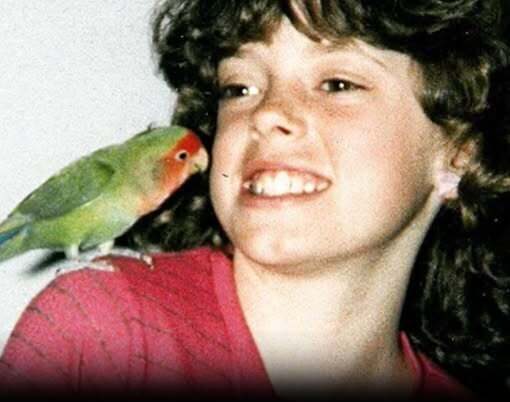
Long before Rose McGowan became a recognizable figure in Hollywood, she spent her earliest years in an environment far removed from ordinary childhood life.
Born in Florence, Italy, in 1973, McGowan was raised within the Children of God, a controversial religious sect that promoted communal living, strict obedience, and unconventional ideas about relationships.
Her father, an Irish-born artist, operated an Italian branch of the group. Her mother, Terri, was an American-born writer.
While many children her age were attending regular schools and developing familiar routines, McGowan moved through communal compounds with her family. Her parents traveled across Europe, bringing their children into a lifestyle shaped by the sect’s rules and beliefs.
A Childhood Defined by Rebellion
McGowan has said she believed in God as a child, but she did not accept the way the group expected women and girls to behave.
She became especially disturbed by the unequal relationships she witnessed between men and women. Even at a young age, she understood that she did not want the same future as the adult women around her.
“I remember watching how the [cult’s] men were with the women, and at a very early age I decided I did not want to be like those women. They were basically there to serve the men sexually — you were allowed to have more than one wife,” she told People.
McGowan resisted the group’s expectations in visible ways. She refused to adopt the appearance expected of the other girls and rejected the idea that females should exist primarily to serve men.
Her rebellion became increasingly direct. As a young girl, she set fire to a wall of Bibles and repeatedly answered “no” when people asked whether she had allowed God into her heart.
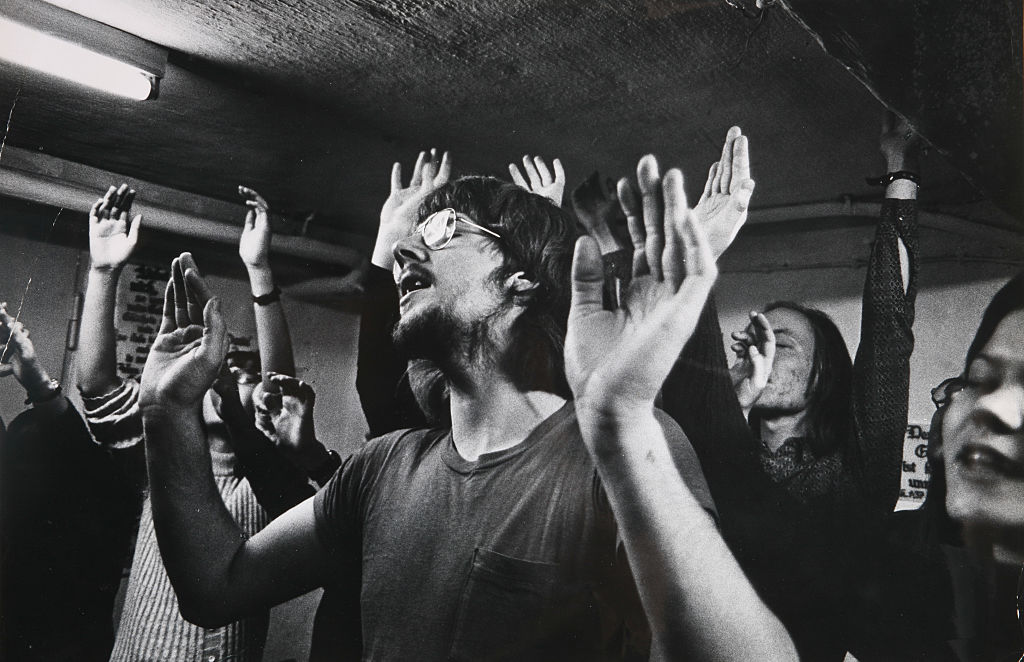
She later described the group’s appearance as a “hippie aesthetic,” a style she never believed suited her personality.
She frequently joked about how different she felt from everyone around her, saying, “I came out of the womb waving red lipstick.”
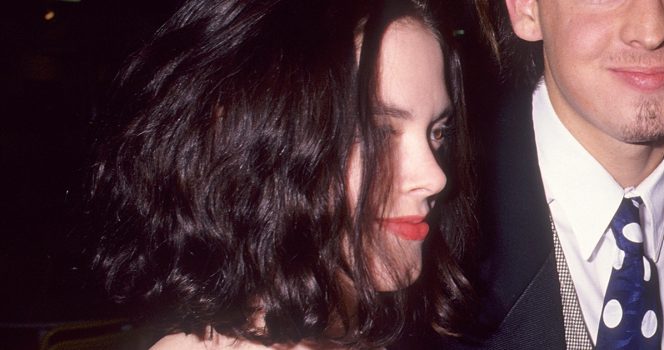
Her Family Escaped as the Situation Grew More Dangerous
The family’s life inside the sect eventually became more alarming. Discussions within the group began moving toward sexual contact between adults and children.
McGowan’s father feared that his daughter could become a target. Faced with that possibility, he gathered his children, fled Italy, and permanently separated the family from the organization.
Leaving the sect did not immediately create a stable or conventional life. McGowan and her family had spent years viewing the outside world through the beliefs and attitudes of the religious community.
Adapting to life in the United States was difficult. The customs and personalities they encountered appeared unfamiliar after years in an isolated communal environment.
“We thought everyone was boring,” she would later recall.
The escape marked the end of one unusual chapter, but McGowan’s adolescence remained unsettled. Family conflict, frequent moves, and financial pressures continued to shape her teenage years.
Finding Safety on the Streets of Portland
During her adolescence, McGowan ran away and spent time on the streets of Portland, Oregon.
There, she found support among members of the city’s drag community. The drag queens she met became an unexpected chosen family and provided a sense of protection during a vulnerable period in her life.
After her parents separated, she moved to Seattle to live with her father. She attended Roosevelt High School and Nova Alternative High School while also working at McDonald’s.
McGowan had studied ballet until she was 13, but her life soon demanded a level of independence rarely expected from someone so young.
At 15, she legally emancipated herself and cut ties with both parents. The decision allowed her to control her own life, but it also required her to survive without the security of a traditional family structure.
Years afterward, she returned to the small Italian town connected to her childhood. She arrived with her then-boyfriend, musician Marilyn Manson, surprising residents who remembered her from her earlier years.
A Breakthrough in One of the 1990s’ Most Influential Horror Films
McGowan began appearing in small acting roles during the early 1990s. Her career changed dramatically when she was cast in the 1996 horror film Scream.
The filmmakers were searching for an actress capable of presenting several qualities at once. The character needed attitude and confidence while still appearing vulnerable and youthful.
McGowan was chosen to play Tatum Riley, a sharp and memorable supporting character whose personality stood out within the film’s mix of horror, humor, and self-awareness.
Scream became a major cultural success and provided McGowan with her first significant path into mainstream Hollywood.
Almost overnight, the young woman who had grown up inside a religious sect became one of the most visible actresses of her generation.
Her performance opened the door to a series of prominent roles. She appeared in Going All the Way, Devil in the Flesh, and Jawbreaker, gradually developing an image as a bold and unpredictable screen presence.
Television Success and a Growing Public Profile
McGowan’s fame expanded further in the 2000s when she joined the television series Charmed.
She played Paige Matthews from 2001 until 2006, becoming part of a widely watched supernatural drama with a dedicated international audience.
The role made her a household name and brought her into viewers’ homes each week. It also placed her under a level of public attention that she later acknowledged was never entirely comfortable.
Alongside her television work, McGowan continued appearing in films. She had a role in the 2001 fantasy comedy Monkeybone and returned to the big screen in Grindhouse in 2007.
The double feature was created through a collaboration involving Robert Rodriguez and Quentin Tarantino.
McGowan’s performance attracted significant attention and earned her nominations for a Saturn Award for Best Actress and a Scream Award.
By that point, she had established herself as an actress willing to take unconventional roles and embrace characters that did not fit traditional expectations.
Private Struggles Behind Her Public Success
While her career was developing, McGowan was also dealing with serious personal struggles that remained largely hidden from audiences.
In the early 1990s, she developed an eating disorder while attempting to reduce her weight to 84 pounds, or 38 kilograms.
She was influenced by the extremely thin models she saw in magazines and believed she needed to match their appearance.
“I never was able to get below 92 pounds (42 kg),” she later wrote. “I felt like a failure.”
Her struggle with the eating disorder ended in early 1993 after she met Brett Cantor, a co-owner of Hollywood’s Dragonfly nightclub.
Cantor was fatally stabbed inside his home in July of that year. McGowan later described herself as “shattered” by his death.
The killing has remained unsolved, leaving the tragedy without a final legal resolution.
Her Relationship With Marilyn Manson
In 1997, McGowan began a romantic relationship with rock musician Marilyn Manson.
She described him as “one of the sweetest people you could ever meet” and said the relationship allowed her to step away from the responsibilities and pressures that had shaped much of her life.
“I ran away with the circus. That’s what I needed for 3½ years. I just needed to not be responsible — to have fun. Then, eventually, I kind of grew up,” she reflected.
The couple became engaged in February 1999. Their relationship ended in 2001.
Their public image attracted considerable attention, but McGowan later framed the relationship as a temporary period of freedom rather than simply a celebrity romance.
Speaking Publicly About Harvey Weinstein
McGowan’s public identity eventually became tied not only to acting but also to her outspoken criticism of abuse and exploitation in the entertainment industry.
In October 2017, she publicly accused former Miramax executive Harvey Weinstein of raping her.
She said the assault took place in 1997 during the Sundance Film Festival.
McGowan also claimed that she discussed what happened with her Phantoms co-star Ben Affleck and later accused him of being connected to efforts to conceal the misconduct.
Her allegations emerged during a period in which numerous women were beginning to describe similar experiences involving Weinstein.
More than 80 women ultimately accused him of sexual misconduct.
The disclosures helped expand the #MeToo movement, which encouraged survivors across industries to share their experiences and brought wider attention to harassment, abuse, and institutional silence.
McGowan strongly emphasized that she believed her own actions played a central role in bringing the allegations into public view.
“I’ve been called one of the first to speak out. No. I was the first. I called the New York Times. I blew it wide open, not them. They won the Pulitzer and I’m the one hard-up for money. It’s disgusting. I was kind of grossed out by how much they enjoyed being lauded,” she told The Guardian.
McGowan also spoke about what she described as a toxic work environment during her time on Charmed.
In October 2019, she filed a federal racketeering lawsuit against Weinstein. A federal judge dismissed the case in December 2021.
Growing Disillusioned With Hollywood
Although McGowan achieved the type of fame many performers pursue, she has said the attention never gave her a sense of fulfillment.
Instead, she often found public reactions to her acting persona uncomfortable and disconnected from her real identity.
“I found being reacted to for something that wasn’t me deeply embarrassing,” she says. “It didn’t give me a rush. It was the opposite for me, and I looked at it like, this is my day job, it’s just extraordinarily strange.”
She also became increasingly frustrated with the way she was presented as a sex symbol.
McGowan identified a provocative 2007 photo shoot with Rosario Dawson as an important turning point in her relationship with the entertainment industry.
“I was on the cover of Rolling Stone with a fake tan and gun belt around me and breasts,” she told art publication Flatt.
“I just was like, ‘I’ve had it. I’m like sick of being sexualized.’”
The experience contributed to her emotional withdrawal from Hollywood. She later said she “checked out” and came to the conclusion, “I wasn’t meant to be an actress.”
Leaving the United States for a Quieter Life
In 2020, McGowan stepped away from the United States and established a quieter life in Mexico.
She moved from New York and became a permanent resident, settling in Tulum, Quintana Roo.
The change represented more than a move between countries. It also reflected her desire to leave behind the pressures of public life and create a simpler existence outside Hollywood.
McGowan has said she does not intend to return to live in the United States.
Her connection to Mexico also carries a family history. Her father lived in the country for 35 years.
During a Charmed panel at 90s Con in 2025, she spoke warmly about her new home and its people.
“My father lived in Mexico for 35 years and mi gusta Mexico. Te quiero much, mi amores. It is an incredible country. It is so wildly geographically diverse, culturally diverse and just very, very special. There’s so much joy,” she shared.
A Life Rebuilt Beyond Acting
McGowan’s journey has moved through dramatically different worlds.
She began life inside a controversial religious organization, escaped with her family, lived as a runaway, legally emancipated herself, and eventually became a major actress.
She then moved from Hollywood success into a highly public role as an advocate speaking against abuse and the systems that protect powerful people.
Her story also includes periods of grief, struggles with body image, difficult relationships with fame, and growing frustration with the way women were treated within the entertainment industry.
Leaving acting and moving to Mexico allowed her to build a life that she considered more authentic and less controlled by public expectations.
For McGowan, fame was never the final destination. It became another environment she eventually chose to leave after deciding it no longer reflected who she wanted to be.
Her life today stands far apart from the communal compounds of her childhood and the film sets that made her famous. After decades of being shaped, watched, judged, and presented by others, she chose to define her future on her own terms.