
Massive Snapping Turtle Surprises Mother and Daughter During Mississippi River Fishing Trip
A Peaceful Kayak Trip Takes an Unexpected Turn
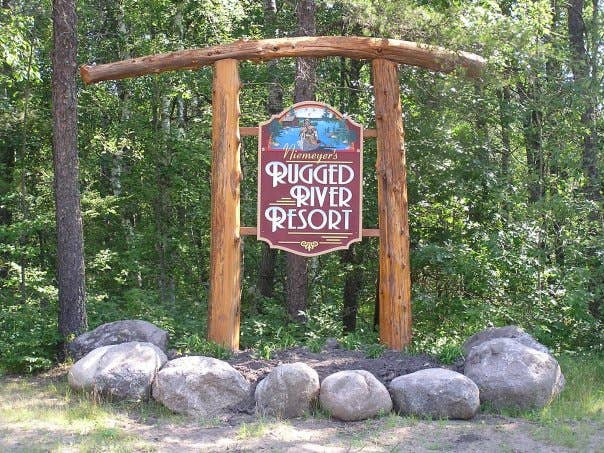
A family vacation at Niemeyer’s Rugged River Resort became unforgettable when Shala Holm encountered an enormous snapping turtle while fishing with her daughter on the Mississippi River.
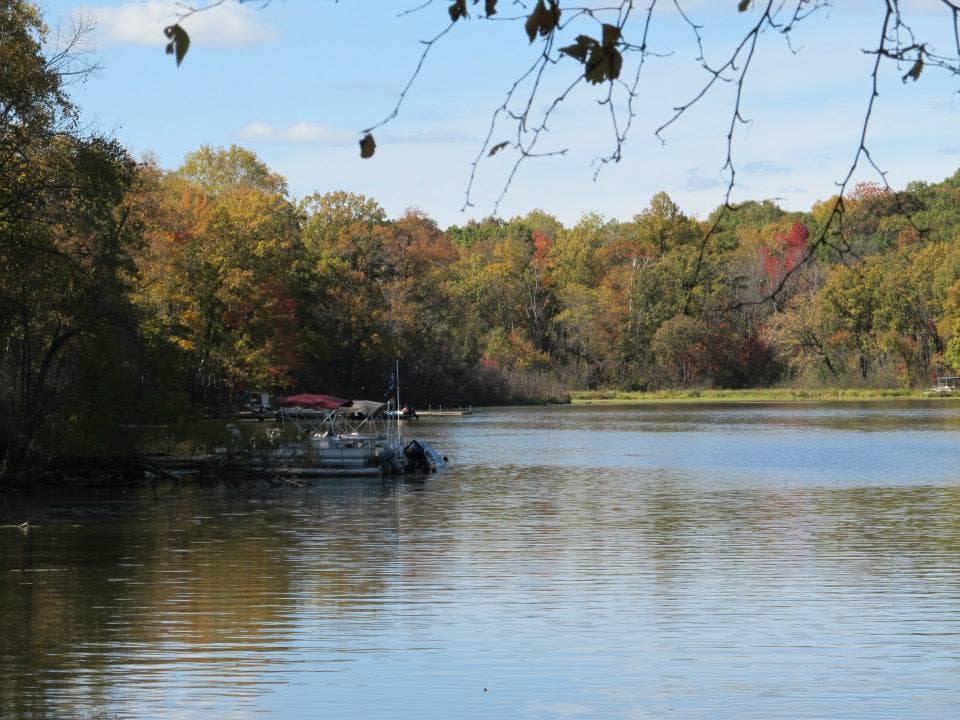
The remarkable meeting happened while the pair were enjoying a quiet outing in a tandem kayak. They had been fishing for crappies and carrying their catch in a basket suspended beside the kayak when an unusual sound caught the daughter’s attention.
She encouraged her mother to look toward the riverbank, where something appeared to be moving near the surface. Holm turned and noticed a nose emerging from the water.
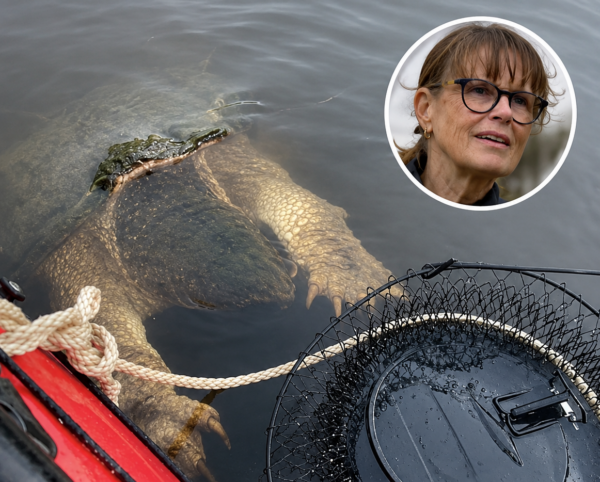
Within moments, the rest of the animal’s head became visible. A very large turtle had approached the kayak and appeared interested in the fish basket hanging close to the water.
The reptile’s unusual appearance immediately stood out. Its broad head, powerful forearms and long claws gave it a prehistoric look, making the encounter seem like a scene involving a creature from another era.
The Turtle Approaches the Fish Basket
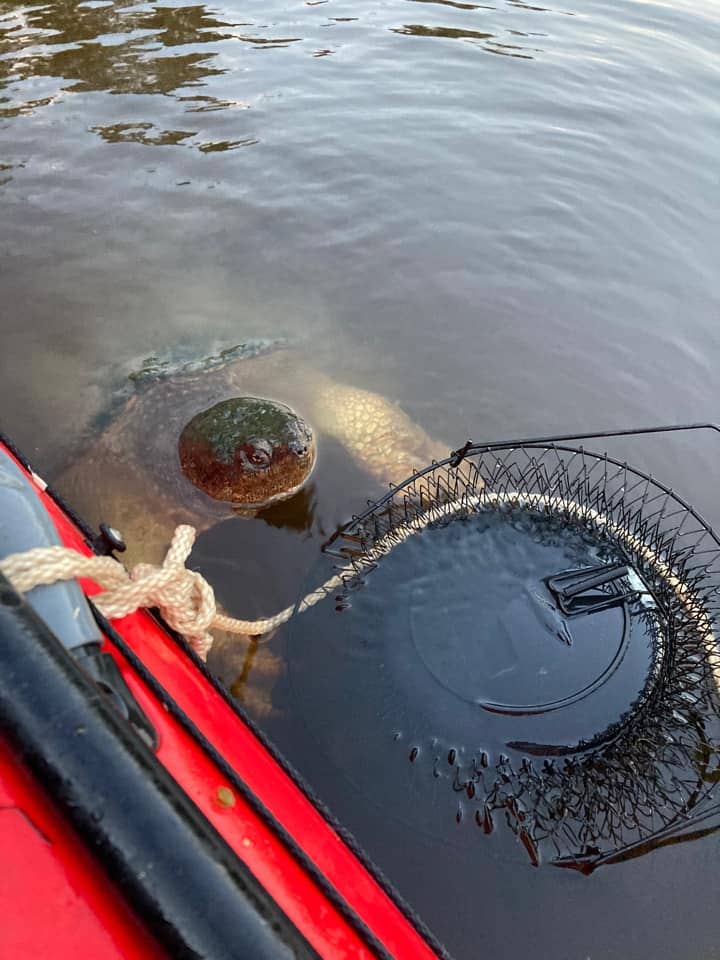
The turtle swam close enough for Holm to see its size and physical features clearly. Its head rose near the basket as its front legs stretched forward beneath the surface.
Although the animal’s sudden arrival was startling, it did not attack the kayak or the people inside it. Its attention appeared to be focused on the basket containing the fish.
Holm reacted quickly by lifting the basket away from the water. Once the possible food source was removed from reach, the turtle turned and calmly swam away.
The brief encounter left both Holm and her daughter amazed. They had expected an ordinary day of fishing, but instead found themselves only a short distance from one of the largest turtles living in Minnesota’s waters.
The animal disappeared before Holm could capture the close-up photographs she wanted. However, the experience made the pair curious about whether the turtle regularly visited that part of the river.
A Return to the Same River Location
Rather than avoiding the area after the surprising encounter, Holm and her daughter returned to the same location the following day.
They hoped the turtle might appear again, giving them another opportunity to observe it more carefully. Their patience was rewarded when the large reptile returned to the area near the kayak.
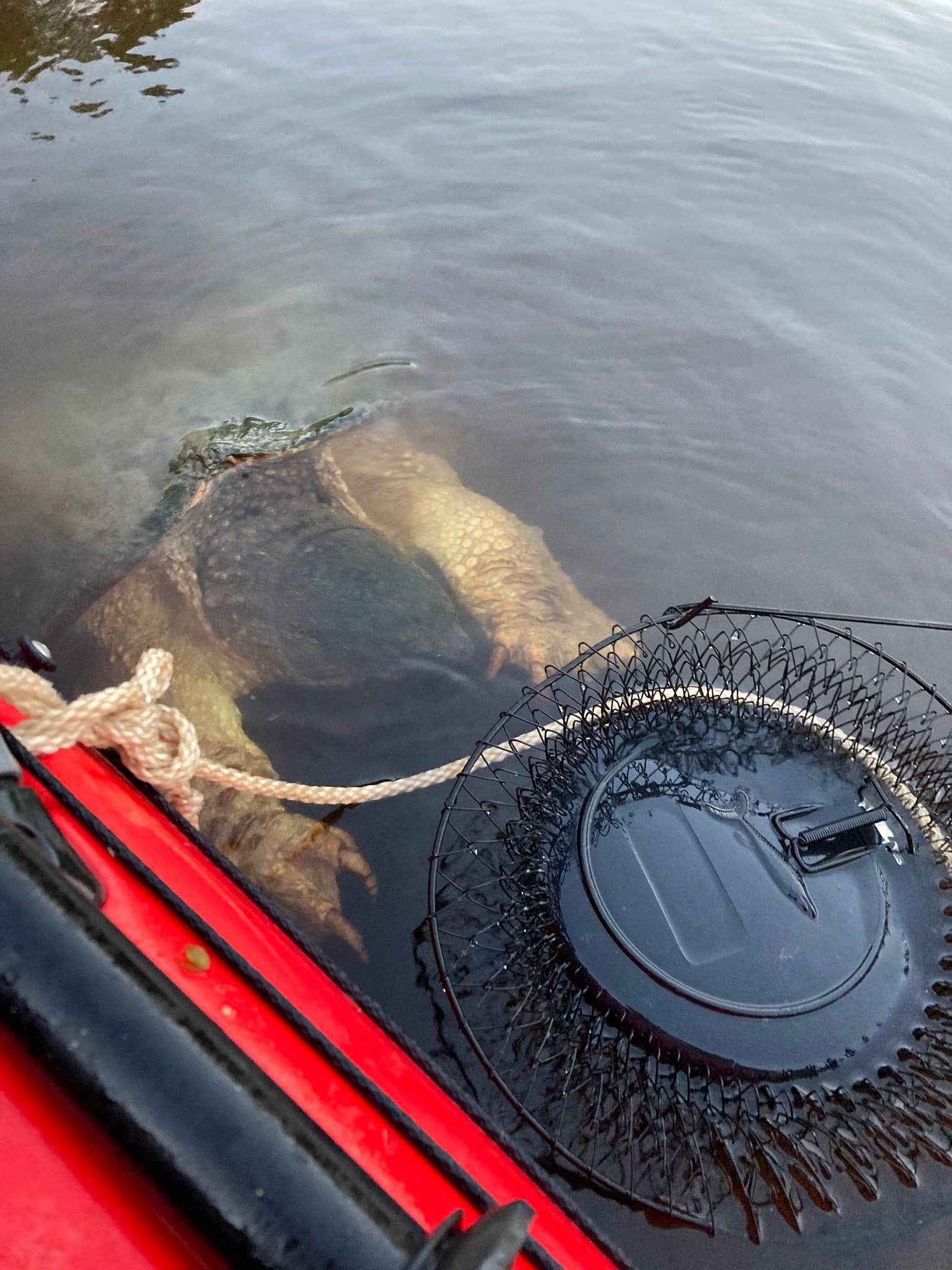
This time, Holm was prepared with a camera. She managed to take several close-up photographs as the turtle’s head and forearms became visible near the surface.
One of the images captured the creature reaching toward the fish basket. Its large claws, thick limbs and distinct facial features made the animal appear especially imposing.
The photograph gave viewers a rare perspective of a large snapping turtle in its natural habitat. Instead of seeing the animal from a distant shoreline, the image showed it only a short distance from the kayak.
Estimating the Turtle’s Impressive Size
The turtle was never removed from the river or physically measured, so its exact length and weight remain unknown.
Holm estimated that each of its front legs was approximately as thick as her wrists. That detail helped communicate the animal’s impressive size, even without an official measurement.
She believed the creature was a snapping turtle, a species known for its sturdy build, strong jaws and rugged appearance. Snapping turtles are also recognized as Minnesota’s largest turtle species.
Adult snapping turtles generally measure between 8 and 14 inches in length. Their typical weight ranges from approximately 10 to 35 pounds.
Some exceptional individuals can become much heavier. Rare snapping turtles have reached weights of about 65 pounds, demonstrating how large the species may grow under favorable conditions.
The turtle seen by Holm appeared mature and powerfully built. Its considerable size contributed to the attention the photographs later received online.
Experts Consider the Turtle’s Possible Age
After photographing the animal, Holm sent an image to the Department of Natural Resources for additional insight.
Experts estimated that the turtle was at least 15 years old. They also considered it possible that the animal could be approximately 30 years old.
The broad age estimate reflected the difficulty of determining a wild turtle’s exact age from photographs alone. Even so, the assessment showed that the reptile had likely lived in the river system for many years.
Its age may help explain its substantial size and mature appearance. A turtle surviving for several decades would have had considerable time to grow and adapt to its environment.
The encounter also offered a reminder that large, long-lived animals may remain largely unnoticed in familiar waterways. People can visit, fish or travel through the same areas for years without realizing what lives beneath the surface.
A Vacation Photograph Reaches a Large Audience
Holm eventually shared the striking photograph with Sheila Niemeyer, a co-owner of Niemeyer’s Rugged River Resort.
Niemeyer posted the image on the resort’s Facebook page without expecting it to generate widespread attention. The unusual size and appearance of the turtle quickly captured the interest of online viewers.
Within only a few days, the post attracted nearly 1,000 comments. It was also shared thousands of times and gained attention from multiple media outlets.
Many people expressed amazement at seeing such a large turtle so close to a small kayak. Others focused on the animal’s dinosaur-like head and the intimidating claws visible in the photograph.
The image spread because it combined several striking elements: a familiar outdoor activity, an unexpected animal encounter and a close view of a creature that usually remains hidden beneath murky water.
For many viewers, the photograph revealed a side of the Mississippi River they had never considered. The waterway was not only a place for kayaking and fishing but also a habitat for large, mature reptiles.
Online Reactions Range From Awe to Humor
The public response included admiration, surprise and playful concern. Some commenters were fascinated by the opportunity to see a snapping turtle at such close range.
Others joked that the photograph would make them reconsider swimming in rivers or lakes where similar animals might be present.
The turtle’s appearance naturally contributed to those reactions. Its hooked mouth, broad head and powerful claws can look threatening, especially when photographed from only a few feet away.
However, appearance alone does not mean that snapping turtles actively seek confrontations with people. Their intimidating features are part of their natural anatomy and help them survive in aquatic environments.
The animal involved in Holm’s encounter did not pursue the kayak after the fish basket was lifted. It simply moved away, showing no continued interest in the mother or daughter.
Snapping Turtles Usually Avoid People
Despite their fierce appearance, snapping turtles are not generally considered dangerous to people who leave them undisturbed.
Erica Hoaglund, a wildlife specialist from the Minnesota DNR, explained that snapping turtles prefer avoiding encounters and rarely pose a threat to humans.
In water, they typically attempt to escape rather than confront nearby people. Their behavior can be defensive when they feel threatened, particularly if they are handled or trapped on land.
Holm’s experience demonstrated that avoidance behavior. Once the fish basket was moved away, the turtle had no reason to remain beside the kayak and peacefully left the area.
The incident also showed the importance of observing wild animals without attempting to touch, capture or disturb them. Maintaining a respectful distance allows people to enjoy unusual sightings while reducing stress for the animal.
An Important Part of the River Ecosystem
Snapping turtles perform valuable work in the lakes and rivers they inhabit. They consume decaying matter, helping remove material that might otherwise accumulate in aquatic environments.
This feeding behavior contributes to the overall health of waterways. By consuming organic remains, the turtles serve as part of the natural cleanup system within their habitats.
Their role is sometimes overlooked because their appearance can make them seem frightening. In reality, they are established members of the ecosystem and contribute to the balance of river and lake environments.
The turtle seen near Holm’s kayak may have lived in the Mississippi River area for decades. During that time, it would have participated in the same natural processes that support the health of the waterway.
Its survival to a possible age of 30 would also suggest that it had successfully navigated changing conditions, seasonal weather and interactions with other wildlife.
Threats Facing Snapping Turtles
Although snapping turtles are strong and well adapted to life in the water, they face several serious threats.
Habitat loss can reduce the areas available for feeding, nesting and shelter. Changes around lakes and rivers may also interrupt the environments turtles depend on throughout their lives.
Vehicle collisions present another major danger. Turtles sometimes travel across roads, particularly when moving between habitats or searching for suitable nesting areas.
Their slow movement makes them especially vulnerable when crossing busy routes. Even large adults that have survived for many years can be killed during a single attempt to reach another area.
Protecting aquatic habitats and remaining alert for turtles on roadways can help reduce these risks. Long-lived animals are particularly valuable because replacing a mature individual within a population can take many years.
A Lasting Memory From the Mississippi River
The unusual experience did not discourage Holm from returning to the river. Instead, it deepened her appreciation for the wildlife living near the resort.
She looked forward to visiting the same location again the following summer. Holm hoped the large turtle might return, allowing her and her daughter to catch another glimpse of the memorable animal.
There is no certainty that the reptile will appear at the same place again. Wild animals move freely through their habitats and follow natural patterns related to food, shelter and changing conditions.
Still, the possibility of another sighting has given the family an additional reason to revisit the area. What began as a peaceful fishing trip became a story they could share long after the vacation ended.
The viral photograph continues to capture attention because it offers a close look at an animal that is both familiar and rarely observed in such dramatic detail.
For Holm, the encounter was more than an impressive image. It was a reminder that extraordinary wildlife can appear during the most ordinary moments.
The massive snapping turtle, with its ancient-looking head and powerful limbs, became an unforgettable symbol of the natural wonders hidden beneath the surface of the Mississippi River.