
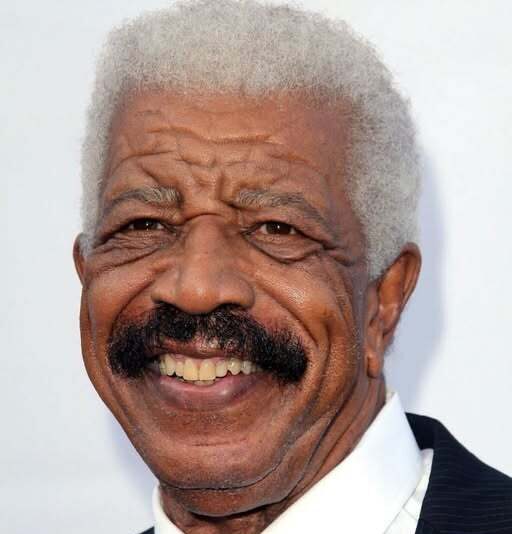
Hal Williams Dies at 91 After a Career That Brought Humor, Warmth, and Dignity to Television
A Familiar Presence Remembered Across Generations
Hal Williams, the veteran actor whose calm presence and memorable performances made him a familiar figure in American homes, has died at the age of 91.
For generations of television viewers, Williams was the kind of performer who could bring stability to a chaotic scene without taking attention away from the larger story. His characters often carried a combination of humor, patience, authority, and warmth.
Many fans remember him most clearly as Officer Smitty on Sanford and Son and as Lester Jenkins on 227. Those roles became enduring parts of his career and helped establish him as a dependable actor who could make even an ordinary exchange feel natural and memorable.
His work, however, reached far beyond two popular television programs. Williams appeared in productions ranging from Private Benjamin to Modern Family, building a body of work that connected different periods of American entertainment.
Behind that long career was a deeply personal decision. Before the recognition, recurring roles, and decades of professional success, Williams faced a period of uncertainty that forced him to reconsider the direction of his life.
A Personal Turning Point After Divorce
The defining gamble of Williams’ life began after the end of his marriage. Divorce left him alone with difficult questions about his future, his ambitions, and the goals he had not yet attempted to pursue.
Rather than allowing disappointment to determine the rest of his life, he confronted himself with a direct and lasting question: “What do I really want to try to do before the maker comes and gets me?”
That private moment of honesty became the foundation for everything that followed. Williams recognized that continuing along a familiar path would not answer the question that had begun to weigh on him.
He wanted to act, and he understood that pursuing that ambition would require more than quiet hope. It would demand movement, commitment, and a willingness to accept the possibility of failure.
Williams decided to leave behind the security of what he knew and drive west toward Los Angeles. The journey was not presented as a guaranteed path to success. It was a personal test built around determination and a clear deadline.
He gave himself three years to establish a career. If he failed to make meaningful progress during that period, he was prepared to stop pursuing the dream and accept a different future.
The decision carried enormous risk. There was no safety net waiting for him, no promise of a major role, and no certainty that the entertainment industry would make room for him.
What he did have was a clear understanding of what he wanted to attempt. That certainty proved powerful enough to push him onto the highway and toward an unfamiliar city where talent alone could never guarantee opportunity.
A Three-Year Deadline That Changed His Future
Williams’ self-imposed deadline transformed a distant dream into an urgent mission. By limiting the amount of time he would give himself, he removed the possibility of waiting indefinitely for the perfect opportunity.
Every audition, conversation, rejection, and small opening mattered. The three-year window demanded persistence while also reminding him that the future he wanted would have to be built through action.
His gamble eventually developed into a career that lasted across generations. Instead of returning home with the dream unfinished, Williams became part of the television and film landscape that had once seemed beyond his reach.
The significance of that success was not limited to fame. His career demonstrated how one difficult decision can redirect an entire life, especially when that decision is made without certainty or immediate support.
Williams did not begin his journey from a position of comfort. He began after a painful personal change, carrying the emotional weight of a marriage that had ended and the practical pressure of a deadline he had created for himself.
That background gave his later achievements an additional meaning. Each role represented more than professional progress. It also confirmed that his willingness to confront uncertainty had opened a path that caution might have permanently closed.
Bringing Officer Smitty to Sanford and Son
One of Williams’ best-known television roles came through Sanford and Son, where he portrayed Officer Smitty. The popular series placed him inside a world filled with rapid humor, strong personalities, and unpredictable situations.
Williams brought a steady energy to the role. Officer Smitty could participate in the comedy while still appearing grounded, giving the surrounding chaos a believable center.
His performance helped create the feeling that the character existed beyond the immediate joke. That quality made Williams recognizable to viewers and allowed him to leave a lasting impression without relying on exaggerated behavior.
The role also demonstrated one of his greatest professional strengths. Williams understood how to support a scene while giving his own character a distinct identity.
He did not need to dominate every moment to be remembered. His controlled timing, natural delivery, and quiet authority gave Officer Smitty an enduring place in the memories of the show’s audience.
Lester Jenkins Became a Beloved Television Father
Williams later became widely known as Lester Jenkins on 227. In that role, he brought humor and heart to a family-centered television series that became an important part of his legacy.
Lester was more than a source of comedy. Through Williams’ performance, the character became a reliable husband, father, and neighbor whose presence gave emotional balance to the stories unfolding around him.
Viewers could recognize familiar qualities in the character. Lester could be patient, frustrated, amused, protective, or practical, often moving between those emotions in a way that felt believable.
Williams approached the role with dignity. His performance helped make Lester feel like a complete person rather than a simple television type created only to serve a joke or advance a plot.
That authenticity allowed audiences to form a lasting connection with him. Many viewers never met Williams, yet his years on television created the sense that he was a familiar and trusted presence.
In homes across the country, he became part of a weekly routine. Families watched him navigate fictional challenges, share laughter, and provide the steady center that made the surrounding characters and storylines feel more grounded.
A Career Extending Beyond Two Signature Roles
Although Sanford and Son and 227 remain central to Williams’ public legacy, his career included work across film and television.
His appearance in Private Benjamin added another recognizable production to his professional history. The project demonstrated his ability to contribute to stories outside the family sitcom format that had made him so familiar to television audiences.
Years later, his work extended into the era of Modern Family. That appearance connected Williams with another generation of viewers and reflected the unusual length of his career.
Few performers remain active or recognizable across such different periods of entertainment. Williams moved through changing styles, audiences, production environments, and cultural expectations while maintaining the qualities that defined his work.
He brought professionalism to each role, whether the character occupied the center of the story or appeared for a shorter period. His performances were marked by restraint, clarity, and an ability to make scripted moments feel lived-in.
This consistency became one of the strongest features of his career. Audiences could trust Williams to create a believable presence, even when he had limited time to establish a character.
The Quiet Influence of a Supporting Performer
Entertainment history often focuses on the biggest stars, highest-profile roles, and most dramatic public careers. Williams’ legacy also highlights the importance of performers who strengthen every production through reliability and depth.
He could stand beside louder characters without disappearing. He could also bring emotional weight to a scene without making the performance feel forced.
That balance is difficult to achieve. It requires an actor to understand not only his own lines but also the rhythm, purpose, and emotional direction of the entire scene.
Williams repeatedly showed that supporting characters can become essential to the identity of a program. Officer Smitty and Lester Jenkins were memorable because he treated them as people with their own dignity, reactions, and inner lives.
His work helped shape the tone of the productions in which he appeared. He offered calm when a scene needed stability, humor when it needed release, and sincerity when the story required emotional grounding.
Those contributions may appear effortless on screen, but they reflect discipline and careful judgment. Williams’ long career suggests that colleagues and audiences valued his ability to deliver those qualities consistently.
A Story About Beginning Again
Williams’ life offers a powerful example of what can happen when someone chooses to begin again after personal loss.
The end of his marriage could have convinced him to avoid further uncertainty. Instead, it became the moment that forced him to examine what he still hoped to accomplish.
His decision to drive to Los Angeles was not based on proof that success would follow. It was based on the belief that failing to try would leave him with a question he could never answer.
The three-year deadline made that belief concrete. He was not simply imagining a different life. He was giving himself a limited period in which to build one.
That choice remains one of the most meaningful parts of his story because it came before the recognizable characters and professional achievements. It reveals the private courage that existed long before audiences knew his name.
Williams’ journey shows that a major beginning does not always arrive at a convenient moment. Sometimes it follows disappointment, disruption, and the realization that a familiar life no longer feels complete.
A Legacy of Humor, Heart, and Determination
Hal Williams leaves behind three children and a body of work that spans generations. His family now carries the personal memories of the man behind the performances, while audiences continue to remember the characters he brought into their homes.
His death at 91 marks the loss of an actor whose impact was built steadily rather than loudly. He became known through years of dependable work, thoughtful performances, and characters who felt genuine.
Fans will continue to remember the laughter associated with Sanford and Son, the warmth of 227, and the many appearances that filled out his career from Private Benjamin to Modern Family.
His professional record tells only part of the story. The decision that made the career possible remains equally important: a long drive west, a three-year promise to himself, and a refusal to abandon the question that had taken hold of him.
Williams ultimately discovered what he wanted to try before his life ended, and he gave himself fully to that pursuit. The risk did not merely change his circumstances. It created a legacy that reached millions of people he would never personally meet.
His work will remain visible in the programs and films that introduced him to successive generations. His personal journey will remain meaningful to those who wonder whether disappointment has closed the door on a new beginning.
For Williams, the answer was found through movement rather than certainty. He chose the road, accepted the deadline, and stepped into an industry that offered no guarantees.
What followed was a career defined by dignity, humor, heart, and perseverance. Hal Williams may be gone, but the characters he created and the courage behind his journey will continue to speak for him.