
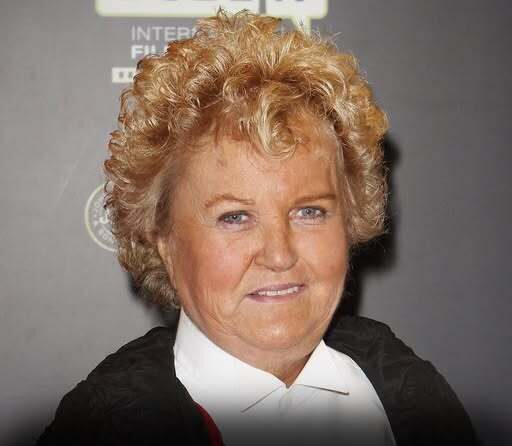
Brenda Fricker, Oscar-Winning Irish Actress and Beloved Home Alone 2 Star, Dies at 81
A Quiet Screen Presence Remembered Across Generations
Brenda Fricker, the acclaimed Irish actress whose deeply human performances moved audiences for decades, has died at the age of 81.
Her death has brought sadness to film fans who remember her both as an Academy Award-winning dramatic actress and as the unforgettable woman surrounded by pigeons in Home Alone 2.
For many viewers, Fricker became part of an annual Christmas tradition. Her appearance beneath a worn coat, standing alone among the birds of New York City, created one of the film’s most tender and emotionally resonant storylines.
Although the character initially appeared mysterious and intimidating, Fricker gradually revealed a gentle person shaped by disappointment, isolation, and a lingering hope that meaningful human connection was still possible.
That quiet transformation helped make the role memorable. She brought warmth to a character who could easily have remained a simple background figure, allowing audiences to recognize the loneliness hidden beneath an unusual appearance.
More Than “the Pigeon Lady”
To generations of younger viewers, Fricker will always be associated with “the Pigeon Lady,” the lonely figure who forms an unexpected friendship with a lost child during the Christmas season.
Her performance was restrained rather than theatrical. Much of its emotional effect came from her expressions, pauses, posture, and the careful way she delivered each moment of vulnerability.
Fricker gave the character dignity. Instead of presenting her merely as an eccentric stranger, she portrayed a woman who had once trusted others, experienced emotional pain, and withdrawn from the world as a form of protection.
The connection at the center of the storyline gave audiences a simple but enduring message about compassion. A person who appears distant or frightening may be carrying private sorrow, and a small act of kindness may reach someone who has felt forgotten.
Her work in Home Alone 2 introduced her to an enormous global audience, but the role represented only one part of a long and respected acting career.
Fricker had already demonstrated her dramatic power through performances built around realism, emotional precision, and an instinctive understanding of ordinary people facing extraordinary circumstances.
An Historic Academy Award Achievement
One of the defining moments of Fricker’s career came with My Left Foot, the film that earned her an Oscar and established her place in Irish cinema history.
She became Ireland’s first Oscar-winning actress, an achievement that carried significance far beyond a single ceremony or performance.
Her success represented international recognition for an actress whose strength came not from glamour or spectacle, but from honesty and emotional detail.
In My Left Foot, Fricker delivered a performance shaped by patience, endurance, and profound maternal strength. She portrayed a woman whose daily life required resilience, care, and an ability to remain steady through hardship.
The role allowed Fricker to demonstrate what would become one of the central qualities of her work: the ability to make an apparently ordinary person feel complex, important, and fully alive.
She never needed excessive dialogue to command attention. A look, a gesture, or a carefully controlled silence could communicate years of struggle and affection.
Winning the Oscar confirmed what audiences and colleagues had already recognized. Fricker possessed the rare ability to disappear into a role while still leaving an unmistakable emotional impression.
Performances Built on Humanity and Restraint
Fricker continued to bring that emotional depth to films including The Field and A Time to Kill.
Across her work, she often portrayed people who were not protected by wealth, status, or easy circumstances. Her characters carried burdens that felt recognizable, even when the stories surrounding them were dramatic.
She approached those roles without sentimentality. Rather than forcing an audience to feel sympathy, she allowed emotion to emerge naturally through behavior and character.
That approach gave her performances a lasting quality. Viewers did not simply observe her characters from a distance; they felt invited into their disappointments, hopes, fears, and private acts of courage.
Fricker had a gift for making silence meaningful. In her hands, a pause could suggest regret, suspicion, exhaustion, tenderness, or a lifetime of words that had never been spoken.
Her performances often reminded audiences that the most powerful moments in a film do not always belong to the loudest character. Sometimes they belong to the person standing quietly at the edge of the scene, carrying an entire history in her face.
A Respected Colleague Behind the Camera
Those who worked with Fricker remembered more than her skill as a performer. She was known for sharp wit, discipline, and a strong sense of professionalism.
Her humor could be direct, but it was accompanied by a kindness that made a lasting impression on colleagues.
She approached acting seriously without presenting herself as distant or self-important. Her reputation was built through preparation, reliability, and respect for the work.
That combination of toughness and warmth reflected many of the characters she played. She understood vulnerability, but she never confused it with weakness.
Fricker also spoke with humility and honesty about her own health struggles. Rather than turning those difficulties into a public spectacle, she carried them with the same quiet strength that audiences recognized in her screen performances.
Her openness contributed to the sense that she was never performing a carefully constructed celebrity identity. She appeared as a person who understood hardship, disappointment, humor, and survival.
Why Her Christmas Role Remained So Powerful
The lasting affection for Fricker’s Home Alone 2 character is connected to more than nostalgia.
The film returned to homes each Christmas, allowing children to meet her character for the first time while adults revisited the story with a different understanding of its themes.
Younger viewers often remembered the pigeons, the worn clothing, and the initial uncertainty surrounding the woman. As they grew older, many came to recognize the deeper sadness beneath the performance.
Fricker portrayed loneliness without making the character helpless. The woman had survived emotional pain by building a guarded life for herself, even though that protection had also separated her from others.
Her scenes explored the fear of trusting again after being hurt. They also suggested that hope can return through an unexpected friendship, even after someone has decided that isolation feels safer.
That emotional truth gave the character unusual depth for a family holiday film. She was not simply there to help move the plot forward. She represented the people who feel invisible during a season associated with togetherness.
Through Fricker’s performance, the character became a reminder that kindness should not depend on appearance, reputation, or social position.
A Career Without the Need for Spectacle
Fricker did not build her legacy through a blockbuster franchise, constant publicity, or a carefully staged farewell from public life.
Her influence came through individual performances that stayed with viewers long after the final scene.
She represented a tradition of acting centered on character rather than celebrity. The work mattered more than the attention surrounding it.
That made her especially effective in supporting roles. She could enter a story that belonged to someone else and create a character whose emotional presence became essential.
Even when she was not the central figure, audiences remembered her. She had the ability to make limited screen time feel complete, as though the character’s life continued beyond the boundaries of the film.
Her career demonstrated that an actor does not need to dominate every scene to leave a permanent impression. Fricker’s strength came from serving the story while bringing truth to every moment she was given.
Grief Shared by Fans and Fellow Performers
News of her death has brought together admirers from different generations.
Some remember the historic Oscar victory and the dramatic force of My Left Foot. Others discovered her through The Field, A Time to Kill, or the many roles in which she portrayed women of strength and complexity.
Millions will remember her from annual Christmas viewings, when her lonely character stepped from the shadows and became a trusted friend.
For those viewers, Fricker’s death feels personal because the performance became connected to family traditions, childhood memories, and familiar holiday rituals.
The grief also reflects the type of artist she was. She did not seem remote or unreachable. Her characters often felt like people audiences had known, worried about, or failed to notice in their own lives.
That familiarity gave her work unusual emotional intimacy. She could make viewers feel that they understood someone whose life was very different from their own.
A Legacy Found in the People She Portrayed
Brenda Fricker leaves behind a body of work defined by empathy, honesty, and remarkable emotional control.
Her legacy rests in the mothers, outsiders, survivors, and lonely figures she portrayed with seriousness and respect.
She gave ordinary lives cinematic importance. Her characters did not need grand speeches or heroic recognition to matter.
Through them, she showed how courage can exist in endurance, how tenderness can survive disappointment, and how dignity can remain even when a person has been overlooked by the world.
Her Oscar marked an historic achievement, but her enduring influence cannot be measured by awards alone.
It can be found in the viewers who still remember a particular expression, a quiet conversation, or the moment a guarded character finally allowed herself to trust again.
It can also be found every Christmas, when a new audience discovers the woman beneath the tattered coat and realizes that the heart of the story belongs partly to her.
Brenda Fricker’s finest performances did not demand attention. They earned it through truth.
She leaves no need for a loud final statement. Her work continues to speak through the people who watched her, remembered her, and felt less alone because of the humanity she placed on screen.