
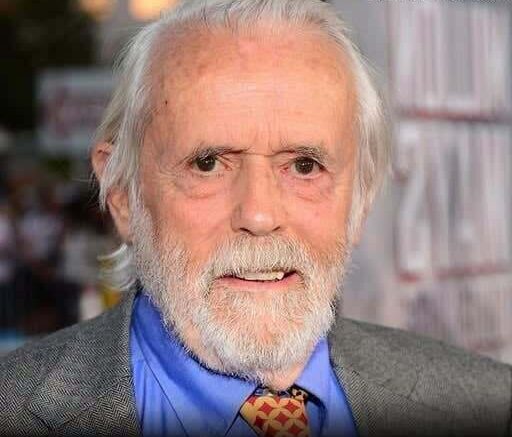
Matt Clark, Trusted Character Actor With More Than 120 Roles, Dies at 89
A Dependable Presence Across Decades of Cinema
Matt Clark, the veteran character actor whose career included more than 120 screen roles, has died at the age of 89. Although he was rarely presented as the central attraction, his performances helped give countless stories a sense of weight, credibility, and emotional truth.
Clark became known as the kind of performer directors could depend on and audiences could immediately accept. Whether he appeared in a Western, drama, thriller, or science-fiction production, he brought an understated authority that made even a brief appearance feel important.
His career was not built around celebrity or constant publicity. Instead, it developed through patient work, carefully shaped characters, and a willingness to support the larger story rather than compete for attention.
For many viewers, Clark was a familiar face whose name may not always have been immediately recognized. His performances, however, were difficult to forget because they often made fictional worlds feel grounded and believable.
The Actor Who Strengthened Every Scene
Clark’s value as a performer came from his ability to fit naturally into an ensemble. He could enter a scene without dominating it, establish a convincing presence, and give the actors around him something solid to respond to.
That quality made him especially useful in productions that depended on atmosphere and realism. His weathered appearance, measured delivery, and restrained physical style allowed him to portray people who seemed to have lived full lives before the audience ever met them.
He did not need lengthy speeches or dramatic gestures to establish a character. A glance, a pause, or the way he delivered a simple line could suggest experience, doubt, loyalty, exhaustion, or quiet determination.
Stars frequently receive the greatest attention, but supporting performers often determine whether a story feels complete. Clark understood that responsibility and approached it without trying to pull focus away from the production as a whole.
His work provided structure around leading actors. In scenes that required tension, he could make the danger feel immediate. In quieter moments, he could add humanity without making the emotion seem forced.
A Career Built Without Chasing Fame
During a career that stretched across decades, Clark accumulated more than 120 acting roles. The number reflects not only his longevity, but also the trust placed in him by filmmakers who needed a dependable performer.
He never appeared driven by the need to become the loudest name on a poster. His reputation developed through consistency rather than promotion, allowing the work itself to become his most enduring introduction.
Clark’s approach stood apart from the traditional image of Hollywood ambition. While many performers pursued greater visibility, he seemed comfortable allowing his characters to receive the attention instead of his private identity.
That distance from celebrity helped him disappear more completely into each role. Audiences were not asked to watch a famous personality pretending to be someone else. They were invited to believe in the person standing inside the scene.
His choices created a body of work that feels connected by discipline rather than by one repeated character type. He could serve the tone of a Western, support the emotional demands of a drama, or strengthen the suspense of a thriller without losing his natural authenticity.
A Natural Fit for Westerns, Dramas, and Thrillers
Clark’s screen presence was particularly suited to stories built around hard lives, difficult choices, and morally complicated situations. His features and manner suggested resilience, making him believable in roles that required experience rather than glamour.
Westerns benefited from that quality because the genre often depends on characters who appear shaped by their surroundings. Clark could look at home in such settings without seeming as though he had been placed there only for the camera.
In dramatic productions, his restraint gave emotional scenes greater impact. Rather than exaggerating a character’s feelings, he often allowed the emotion to emerge through small changes in voice, expression, or posture.
Thrillers also made effective use of his ability to create uncertainty. His calmness could feel reassuring in one moment and quietly threatening in the next, depending on what the story required.
This flexibility allowed him to move between genres without losing the qualities that made his acting recognizable. The surroundings changed, but the sense of lived experience remained.
More Than a Familiar Supporting Face
The phrase character actor can sometimes suggest a performer whose contribution is secondary. Clark’s career demonstrated how essential such performers can be to the success of a film or television story.
His characters often helped define the world around the central figures. They could represent authority, danger, experience, skepticism, loyalty, or the practical reality that kept a larger story from becoming unbelievable.
Even when his screen time was limited, he approached the role as though the character existed beyond the visible scene. That attention gave his performances a depth that audiences could sense even when little background information was provided.
Clark’s work also showed the importance of listening on screen. He reacted carefully to other performers, allowing conversations to feel spontaneous rather than mechanically delivered.
This ability made him a stabilizing force within an ensemble. He supported the rhythm of a scene and helped establish the emotional conditions in which other actors could perform effectively.
A Private Life Shaped by the Same Patience
The patience visible in Clark’s acting also appeared in the way he approached life away from the spotlight. He built his own home board by board, completing the work with the same precision and refusal to take shortcuts that defined his career.
The project reflected a practical side of his personality. Instead of treating success as a reason to separate himself from ordinary work, he remained willing to build something lasting with his own hands.
Constructing a home required planning, endurance, and attention to detail. Those qualities closely matched the way he developed characters, gradually assembling each performance from small and believable choices.
There was no need for spectacle in either process. The result came through steady effort, with each part contributing to a structure strong enough to endure.
That parallel offers a revealing picture of Clark. He was an actor who appeared to value craftsmanship more than display and completion more than applause.
Choosing Distance From the Spotlight
After decades of work, Clark eventually stepped away from public attention by choice. His disappearance from the spotlight was not presented as a dramatic fall or a struggle for relevance, but as a personal decision.
The move was consistent with the way he had managed his career. He had never depended on constant visibility to define his value, and he did not appear interested in remaining publicly present simply for the sake of being noticed.
His absence may have caused some viewers to lose track of him, but the performances remained. Films and television productions continued to preserve the characters he created long after he had chosen a quieter life.
For an actor who spent so much time disappearing into other identities, leaving the spotlight without ceremony felt appropriate. He allowed the work to remain visible while keeping himself separate from the attention surrounding it.
An Unexpected Connection to Back to the Future
Following Clark’s death, renewed interest in his career has drawn attention to an unusual part of his screen legacy. He had an uncredited connection to the science-fiction world of Back to the Future.
The detail came as a surprise to fans who primarily associated him with grounded Westerns, dramas, and thrillers. It revealed that his work extended into one of cinema’s most recognizable fictional universes, even though his name was not prominently attached to that appearance.
The uncredited nature of the role reflects the larger pattern of Clark’s career. He contributed to the believability of a story and then allowed the production itself to receive the attention.
His involvement did not depend on public recognition to have value. Like many of his supporting performances, it became part of the texture that helped make the cinematic world feel complete.
The rediscovery of this connection has given admirers another reason to revisit his work. It also demonstrates how a long career can contain details that remain unnoticed until audiences begin looking more closely.
A Hidden Science-Fiction Legacy
Clark was not widely identified as a science-fiction figure during his lifetime. His strongest public association remained with stories that emphasized realism, rugged characters, and emotionally grounded situations.
That is why the connection to Back to the Future has taken on special significance. It adds an unexpected dimension to a career that many viewers believed they already understood.
The discovery does not replace the work for which he was best known. Instead, it expands the picture, showing that his contribution to film reached into places where audiences may never have thought to look for him.
His understated involvement also fits the nature of his talent. Clark specialized in strengthening the world around him, whether the setting was a difficult Western landscape, a tense dramatic environment, or a science-fiction universe shaped by extraordinary events.
He made unfamiliar situations feel inhabited. Even in a story built around imaginative ideas, his kind of presence could provide the ordinary human detail needed to make the larger concept believable.
Why Audiences Believed Him
Clark’s credibility came from the impression that he understood more about his characters than the script needed to explain. His performances suggested personal histories, disappointments, loyalties, and experiences that remained just outside the frame.
He rarely appeared to be demonstrating emotion for the audience. Instead, he seemed to be allowing viewers to observe a character who was already thinking and feeling before the scene began.
That distinction helped audiences trust him. His characters could be honorable, questionable, weary, guarded, or dangerous, but they rarely felt artificial.
His acting also respected the intelligence of viewers. He did not insist that every feeling be explained, leaving room for the audience to interpret the pauses and contradictions within a performance.
This quiet confidence became one of his most valuable qualities. It allowed Clark to communicate complexity without pulling attention away from the story’s main direction.
The Importance of Actors Who Do Not Demand Attention
Clark’s death has encouraged renewed appreciation for performers who build long careers without becoming constant subjects of celebrity coverage. Their names may be less familiar than those of leading stars, but their contributions are often essential.
Movies depend on believable communities, workplaces, families, towns, and institutions. Those worlds cannot be created by one or two famous performers alone.
Actors such as Clark give those environments substance. They portray the people who challenge, guide, threaten, protect, or simply stand beside the central characters.
When the work is done effectively, viewers may not consciously notice the craft involved. They simply accept the world as real, which is often the clearest sign that the supporting performance has succeeded.
Clark repeatedly achieved that result. He made stories stronger without asking audiences to admire the effort behind the transformation.
A Career Defined by Craft Rather Than Recognition
More than 120 roles gave Clark opportunities to work across a wide range of stories, but the defining feature of his career was not volume alone. It was the consistency with which he brought seriousness to each assignment.
He treated supporting characters as complete people rather than as background decoration. That respect could be felt in the smallest scenes and helped distinguish his work from performances built only around surface traits.
His career serves as a reminder that impact is not always measured by billing position. A performer can shape the emotional tone of a production without receiving the largest role or the most promotional attention.
Clark’s contribution often appeared in the space between major dramatic events. He helped prepare the audience for what was coming, grounded what had just occurred, or added a human response that made the central action matter.
Those moments accumulated across decades, producing a legacy far larger than any single appearance.
A Final Rediscovery for Longtime Fans
The attention surrounding Clark’s death has led many viewers to reconsider how often they encountered him without fully recognizing the scope of his career. Familiar scenes now carry new significance as audiences connect the characters to the actor behind them.
His uncredited association with Back to the Future has become an especially memorable part of that rediscovery. It offers fans an unexpected final detail from a performer who rarely centered himself in discussions of his own work.
The revelation feels appropriate because it mirrors the way he operated throughout his career. Clark entered a story, helped make its world convincing, and stepped aside without demanding acknowledgment.
For viewers, discovering that hidden connection provides another reason to remember him. It also encourages a closer look at the many supporting performers whose work quietly shapes beloved productions.
A Steady and Enduring Screen Legacy
Matt Clark’s death at 89 closes the life of an actor whose influence was often felt more strongly than it was announced. Directors trusted him because he understood how to serve a story, and audiences believed him because he never appeared to be forcing their attention.
His more than 120 roles form a record of disciplined craftsmanship across Westerns, dramas, thrillers, and science fiction. Together, they show a performer capable of adapting to different worlds while preserving the realism that became his signature.
Away from the screen, the home he built board by board reflected the same qualities visible in his acting. He valued patience, structure, and work completed without shortcuts.
His decision to leave the spotlight did not erase his presence. The films and characters remained, waiting for audiences to encounter them again.
Clark may never have been the loudest name attached to a production, but his work helped hold many productions together. His performances remain stitched into decades of cinema, steady, convincing, and quietly unforgettable.