
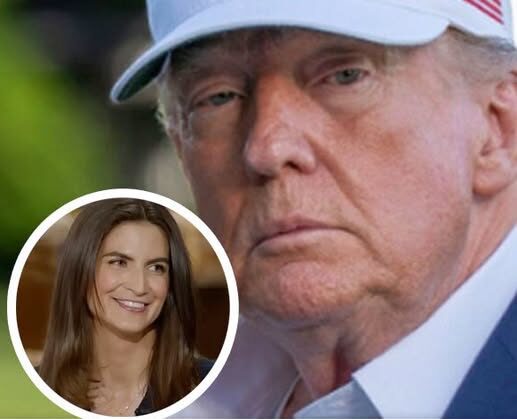
Kaitlan Collins Responds After Trump Targets Her Award and Tells Her to “Smile More”
The CNN Journalist Addresses the Public Remarks
CNN journalist Kaitlan Collins has spoken publicly after Donald Trump criticized her during the White House Correspondents’ Dinner on Friday.
Trump questioned whether Collins deserved the journalism award she had received and repeatedly told her to smile while addressing the audience.
Collins, 34, was honored with the 2026 White House Correspondents’ Association award for broadcast journalism.
The recognition was connected to her reporting on Trump’s February 2025 meeting with Ukrainian President Volodymyr Zelensky.
During his speech, Trump dismissed the award and suggested it should not have been presented to her.
“She shouldn’t get the award,” he told the room.
“It was a fake, but I didn’t mind.”
Trump then shifted his attention to Collins’s expression and position at CNN.
“She never smiles. I said, ‘Kaitlan, do you ever smile?’ Smile. You have a nice position. You’re at CNN fake news. You should be a happy person. So smile, Kaitlan. Just smile.”
Collins did not respond from her seat while the remarks were being delivered.
Collins Says the Behavior Was Familiar
Collins discussed the incident during a Monday appearance on The Daily Show with Jon Stewart.
She explained that Trump’s comments themselves did not surprise her because she had encountered similar treatment while covering him in the Oval Office.
The unusual part, she said, was that the exchange took place before a much larger audience.
“This happens pretty regularly inside the Oval Office,” she told Stewart.
“This is just a bigger venue where it was happening. What was most surprising to me was the room was filled with a lot of his staffers, his cabinet, his allies, Republicans in Congress. It was so quiet.”
Her description suggested that the atmosphere inside the room stood out more than Trump’s criticism.
Many of the people attending were administration officials, political allies, cabinet members, and Republican lawmakers.
Despite the personal nature of Trump’s remarks, Collins recalled that the room remained notably silent.
Stewart jokingly asked whether the lack of reaction might have been a sign of respect for the president.
Collins responded dryly.
“Who’s to say.”
Why She Chose Not to Respond at the Dinner
Collins also explained why she did not react directly while Trump was speaking.
She said her reporting philosophy requires her to avoid becoming the center of the story, regardless of which president she is covering.
“I’ve always felt this, regardless of who’s the president, it’s really not about me and I don’t want it to be about me. If you let it become about that, then it becomes a back and forth between the two of us.”
Her decision reflected a desire to prevent the moment from becoming a personal dispute between a journalist and the president.
Responding publicly from the audience could have shifted attention away from the role of the press and toward an argument about personalities.
Instead, Collins remained composed and allowed the comments to stand without an immediate confrontation.
She later addressed the situation in a setting where she could explain her reasoning more fully.
A Message Shared After the Event
Following the dinner, Collins posted a quotation from Eleanor Roosevelt on Instagram.
“No one can make you feel inferior without your consent.”
The message appeared to reflect her response to being criticized in front of colleagues, administration officials, political figures, and members of the media.
In the accompanying caption, Collins emphasized that the most important part of the evening was drawing attention to the First Amendment and the importance of asking difficult questions.
Her post redirected the conversation away from the personal remarks and toward the broader responsibilities of journalists.
For Collins, the evening represented more than an uncomfortable exchange.
It provided an opportunity to reinforce the value of a press corps willing to challenge powerful people and seek answers on matters of public importance.
The Award Recognized Her Zelensky Coverage
The award at the center of Trump’s comments honored Collins’s work as a broadcast journalist.
Her recognized reporting involved Trump’s meeting with Ukrainian President Volodymyr Zelensky in February 2025.
The White House Correspondents’ Association award acknowledged the journalistic value of that coverage.
Trump used his dinner speech to dispute the recognition rather than focusing only on the reporting itself.
By describing the award as undeserved and “fake,” he directly challenged the decision to honor Collins.
He also repeated his long-running criticism of CNN while telling her she should appear happier because of her prominent role at the network.
The repeated instruction to smile transformed the moment from criticism of her journalism into commentary about her appearance and demeanor.
A Larger Setting for a Familiar Exchange
Collins’s response indicated that contentious interactions with Trump have become a regular part of her White House coverage.
She has frequently asked direct questions in settings where the president controls the room and determines how much access reporters receive.
Her Daily Show remarks framed the dinner incident as an expanded version of exchanges that normally occur in a more limited space.
Inside the Oval Office, such comments might be witnessed by only a smaller group of officials and journalists.
At the Correspondents’ Dinner, they were delivered to an audience filled with political leaders, administration personnel, media professionals, and invited guests.
That difference made the quiet response inside the room especially noticeable to Collins.
The Risk of Becoming Part of the Story
Journalists who cover political leaders frequently face the challenge of responding when criticism becomes personal.
Collins indicated that engaging directly could create a cycle in which the reporter’s reaction becomes more prominent than the original issue.
Her approach was to avoid giving the exchange that kind of momentum.
By refusing to turn the speech into a public argument, she maintained focus on her professional role rather than allowing the interaction to become a prolonged personal conflict.
Her later explanation showed that silence in the moment did not mean she had ignored what happened.
Instead, she chose when and where to discuss it.
The Daily Show appearance allowed her to describe the atmosphere, explain the frequency of similar interactions, and clarify why she stayed quiet during the dinner.
Trump Also Focuses on Dylan Mulvaney
Collins was not the only public figure targeted during Trump’s remarks that evening.
He also mentioned transgender activist and influencer Dylan Mulvaney.
Trump compared Mulvaney with Collins while referring to the controversy surrounding Mulvaney’s 2023 sponsorship involving Bud Light.
“I thought Kaitlan had really made it big with a major new sponsorship, but then I was informed it wasn’t her on the Bud Light can, it was Dylan Mulvaney,” Trump said, before claiming Mulvaney had cost the brand $35 billion in market cap.
The comment connected two separate targets of his criticism through a joke about the advertising controversy.
Mulvaney later responded through a four-minute TikTok video.
She said being mocked by the administration was “the greatest compliment of all” because it placed her “in the company of some of the most brilliant, empathetic people in our world today.”
Mulvaney Reframes the Attack
Mulvaney’s response took a different approach from Collins’s restrained reaction at the dinner.
Rather than focusing on the insult itself, she reframed the attention as evidence that she belonged among other people who had been publicly targeted.
Her remarks presented the criticism as something that connected her with figures she viewed as intelligent and compassionate.
The response also ensured that Trump’s comments did not remain the final word on the exchange.
Both Collins and Mulvaney addressed their treatment without adopting the same tone or strategy.
Collins emphasized journalistic purpose and her refusal to make the story about herself.
Mulvaney described the criticism as an unexpected form of praise.
The Silence Inside the Room Draws Attention
Collins repeatedly returned to the quiet atmosphere surrounding Trump’s remarks.
Her comments suggested that the presence of powerful administration figures and political allies made the silence more striking.
Those attending included people who regularly work with Trump and support his political agenda.
While some might have expected laughter, applause, or a visible reaction, Collins described a room that remained unusually still.
That silence became an important part of how she remembered the moment.
It highlighted the difference between the spectacle of the speech and the restrained response of those listening.
Stewart’s joking question gave Collins an opportunity to acknowledge the ambiguity without claiming to know what everyone in the room was thinking.
Her answer, “Who’s to say,” preserved the understated tone she had used throughout the interview.
Keeping the Focus on Press Freedom
Collins’s public response ultimately centered on the work of journalism rather than the personal insult.
Her social media message stressed the importance of the First Amendment and the need for reporters to ask uncomfortable questions.
That framing positioned the award as recognition of reporting conducted in a challenging political environment.
It also rejected the idea that a journalist’s value should be judged by whether she smiles while asking difficult questions.
Collins made clear that her responsibility is not to create a comfortable interaction with the president.
Her role requires her to seek answers, document events, and maintain enough distance to avoid becoming the subject of the coverage.
A Public Moment Handled Without a Public Confrontation
The Correspondents’ Dinner placed Collins in an unusual position.
She had just been recognized for her work when the president used his speech to challenge the award and criticize her personally.
Rather than responding from the room, she waited until a later interview to explain how she viewed the incident.
Her response suggested that she regarded Trump’s remarks as part of a familiar pattern rather than an extraordinary attack.
The scale of the event, however, made the moment different from the encounters she regularly experiences while reporting inside the White House.
Collins’s decision not to react immediately kept the dinner from becoming a direct confrontation.
Her later comments shifted the focus back to the purpose of political journalism and the responsibility to continue asking questions even when those questions provoke hostility.
The episode also revealed two different methods of responding to public ridicule.
Collins relied on professional distance, a carefully chosen quotation, and an explanation of her reporting principles.
Mulvaney responded by transforming the criticism into a statement of pride and solidarity.
Both responses rejected the intended humiliation while refusing to let the remarks define them.
For Collins, the central issue remained larger than the award, the dinner, or the demand that she smile.
It was about ensuring that journalists remain willing to ask difficult questions without allowing personal attacks to distract from their work.