
Three Emergency Ways to Open a Can Without a Can Opener
Simple Methods Using a Spoon, a Sturdy Surface, or a Kitchen Knife
Picture yourself camping far from the nearest store when hunger suddenly sets in.
You search through your supplies and find a can of food, only to realize that the can opener was left at home.
It is an inconvenient situation, but it does not necessarily mean the meal is impossible to reach.
Several ordinary objects can be used to open a metal can during an emergency. A strong spoon, a rough concrete surface, or a sturdy chef’s knife may help when no proper opener is available.
Each method requires patience and extreme caution because the cut lid may become sharp and uneven.
These techniques should be reserved for situations in which a standard can opener is unavailable.
Safety Comes Before the Food
Before attempting any emergency can-opening method, place the can on a stable surface whenever possible.
Do not hold it close to your face or body, and keep fingers away from the metal rim.
Improvised methods can leave sharp points on both the lid and the can. These edges may cause deep cuts if handled carelessly.
Protective gloves are helpful when available. A folded cloth may also provide some protection, but it should never be placed where it could slip into the opening.
Inspect the can before beginning. Do not eat food from a container that is swollen, leaking, badly rusted, severely dented around the seams, or producing an unusual smell.
Metal fragments, dirt, and concrete dust should be removed before the food is touched.

Opening a Can With a Metal Spoon
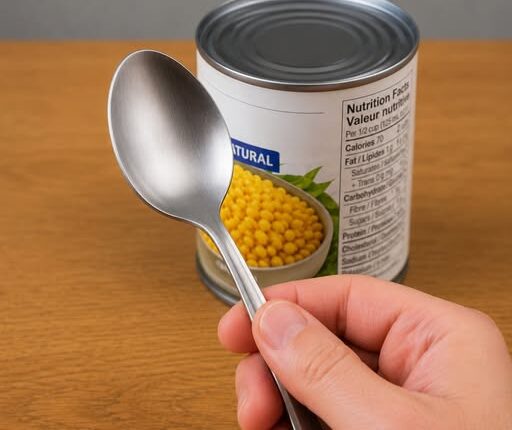
A sturdy metal spoon is one of the most practical emergency substitutes for a can opener.
Thin plastic spoons and lightweight disposable utensils will not be strong enough for this method.
Place the can on level ground, a picnic table, or another stable surface. Hold it firmly with one hand while keeping your fingers below the top rim.
Turn the spoon so that the rounded bowl faces upward and the tip rests against the inside edge of the lid.
Choose one small section along the sealed rim.
Grip the spoon firmly and rub its tip back and forth over the same spot. Use a short, controlled motion rather than striking the lid.
The repeated friction gradually weakens the thin metal.
Continue pressing until the spoon creates a small opening.
Once the first puncture appears, insert the tip slightly and begin working along the rim.
Use the spoon to enlarge the opening a little at a time.
Continue around most of the lid, leaving a small section attached if possible. This can make the lid easier to control and reduce the chance that it falls into the food.
Use the spoon to lift the loosened metal carefully.
Do not place bare fingers beneath the lid. The newly opened edge can be extremely sharp.
Why the Spoon Method Works
The lid of a can is usually thinner near the sealed rim than it is across the center.
Concentrated rubbing wears through that thinner area and creates enough space to begin separating the lid.
A spoon is relatively easy to control because it does not have a sharpened blade.
That does not make the process completely safe, but it generally offers more stability than attempting to cut the can with an unsuitable object.
The method may require several minutes, especially if the spoon is rounded or the lid is made from thicker metal.
Patience is safer than applying sudden force.

Common Mistakes When Using a Spoon
One mistake is attempting to puncture the center of the lid.
The stronger central area can be difficult to penetrate and may cause the spoon to slip unexpectedly.
Another mistake is moving rapidly around the rim before the first spot has weakened.
Focus on one area until a clear opening develops.
Do not grip the can around the top edge. Keep the supporting hand around the sides or lower portion of the container.
Avoid using a valuable or decorative spoon because the process may bend or scratch it.
Using a Rough Concrete Surface
A flat piece of concrete or a rough stone can also help open a can.
This method works by wearing away the raised metal seam that holds the lid in place.
Choose a clean, stable surface that is rough enough to create friction.
Turn the can upside down so that the top rests directly against the concrete.
Hold the can securely and rub it back and forth using short movements.
Do not strike or smash the container. The goal is to grind down the raised rim gradually without crushing the can.
After several passes, stop and inspect the top.
Moisture beginning to appear around the seam may indicate that the metal seal has become thin enough.
Turn the can upright and wipe away all dust and debris from the lid.
Press gently against the sides of the can. If enough of the seam has been removed, the top may loosen and begin to lift.
Use a clean utensil to raise the lid rather than placing fingers near the weakened edge.

Keeping Dirt Out of the Food
The concrete technique creates more contamination risk than the spoon method.
Dust, grit, and small particles can collect around the opening while the can is being rubbed.
Clean the top carefully before allowing the lid to fall inward.
A small amount of clean water may be used to rinse the outside if sufficient drinking water is available.
Do not rinse the opened food with untreated river, lake, or stream water.
If visible metal fragments or debris enter the food and cannot be removed safely, the meal should not be eaten.
What Surface Works Best
A flat concrete slab usually provides the most consistent friction.
A broad, rough rock may also work if it does not move while pressure is applied.
Avoid unstable stones, sharp rocks, or surfaces covered in oil, chemicals, animal waste, or other contamination.
Very smooth surfaces may not wear down the rim effectively.
Extremely jagged concrete can tear the can unpredictably, so a moderately rough and level area is preferable.

Using a Chef’s Knife Only With Extreme Care
A chef’s knife may open a can, but it is the riskiest of the three methods.
The blade can slip, and the force required may cause a serious hand injury.
The spoon or concrete method should generally be attempted first.
Never use the sharp tip of the knife as though it were an ice pick. A narrow point can slip suddenly or break.
Place the can on a stable, level surface rather than holding it in the air.
Grip the knife firmly by the handle.
The strongest part of a chef’s knife is the heel, located at the lower rear of the blade near the handle.
Position that section carefully against the inner edge of the lid while keeping the cutting edge directed away from the body.
Apply slow, controlled downward pressure to create a small opening.
Lift the knife completely before repositioning it. Do not slide the blade around the rim while it remains inserted.
Repeat the process in nearby locations until enough of the lid has loosened.
Use a spoon or another blunt object to lift the metal once the opening is large enough.
Knife Safety Is Essential
Do not hold the can in one hand while forcing a knife into it with the other.
If the knife slips, the supporting hand may be directly in its path.
Keep everyone else away from the immediate area while the method is being attempted.
Do not use a folding knife that may close unexpectedly.
Do not place a finger on the sharpened edge of the blade.
Stop if the surface is wet, unstable, or too dark to see the position of the knife clearly.
A delayed meal is safer than a serious cut far from medical assistance.
Handling the Open Lid
Regardless of the method used, assume that every exposed metal edge is sharp.
Do not run a finger around the opening to check whether the lid is fully separated.
Use a spoon, fork, pliers, or another tool to bend the lid away from the food.
Leave one section attached when possible. A completely detached lid may fall into the food or become difficult to handle safely.
Once the can is open, place the lid where no one can step on it.
Do not leave it on a campsite, trail, or picnic area.

Check the Food Before Eating
Improvised opening can damage the protective interior coating of the can or introduce particles into the food.
Examine the contents carefully.
Look for metal shavings, pieces of rust, stones, dirt, or other foreign material.
Discard food that smells unusual, sprays liquid when opened, appears spoiled, or has come from a damaged container.
If the food looks normal and the opening is clean, transfer it to another container when one is available.
This reduces the chance of touching the sharp rim while eating.
Why a Proper Can Opener Is Still Best
Emergency techniques are useful, but none is as safe or convenient as a standard can opener.
A basic manual opener is lightweight, inexpensive, and easy to include in camping equipment or an emergency kit.
Some multi-tools also include a small can-opening attachment.
Before leaving home, test the opener to confirm that it works and is not badly rusted.
Keeping a spare opener with stored food can prevent unnecessary risk during power outages, storms, travel delays, and outdoor emergencies.
Building a More Reliable Emergency Food Kit
An emergency kit should contain foods that can be opened easily.
Pull-tab cans, sealed pouches, dried food, and individually wrapped items can reduce dependence on special tools.
A small kit may also include a spoon, protective gloves, clean cloths, drinking water, and basic first-aid supplies.
Store the can opener directly with the canned food rather than in a separate drawer or backpack compartment.
When camping, consider attaching a compact opener to a key ring or cooking kit.
Choosing the Safest Method Available
The spoon method is usually the most controlled choice when a strong metal spoon is available.
The concrete method can work without utensils, but the top must be cleaned carefully before opening.
The chef’s knife technique should be treated as a last resort because it introduces a greater risk of slipping and injury.
Whatever method is chosen, move slowly and maintain control.
Do not allow hunger, frustration, or pressure from others to encourage rushed movements.
Resourcefulness Without Unnecessary Risk
Knowing how to improvise can be valuable during camping trips, emergencies, and unexpected situations.
A forgotten can opener does not always mean that canned food must remain sealed.
A metal spoon can gradually wear through the lid, while a rough surface can weaken the outer seam.
A sturdy kitchen knife may also work, but only when used with careful positioning and strict attention to safety.
These methods are not party tricks and should not replace ordinary kitchen tools.
They are emergency options intended for moments when no safer alternative is available.
The most important goal is not simply opening the can.
It is reaching the food without causing an injury that turns a small inconvenience into a genuine emergency.