
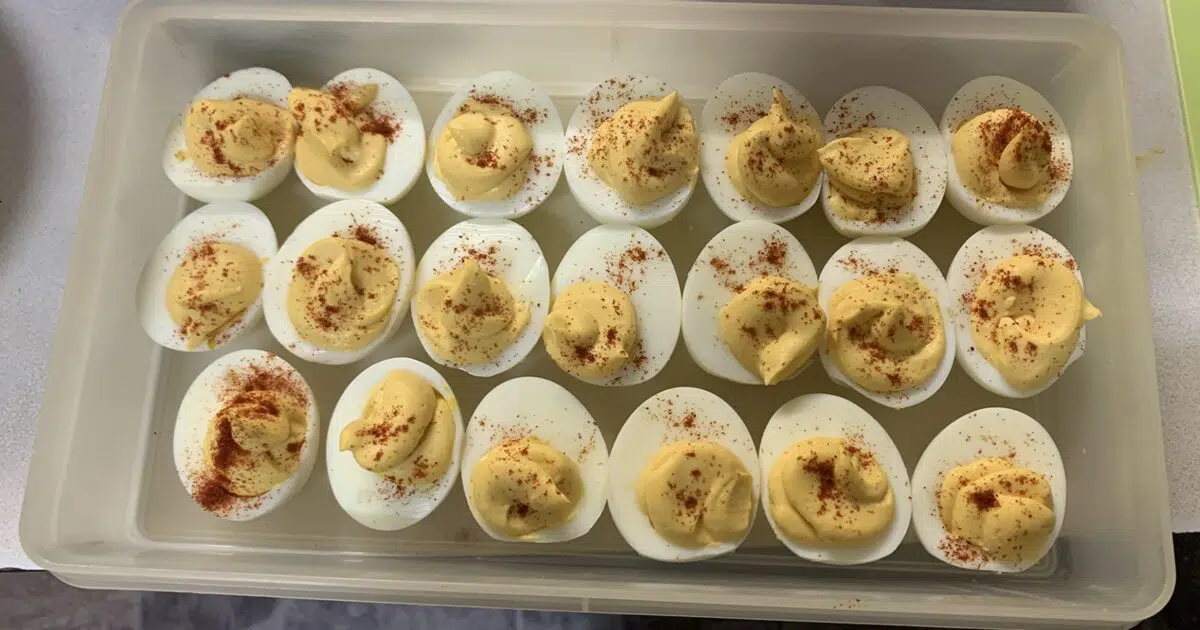
Martha Stewart’s Creamy Deviled Eggs Deliver a Smooth, Tangy Filling With a Gentle Kick
A Reliable Favorite for Any Time of Day
Deviled eggs are one of those dishes that can disappear almost as quickly as they are prepared. They work as a simple breakfast, a quick snack, a party appetizer, or an easy addition to dinner.
In some households, they are more than an occasional treat. They are a regular request, especially among children who enjoy the creamy filling and mild, familiar flavor.
After making deviled eggs repeatedly, it is easy to assume there is little left to improve. The basic process appears straightforward: boil the eggs, remove the yolks, mix the filling, and spoon it back into the whites.
Martha Stewart’s creamy version shows how a few carefully balanced ingredients can make a noticeable difference. The filling combines mayonnaise, Dijon mustard, white-wine vinegar, minced shallot, and hot sauce to create a smooth mixture with acidity, richness, and a small amount of heat.
The recipe is also uncomplicated enough for everyday preparation. It does not require unusual equipment or a long list of ingredients, making it suitable for both experienced cooks and beginners.
Why the Cooking Method Matters
The filling may receive most of the attention, but properly cooked eggs are the foundation of the recipe. If the whites are damaged during peeling, the finished eggs can become difficult to fill and less attractive when served.
Eggshells sometimes cling tightly to the cooked whites. Pulling them away can leave dents, tears, and uneven surfaces that make the eggs look rough rather than smooth.
A carefully timed cooking process followed by immediate cooling can make peeling easier. The method begins with eight large eggs placed in a medium saucepan.
The eggs should be covered with cold water. The water level needs to rise roughly one inch above the eggs so they cook evenly while the temperature increases.
The pan is then heated until the water reaches a full boil. A strong boil is important at this stage rather than a few small bubbles around the edge of the pan.
Once the water boils, the cooking process must be controlled carefully. The water is maintained at a steady simmer for 30 seconds before the pan is covered.
The covered eggs remain in the hot water for exactly 13 minutes. Following the timing closely helps produce yolks that are completely cooked without becoming excessively dry.
Accurate timing also supports the texture of the final filling. Yolks that are cooked properly are easier to mash and blend with the other ingredients.

Cooling the Eggs Quickly
When the 13 minutes have passed, the hot water should be poured away immediately. The eggs are then transferred into very cold water with ice cubes.
This ice bath stops the residual heat from continuing to cook the eggs. Without rapid cooling, the yolks can become firmer than intended while the eggs remain hot inside their shells.
The temperature change also helps the shells separate from the whites. Once the eggs have cooled completely, they can usually be peeled with less tearing and fewer damaged areas.
Running cold water can also assist during the cooling and peeling stages. Water slipping beneath the shell may help release stubborn fragments from the egg white.
Patience is useful when peeling. Gently tapping the shell and removing it in small sections can protect the egg’s shape and create smooth halves for serving.
After peeling, each egg should be checked for small pieces of shell. Even a tiny fragment can be unpleasant when someone bites into the finished dish.
Ingredients for the Creamy Filling
While the eggs are cooling, the filling can be prepared. This saves time and allows the flavors to begin combining before the cooked yolks are added.
The mixture starts with ⅓ cup light mayonnaise. The mayonnaise provides the creamy base and helps transform the yolks into a soft filling that can be spooned or piped easily.
One tablespoon of Dijon mustard adds a sharper flavor. Its tanginess cuts through the richness of the mayonnaise and yolks without overpowering the entire mixture.
One teaspoon of white-wine vinegar increases the acidity. This small amount brightens the filling and prevents it from tasting too heavy.
One tablespoon of minced shallot introduces a mild onion flavor and a delicate texture. Finely mincing the shallot is important because large pieces can interrupt the smooth consistency.
A quarter teaspoon of hot sauce adds gentle heat. Tabasco can be used, although the amount is small enough that the filling remains approachable rather than intensely spicy.
Salt and freshly cracked pepper are added according to taste. Because mayonnaise, mustard, and hot sauce already contain strong flavors, it is best to season gradually.
Balancing Creaminess, Acidity, and Heat
The strength of this recipe comes from the way the ingredients support one another. The mayonnaise creates richness, while the mustard and vinegar keep that richness from becoming overwhelming.
The hot sauce contributes warmth and additional acidity. At only a quarter teaspoon, it is intended to wake up the flavors rather than dominate them.
The shallot is particularly important because it adds more than seasoning. Its mild crunch gives the filling a subtle contrast while making the recipe feel more refined.
All of the filling ingredients should be mixed thoroughly in a bowl before the yolks are added. This helps distribute the hot sauce, mustard, vinegar, and seasonings evenly.
Tasting the mixture after the yolks are incorporated is the easiest way to determine whether it needs more salt or pepper. Adjustments should be small so the original balance remains intact.

Preparing the Egg Whites
Once the eggs are cold and peeled, they should be sliced in half lengthwise. A clean, sharp knife helps create even halves and reduces the chance of tearing the whites.
The yolks can then be removed and placed in the bowl containing the prepared filling ingredients. Pressing gently on the back of each egg half often helps release the yolk without damaging the white.
The empty whites act as small serving cups. They should be placed carefully on a plate or tray while the filling is completed.
If the whites slide around, they can be arranged on a serving platter with shallow grooves or positioned closely enough that they support one another. Keeping them stable makes filling and serving easier.
Any torn or uneven whites can still be used. They may not look perfect, but the flavor remains the same.
Creating a Smooth Filling
The cooked yolks should be mashed into the mayonnaise mixture with a fork. Continue mixing until no large pieces remain.
A smooth filling is easier to distribute and gives the deviled eggs a creamy texture. Visible lumps can make piping difficult and may cause the filling to appear uneven.
The mixture should be thick enough to hold its shape but soft enough to spoon or pipe. The measured mayonnaise and liquid ingredients are designed to create that consistency.
Overmixing is generally less of a concern than undermixing. Taking an extra moment to press the yolks against the side of the bowl can help eliminate stubborn pieces.
Once the filling is smooth, it can be tasted and adjusted. A small amount of salt, pepper, mustard, or hot sauce may be added, but changes should be made carefully.
Spooning or Piping the Filling
A spoon is the quickest tool for filling the egg whites. Small portions can be placed into the center of each half and shaped gently with the back of the spoon.
For a more polished presentation, the filling can be transferred to a piping bag. A decorative tip can create ridges and give the eggs a more formal appearance.
A sandwich bag offers a simple alternative when a piping bag is unavailable. The filling can be placed inside, pushed toward one corner, and piped through a small opening cut into the tip.
The opening should not be too large. A smaller cut provides greater control and makes it easier to divide the filling evenly among all 16 egg halves.
Each white should receive a generous amount. Piling the filling slightly above the edge creates the familiar deviled egg appearance and ensures every bite contains enough of the creamy mixture.
Simple Garnishes for the Finished Eggs
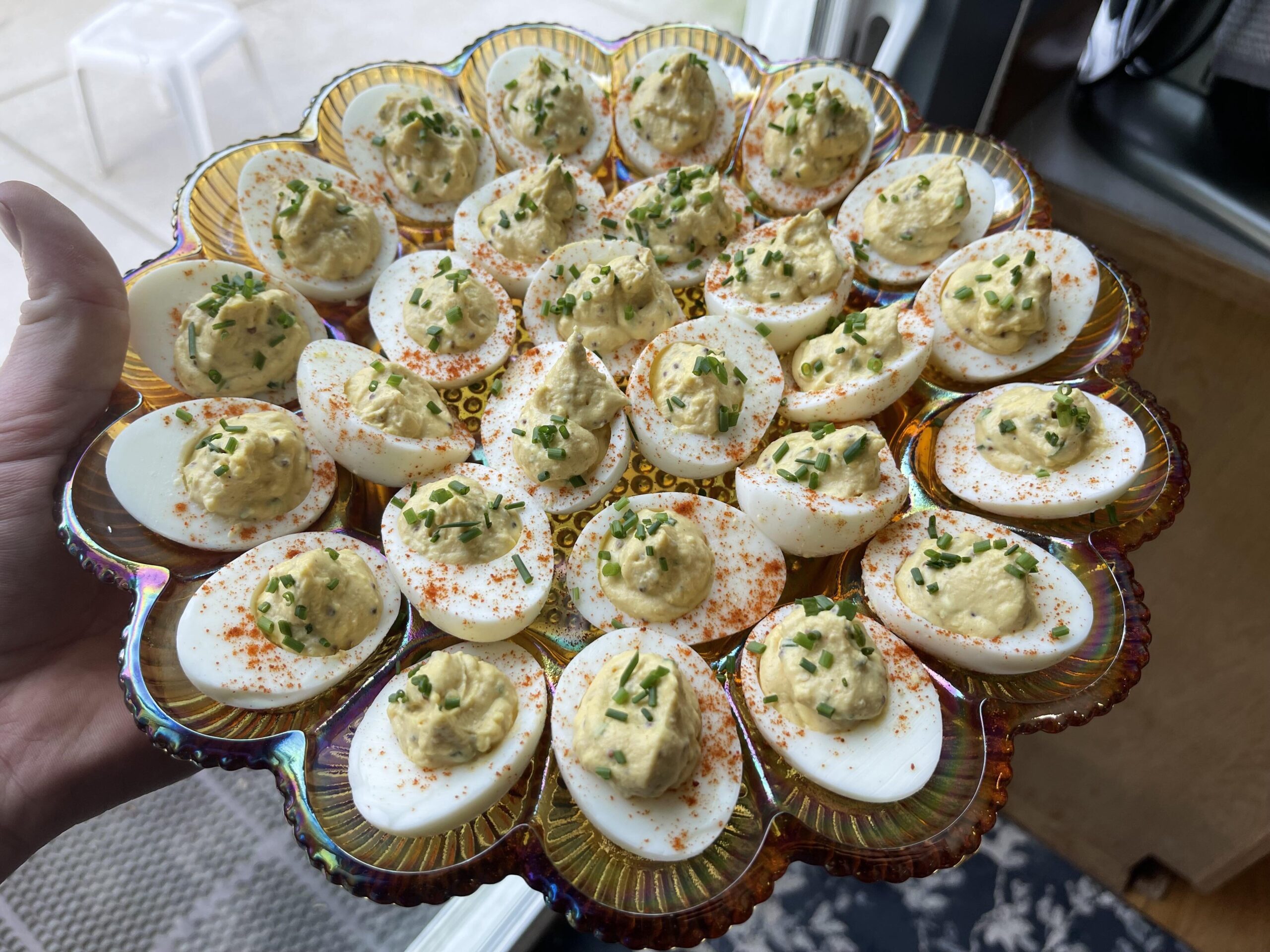
Paprika is the traditional finishing touch. A light sprinkle adds color and gives the deviled eggs their recognizable presentation.
Only a small amount is needed. Too much paprika can cover the creamy surface and compete with the balanced flavors in the filling.
Chopped chives can be added for freshness and a mild onion note. Their green color also creates a clean contrast against the pale filling.
Crispy bacon pieces are another possible topping. They add saltiness, crunch, and a smoky element that works well with the mayonnaise and mustard.
The eggs can be served immediately or chilled until needed. Keeping them refrigerated helps the filling remain firm and fresh.
What Makes This Version Stand Out
Many deviled egg recipes rely heavily on mayonnaise, which can result in a filling that tastes overly rich. This version uses enough mayonnaise for creaminess while allowing the other ingredients to remain noticeable.
The white-wine vinegar and Dijon mustard provide different forms of tanginess. Together, they give the filling a lively flavor without making it sour.
The hot sauce adds just enough spice to create interest. Because the quantity is limited, it can still appeal to people who do not enjoy strongly spicy food.
The minced shallot separates the recipe from simpler versions. It brings mild sharpness and texture without requiring complicated preparation.
The finished eggs are creamy, tangy, lightly spicy, and easy to eat. That combination makes them suitable for casual family meals as well as parties, picnics, and larger gatherings.
Ways to Adjust the Basic Recipe
The recipe provides a dependable base that can be changed according to personal preference. Small additions allow the flavor to shift without replacing the main structure.
A little pickle juice can be mixed into the filling for additional tanginess. Because it adds liquid, it should be introduced gradually to avoid making the mixture too loose.
Sriracha can replace the regular hot sauce. This creates a different type of heat and may add a slightly fuller flavor.
Crumbled bacon can be mixed into the filling or sprinkled over the top. Adding it at the last moment helps preserve its crisp texture.
Other adjustments should remain moderate so the filling stays balanced. The appeal of the original recipe comes from its simplicity and controlled proportions.
An Easy Recipe Worth Repeating
Martha Stewart’s creamy deviled eggs show that a familiar dish can be improved through accurate cooking, quick cooling, and a well-balanced filling. None of the individual steps are difficult, but each one contributes to the final result.
The 13-minute resting time helps cook the yolks properly. The ice bath stops the cooking process and makes the eggs easier to peel.
Mayonnaise provides creaminess, while Dijon mustard and white-wine vinegar add brightness. Shallot introduces texture, and hot sauce supplies a restrained kick.
The recipe can be prepared for a family snack, a holiday table, a picnic, or a casual gathering. It is simple enough to make regularly but flavorful enough to feel special.
Once the technique becomes familiar, the eggs can be assembled quickly and customized with paprika, chives, bacon, pickle juice, or a different hot sauce. The result is a versatile dish that can easily become a household favorite.