
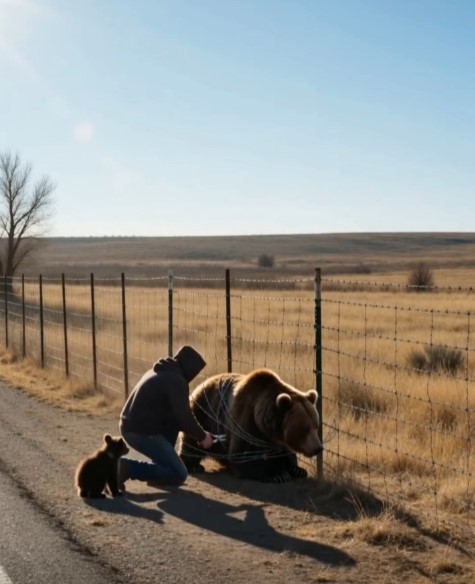
Bear Cub Refuses to Leave After Its Mother Becomes Trapped in Barbed Wire
A Troubling Scene Beside a Quiet Forest Road
A young grizzly bear remained close to the roadside, refusing to move away from its mother as vehicles occasionally passed through the quiet rural area.
Only a short distance away, the adult bear had become tangled in a damaged section of barbed wire fencing near the edge of the forest. The wire prevented her from returning to the trees and made every attempt to move increasingly difficult.
The cub stayed nearby, repeatedly looking toward its mother before turning its attention toward the road. Although it appeared uncertain about the passing vehicles, it would not abandon the trapped bear.
The mother remained alert throughout the ordeal. Despite being unable to move freely, she continued watching the cub and monitoring everything happening around them.
The pair had been traveling together through the woodland earlier that morning. They were moving through familiar territory in search of berries and fresh water when their route brought them close to an old fence separating the forest from nearby land.
Much of the damaged wire was concealed by tall grass. From the bears’ position, the dangerous section would have been difficult to notice before it was too late.
The Wire Tightened as the Bear Struggled
As the mother bear stepped through the grass, part of her body became caught in the barbed wire. Her first reaction was to pull backward and escape the obstacle.
Instead of releasing her, the movement caused the wire to tighten. The sharp material wrapped more firmly around her and further restricted her ability to move.
The bear made several attempts to free herself. Each effort risked making the situation worse, and she eventually stopped struggling.
Remaining still reduced the chance that the fencing would tighten further. It also allowed her to conserve energy while continuing to watch over the cub.
The youngster did not understand how to release its mother, but it appeared unwilling to travel deeper into the forest alone. It waited near her and occasionally made soft sounds in her direction.
For a young bear dependent on its mother, leaving the area would have meant entering the forest without protection or guidance. The cub instead remained beside the road, creating the unusual sight that eventually attracted attention.
Passing Drivers Initially Missed the Emergency
Traffic along the road was light, and several vehicles passed without recognizing what was happening beyond the shoulder.
The mother bear was partly hidden by vegetation, while the cub’s small size made it easy to overlook from a moving vehicle. To an unsuspecting driver, the animal may have appeared to be standing near the forest temporarily.
The seriousness of the situation was not immediately obvious. The damaged fence blended into the surrounding grass, and the adult bear could not easily be seen from every angle.
The cub continued looking between the road and its trapped mother. Its refusal to leave the same location eventually made one passing ranger realize that something was wrong.
A Park Ranger Notices the Waiting Cub
A park ranger traveling through the area spotted the young bear standing unusually close to the road. Rather than following its mother into the trees, the cub remained in place and appeared focused on something beyond the shoulder.
The ranger immediately reduced speed and parked at a safe distance. Approaching without understanding the situation could have placed both the person and the bears in danger.
Using binoculars, the ranger observed the area carefully. From that protected position, the reason for the cub’s behavior quickly became clear.
The adult grizzly was caught in the barbed wire and could not move away. The cub had remained close because its mother was trapped.
The ranger understood that attempting an immediate rescue alone would be extremely unsafe. Grizzly bears are powerful wild animals capable of reacting defensively when frightened, injured, or unable to escape.
The presence of a cub made the situation even more sensitive. A mother bear may become especially protective when she believes her offspring is threatened.
Why Bystanders Should Never Approach a Trapped Bear
A bear caught in fencing may appear exhausted or calm, but that does not mean it is safe to approach. A frightened animal can react suddenly when a person enters its space.
Even a well-intentioned attempt to cut the wire could increase the bear’s panic. The animal might struggle more violently, tighten the fencing, or turn toward the person trying to help.
People who discover a bear trapped in wire, netting, or another obstacle should remain far away. They should never try to touch, feed, calm, or release the animal themselves.
The safest response is to contact wildlife authorities and provide an accurate description of the location. Trained professionals have the equipment and experience needed to manage dangerous wildlife emergencies.
Keeping other people and vehicles away is also important. Crowds, loud voices, and repeated movement can increase the animal’s stress and interfere with the rescue.
Helping wildlife responsibly sometimes means resisting the urge to step closer. In this situation, distance protected the ranger, the rescue team, the mother bear, and the cub.
The Area Is Secured Before Help Arrives
After confirming that the mother bear was trapped, the ranger contacted wildlife officers experienced in handling large mammals.
The road was managed carefully while the team traveled to the location. Vehicles were redirected so drivers would not stop near the bears or place themselves in danger.
The ranger continued observing from a safe distance. The goal was to make sure no one approached while also monitoring the condition of the animals.
Throughout the wait, the cub remained beside its mother. It occasionally looked toward the ranger’s position but did not move far from the adult bear.
The mother also watched the surrounding area closely. Although she had stopped struggling against the wire, she remained fully aware of the activity near the road.
By keeping the scene quiet, the ranger helped prevent additional stress before the trained responders arrived.
A Specialized Wildlife Team Develops a Rescue Plan
The rescue team arrived with equipment designed for working around large and potentially dangerous animals. Before moving closer, the responders studied the fence, the bear’s position, and the surrounding terrain.
They needed to determine how the wire was wrapped around the animal and which sections could be loosened safely. Cutting the wrong piece first could have caused the remaining wire to tighten.
The team also considered the position of the cub. Any sudden movement from the youngster could affect the mother’s behavior and change the level of risk.
Every stage of the rescue had to be planned carefully. The responders wanted to free the bear while keeping human movement, noise, and stress to a minimum.
Specialized safety equipment allowed them to work methodically without standing unprotected beside the animal. Clear communication between team members was essential.
The rescue could not be rushed. Although the bear needed help, moving too quickly could have increased the danger for everyone involved.
The Wire Is Removed One Section at a Time
Once the plan was in place, the rescuers carefully positioned themselves and began loosening the barbed wire.
They worked on one section at a time, using calm and deliberate movements. Each responder remained aware of the bear’s reactions and the location of the cub.
The team communicated quietly throughout the process. Loud instructions or sudden motions could have startled the mother and caused her to struggle again.
After several patient minutes, the first section of wire was released. The rescuers then moved to the next point where the fence remained caught.
Another section came free, gradually reducing the pressure around the bear. The mother remained in place as the team continued working.
Finally, the last piece of wire was removed. The bear was no longer attached to the damaged fence.
The Mother Bear Stands and Turns Toward Her Cub
After being freed, the adult grizzly slowly stood. The rescue team did not approach her or attempt to guide her toward the forest.
Instead, everyone remained still and allowed the bear to decide when and where to move. Giving her space was essential now that she had regained her freedom.
The mother paused briefly before turning toward the cub. The youngster immediately hurried to her side.
For a moment, the two bears stood together near the roadside. The cub that had waited throughout the rescue was finally reunited with its mobile and unhindered mother.
The pair then began walking calmly toward the forest. The rescuers remained where they were and avoided making any movement that could be interpreted as pursuit.
Within seconds, the mother and cub disappeared among the trees. The quiet woodland had taken them out of sight once again.
The Damaged Fence Is Repaired
The rescue did not end when the bears entered the forest. The team remained at the location to address the hazard that had caused the emergency.
Responders inspected the damaged fence and repaired the section where the mother bear had become trapped. Loose pieces of barbed wire were also removed from the surrounding grass.
Leaving the material in place could have endangered another animal traveling along the same route. Deer, bears, and other wildlife may move through the area without seeing wire hidden among vegetation.
Old fencing can become especially dangerous when it collapses, breaks, or becomes partially buried. What once marked a property boundary may later turn into an almost invisible trap.
Repairing the fence helped reduce the possibility that the same emergency would happen again.
Discarded Materials Can Endanger Wildlife
Animals moving through natural habitats do not always recognize human-made obstacles. Wire, netting, plastic, and damaged fencing can become entangled around their bodies.
Once caught, an animal’s instinctive struggle may make the situation worse. Material can tighten, restrict movement, or prevent the animal from reaching food, water, shelter, or its young.
Regularly inspecting fencing near forests and wildlife corridors can help identify dangerous sections before an animal becomes trapped.
Loose wire should be secured or removed, and damaged barriers should be repaired promptly. Materials that are no longer needed should not be left in tall grass or wooded areas.
Preventive action is often safer and easier than organizing an emergency wildlife rescue after an animal has already become entangled.
How to Respond When Wildlife Needs Help
Anyone who encounters an injured or trapped wild animal should begin by keeping a safe distance. The animal may be frightened, in pain, or unable to escape, making its behavior difficult to predict.
The location should be reported to the appropriate wildlife authorities as quickly as possible. Clear information about nearby roads, landmarks, and the type of obstacle can help responders prepare.
People should avoid surrounding the animal or recording it from close range. Additional attention may increase stress and create more danger.
Children and pets should be kept away from the scene. Drivers should continue moving unless authorities direct them to stop or use another route.
Wildlife professionals can determine whether specialized equipment, veterinary support, or other measures are needed. Their training allows them to balance human safety with the welfare of the animal.
The Cub’s Patience Helped Reveal the Emergency
The young bear could not cut the wire or call for assistance, but its refusal to leave drew attention to the hidden problem.
Had the cub disappeared into the forest, passing drivers might not have noticed the trapped mother as quickly. Its unusual roadside behavior encouraged the ranger to slow down and investigate.
The cub remained close throughout the long wait and the careful rescue. It watched as strangers entered the area but continued focusing on its mother.
Once the final wire was removed, the cub immediately returned to her side. Their reunion marked the successful end of a tense situation that could easily have become more dangerous.
A Quiet Road Returns to Normal
As evening approached, the activity around the roadside gradually ended. The vehicles had moved away, the damaged fence had been repaired, and the loose wire had been removed.
The mother bear was no longer trapped, and the cub no longer needed to wait beside the road.
The incident demonstrated why wildlife rescues involving large animals must be handled by trained professionals. The ranger’s decision to observe from a distance and contact the proper team allowed the rescue to proceed without unnecessary risk.
It also showed how everyday human structures can create unexpected dangers for animals moving through their habitat.
Sometimes the most responsible way to help is not to intervene personally. Recognizing the emergency, protecting the area, and contacting experienced responders can make the greatest difference.
Somewhere beyond the repaired fence, the grizzly bear and her cub continued their journey through the forest together.
Grizzly bear by a barbed wire fence while its cub stays on the road pic.twitter.com/0X5fL19wuk
— Animal Rescue Stories (@AnimalStory5) July 14, 2026