
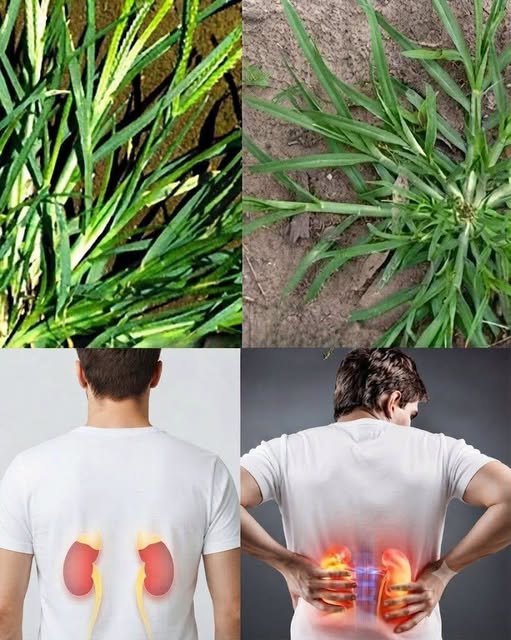
Goosegrass: The Common “Weed” With a Long History in Traditional Herbal Use
Its Folk Reputation Is Fascinating, but Modern Research Has Not Established It as a Proven Cure
Goosegrass has spent much of its history being treated as an inconvenience.
It climbs over neighboring plants, catches on clothing, clings to animal fur, and frequently appears in gardens, fields, hedges, and disturbed ground without being invited.
Generations of gardeners have pulled it from the soil and discarded it without giving the plant another thought.
Yet goosegrass has also occupied a very different place in traditional life.
In some households, its stems and leaves were gathered, dried, steeped in water, or incorporated into folk preparations passed from one generation to another.
Those practices gave an ordinary-looking plant a place in community memory long before laboratories began studying its chemical composition.
Today, renewed interest in herbal traditions has brought goosegrass back into public discussion.
However, its story needs to be approached carefully.
Traditional use can offer valuable historical and cultural information, but it does not automatically prove that a plant safely or effectively treats disease.
“Goosegrass” Can Refer to More Than One Plant
One of the first difficulties surrounding goosegrass is its common name.
Different plants may be called goosegrass in different regions.
The plant most closely associated with European herbal traditions and homemade teas is generally Galium aparine, also commonly called cleavers, catchweed bedstraw, stickyweed, or sticky willy.
Galium aparine belongs to the Rubiaceae family and is recognized as a widespread annual plant across temperate regions. It is native across parts of Eurasia and has spread widely elsewhere, including areas of North America, Australia, and New Zealand.
Another unrelated grass, Eleusine indica, is also called goosegrass in some countries.
That difference matters because plants sharing a common name may have entirely different botanical identities, chemical components, traditional uses, and safety profiles.
Anyone researching or considering a plant preparation should begin with an accurate scientific identification rather than relying on the common name alone.
Why Galium Aparine Is So Easy to Recognize
Galium aparine is known for its long, weak stems that climb over other vegetation rather than standing upright independently.
Its leaves grow in circular arrangements around the stem, and tiny hooked structures allow the plant to attach itself to fabric, hair, and fur.
This clinging quality explains many of its familiar common names.
Children sometimes throw pieces of it onto one another’s clothing, while pet owners may discover its stems or fruits attached to an animal after a walk through overgrown ground.
The plant produces small flowers and rounded fruits that can also cling to passing animals.
Its ability to spread efficiently helps explain why it is often classified as a troublesome agricultural or garden weed.
Heavy growth can interfere with crops, and its seeds may be difficult to separate from harvested material.
A Plant That Survived Through Ordinary Knowledge
For many communities, plant knowledge was once part of daily survival.
Before modern clinics, pharmacies, and transportation became widely accessible, families often relied on locally available materials for food, comfort, and household care.
Knowledge was learned through observation and repetition.
One person showed another which plants appeared during a particular season, which parts were traditionally collected, and how they were prepared.
Those practices were not necessarily recorded in formal medical texts.
They were preserved through conversation, family routines, and community experience.
Goosegrass became part of this inherited tradition because it was common, recognizable, and readily available.
Its cultural importance therefore cannot be measured only by whether every historic claim eventually receives scientific confirmation.
The act of collecting and sharing the plant also represented continuity, resourcefulness, and trust in knowledge passed down by older generations.
Traditional Use Is Not the Same as Clinical Proof
It is easy for online health articles to transform an old herbal practice into a dramatic medical claim.
A plant may have been used traditionally for a particular purpose without ever being tested in rigorous human clinical trials.
Traditional use can help researchers identify interesting plants and compounds, but it does not determine the correct dose, long-term safety, effectiveness, or potential interactions with medication.
Laboratory findings also need careful interpretation.
A substance that affects cells in a dish may behave differently inside the human body.
An effect observed in animals does not establish that the same result will occur safely in people.
Research involving isolated plant extracts may also use concentrations far different from anything obtained through an ordinary homemade tea.
For these reasons, goosegrass should not be described as a miracle cure.
What Researchers Have Studied
Scientific interest in Galium aparine has included examination of its natural chemical constituents and possible biological activity.
Published experimental work has explored properties such as antioxidant, antimicrobial, liver-related, and wound-healing activity.
However, much of this research remains laboratory-based or involves animal models rather than large, well-controlled human trials.
One animal study examined a Galium aparine preparation in rats exposed to acetaminophen-related liver injury.
Such a study may help researchers generate hypotheses, but it does not prove that drinking goosegrass tea can prevent or treat liver damage in humans.
Another study investigated antimicrobial, antioxidant, and wound-related effects under experimental conditions.
Again, those findings should not be interpreted as permission to apply an unidentified wild plant to an open wound or replace medical treatment for infection.
Natural Compounds Do Not Automatically Equal Medicine
Plants produce complex chemical mixtures that help them survive insects, disease, sunlight, and environmental stress.
Some of those compounds may eventually contribute to useful medicines.
Others may have little effect in people, may be poorly absorbed, or may cause harm at certain concentrations.
The word “natural” describes origin, not safety.
Many powerful toxins are also natural.
Even familiar foods can cause allergic reactions, and herbs can interfere with prescription drugs or medical conditions.
A plant preparation may also vary according to soil, weather, harvest time, processing, and the specific part used.
Two cups prepared from plants collected in different locations may not contain identical chemical concentrations.
This variability is one reason formal medicines undergo standardization and controlled testing.
The Appeal of Goosegrass Tea
Goosegrass tea is often presented online as a simple traditional drink made by steeping fresh or dried aerial parts of the plant.
The ritual itself may feel appealing.
It connects people with seasonal plants and with older methods of preparing ingredients at home.
For some, the interest is cultural rather than medical.
They may want to experience a drink remembered by grandparents or explore the history of regional plant use.
Problems arise when a mild traditional beverage is promoted as a treatment for serious conditions.
Claims that it can cure cancer, remove toxins, repair organs, replace antibiotics, or treat chronic disease are not established by the available evidence.
Such language can encourage people to delay appropriate diagnosis and care.
“Detox” Claims Require Particular Caution
Goosegrass is sometimes promoted as a detoxifying herb.
The term “detox” is often poorly defined in commercial wellness content.
The human body already relies on organs including the liver, kidneys, lungs, digestive system, and skin to process and eliminate waste products.
To establish that an herb improves this process, researchers would need to identify the specific substance being removed, measure the effect, confirm an appropriate dose, and demonstrate meaningful health benefits in people.
General statements that a tea “flushes toxins” do not provide that information.
They may sound scientific while remaining too vague to test.
Consumers should be especially cautious when detox claims are used to sell expensive supplements or encourage extreme regimens.
Wild Harvesting Carries Real Risks
A plant growing beside a path or road should not automatically be considered safe to consume.
Roadside vegetation may be exposed to vehicle pollution, pesticides, animal waste, contaminated water, or other substances.
Plants growing in agricultural fields may have been sprayed with herbicides or insecticides.
Even plants from a clean-looking area may be misidentified.
Several species can appear similar to an inexperienced collector, particularly before flowering.
Because “goosegrass” refers to different plants, relying on a photograph or informal social media description can increase the risk of collecting the wrong species.
Wild plants may also carry insects, fungi, or bacteria that require proper handling.
Who Should Be Especially Careful
Pregnant or breastfeeding individuals should not assume that traditional herbal products are safe simply because they have been used historically.
Children, older adults, and people with liver, kidney, heart, or bleeding conditions may also be more vulnerable to unexpected effects.
Anyone taking prescription medicines should speak with a qualified healthcare professional before using concentrated herbal supplements.
Potential concerns may include changes in fluid balance, allergic reactions, digestive symptoms, or interactions that have not been adequately studied.
A lack of published safety reports does not necessarily mean no risk exists.
It may mean that the product has not been studied systematically enough for uncommon problems to be recognized.
Herbal Products Can Differ From the Living Plant
A commercially sold extract is not necessarily equivalent to a cup of traditionally prepared tea.
Extracts may concentrate particular compounds far beyond the levels present in a simple infusion.
Capsules, tinctures, powders, and blended products can also differ significantly from one manufacturer to another.
Labels may use common names without clearly identifying the exact species or plant part.
Products purchased online may contain additional ingredients or may not match the claimed concentration.
Consumers should avoid assuming that every product labeled “cleavers” or “goosegrass” has the same composition, purity, or safety.
Respecting Traditional Knowledge Without Exaggerating It
Scientific caution does not require dismissing the people who historically used goosegrass.
Traditional practices developed in specific cultural and practical settings.
Families used the resources available to them, often when formal medical care was distant, unaffordable, or nonexistent.
Those practices deserve to be documented and understood.
At the same time, respecting tradition does not mean repeating every historical claim as medical fact.
A balanced approach asks what people used the plant for, how they prepared it, what meaning it carried, and what modern research has actually demonstrated.
This preserves cultural history while protecting readers from misleading health promises.
Why Common Plants Attract Renewed Attention
Modern interest in goosegrass is part of a broader movement toward wild foods, herbal traditions, local ecology, and forgotten household practices.
People are increasingly curious about plants they once ignored.
That curiosity can encourage deeper appreciation of biodiversity and cultural history.
It can also create an opportunity for misinformation.
Online posts often gain attention by claiming that a common weed is secretly more powerful than expensive medicine.
Such claims are emotionally satisfying because they suggest that an overlooked cure has been available all along.
Scientific discovery is usually less dramatic.
Researchers identify compounds, test possible mechanisms, evaluate toxicity, and gradually determine whether any effect is useful in real medical settings.
Many promising laboratory findings never become approved treatments.
Goosegrass Has Value Beyond Medical Claims
A plant does not need to cure disease to be worthy of attention.
Galium aparine plays a role in local ecosystems and offers an accessible example of how plants disperse by attaching themselves to animals and clothing.
Its unusual texture makes it memorable to children and naturalists.
Its history reveals how communities interacted with the plants growing around them.
It also demonstrates the complicated relationship between agriculture and wild vegetation.
The same species can be considered a troublesome crop weed, an interesting botanical specimen, a traditional ingredient, and part of a family memory.
Those identities can exist at the same time.
What the Evidence Allows Us to Say
Galium aparine is a genuine and widely distributed plant with a documented history of use as food and medicine in some settings. Kew’s botanical database lists it as an accepted species and records both food and medicinal uses.
Experimental studies have identified areas worthy of further investigation.
However, early laboratory or animal research does not establish goosegrass as an effective treatment for serious human illness.
There is not enough reliable clinical evidence to present it as a replacement for prescribed medication, cancer treatment, infection care, or evaluation of liver and kidney conditions.
The most accurate description places goosegrass between two worlds.
It is a plant with a meaningful traditional history and an emerging but incomplete scientific profile.
A Quiet Legacy Growing Underfoot
Goosegrass was never glamorous.
It did not need careful cultivation or expensive soil.
It appeared along fences, beneath hedges, across field margins, and in forgotten garden corners.
Its persistence made it easy to overlook.
Yet generations noticed it, named it, handled it, and incorporated it into ordinary life.
That history is worth remembering.
The plant’s modern relevance does not depend on turning it into a miracle remedy.
Its value lies partly in the questions it raises about traditional knowledge, scientific evidence, and the many forms of importance humans assign to plants.
Goosegrass reminds us that familiar things can carry complicated histories.
It also reminds us that curiosity should be accompanied by care.
Studying a traditional plant can honor the people who preserved knowledge about it while still acknowledging uncertainty, limitations, and safety.
Perhaps that balance is the most meaningful lesson growing beside the path.
Goosegrass may never become a headline-making cure, but its resilience, cultural memory, and scientific possibilities show how easily people can overlook a story simply because it is growing beneath their feet.