
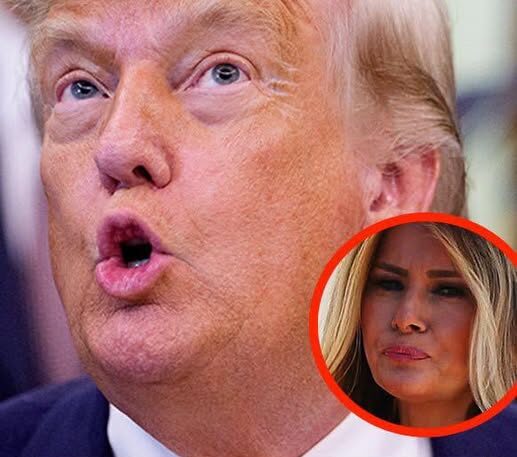
Donald Trump Says Melania Disapproves of His Viral Rally Dance Moves
The Familiar “Y.M.C.A.” Routine Has Become a Rally Trademark, but Trump Says Melania Sees It Very Differently
Donald Trump’s campaign rallies have long been known for more than political speeches.
Music, crowd reactions, exaggerated gestures, and moments designed to energize supporters have all become part of the atmosphere surrounding his public appearances.
Among the most recognizable of those moments is Trump’s dance to “Y.M.C.A.,” a routine that has repeatedly generated viral clips and reactions across social media.
Supporters frequently cheer when the music begins, and Trump often responds with his familiar combination of fist movements, shoulder motions, and a distinctive side-to-side shuffle.
But Trump has revealed that one person close to him is far less impressed.
Melania Trump, he says, does not consider the routine appropriate for someone occupying the presidency.
Melania Has a Very Different View of the Dance
Trump has described Melania as being direct when discussing his rally performances.
While thousands of supporters may applaud the moment, he says she remains skeptical about whether the enthusiasm should encourage him to keep dancing.
Her assessment is simple.
She considers the behavior “not Presidential,”
That reaction highlights an obvious contrast between the public persona Trump has developed at rallies and Melania’s preference for a more restrained image.
Where Trump often embraces spontaneity, humor, and performance, Melania appears to view the presidency as an institution that should carry a certain degree of formality.
Trump’s Dance Has Become Instantly Recognizable
The routine itself is not especially complicated.
Trump frequently moves his arms in short pumping motions, occasionally appearing to imitate someone lifting weights before shifting into the dance that supporters have come to expect when “Y.M.C.A.” begins playing.
The moves have become so closely associated with him that short clips can be recognized almost immediately, even without the surrounding speech or rally context.
For supporters, the dance often functions as a celebratory conclusion to an event.
For critics, it provides material for jokes and parody.
Either way, the routine regularly attracts attention far beyond the crowd attending the event itself.
Melania Apparently Questions Whether the Crowd Really Loves It
Trump has also described Melania as unconvinced by the enthusiastic response from supporters.
When he points to cheering crowds as evidence that people enjoy his dancing, she reportedly offers a much less flattering interpretation.
From her perspective, the audience may simply be responding politely rather than genuinely admiring the performance.
That disagreement creates an unusual domestic contrast behind one of Trump’s most visible public habits.
Thousands of people might be cheering while the person closest to him is apparently wondering why he is dancing at all.
The Rally Persona Is Built Around Performance
Trump’s public style has always relied heavily on performance and audience reaction.
His rallies are structured around direct engagement with supporters, and he frequently reacts to the energy of the room rather than maintaining the carefully controlled presentation associated with many traditional political events.
He gestures dramatically, pauses for chants, repeats phrases that trigger predictable crowd reactions, and often uses humor to maintain momentum.
The dance fits naturally into that style.
Rather than appearing detached from supporters, Trump embraces the spectacle and allows the audience to become part of the performance.
That approach has helped make certain moments from his rallies instantly recognizable even among people who do not follow every speech.
Melania Represents a More Controlled Public Image
Melania’s public presentation has generally been very different from her husband’s rally persona.
Her appearances tend to emphasize polished clothing, controlled gestures, and a more reserved manner.
That difference helps explain why the dancing may stand out to her as inconsistent with the image she associates with the presidency.
Trump appears comfortable turning himself into the center of a highly energetic crowd.
Melania’s reported reaction suggests she sees greater value in maintaining distance between presidential authority and entertainment.
Neither style is subtle, but they communicate very different ideas about how a national political figure should behave in public.
“Y.M.C.A.” Became Part of the Trump Rally Experience
The Village People song has become closely associated with the closing atmosphere of many Trump events.
As the familiar opening begins, supporters often anticipate what comes next.
Trump frequently stays on stage rather than immediately leaving, allowing the music and crowd response to continue.
The resulting footage is highly shareable.
A brief sequence of Trump dancing can spread online without requiring viewers to watch an entire political speech.
That has helped transform the routine into something larger than a single rally moment.
It has become part of his broader political brand.
The More Critics React, the More Visible the Routine Becomes
One reason the dance has remained so prominent is that it produces dramatically different reactions.
Supporters frequently celebrate it as funny, energetic, and unmistakably Trump.
Critics mock the movements and question whether they fit the dignity traditionally associated with the office.
Those opposite responses ultimately produce the same result: more attention.
Every parody, replay, imitation, and criticism sends the footage to another audience.
The dance therefore benefits from a pattern that has defined much of Trump’s political presence.
Whether people admire the moment or ridicule it, they continue talking about it.
Trump Appears Uninterested in Giving It Up
Melania’s criticism has apparently done little to convince Trump to retire the routine.
He continues using similar gestures and dance movements when the music begins at public events.
The enthusiastic response from supporters appears to matter more to him than concerns about whether the moves look presidential.
That difference between husband and wife has become part of the appeal of the anecdote.
It offers a rare glimpse of how one of Trump’s most recognizable public habits may be discussed privately.
To the crowd, it is entertainment.
To Trump, it is evidence that supporters are having fun.
To Melania, it apparently crosses a line between political celebration and behavior that does not fit the presidency.
The Dance Has Become Bigger Than the Original Moment
What began as a simple closing-stage routine has developed into a widely recognizable cultural image.
Videos of Trump performing the moves have been reposted, imitated, edited, and discussed repeatedly.
Some viewers copy the routine affectionately.
Others imitate it sarcastically.
The distinction often matters less than the fact that people instantly understand the reference.
A few short arm movements can now identify the subject before Trump’s name is even mentioned.
That level of recognition demonstrates how effectively a seemingly small behavior can become attached to a political figure’s larger public identity.
His Supporters See the Routine Differently
For many supporters, Trump’s willingness to dance contributes to the sense that his rallies are less formal than conventional political events.
They often respond positively to moments in which he appears relaxed or playful.
The dancing also gives supporters something they can imitate themselves.
Rather than remaining only spectators, people can recreate the gestures at gatherings or in social media videos.
That participation strengthens the cultural life of the routine beyond Trump’s own appearances.
Once a recognizable gesture becomes easy to copy, it can travel much farther than the original event.
Critics See a Question of Presidential Image
Melania’s reported objection also mirrors a wider debate surrounding how presidents should present themselves.
Some people expect the office to remain associated with formality, restraint, and carefully controlled behavior.
From that perspective, repeated dancing on a political stage may appear inconsistent with the seriousness of presidential leadership.
Others argue that modern political figures operate in an environment where personality is inseparable from public communication.
Trump has repeatedly favored the second approach.
His style relies on being memorable, unpredictable, and visually distinctive.
The dance serves all three purposes.
The Contrast Between the Couple Makes the Story More Striking
What makes Trump’s comments about Melania especially memorable is not simply that she dislikes the dance.
It is the contrast between her reaction and the enormous response the routine receives publicly.
A stadium full of supporters may be cheering while Melania’s reaction, as described by Trump, remains essentially unimpressed.
That creates an almost comedic image of two completely different interpretations of the same moment.
Trump sees applause.
Melania sees a president behaving in a way she believes is beneath the office.
He sees proof that the crowd enjoys itself.
She apparently believes the crowd may simply be encouraging him.
Trump’s Political Brand Has Always Defied Traditional Expectations
The disagreement also reflects something larger about Trump’s political career.
He has repeatedly rejected expectations about how political leaders are supposed to speak, behave, and interact with audiences.
Rather than adjusting himself to established presidential traditions, he has often pushed those traditions toward his existing public personality.
His supporters consider that authenticity.
His critics frequently describe the same behavior as inappropriate.
The “Y.M.C.A.” dance captures that divide in an unusually simple form.
No lengthy policy disagreement is required.
One person sees an entertaining moment between Trump and his supporters.
Another sees behavior that lacks presidential restraint.
Social Media Helped Turn the Routine Into a Cultural Meme
The dance also illustrates the enormous influence of short-form online video on modern politics.
A traditional speech may last an hour, but a few seconds of unusual movement can become the part millions of people ultimately see.
Trump’s dance is ideally suited to that environment.
It requires almost no context.
The music is familiar, the movements are immediately recognizable, and the footage can be understood regardless of what happened during the preceding speech.
As a result, the clips repeatedly escape the political environment in which they were created and circulate as entertainment.
For Trump, Audience Reaction Appears to Be the Final Verdict
Whatever Melania may think about his dancing, Trump appears to judge the routine largely by how the crowd responds.
When supporters cheer, he continues.
When the music plays, the familiar movements return.
That relationship with the audience has been one of the most consistent features of his public appearances.
Trump pays close attention to what generates laughter, applause, chants, or excitement and frequently repeats the moments that produce the strongest reaction.
The dance survived because it works within that environment.
A Small Family Disagreement Became Part of a Much Larger Political Image
Melania’s reaction may sound like a minor disagreement between spouses, but it also highlights the competing images that surround Donald Trump.
One version is the traditional expectation of a president who maintains formality and restraint.
The other is the rally performer who dances to familiar music, imitates weightlifting movements, and encourages the audience to participate in the spectacle.
Trump has repeatedly chosen the second image.
Melania, judging by his description of her reaction, remains unconvinced.
The Dance Is Unlikely to Be Forgotten Soon
Political moments that endure in popular memory are not always the ones politicians expect.
Sometimes a phrase, gesture, facial expression, or piece of music becomes more culturally memorable than an entire speech.
Trump’s “Y.M.C.A.” routine has reached that level of recognition.
Supporters celebrate it.
Critics parody it.
People around the world imitate it.
And Melania, based on Trump’s own description, apparently wishes he would behave differently.
That combination has turned a simple dance into one of the stranger recurring subplots of Trump’s political life.
For Trump, it represents entertainment, crowd connection, and another unmistakable element of his public brand.
For Melania, it appears to represent something else entirely: a moment when the spectacle goes further than she believes a president should.