
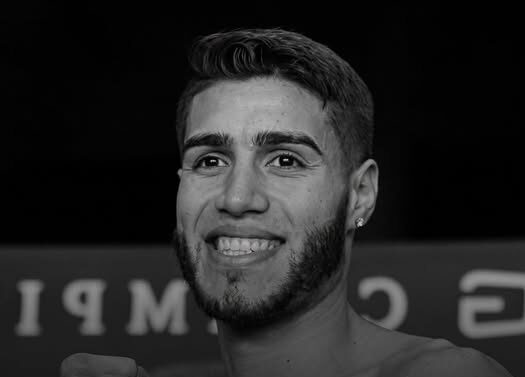
Prichard Colón’s Tragic Boxing Story and the Legacy That Changed Fighter Safety
A Promising Career Changed in a Single Night
Prichard Colón entered the boxing ring in 2015 with an undefeated record, a growing reputation, and expectations that his career was moving toward something much bigger.
At 16–0, the young Puerto Rican fighter was considered a rising talent with the potential to continue climbing toward a title opportunity.
Instead, one fight changed the course of his life.
What should have been another step forward in an undefeated professional career became the beginning of a medical crisis that would define the years that followed.
A series of illegal blows during the bout became central to what happened next. Colón was struck repeatedly with rabbit punches, dangerous blows delivered toward the back of the head.
By the time the night was over, the promising future that had appeared to be waiting for him had disappeared.
The Fight That Altered Everything
Colón entered the contest as a young athlete whose career had been built on speed, discipline, preparation, and an unbeaten professional record.
He had every reason to believe he would leave the ring and continue pursuing the same goals that had brought him there.
Instead, the fight became remembered for the illegal punches that struck him during the action.
Those blows were not simply another difficult part of a physically demanding sport. The consequences proved devastating.
Colón suffered a brain bleed after the fight, turning what had begun as an athletic competition into a life-changing emergency.
The damage affected far more than his boxing career.
His ability to speak, move independently, and continue the life he had known before the bout was taken from him.
An Undefeated Fighter Suddenly Faced a Different Battle
Before that night, Colón’s professional identity had been tied to winning.
A 16–0 record represented years of training, sacrifice, and successful performances inside the ring.
He had reached the point where his name was increasingly associated with potential and the possibility of competing for greater honors.
After the brain injury, none of those sporting ambitions mattered anymore.
The battle was no longer about maintaining an undefeated record or earning another opportunity.
It became a fight for survival.
The physical precision that had helped make Colón successful as a boxer was replaced by a condition that left him dependent on those closest to him.
Colón Spent 221 Days in a Coma
The severity of the injury became clear as Colón remained in a coma for 221 days.
For his family, those months marked the beginning of an entirely different life.
They were no longer watching him prepare for another fight or discussing future opponents.
Instead, they stayed beside him during an extended medical struggle in which the future was uncertain.
Every day became centered on his condition and what might happen next.
The young boxer who had entered the ring with an undefeated record remained unable to return to the life he had known.
His family was left confronting the reality that a few moments inside a boxing ring had permanently changed everything.
His Family Became His New Corner
In boxing, a fighter depends on the people in his corner for instruction, encouragement, and protection between rounds.
After Colón’s injury, that idea took on an entirely different meaning.
His family became the people responsible for helping him through every part of daily life.
They fed him, lifted him, cared for him, and continued speaking to him through the years that followed.
The routines of professional boxing were gone, replaced by constant caregiving and patience.
For his mother, Nieves, the role became especially profound.
She remained closely involved in her son’s care, refusing to abandon him even as the years passed and the life he had once expected became increasingly distant.
A Mother’s Vigil Continued for Years
Nieves became one of the central figures in Colón’s life after the injury.
The responsibilities that followed were not temporary.
They continued through the long aftermath of the fight and through years in which Colón remained dependent on his family.
For nearly a decade after the coma, the family continued caring for him in a condition dramatically different from the life he had lived before 2015.
They spoke to him, assisted him physically, and remained present through a situation no family expects to face when watching a young athlete pursue a professional career.
Their commitment became part of Colón’s story just as much as his undefeated record had been before the injury.
A Career Full of Possibility Was Taken Away
Colón had entered professional boxing with the physical ability and confidence required to build an unbeaten record.
At 16–0, his career still appeared to have years ahead of it.
There was no indication that the 2015 fight would become the final dividing line between his old life and everything that followed.
The damage caused by the brain bleed erased any realistic possibility of continuing the career he had worked to build.
His boxing dreams ended not through an ordinary defeat, retirement, or gradual decline, but through a catastrophic medical emergency.
The loss could not be measured simply through championships that were never won or fights that were never scheduled.
It was a loss of independence, communication, and the future his family had expected to watch him build.
The Boxing World Was Forced to Examine What Happened
Colón’s case extended far beyond his family.
As the circumstances of the fight became widely discussed, attention increasingly focused on the illegal rabbit punches that had occurred during the bout.
Rabbit punches are dangerous because they target the back of the head, an area that boxing rules are designed to protect.
Colón’s devastating injury made the risks impossible to ignore.
The sport was forced to confront uncomfortable questions about enforcement, medical protection, and what should happen when illegal blows occur during a fight.
What had happened to one undefeated young fighter became part of a broader discussion about how athletes could be better protected.
Rabbit Punches Came Under Greater Scrutiny
The illegal punches connected to Colón’s final fight became one of the most important elements of his legacy.
His injury demonstrated how serious the consequences could become when blows to the back of the head were not prevented or adequately addressed.
Afterward, the WBC adopted a tougher stance toward rabbit punches.
The renewed attention was not limited to penalties alone.
Medical oversight and fighter safety also became more prominent concerns.
For a sport built around controlled physical contact, Colón’s case became an example of what could happen when the boundaries intended to protect fighters failed.
His Story Became Part of a Push for Safer Boxing
The changes associated with Colón’s case could never undo what happened to him.
No rule adjustment could return the years he lost or restore the career that ended in 2015.
Still, his experience created pressure for boxing authorities to pay greater attention to dangerous illegal punches and to the health of fighters during competition.
The WBC’s stronger approach to rabbit punches became part of that response.
Medical oversight also received renewed attention as the sport considered how serious injuries might be recognized and managed.
Colón’s name therefore became connected not only with tragedy, but also with efforts intended to reduce the possibility that another boxer might suffer a similar outcome.
The Cost of Reform Was Enormous
Safety improvements can appear positive when discussed as rules, procedures, or stronger enforcement.
For Colón’s family, however, those changes came only after an irreversible personal loss.
The reforms did not return their son to the person he had been before the fight.
They did not restore his undefeated career or give him the opportunity to continue pursuing a title.
Instead, his family carried the consequences every day.
While the sport moved forward with greater awareness, Colón remained dependent on the people who loved him.
The contrast became one of the most painful parts of his story.
Nearly a Decade Was Defined by Care and Hope
After emerging from the 221-day coma, Colón did not simply return to his previous life.
The effects of the brain injury continued for years.
His family remained responsible for helping him through basic daily needs that he had once handled without thought.
The boxer who had once relied on rapid movement and split-second reactions now needed others to assist him physically.
His loved ones continued talking to him and remaining close, treating every interaction as meaningful.
For nearly a decade, that dedication became the reality surrounding Colón’s life.
His family refused to allow the tragedy to reduce him to a single night in the ring.
His Story Was About More Than Boxing
Colón’s career makes the tragedy especially striking, but his story ultimately became much larger than his record.
Before the injury, the number 16–0 represented athletic achievement.
Afterward, numbers such as the 221 days he spent in a coma revealed a completely different kind of struggle.
His life became a story about family commitment, the consequences of dangerous actions inside a sport, and the limits of what reform can repair.
Rules can change after tragedy.
Officials can become stricter and organizations can emphasize safety.
But the person whose suffering created the demand for those changes still bears the cost.
A Family Refused to Give Up
Perhaps the strongest part of Colón’s story was the determination shown by his family.
They remained with him after the cameras moved on and after the boxing world returned to its regular schedule.
They handled the physical and emotional responsibilities created by his condition.
They continued speaking to him, feeding him, lifting him, and providing the care he needed.
There was no championship belt waiting at the end of that struggle.
There was simply a family continuing to support someone whose life had been permanently changed.
In that sense, the people surrounding Colón became his most important corner.
The Sport Continued, but Colón’s Life Never Returned to Normal
Boxing continued after the 2015 fight.
New champions emerged, new events were promoted, and other young fighters began pursuing the same ambitions Colón once carried.
For his family, however, the consequences of that night never disappeared.
Each year represented more time removed from the young undefeated boxer who had entered the ring expecting to continue his career.
His future had been transformed in seconds.
The sport could learn from what happened, but Colón could not recover the life that existed before the injury.
Prichard Colón’s Name Became a Warning
Colón’s story became one of the most powerful reminders of why boxing rules exist.
Illegal punches are not minor technical violations when they place a fighter’s health at risk.
The consequences can extend far beyond a single round, a single fight, or even an entire career.
In Colón’s case, the damage followed him and his family for years.
That reality gave new weight to discussions about rabbit punches, medical supervision, and the responsibility to protect fighters during competition.
His experience became something the sport could not easily dismiss.
His Legacy Reached Beyond His 16–0 Record
Colón will always be remembered as an undefeated fighter whose career ended before it had the chance to reach its full potential.
But his legacy also became connected to something larger.
The increased focus on rabbit punches and fighter safety means the circumstances surrounding his injury continued influencing boxing long after his final bout.
His family’s devotion added another dimension to that legacy.
They demonstrated what happened after the fight was over, when the consequences became a permanent part of everyday life.
The sport saw a tragic case.
His family saw a son whose future had been taken away.
A Life Changed in Seconds, a Legacy That Endured
Prichard Colón entered the ring in 2015 as a 16–0 prospect with the possibility of a major boxing future ahead of him.
He left that chapter of his life with a devastating brain injury after a fight marked by illegal rabbit punches.
The 221-day coma that followed was only the beginning of a much longer struggle.
For nearly a decade, his family remained beside him, caring for him and refusing to surrender to the reality created by that night.
The boxing world responded by placing greater emphasis on rabbit punches, medical oversight, and fighter safety.
Those developments gave Colón’s tragedy a lasting influence within the sport.
But the reforms came at an extraordinary personal cost.
At 33, Colón is gone, leaving behind a story that remains inseparable from both the danger of boxing and the love of a family that stayed in his corner until the end.
His undefeated record tells only the beginning of that story.
The deeper legacy is found in the rules that became more important after his injury, the fighters who may benefit from greater protection, and the family members who spent years caring for the young man who should have been able to walk away from the ring and continue building his future.