
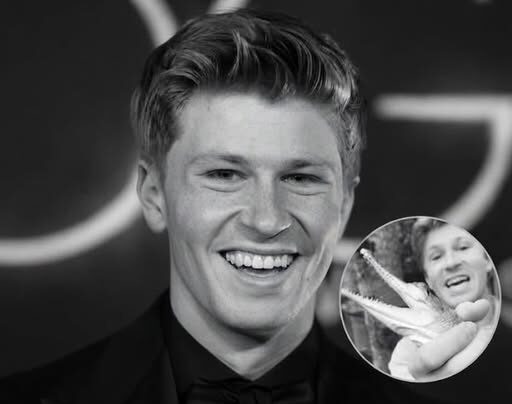
Robert Irwin’s Crocodile Feeding Moment at Australia Zoo Sparks Debate Over Safety
A Routine Feeding Suddenly Becomes Tense
A crocodile feeding at Australia Zoo took an unexpected turn when the animal suddenly lunged forward, forcing Robert Irwin and the other keepers to retreat quickly from the area.
The tense moment unfolded during what had begun as a routine interaction with the crocodile. As the animal moved forward unexpectedly, Robert immediately shouted “Bail!” to alert the team that they needed to move away.
The keepers responded without hesitation and quickly created distance between themselves and the crocodile. Despite the sudden movement and the intensity of the encounter, nobody was injured.
Footage of the incident soon attracted attention online, where viewers began discussing both the danger involved and the speed of Robert’s reaction.
Robert Irwin’s Warning Came Immediately
The most dramatic moment occurred when the crocodile abruptly lunged in the direction of the keepers. Robert recognized the change in the animal’s movement and immediately called for everyone to retreat.
His shout of “Bail!” served as a direct warning to the people working alongside him. Within moments, the group moved back and avoided a potentially dangerous situation.
The incident showed how quickly conditions can change when people work in close proximity to large wild animals. Even an activity that has been performed many times can become unpredictable within seconds.
The fact that nobody was hurt became an important part of the discussion that followed. The keepers were able to respond quickly enough to the crocodile’s movement and leave the immediate area safely.
The Footage Quickly Divided Viewers
Once the footage circulated online, reactions were mixed. Some viewers focused on how close the keepers appeared to be to the crocodile and questioned whether the feeding involved unnecessary risk.
For those viewers, the sudden lunge demonstrated the unpredictability of working directly with a powerful animal. They argued that even experienced handlers can face situations that develop faster than expected.
Others interpreted the footage differently. They pointed to Robert’s immediate response as evidence that he understood the animal’s behavior and knew when the situation had changed.
Supporters also emphasized that the team retreated successfully and that no injuries occurred. From that perspective, the footage showed the importance of experience, awareness, and having a clear response when conditions become unsafe.
Why Crocodile Encounters Attract Such Strong Reactions
Crocodiles naturally create a strong emotional response because of their size, strength, and unpredictable movement. When people are shown standing close to one during a feeding, even a small change in the animal’s behavior can appear dramatic.
In this case, the animal’s sudden forward movement transformed an ordinary feeding demonstration into a tense moment almost instantly.
The footage was particularly striking because viewers could see the keepers respond in real time. There was little opportunity for hesitation once the crocodile moved forward.
That combination of proximity, speed, and uncertainty helped fuel the online discussion about whether such encounters should be conducted in the way shown.
Supporters Point to Experience and Awareness
Many of the people defending Robert focused on his ability to identify the danger quickly. His warning came as soon as the crocodile’s behavior appeared to change, allowing everyone nearby to react.
Experience around wildlife can be important in situations where an animal’s movements need to be interpreted almost immediately. In the footage, Robert did not remain in place once the crocodile moved forward.
Instead, he called for the keepers to retreat and moved away with them. The response prevented the encounter from escalating further.
Supporters viewed this as an example of knowing when to abandon an interaction rather than attempting to continue it after conditions had become unpredictable.
Critics Say the Situation Looked Too Dangerous
Other viewers were less reassured by the successful retreat. They questioned why keepers should be placed close enough to the crocodile for such a situation to occur at all.
Their concern centered not only on what happened but on what could have happened if the crocodile had moved differently or if someone had reacted more slowly.
The fact that the incident ended safely did not eliminate those concerns. For critics, the footage illustrated the narrow margin that can sometimes exist during close wildlife encounters.
That reaction has contributed to a broader discussion about how much risk is acceptable when animals are being presented to the public.
Wildlife Conservation and Public Demonstrations
The incident has also revived questions about the relationship between wildlife conservation and entertainment. Public animal demonstrations can attract attention to wildlife and give audiences a close look at species they might otherwise never encounter.
At the same time, dramatic interactions involving dangerous animals can raise questions about how those demonstrations are structured and where safety should take priority.
The debate is not simply about whether people should work with crocodiles. It is also about how close those interactions should become when they are being conducted in front of an audience.
The Australia Zoo footage has become a focal point for that discussion because it captured both sides of the issue in a single moment: the unpredictability of a wild animal and the rapid response of experienced keepers.
The Difference Between Control and Preparedness
One of the lessons visible in the encounter is that working with wildlife does not mean every movement can be controlled. Animals can react suddenly, which means handlers must be prepared to change their approach immediately.
The crocodile’s lunge demonstrated that distinction clearly. The feeding may have begun routinely, but the team had to abandon the situation once the animal moved forward unexpectedly.
Robert’s warning was therefore not an attempt to control the crocodile’s behavior. It was a response to behavior that had already changed.
The keepers’ retreat showed that preparation can involve knowing when to stop an interaction rather than trying to maintain it.
No Injuries Were Reported
Despite the tension visible in the footage, the encounter ended without anyone being injured. The keepers successfully moved out of the crocodile’s immediate path after Robert sounded the warning.
That outcome has been central to those defending the team’s handling of the situation. They argue that the quick retreat demonstrated that safety procedures and experience mattered when the unexpected movement occurred.
Critics, however, have continued to focus on the risk that existed before the retreat became necessary.
The different interpretations show why the footage has generated such a strong response. The same moment can be viewed either as evidence that experienced keepers responded effectively or as evidence that the interaction came too close to becoming dangerous.
A Debate About Risk Around Wild Animals
Wild animals can behave unpredictably even when handlers are familiar with them. That reality is one of the main reasons the crocodile encounter has prompted discussion beyond the brief moment captured on video.
Some viewers believe that unpredictability is precisely why strict distance and caution are necessary. Others argue that experienced wildlife professionals understand those risks and are trained to react when circumstances change.
Robert’s immediate warning has become one of the strongest points raised by those supporting him. He recognized the potential danger and did not hesitate to tell the others to move.
The rapid response also prevented the moment from developing into an injury or more serious incident.
Why the Incident Resonated Online
The footage contains several elements that naturally attract attention: a large crocodile, people standing nearby, a sudden movement, and an urgent warning.
What appeared to be a normal feeding changed within seconds, creating a moment of uncertainty that viewers could immediately understand.
The encounter also gave audiences something to debate afterward. Rather than ending with a clear conclusion, it raised competing questions about expertise, acceptable risk, conservation, and public entertainment.
Those questions helped the footage move beyond a simple animal encounter and become part of a wider conversation about how wildlife should be presented.
Safety Remains at the Center of the Discussion
Whatever position viewers take, the incident highlights how quickly wildlife interactions can become unpredictable. A routine activity can change without warning, particularly when large and powerful animals are involved.
In this case, Robert Irwin responded by shouting “Bail!” and retreating with the other keepers as the crocodile lunged forward.
No one was injured, and the immediate danger passed once the group moved away. The footage nevertheless left viewers questioning how such encounters should balance public engagement with the safety of those involved.
For supporters, the moment demonstrated Robert’s experience and ability to react under pressure. For critics, it showed why close interactions with dangerous wildlife can never be considered completely predictable.
The Moment Leaves a Larger Question Behind
The crocodile feeding may have lasted only a short time, but the discussion surrounding it reaches much further. It touches on how wildlife organizations educate audiences, how animal encounters are presented, and how much risk should be accepted during public demonstrations.
Australia Zoo’s dramatic feeding moment ultimately ended safely, with the keepers retreating before anyone was hurt.
What remains is the debate created by the footage. Some viewers see a professional team responding correctly when an animal behaved unexpectedly, while others see an encounter that came uncomfortably close to becoming dangerous.
The disagreement reflects the larger challenge involved whenever conservation, public interest, wildlife behavior, and safety meet in the same space. The animals can attract and educate audiences, but their unpredictability remains an essential part of every interaction.