
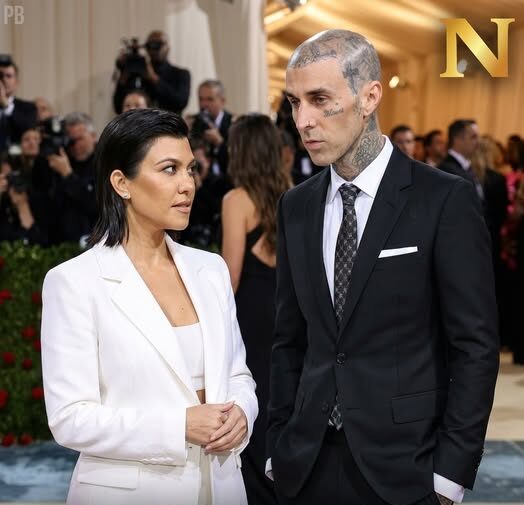
Kourtney Kardashian’s Poosh Article Sparks Conversation About Autosexuality and Self-Desire
A Lifestyle Article Leads to Questions About Sexuality
Kourtney Kardashian became the focus of an intense online discussion after a piece published through her lifestyle platform, Poosh, explored the concept of autosexuality.
The subject quickly attracted attention because some readers interpreted the article as a deeply personal statement about Kardashian herself.
Others viewed the piece differently, seeing it primarily as an educational discussion about a form of sexuality that is not widely understood.
The article did not present a direct or conventional announcement about Kardashian’s sexual identity.
Instead, it introduced readers to the idea of being sexually attracted to oneself and examined how self-directed desire can exist alongside attraction to another person.
What the Poosh Discussion Actually Focused On
The article involved therapist Casey Tanner and centered on autosexuality, a concept describing sexual attraction or arousal that is primarily directed toward oneself.
The discussion explored the idea that people can experience desire connected to their own body, appearance, presence, or erotic identity.
Rather than presenting self-attraction as vanity, the piece encouraged readers to consider it as a more complex part of sexuality and personal intimacy.
That distinction became one of the most important elements of the discussion.
For some readers, the topic was unfamiliar enough that simply seeing Kardashian associated with it led to immediate assumptions about what the article meant.
However, the piece itself focused more broadly on understanding self-desire than on making a definitive statement about Kardashian.
Why Some Readers Interpreted It as a Personal Confession
Kardashian’s public connection to the article contributed to speculation that she was revealing something about her own sexuality.
Because Poosh is closely associated with her personal lifestyle brand, some fans interpreted the subject matter as evidence that the topic reflected her own experience.
That interpretation quickly became part of the wider conversation.
Yet the article did not provide the kind of direct declaration that would normally accompany a formal statement about sexual identity.
Instead, Kardashian’s platform gave space to a therapist-led exploration of a concept that can apply in different ways to different people.
The difference between discussing a subject and personally adopting a specific label became increasingly important as speculation spread.
Understanding Autosexuality
Autosexuality, as presented in the Poosh discussion, involves experiencing sexual attraction toward oneself.
This can include feeling aroused by one’s own body, enjoying one’s own sensuality, or experiencing attraction that is centered partly or primarily on the self.
The concept does not necessarily mean that someone lacks attraction to other people.
One of the central points raised through Tanner’s perspective was that self-directed arousal can exist alongside strong attraction to a romantic or sexual partner.
This nuance challenges a common assumption that attraction must be directed exclusively outward.
Instead, the article presented sexuality as something that can include both self-focused and partner-focused experiences.
Everyday Behaviors Were Presented in a Different Light
The Poosh article used familiar personal routines to illustrate how self-desire might appear in everyday life.
Examples included wearing lingerie for personal enjoyment rather than for someone else, taking pleasure in a skincare routine, and appreciating the physical sensation of one’s own touch.
These behaviors were reframed as possible expressions of attraction to oneself.
The discussion suggested that feeling desirable does not always need to depend on receiving attention or approval from another person.
A person may enjoy feeling attractive even when nobody else is present.
That idea became a major theme of the conversation surrounding the article.
Self-Desire Was Distinguished From Vanity
One of the clearest ideas in the discussion was that attraction to oneself should not automatically be treated as narcissism, selfishness, or excessive vanity.
The article encouraged readers to separate healthy self-appreciation from assumptions that self-focused attraction must be negative.
This reframing was significant because many people are more familiar with messages encouraging confidence than with discussions about sexual attraction to oneself.
By placing the topic within a broader conversation about intimacy, the article presented self-desire as something that could be examined without immediate shame.
That framing helped explain why some readers considered the discussion empowering.
Why the Topic Created Strong Reactions
The conversation surrounding Kardashian’s article became polarized because sexuality remains a highly personal subject.
Some readers welcomed the effort to discuss a concept that is not frequently addressed in mainstream lifestyle content.
Others reacted more critically and questioned whether the subject was being presented too casually.
The strength of those reactions demonstrated how quickly a discussion about sexuality can become connected to assumptions about the person publishing it.
Instead of focusing only on the concept Tanner was explaining, much of the attention shifted toward Kardashian and whether the article represented a personal disclosure.
That shift transformed an educational lifestyle discussion into a broader debate about identity, intimacy, and celebrity.
The Article Did Not Present a Traditional Coming-Out Announcement
Despite the speculation, the Poosh collaboration did not contain a straightforward declaration that Kardashian was formally identifying herself with a particular sexual orientation.
There was no simple announcement structured around a new personal label.
The piece instead explored the broader idea of self-attraction and invited readers to consider whether some familiar behaviors could fit within that framework.
That distinction matters because public discussion often compresses complicated subjects into simple conclusions.
A celebrity may publish material about a particular topic without necessarily making that topic a complete definition of personal identity.
In this case, the article created room for discussion without delivering the definitive confession that some online reactions suggested.
Casey Tanner’s Perspective Emphasized Reducing Shame
Tanner’s contribution to the discussion emphasized that self-directed desire does not have to be treated as embarrassing or incompatible with a relationship.
The therapist’s framing pushed against the idea that arousal focused on oneself somehow reduces the ability to be attracted to someone else.
Instead, the article presented the possibility that both experiences can exist together.
A person can appreciate a partner while also enjoying personal sensuality and feeling sexually confident in their own body.
This was one of the more nuanced elements of the piece, but it was also one of the details most easily lost once the conversation moved into headlines and speculation.
Feeling Attractive Without an Audience
Another important theme involved the idea of feeling attractive without depending on another person’s attention.
The article encouraged readers to think about moments when they enjoy their own appearance or physical presence simply for themselves.
Putting on lingerie without planning to show it to another person was one example.
Enjoying a slow skincare routine or appreciating one’s own physical touch offered other examples of self-directed sensuality.
Within this framing, personal attractiveness does not begin only when another person expresses interest.
The experience can exist privately and independently.
Self-Intimacy Became a Central Theme
Beneath the debate about labels, the Poosh discussion ultimately raised a broader question about intimacy with oneself.
People often think of intimacy as something that requires another person.
The article challenged that assumption by suggesting that personal awareness, touch, confidence, and sensual enjoyment can also form part of an intimate relationship with oneself.
That does not necessarily replace closeness with a partner.
Instead, the discussion presented self-intimacy as something that can exist alongside emotional and physical connection with someone else.
This broader framing helped move the subject beyond a simple question of celebrity identity.
Why Labels Became the Focus of the Conversation
Once the article attracted wider attention, many readers became more interested in whether Kardashian personally identified as autosexual than in the concept itself.
This created a divide between what the article explored and what some people believed it revealed.
Labels can provide useful language for understanding personal experiences, but they can also simplify discussions that are more complicated.
The Poosh piece introduced a concept and described behaviors that may be associated with it.
That does not automatically establish a complete personal identity for every person who recognizes those behaviors in themselves.
The article therefore became an example of how quickly educational content can turn into speculation when a well-known public figure is involved.
The Discussion Broadened the Meaning of Sexual Confidence
The article also encouraged a broader understanding of sexual confidence.
Confidence is often described in terms of how someone appears to others or how comfortable they feel attracting a partner.
The Poosh discussion shifted part of that focus inward.
Enjoying one’s appearance, appreciating one’s body, or feeling sensual without external validation were presented as experiences worth considering on their own.
That perspective suggested that self-confidence and self-desire can overlap in ways that are not always openly discussed.
Attraction to a Partner and Attraction to Oneself Can Coexist
One of the strongest points in Tanner’s contribution was that self-arousal does not automatically exclude attraction to another person.
This challenged the assumption that sexuality must operate in one direction at a time.
Someone may have a satisfying relationship with a partner while also experiencing attraction toward their own body or presence.
The two experiences were not presented as mutually exclusive.
This distinction was especially important because some reactions to the article treated autosexuality as though it necessarily meant rejecting or replacing romantic partners.
The discussion itself offered a more complicated picture.
A Celebrity Conversation Becomes a Broader Cultural Discussion
Kardashian’s involvement gave the topic a level of visibility it might not otherwise have received.
Her association with Poosh meant that a relatively unfamiliar concept suddenly reached an audience that may never have encountered the term before.
As a result, the discussion moved beyond Kardashian herself.
Readers began debating the meaning of attraction, the role of self-confidence, and whether personal sensuality needs to be directed toward another person to be considered meaningful.
The disagreement surrounding the article demonstrated that these questions remain complicated and deeply personal.
The Difference Between Discussion and Disclosure
The most important distinction surrounding the controversy is the difference between discussing a form of sexuality and personally announcing a fixed identity.
Kardashian’s Poosh article helped introduce autosexuality to a wider audience, but it did not provide a simple declaration that resolved every question about her personal sexuality.
The article instead presented readers with a concept and encouraged reflection on behaviors that may already feel familiar.
Some readers interpreted that as revealing.
Others saw it as educational content designed to challenge assumptions about intimacy and self-attraction.
A Conversation About Feeling Sexy for Yourself
Ultimately, the strongest idea emerging from the article was not a celebrity label.
It was the suggestion that feeling attractive can belong to the individual experiencing it rather than to the person looking at them.
Someone can wear something sensual because they enjoy it.
They can appreciate their own body without waiting for another person’s approval.
They can experience pleasure in routines that make them feel physically connected to themselves.
Within the framework presented by Tanner, those experiences do not have to be dismissed as vanity or selfishness.
The Article Leaves More Nuance Than the Headlines Suggested
The attention surrounding Kourtney Kardashian and autosexuality became much louder than the original discussion itself.
What began as an exploration of self-directed attraction quickly became interpreted by some as an intimate personal revelation.
Yet the material presented through Poosh was more nuanced.
It examined self-desire, challenged shame surrounding personal arousal, and emphasized that attraction to oneself can coexist with attraction to a partner.
It also encouraged readers to reconsider everyday acts of self-care and sensuality through a different lens.
Whether an individual chooses to identify with the concept is a separate and deeply personal matter.
For Kardashian, the article did not deliver the simple answer that online speculation demanded.
Instead, it opened a broader conversation about what it means to feel desirable, how people experience intimacy with themselves, and why personal sexuality may be more complicated than a single label.
The biggest takeaway may therefore have little to do with determining exactly how Kardashian identifies.
The discussion suggested that attraction can include a relationship with oneself and that feeling sexy without another person’s gaze can be understood as a legitimate form of personal intimacy.