
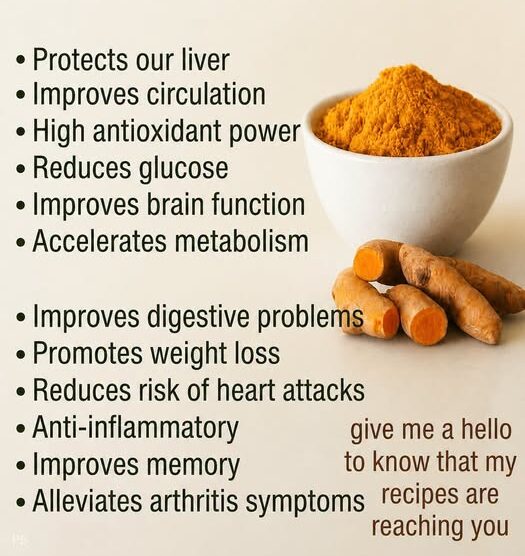
Turmeric Tea May Be Soothing, but Its Health Benefits Are Often Overstated
The Golden Drink With a Powerful Reputation
Turmeric tea has become one of the most recognizable drinks in the wellness world.
Its bright golden color, warming flavor, and long history of culinary use have helped turn it into a popular evening ritual for people interested in natural approaches to well-being.
Much of the excitement surrounding turmeric comes from curcumin, one of the plant’s best-known active compounds. Curcumin has demonstrated antioxidant and anti-inflammatory activity, which has encouraged researchers to investigate whether it could have meaningful health applications.
But there is an important difference between promising biological activity and proving that an ordinary cup of turmeric tea can prevent or treat disease.
Turmeric Tea Is Not the Same as a Concentrated Curcumin Supplement
Many headlines about turmeric blur the distinction between turmeric used as a food and concentrated curcumin preparations studied in clinical research.
Those products are not interchangeable.
A homemade drink containing turmeric powder generally delivers a very different amount and formulation of curcumin from the concentrated extracts used in many studies.
Curcumin also has relatively poor natural bioavailability, meaning the body absorbs and retains only limited amounts when it is consumed by itself. Poor absorption, rapid metabolism, and rapid elimination all contribute to this problem.
That makes it difficult to take results involving specially formulated supplements and assume that drinking turmeric tea will produce the same effects.
What Curcumin Actually Does
Curcumin has attracted scientific interest primarily because of its effects on biological pathways related to inflammation and oxidation.
These properties provide a plausible reason to investigate turmeric compounds for conditions in which inflammation plays a role.
However, laboratory activity does not automatically translate into a meaningful medical benefit in humans.
There is still insufficient evidence to definitively conclude that turmeric or curcumin is beneficial for any particular health purpose.
Joint Pain Is One of the More Promising Areas
Among the numerous health claims surrounding turmeric, joint discomfort has received some of the more encouraging clinical attention.
Studies involving curcumin and Curcuma longa extracts in arthritis have found improvements in inflammation and pain measures, although additional well-designed research is still necessary.
Research focusing on knee osteoarthritis has also produced encouraging results for curcumin-based interventions while noting that further investigation is needed.
These findings make curcumin interesting as a subject of research.
They do not establish that drinking an ordinary cup of turmeric tea will provide the same degree of relief.
Why the Difference Between Tea and Supplements Matters
Research studies frequently use measured doses of curcumin extracts rather than a spoonful of turmeric stirred into hot water.
Some formulations are specifically designed to increase absorption.
A simple tea may contain considerably less available curcumin.
That means a person should be cautious when encountering claims suggesting that results from concentrated supplements prove that turmeric tea itself can treat arthritis or another chronic condition.
The evidence is much more complicated than that.
Claims About Alzheimer’s Disease Go Too Far
Turmeric is frequently promoted online as a way to protect the brain or prevent Alzheimer’s disease.
Those claims are far stronger than current evidence supports.
Researchers remain interested in curcumin and neurological health, but that interest should not be confused with proof that turmeric tea prevents dementia.
No ordinary beverage should be treated as a substitute for established medical evaluation, prevention strategies, or treatment simply because one of its compounds has produced interesting laboratory findings.
The Same Caution Applies to Heart Health Claims
Another common claim is that turmeric protects the heart.
Curcumin has been studied in connection with inflammation, oxidative stress, blood vessels, and cardiovascular risk factors.
But evidence involving specific preparations or concentrated doses cannot automatically be translated into a claim that a nightly mug of turmeric tea prevents heart disease.
Turmeric can certainly be part of a balanced diet.
That is very different from describing it as cardiovascular protection.
Turmeric Tea Does Not Cure Chronic Disease
The biggest problem with many wellness claims is not that turmeric has no interesting properties.
It is that preliminary or limited evidence is often transformed into promises that are much larger than the research itself.
Claims that turmeric tea can cure chronic inflammation, prevent major diseases, reverse neurological decline, or replace medication should be treated with considerable skepticism.
Current evidence does not justify using turmeric or curcumin as a replacement for appropriate medical treatment.
Why Laboratory Results Can Sound More Impressive Than They Are
Researchers can expose cells or biological systems to carefully controlled amounts of curcumin and measure what happens.
Those experiments are useful for understanding how a compound might work.
But drinking turmeric tea involves digestion, absorption, metabolism, dosage, and numerous other variables.
A compound that produces a strong effect under laboratory conditions may behave very differently once it enters the human digestive system.
That gap between laboratory promise and real-world effectiveness is one reason nutrition headlines can become misleading.
Curcumin’s Poor Absorption Is a Major Limitation
Curcumin is notoriously difficult for the body to absorb efficiently.
This limitation has led researchers and supplement manufacturers to develop formulations designed to increase its bioavailability.
Some combine curcumin with compounds such as piperine from black pepper, while others use specialized delivery systems.
Research has demonstrated that piperine can substantially increase curcumin availability under particular conditions.
But improving absorption does not automatically prove that the resulting product prevents serious diseases.
Better absorption simply means more of the compound becomes available to the body.
Adding Black Pepper Is Not a Magic Solution
Turmeric recipes frequently recommend adding black pepper because piperine can increase curcumin absorption.
That principle has a scientific basis.
However, the popular conclusion that adding pepper suddenly transforms turmeric tea into a powerful medical treatment does not follow from that evidence.
Higher absorption and proven disease prevention are two completely different questions.
Turmeric Can Still Be Part of a Healthy Diet
Rejecting exaggerated claims does not mean turmeric needs to disappear from the kitchen.
Turmeric is a flavorful spice that can be used in soups, vegetables, curries, rice dishes, and warm drinks.
Incorporating turmeric into foods can be a reasonable way to consume it without automatically relying on concentrated supplements.
A cup of turmeric tea can therefore be enjoyed for what it actually is: a warm, caffeine-free beverage that fits comfortably into many diets.
A Bedtime Ritual Can Have Value Without Being a Cure
There is also something to be said for the ritual itself.
Preparing a warm drink at the end of the day can create a deliberate moment to slow down.
Someone may enjoy the taste, aroma, warmth, or simple routine of preparing turmeric tea.
Those qualities do not need exaggerated medical promises to make the drink worthwhile.
A habit can contribute to personal comfort without preventing Alzheimer’s disease or curing arthritis.
More Turmeric Is Not Necessarily Better
Another misconception is that natural products can be consumed in unlimited quantities without consequences.
Turmeric and curcumin can cause adverse effects.
Possible effects of oral turmeric products can include nausea, vomiting, acid reflux, stomach upset, diarrhea, and constipation.
This is particularly relevant when people move beyond culinary amounts and begin taking concentrated supplements.
Supplements Deserve More Caution Than a Cup of Tea
A person adding a normal amount of turmeric to food is not necessarily exposing themselves to the same amount of curcumin found in a concentrated supplement.
That distinction is important when discussing safety.
Some modern supplements have been specifically formulated to increase how much curcumin reaches the bloodstream.
Highly bioavailable curcumin products may harm the liver in some people, and cases of liver injury have been reported in people consuming certain curcumin products.
That does not mean an ordinary cup of turmeric tea is inherently dangerous.
It does mean that “natural” should never be interpreted as automatically risk-free.
Turmeric Tea and Turmeric Supplements Should Not Be Treated as Identical
This distinction becomes especially important when reading health articles.
A study involving hundreds of milligrams of concentrated curcumin cannot automatically support a headline about drinking turmeric tea.
The preparation, dose, absorption, and frequency may all be different.
When those details disappear from a headline, the resulting claim can sound much more certain than the research deserves.
Why Wellness Claims Spread So Easily
Turmeric has nearly everything needed for a successful wellness trend.
It has a distinctive color.
It has a long history of use.
It contains compounds that genuinely interest researchers.
It is inexpensive and easy to prepare.
And it fits naturally into the appealing idea that one familiar ingredient could provide broad protection against complicated diseases.
The problem is that human biology rarely works that simply.
One Ingredient Cannot Compensate for an Unhealthy Lifestyle
Even if future research establishes additional benefits from turmeric or curcumin, one ingredient cannot replace the broader foundations of health.
A single beverage cannot compensate for consistently poor nutrition, inadequate activity, chronic sleep deprivation, or neglected medical conditions.
Turmeric tea is better viewed as one small dietary choice rather than the centerpiece of a disease-prevention strategy.
Be Skeptical of Claims Using Words Like “Cure”
When a food or beverage is promoted as a cure for multiple unrelated diseases, that should immediately raise questions.
Alzheimer’s disease, cardiovascular disease, arthritis, and other chronic conditions involve very different biological processes.
It would be extraordinary for one simple drink to reliably prevent or treat all of them.
Extraordinary health claims require correspondingly strong evidence.
Turmeric tea does not currently have that level of evidence behind the sweeping promises often attached to it.
Does Turmeric Tea Reduce Inflammation?
This question requires a careful answer.
Curcumin has demonstrated anti-inflammatory activity and has been investigated in clinical research.
But the amount of curcumin absorbed from an ordinary cup of tea may differ substantially from the doses and preparations used in studies.
It is therefore reasonable to say that turmeric contains compounds with anti-inflammatory properties.
It is much harder to promise that drinking turmeric tea will meaningfully treat a specific inflammatory disease.
Can Turmeric Tea Help With Joint Comfort?
Research involving curcumin preparations for arthritis and knee osteoarthritis provides some encouraging evidence regarding pain and symptoms.
However, those findings should not be interpreted as proof that every turmeric tea recipe will produce the same result.
Someone who enjoys turmeric tea and feels it complements an otherwise healthy routine can reasonably continue drinking it.
Persistent or significant joint pain still deserves proper evaluation rather than depending solely on a beverage.
Can Turmeric Tea Prevent Alzheimer’s Disease?
There is not sufficient evidence to promise that drinking turmeric tea will prevent Alzheimer’s disease.
Research interest in curcumin should not be transformed into certainty where certainty does not exist.
Anyone encountering claims that one daily turmeric drink can protect against dementia should distinguish between an interesting research hypothesis and an established clinical recommendation.
Can Turmeric Tea Protect Your Heart?
The same caution applies to cardiovascular claims.
Turmeric can be part of a healthy eating pattern, but a cup of turmeric tea should not be described as a proven shield against heart disease.
Heart health depends on a much broader set of factors than any single spice.
The Best Reason to Drink It May Be the Simplest
Turmeric tea does not need to be miraculous to deserve a place in someone’s routine.
Perhaps you enjoy the earthy flavor.
Perhaps you like drinking something warm without caffeine in the evening.
Perhaps preparing it encourages you to slow down for a few minutes.
Those are perfectly legitimate reasons to drink it.
There is no requirement that every food or beverage deliver extraordinary medical benefits to have value.
Keep Expectations Grounded in Evidence
Turmeric remains an interesting plant containing compounds that continue to be investigated for their biological effects.
Research into curcumin has produced promising findings in some areas, particularly regarding certain measures of inflammation and joint symptoms.
At the same time, major gaps remain, and turmeric’s poor natural bioavailability further complicates the translation of laboratory findings into everyday dietary advice.
A homemade drink therefore should not inherit every benefit ever suggested by research involving curcumin.
Enjoy the Golden Cup Without the Golden Promises
Turmeric tea can remain a pleasant part of everyday life without being treated as medicine.
It can provide warmth, flavor, and a relaxing caffeine-free ritual.
Its most famous compound has genuine biological activity and remains a subject of scientific investigation.
But those facts do not establish turmeric tea as a cure for chronic illness, a guaranteed treatment for joint disease, or proven protection against Alzheimer’s disease and cardiovascular problems.
The most balanced approach is also the simplest.
Enjoy turmeric tea if you like it.
Consider it one component of an overall healthy lifestyle rather than a shortcut around one.
And when serious health conditions are involved, rely on evidence-based medical care rather than expecting a golden drink to accomplish what science has not shown it can do.