
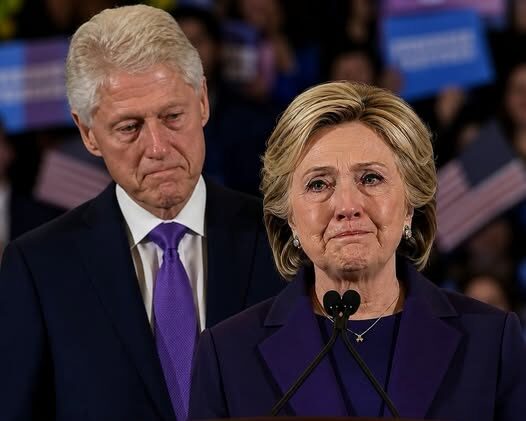
Bill and Hillary Clinton Testify After Contempt Showdown in House Epstein Investigation
Months of Resistance Ended With Sworn Depositions
Bill and Hillary Clinton ultimately avoided an expected full House contempt vote after agreeing to appear for sworn depositions in the House Oversight Committee’s investigation involving Jeffrey Epstein and Ghislaine Maxwell.
The confrontation had escalated for months after the former president and former secretary of state declined to appear for previously scheduled testimony.
By January 2026, the House Committee on Oversight and Government Reform had voted on a bipartisan basis to advance contempt resolutions against both Clintons for failing to comply with subpoenas issued the previous year.
The situation appeared headed toward an extraordinary confrontation on the House floor.
Instead, negotiations produced an agreement in early February that suspended the contempt push and required both Clintons to sit for transcribed and filmed depositions later that month.
The Subpoenas Were Issued in August 2025
The dispute began after Republicans and Democrats on a House Oversight subcommittee unanimously approved a motion in July 2025 authorizing subpoenas for multiple witnesses connected to the committee’s examination of Epstein-related matters.
Oversight Chairman James Comer issued subpoenas to Bill Clinton and Hillary Clinton on August 5, 2025.
The committee was examining matters connected to Epstein, Maxwell and the government’s handling of investigations surrounding them.
The Clintons were not the only prominent former government officials subpoenaed as part of the inquiry.
The committee also sought testimony from several former attorneys general and FBI officials as it attempted to build a broader record surrounding the handling of the Epstein case.
Repeated Scheduling Disputes Increased the Pressure
Negotiations over the Clintons’ appearances continued for months.
Bill Clinton’s deposition was initially requested for October 14, 2025, before being moved to December 17.
Hillary Clinton’s deposition was initially scheduled for October 9 and later moved to December 18.
Both declined the December dates because of a funeral, and the committee said it was willing to accommodate alternative dates in January.
New subpoenas eventually set Bill Clinton’s appearance for January 13, 2026, and Hillary Clinton’s for January 14.
Neither appeared on those dates.
The Clintons Challenged the Committee’s Position
The Clintons did not simply ignore the dispute without explanation.
Their attorneys challenged the validity and purpose of the subpoenas, arguing that the committee was seeking information that was not pertinent and that the investigation was politically motivated.
Bill Clinton also maintained that the subpoena directed at him was legally invalid.
The committee rejected those arguments and insisted that compliance required in-person testimony.
That disagreement created a constitutional and political confrontation over Congress’s investigative authority and the obligations of prominent former officials who receive subpoenas.
The Oversight Committee Moves Toward Contempt
After the Clintons did not appear in January, Comer announced that the committee would initiate contempt proceedings.
On January 21, the Oversight Committee voted to advance resolutions recommending that the House hold both Bill and Hillary Clinton in contempt of Congress.
The votes were bipartisan, although support differed between the two cases.
The committee argued that the subpoenas were lawful and that continued refusal to appear threatened Congress’s ability to enforce its investigative authority.
A contempt resolution was subsequently introduced and referred to the House Rules Committee as preparations continued for possible consideration by the full House.
A Full House Vote Appeared Increasingly Likely
By early February, the dispute was approaching a critical point.
House leaders were preparing for possible floor consideration of the contempt measures.
Had the House approved a criminal contempt referral, the matter could have been sent to federal prosecutors.
That possibility raised the stakes considerably, particularly because Bill Clinton is a former president and Hillary Clinton is a former secretary of state and former U.S. senator.
The confrontation therefore carried implications far beyond the individuals involved.
It raised questions about congressional subpoena power, executive-era privilege arguments and whether former high-ranking officials can resist compelled testimony after leaving office.
A Last-Minute Agreement Changes the Course of the Dispute
On February 2, the Clintons’ attorneys informed the committee that they would accept terms for depositions and appear on mutually agreeable dates.
At first, Comer said the agreement still lacked sufficient clarity and insisted that firm dates and conditions were necessary.
The negotiations continued into the following day.
Eventually, the committee announced that Hillary Clinton would appear on February 26 and Bill Clinton on February 27.
The depositions would be transcribed and filmed.
Once the agreement was finalized, the expected contempt proceedings were placed on hold.
The Contempt Threat Never Reached the Final Stage
This distinction became important because public discussion sometimes continued as though the Clintons were still facing an imminent contempt vote months later.
The Oversight Committee had already recommended contempt in January.
But the full House did not complete the process because the Clintons subsequently agreed to testify.
The House Rules Committee halted movement on the resolutions as the deposition agreement came together.
As a result, the legal question of whether prosecutors in Washington would pursue a contempt referral never became the immediate issue some commentators had anticipated.
The conflict shifted instead from enforcement of the subpoenas to the substance of the Clintons’ testimony.
Hillary Clinton Appears First
Hillary Clinton appeared for her closed-door deposition on February 26, 2026.
Lawmakers questioned her for more than six hours as part of the Oversight Committee investigation.
She told lawmakers that she had no knowledge of crimes committed by Epstein or Maxwell.
She also said she did not recall ever meeting Epstein.
Her testimony marked the first of two consecutive days in which the former first couple faced congressional questioning.
The appearance also brought an end to months of dispute over whether she would answer questions in person.
Bill Clinton Testifies the Following Day
Bill Clinton appeared before lawmakers on February 27.
During his deposition, he denied knowing about Epstein’s criminal conduct during the period in which they had interacted.
He maintained that he had seen nothing indicating the crimes Epstein was committing and said he had stopped associating with Epstein years before Epstein’s 2008 guilty plea.
Clinton also rejected suggestions that photographs showing him around Epstein established knowledge of criminal behavior.
The former president’s testimony was historically notable because a former president appearing under congressional subpoena is highly unusual.
Bill Clinton’s Association With Epstein Remained a Central Issue
Bill Clinton’s past association with Epstein had long generated public scrutiny.
Clinton has acknowledged traveling aboard Epstein’s aircraft in connection with charitable work.
He has denied wrongdoing and maintained that he had no knowledge of Epstein’s crimes.
During the February deposition, he again emphasized that he had not witnessed misconduct that would have alerted him to what Epstein was doing.
Those denials became central to his response to lawmakers attempting to understand the extent of Epstein’s relationships with powerful public figures.
Hillary Clinton Said Her Connection Was Limited
Hillary Clinton’s involvement in the investigation was different from that of her husband.
She maintained that she had no substantive relationship with Epstein and no knowledge of his criminal conduct.
Her attorneys had previously questioned why her testimony was necessary at all.
The committee nevertheless insisted that she appear personally rather than satisfy the subpoena through a written declaration.
That disagreement was one of the issues that prolonged negotiations before the contempt fight intensified.
Both Sides Accused the Other of Politicizing the Investigation
The dispute unfolded in an intensely partisan environment.
Republicans argued that congressional subpoenas must apply equally regardless of a witness’s political prominence.
Comer repeatedly emphasized that the subpoenas had originally received bipartisan approval and portrayed the contempt proceedings as necessary to defend Congress’s authority.
The Clintons and their allies argued that the investigation was being used to target political opponents.
Their attorneys maintained that they had already provided the limited information they possessed and argued that compelling extensive depositions was unnecessary.
Democrats Also Raised Questions About the Scope of the Inquiry
Democrats on the committee did not present a completely uniform position during the dispute.
Some joined Republicans in supporting contempt measures, particularly against Bill Clinton.
At the same time, Democratic lawmakers argued that scrutiny involving Epstein should apply consistently to all prominent individuals whose relationships with him had drawn questions.
That included calls for broader examination of other politically connected figures.
The result was an investigation that remained deeply political while also producing moments of bipartisan agreement about transparency and congressional authority.
The Steve Bannon Comparison Had Limits
Some commentary surrounding the Clinton dispute compared it with the criminal contempt prosecution of Steve Bannon.
Bannon was convicted after refusing to comply with a congressional subpoena and ultimately served time in federal prison.
That history demonstrated that contempt of Congress can carry consequences beyond political embarrassment.
However, the Clinton situation did not reach the same stage.
The full House never finalized the contempt referral after the Clintons agreed to appear for depositions.
Because they ultimately complied with the committee’s demand for testimony, speculation about whether a Washington grand jury would indict them became largely hypothetical.
The Investigation Continued After Their Testimony
The Clintons’ appearances did not end the broader House examination of Epstein and Maxwell.
The committee continued seeking testimony and documents from additional individuals connected to the investigation.
By August 2026, Oversight Chairman Comer was still threatening contempt action against other witnesses accused of resisting committee demands.
Billionaire investor Leon Black, for example, faced warnings that the committee could pursue contempt if he failed to provide requested information.
The continuing activity demonstrated that the February Clinton depositions were one part of a much larger inquiry rather than the conclusion of it.
What the Clinton Showdown Ultimately Established
The confrontation produced an unusual test of congressional power.
A former president and former secretary of state resisted subpoenas they regarded as invalid and politically motivated.
A House committee responded by moving toward contempt.
The possibility of a full House vote then created enough pressure to produce an agreement.
In that sense, the conflict demonstrated that the threat of contempt can influence compliance even without a completed criminal referral.
Congress never had to test whether prosecutors would bring charges because the witnesses ultimately appeared.
The Depositions Replaced the Threat of Prosecution
Once Hillary Clinton sat for questioning on February 26 and Bill Clinton appeared the following day, the core enforcement dispute changed dramatically.
The committee had demanded sworn, in-person testimony.
It received it.
The Clintons had sought to prevent a contempt referral from advancing through the House.
That referral was suspended.
The confrontation therefore ended not with an indictment or courtroom prosecution, but with testimony.
The Political Consequences Remain
Although the immediate contempt fight subsided, the political effects of the episode did not disappear.
Republicans portrayed the Clintons’ eventual appearances as proof that congressional pressure had worked.
The Clintons maintained that the subpoenas and surrounding rhetoric were politically motivated.
Both sides therefore emerged from the dispute with dramatically different interpretations of what had happened.
For Republicans, the episode became an example of Congress forcing powerful former officials to comply.
For the Clintons and their supporters, it became another illustration of the degree to which the Epstein investigation had become entangled with partisan politics.
The Epstein Investigation Continues to Pull Powerful Names Back Into Public View
Nearly seven years after Epstein’s death in federal custody, congressional scrutiny surrounding his relationships and the government’s handling of his crimes continues to draw prominent political and business figures back into public controversy.
Bill and Hillary Clinton became part of that process through subpoenas, months of legal resistance, a bipartisan committee contempt vote and finally two days of sworn testimony.
The outcome was less explosive than the criminal confrontation once anticipated.
There was no completed House contempt referral, no indictment and no prosecution of either Clinton arising from the subpoena dispute.
Instead, the pressure campaign ended with both appearing before lawmakers and answering questions under oath.
A Showdown That Ended Differently Than Many Expected
For a period in January and early February 2026, the conflict appeared capable of becoming one of the most consequential congressional contempt battles involving former senior officials in modern political history.
The Oversight Committee had already advanced contempt resolutions, and preparations for a full House vote were underway.
But before that final step occurred, the Clintons agreed to comply.
Hillary Clinton testified on February 26.
Bill Clinton testified on February 27.
Both denied knowledge of Epstein’s crimes.
The contempt proceedings were suspended, leaving the central political dispute unresolved but the subpoenas effectively satisfied.
The episode remains significant not because Bill and Hillary Clinton are currently awaiting indictment for contempt, but because Congress came unusually close to forcing that confrontation before the former first couple agreed to sit down and testify.