
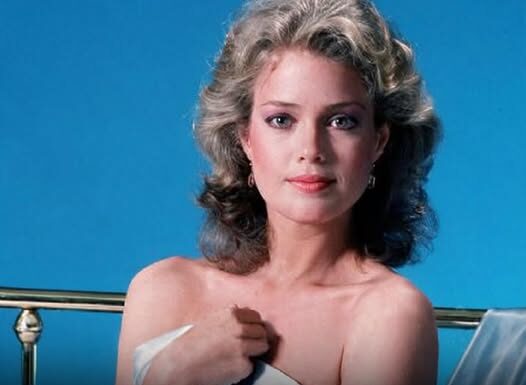
Sean Young Became an ’80s Sci-Fi Icon — Then Hollywood Turned Against Her
A Breakthrough That Made Her Unforgettable
In 1982, Sean Young appeared on movie screens as Rachael in Ridley Scott’s Blade Runner, a role that would become one of the most recognizable performances of her career.
Young was only 22 years old when the film introduced her to an international audience.
Her portrayal of Rachael, an artificial human whose identity becomes central to the film’s emotional story, immediately gave the young actress a place in science-fiction history.
Blade Runner eventually became a defining title of its era, and Young’s carefully controlled, mysterious performance remained closely connected to the film’s visual and emotional identity.
From Dance Training to Hollywood Stardom
Before building her screen career, Young had trained as a dancer.
That background contributed to the physical precision and distinctive presence she brought to her early film roles.
After Blade Runner, Hollywood quickly offered her increasingly prominent opportunities.
She appeared in David Lynch’s Dune in 1984, another ambitious science-fiction production that developed a lasting audience.
Her career continued moving forward through the decade, putting her alongside major directors and actors in some of the most visible films of the period.
Major Roles Followed Throughout the 1980s
By 1987, Young had become one of the most recognizable actresses working in American film.
That year, she appeared alongside Kevin Costner in No Way Out.
She also worked with director Oliver Stone on Wall Street, one of the decade’s most prominent dramas about ambition, money, and corporate power.
At this stage of her career, Young appeared positioned for a long run as a mainstream Hollywood leading actress.
She had already appeared in major studio productions, worked with celebrated filmmakers, and built a public identity connected to several films that would continue attracting audiences for decades.
Her Career Begins to Take a Different Direction
Young’s rapid rise did not continue in the straightforward way many might have expected.
During the late 1980s, stories about disagreements with directors and fellow performers increasingly became part of the public narrative surrounding her career.
Her outspoken personality became a subject of discussion inside Hollywood and in entertainment coverage.
Instead of being discussed only for her performances, Young increasingly found herself being described through the conflicts surrounding various productions.
The label “difficult” became attached to her reputation.
Her Role in Wall Street Was Reduced
One of the significant professional frustrations during this period involved Wall Street.
Young’s screen time in the film was substantially reduced.
The experience became part of a larger pattern in which her relationships with powerful people inside the industry appeared to affect the direction of her career.
At the same time, a highly publicized legal dispute involving actor James Woods generated significant tabloid attention.
The combination of behind-the-scenes conflict and sensational headlines contributed to an image that followed Young throughout the 1990s.
The “Difficult” Label Changes Her Hollywood Trajectory
For an actress who had seemed to be positioned near the center of mainstream American filmmaking, the shift was dramatic.
Major studios became less willing to place her in the types of high-profile projects she had received earlier in the decade.
Young later spoke openly about what she considered a double standard in the treatment she received.
Reflecting on the way outspoken women were viewed compared with men, she said, “Of course, if I were a man I’d have been treated better. Duh.”
That statement summarized one of the central arguments Young has continued to make about her experience in the entertainment business.
Speaking Out Came With Professional Consequences
Young’s career became an example of how quickly public perception can alter opportunities in an industry heavily dependent on reputation.
Her willingness to challenge people around her became part of a narrative that overshadowed some of her acting work.
Male filmmakers and performers could sometimes be praised for intense or unconventional behavior, while outspoken actresses often faced a different response.
Young’s experience became increasingly connected to that broader discussion.
Rather than quietly accepting the way her career had been characterized, she continued speaking about what she believed had happened.
Blade Runner Remained Central to Her Legacy
Even as Young’s relationship with mainstream Hollywood became more complicated, Blade Runner continued growing in cultural importance.
Rachael remained one of the film’s defining characters.
Young’s appearance, performance, and chemistry within the film became inseparable from its identity.
Decades later, when the franchise returned with Blade Runner 2049 in 2017, the filmmakers once again brought Rachael into the story.
But the way the character returned created another source of frustration for Young.
Her Younger Appearance Was Digitally Recreated
For Blade Runner 2049, producers digitally recreated Young’s 1982 appearance.
The technology allowed the film to present Rachael as audiences remembered her from the original movie decades earlier.
Young did not view the decision as a meaningful return to the franchise.
She later expressed frustration that the filmmakers wanted to use the visual appeal and recognition associated with her character without giving her a substantial role in the new production.
For Young, the cameo represented another example of Hollywood benefiting from an image she created without fully including her in the continuation of that legacy.
Young Refused to Disappear
Despite losing the level of studio support she once enjoyed, Young did not stop working.
Instead, her career increasingly moved toward independent films, genre productions, television appearances, and other projects outside the biggest Hollywood releases.
Over the years, she continued accumulating acting credits rather than allowing the industry’s changing perception of her to end her career.
Her body of work eventually expanded to more than 130 film and television credits.
That longevity stands in sharp contrast to the idea that her career simply ended when mainstream studios distanced themselves from her.
Independent Work Became an Important Part of Her Career
Once the massive studio productions became less frequent, Young adapted.
She accepted smaller films and genre projects that allowed her to remain active as an actress.
This path may have been different from the trajectory many expected after Blade Runner, Dune, No Way Out, and Wall Street, but it demonstrated her determination to continue performing.
Young’s career did not depend entirely on Hollywood’s biggest studios.
She continued finding opportunities across different stages of her life.
She Eventually Expanded Into Live Theater
Young also moved beyond screen acting.
She made her stage debut in the off-Broadway production Ode to the Wasp Woman.
The appearance demonstrated her willingness to keep experimenting with new forms of performance decades after becoming famous through cinema.
For an actress whose career had repeatedly been described through past controversies, live theater represented another opportunity to focus attention on the work itself.
It also reinforced the fact that Young never completely stepped away from performing.
Her Filmography Continued to Grow
One of the most overlooked parts of Young’s story is the sheer amount of work she completed after her most famous years.
Her career includes more than 130 film and television credits.
That number challenges the familiar idea that Hollywood entirely erased her after the 1980s.
Her visibility may have changed, and the scale of the projects may have shifted, but Young remained professionally active.
She continued adding roles across several decades, creating a body of work extending far beyond Rachael.
Young Has Remained Candid About Sexism
Young has never been particularly hesitant about discussing the treatment she received during her career.
Her comments about sexism have become an important part of the way she interprets her own professional history.
She has argued that behavior considered unacceptable or threatening when displayed by women was often tolerated, or even celebrated, when associated with powerful men.
That perspective helped shape later conversations about actresses who were pushed aside after developing reputations for being outspoken.
Young’s experience is frequently viewed through that larger question of who was allowed to challenge authority inside Hollywood and who paid a professional price for doing so.
The Meaning of the “Difficult Woman” Reputation Changed Over Time
Hollywood’s history contains many examples of performers whose reputations were shaped as much by behind-the-scenes stories as by their work.
For women in particular, descriptions such as “difficult” could quickly become career-defining.
Young’s story illustrates how powerful such labels could become.
Once the description was attached to her, it influenced how future disagreements and professional decisions were interpreted.
The discussion around her career gradually became larger than any individual movie set or dispute.
A Career That Refused to Follow the Expected Script
Young’s professional journey did not unfold in a neat line from breakthrough role to continuous studio stardom.
Instead, it became a story of dramatic success followed by conflict, reduced mainstream opportunities, and decades of continued work outside Hollywood’s most powerful circles.
That makes her career more complicated than the simple narrative of an actress who disappeared after one famous decade.
She did not disappear.
She continued acting.
Rachael Continues Introducing New Audiences to Sean Young
Blade Runner remains one of the primary ways new viewers discover Young.
As each generation encounters the film, Rachael becomes a new introduction to the actress who played her.
Young has acknowledged that reality directly.
“People will be watching Blade Runner forever, and then they’ll ask themselves, ‘Who’s that actress? Oh, what else did she do?’” Young noted.
That continuing discovery gives her work a longevity that is independent of any studio executive’s opinion or tabloid headline.
Her Career Now Stretches Across Generations
Young has worked through several different eras of entertainment.
Her career began when she was in her twenties and continued through her thirties, forties, fifties, and sixties.
She has openly suggested that there may still be more ahead.
“And they’ll be able to find stuff I’ve done in my 20s, 30s, 40s, 50s, and 60s—and maybe even my 70s. You never know.”
The remark captures the persistence that has defined the later stages of her professional life.
View this post on Instagram
Her Legacy Extends Beyond Hollywood Controversy
Sean Young’s career cannot be reduced to the conflicts that surrounded her during the late 1980s and 1990s.
Her performance as Rachael gave cinema one of its most enduring science-fiction characters.
Her appearances in Dune, No Way Out, and Wall Street placed her inside several of the most recognizable films of her generation.
Her later independent projects demonstrated an ability to continue working even after the major studios became less welcoming.
And her willingness to speak openly about how she was treated ensured that her experience remained part of a larger conversation about women and power in entertainment.
Hollywood Changed, but Sean Young Kept Working
Young’s story is ultimately less about disappearance than endurance.
The image of the young actress appearing as Rachael in Blade Runner remains deeply embedded in popular culture.
But the decades that followed reveal another side of her career.
She experienced professional setbacks, public controversies, reduced studio opportunities, and frustration over the treatment of a character that helped make her famous.
Yet none of those experiences convinced her to stop performing.
Instead, she built a filmography exceeding 130 credits and continued moving between film, television, independent productions, genre work, and theater.
The mainstream industry may have changed the way it treated Sean Young, but it never succeeded in completely removing her from the work she wanted to do.
More than four decades after Rachael first appeared on screen, audiences continue discovering that performance and asking what happened to the actress behind it.
The answer is much simpler than the old Hollywood narrative suggests.
Sean Young kept working.