
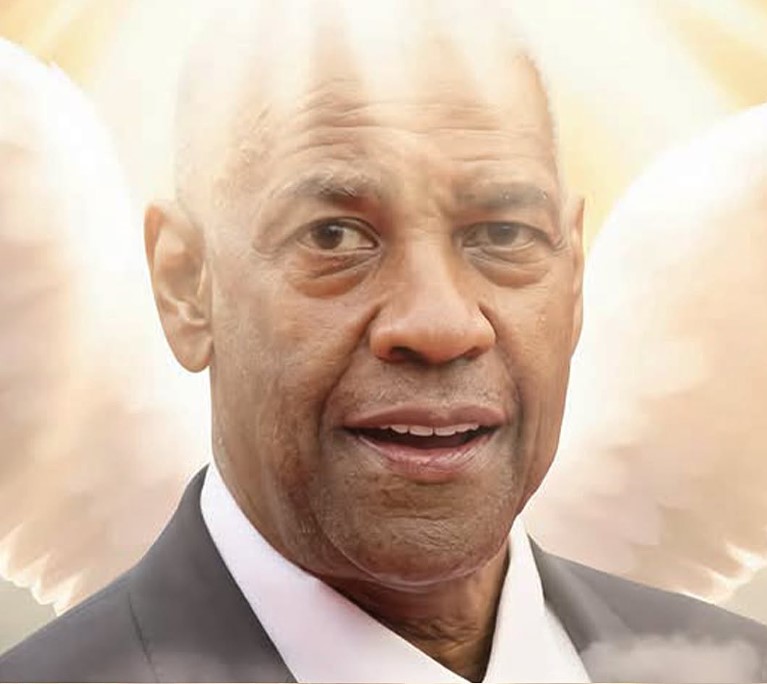
Denzel Washington Built a Hollywood Legacy Through Powerful Performances, Unforgettable Characters, and Extraordinary Range
From Early Television Roles to One of Hollywood’s Most Respected Leading Men
Denzel Washington’s career has stretched across decades, genres, generations, and some of the most memorable films in modern American cinema.
He has played soldiers, lawyers, activists, detectives, athletes, coaches, fathers, criminals, and ordinary men facing extraordinary circumstances. Yet the roles rarely feel interchangeable because Washington has always brought something distinct to each character.
Long before he became one of Hollywood’s most celebrated leading men, Washington developed his craft through theater and television. Those early years revealed many of the qualities that would later define his career: discipline, charisma, intelligence, intensity, and an ability to make even complicated characters feel recognizably human.
One of his earliest major breakthroughs came with the television drama St. Elsewhere, where Washington portrayed Dr. Philip Chandler. The role introduced him to a much wider audience and helped establish him as a serious performer capable of handling emotionally demanding material.
Television success could easily have become the defining feature of his career, but Washington continued moving toward increasingly challenging film roles. He was not interested in being limited to one type of character, and that willingness to take risks would eventually become one of the defining features of his work.
Cry Freedom and Glory Showed How Powerful His Screen Presence Could Be
An important turning point came with Cry Freedom, in which Washington portrayed South African anti-apartheid activist Steve Biko.
The performance demonstrated his ability to bring historical and political figures to the screen without reducing them to symbols. Washington gave Biko intelligence, conviction, humanity, and emotional force, earning an Academy Award nomination and showing that he could carry substantial dramatic material.
Another major breakthrough followed with Glory.
Washington played Private Silas Trip, a soldier fighting during the American Civil War. The character allowed him to explore anger, dignity, pain, courage, and distrust, sometimes within the same scene.
His performance was intense without becoming one-dimensional. Trip was not presented simply as a heroic soldier. He was a man shaped by injustice, carrying wounds that went far beyond the battlefield.
Washington won the Academy Award for Best Supporting Actor for the role. The victory confirmed what audiences and filmmakers were already beginning to understand: he was becoming one of the most important actors of his generation.
But even after winning an Oscar, Washington did not settle into a comfortable formula. His most celebrated performances were still ahead.
Malcolm X Became One of the Defining Performances of His Career
Washington’s collaboration with director Spike Lee on Malcolm X produced one of the performances most closely associated with his name.
Portraying Malcolm X required more than physical resemblance or imitation. The role demanded that Washington portray a man whose beliefs, confidence, spirituality, anger, intelligence, and understanding of the world changed dramatically over time.
Washington captured that evolution with extraordinary control.
He showed Malcolm X as a charismatic public figure, but he also revealed the private uncertainty and transformation taking place beneath the speeches. The result was a performance that felt larger than life without losing its emotional reality.
Audiences could watch the character change through posture, rhythm, expression, and voice. Washington seemed capable of communicating intellectual and emotional shifts even before the dialogue explained them.
The performance earned him another Academy Award nomination and became one of the central achievements of his career.
For many viewers, Malcolm X remains one of the clearest examples of Washington’s ability to inhabit a real historical figure while still creating a fully realized cinematic character.
He Refused to Be Limited to One Kind of Hero
Washington continued choosing roles that challenged the idea of what a Hollywood leading man had to look like.
In Philadelphia, he played attorney Joe Miller, a lawyer forced to confront his own prejudices and fears while representing a man suffering from AIDS.
The character’s importance came partly from his gradual change. Washington did not portray him as morally perfect from the beginning. He allowed audiences to watch Miller reconsider his assumptions as the case forced him to encounter circumstances he had previously kept at a distance.
In The Pelican Brief, Washington moved comfortably into a political and legal thriller. In Crimson Tide, he brought tension and moral authority to a military confrontation. In Courage Under Fire, he entered another story shaped by war, memory, responsibility, and truth.
The range continued with The Hurricane, where he portrayed boxer Rubin “Hurricane” Carter.
The role demanded physical transformation as well as emotional intensity. Washington portrayed a man fighting against a wrongful conviction and years of confinement, giving the character strength without pretending that resilience erased anger, frustration, or exhaustion.
Again, Washington showed one of his greatest strengths as an actor: his heroes rarely feel invincible.
Remember the Titans Revealed His Ability to Make Authority Feel Human
In Remember the Titans, Washington portrayed football coach Herman Boone.
The character carried enormous authority, but the performance worked because Washington did not rely on volume alone. Boone could be demanding, disciplined, intimidating, strategic, and deeply committed to bringing together a team divided by racial tension.
The film gave Washington several memorable speeches, but his quieter moments were equally important.
He could communicate disappointment with a glance. He could shift the atmosphere of a room simply by entering it. He could make a conversation feel confrontational before raising his voice at all.
That ability to command attention became one of the defining qualities of his screen presence.
Many actors can deliver an inspirational speech. Washington has often been able to make the silence immediately before or after the speech just as meaningful.
Training Day Completely Changed the Way Audiences Saw Him
One of the boldest choices of Washington’s career came with Training Day.
For years, audiences had frequently seen him portraying principled professionals, courageous leaders, or men fighting against injustice.
Then came Detective Alonzo Harris.
Harris was intelligent, charming, intimidating, manipulative, unpredictable, and deeply corrupt.
Instead of using Washington’s established image as a source of comfort, the film turned that image against the audience. His charisma became dangerous. His confidence became threatening. His ability to command a scene became part of the character’s power over everyone around him.
Washington made Alonzo compelling without making him admirable.
The character could make audiences laugh, feel uneasy, and fear what might happen next, sometimes within the same sequence.
The performance earned Washington the Academy Award for Best Actor and became one of the most recognizable roles of his career.
Training Day also proved something important about his range. Washington did not need to protect his image by always playing honorable men. He was willing to become the danger at the center of the story.
His Greatest Strength May Be the Complexity He Gives Every Character
One reason Washington’s performances have remained compelling is that his characters rarely feel simple.
Even when he portrays a hero, there is usually tension beneath the surface.
His characters can carry pride and doubt at the same time. They can be strong while remaining afraid. They can be intelligent without having every answer. They can make mistakes without losing their humanity.
That complexity gives the performances weight.
Washington rarely seems interested in presenting characters as symbols of perfection. He allows them to contain contradictions.
A coach can be inspiring and difficult.
A lawyer can begin with prejudice and learn.
A soldier can be courageous while carrying profound anger.
A detective can be charismatic and morally destructive.
Those contradictions make the characters memorable because they resemble real people more than simple cinematic types.
His Presence Has Always Been as Important as His Dialogue
Washington is famous for powerful speeches, but his acting has never depended entirely on words.
Sometimes the most important moment in a scene is a pause.
A slight change in his expression can signal that a character has realized something.
A lowered voice can become more threatening than shouting.
A look across a room can communicate distrust, disappointment, affection, or warning before a single sentence is spoken.
That quality is difficult to teach.
It is part technique and part presence.
When Washington enters a scene, audiences tend to pay attention because his characters often appear to be thinking even when they are silent.
That makes the performances feel alive beyond the written dialogue.
His Career Has Never Been Defined by a Single Genre
Many successful actors become closely identified with one kind of film.
Washington avoided that limitation.
He has worked in historical drama, courtroom drama, military films, political thrillers, sports stories, crime films, action pictures, and intimate character pieces.
That versatility helped his career remain relevant across changing periods in Hollywood.
Audiences who discovered him through Glory may remember a very different Denzel Washington from those who first encountered him through Training Day, Remember the Titans, or one of his later action roles.
Yet the same qualities connect those performances.
Intensity.
Control.
Intelligence.
Emotional precision.
And an ability to make the audience believe that the character has a life extending beyond the scenes shown on screen.
Washington Also Expanded His Career Beyond Acting
His creative work has not been limited to performing in front of the camera.
Washington has directed films, produced projects, and continued working in theater.
That broader commitment to storytelling reflects an actor who continued challenging himself even after reaching a level of success that could easily have allowed him to repeat familiar roles.
He did not need to prove that he could carry a film.
He had already done that many times.
Instead, much of his later career demonstrated a continuing interest in craft, collaboration, and new challenges.
Theater remained especially important because it demanded a different kind of discipline. There are no second takes in front of a live audience. The performance must remain alive and responsive every night.
Washington’s continued involvement with the stage reinforced the seriousness with which he approached acting as a craft rather than simply as celebrity.
His Influence Goes Beyond Awards and Box Office Success
Washington’s career includes major awards, acclaimed performances, commercial successes, and roles that have become part of popular culture.
But numbers alone do not explain his influence.
He helped broaden the image of what a major Hollywood leading man could be.
His characters could possess authority without being emotionally distant.
They could be vulnerable without appearing weak.
They could be flawed without becoming unworthy of empathy.
That balance became one of the defining elements of his work.
Washington also demonstrated that strength on screen does not have to mean invulnerability.
Some of his most powerful characters are memorable precisely because audiences can see the cost of what they are carrying.
Anger has consequences.
Responsibility has weight.
Leadership can create isolation.
Fear can exist alongside courage.
Washington has repeatedly found ways to bring those tensions into his performances.
Many of His Scenes Have Become Part of Popular Culture
Fans remember different moments depending on which films affected them most.
Some remember the speeches in Remember the Titans.
Others immediately think of Malcolm X.
Some remember the moral and emotional conflict of Philadelphia.
Others associate Washington most strongly with the unpredictable energy of Alonzo Harris in Training Day.
For another group of viewers, The Hurricane, Glory, Crimson Tide, or Courage Under Fire may contain the performance that first made them understand his talent.
That variety is significant.
There is no single Denzel Washington role that completely explains Denzel Washington.
His legacy is cumulative.
It is built from decades of different characters and different emotional registers.
New Generations Continue Discovering the Performances
One of the strongest signs of a lasting career is what happens after the original theatrical release has long passed.
Washington’s films continue reaching viewers who were not born when some of his most celebrated performances first appeared.
A younger audience can encounter Malcolm X without having experienced the cultural moment surrounding its original release.
They can watch Glory for the first time and see the intensity of Private Silas Trip.
They can discover Philadelphia, The Hurricane, Remember the Titans, and Training Day years after those films entered the culture.
The performances still work because they were not built only around temporary trends.
They were built around character.
That Is Why the Word “Legend” Feels Appropriate
Calling Denzel Washington a legend is not simply a reference to awards.
It reflects longevity.
It reflects range.
It reflects the ability to remain compelling across dramatically different roles and different periods of filmmaking.
Most importantly, it reflects memory.
Great performances stay with people.
A line remains in someone’s mind.
A character changes how a viewer thinks about leadership, justice, fear, courage, prejudice, ambition, or responsibility.
A scene watched decades earlier can still feel immediate.
Denzel Washington Did More Than Build a Successful Career
He created a body of work filled with characters audiences could admire, question, fear, understand, or even dislike.
That range of response is what acting is supposed to produce.
Washington never needed every character to be loved.
He needed them to feel real enough to matter.
From the young actor gaining recognition on television to the Oscar-winning performer capable of dominating almost any scene, his career became a demonstration of discipline and evolution.
He spent decades portraying people with authority, vulnerability, intelligence, anger, charm, weakness, courage, ambition, and moral uncertainty.
And he made those qualities coexist convincingly within the same human being.
That may be his greatest achievement.
His Legacy Is a Collection of Unforgettable Moments
No single movie contains the entire story.
The legacy lives across all of them.
It is in the emotional force of Glory.
It is in the transformation at the center of Malcolm X.
It is in the questions raised by Philadelphia.
It is in the authority of Remember the Titans.
It is in the fear and fascination created by Training Day.
It is in the quieter moments when Washington says almost nothing and still makes the audience understand exactly what the character is feeling.
Hollywood has changed dramatically during his career. The way films are made, released, marketed, and watched has changed with it.
Yet great performance remains recognizable.
That is why Denzel Washington’s work continues to connect.
He did not simply spend decades pretending to be soldiers, lawyers, detectives, coaches, activists, criminals, athletes, and fathers.
He made audiences believe in them.
And that is why, after decades on stage and screen, Denzel Washington did not merely build a career in Hollywood.
He built a legacy.