
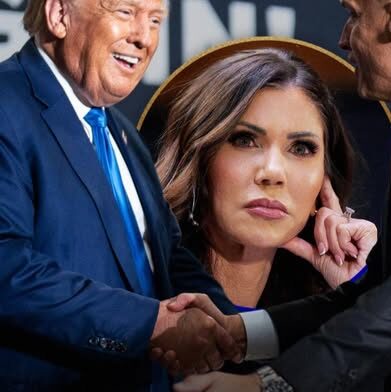
Congressional Hearing Exchange Highlights Debate Over Transparency and Advisory Influence in Washington
A Moment of Tension During Oversight Proceedings
Political tensions in Washington, D.C., briefly intensified during a congressional hearing involving Kristi Noem. The exchange took place before the United States House Oversight Committee as lawmakers gathered to question officials about government oversight, leadership responsibilities, and administrative accountability.
Congressional hearings often serve as opportunities for lawmakers to examine decisions made by public officials and the systems that guide government operations. These proceedings can involve detailed questioning designed to clarify policies, responsibilities, and relationships connected to public administration.
During this particular session, an exchange between lawmakers and Noem quickly drew attention. The moment unfolded during a series of questions that focused on issues related to influence, advisory roles, and the broader expectations surrounding transparency within federal agencies.
Observers following the hearing noted the shift in tone when a question introduced a topic that extended beyond policy discussions and into the realm of professional relationships connected to government advisory roles.
A Question That Sparked Immediate Reaction
The moment occurred when Representative Sydney Kamlager-Dove raised a direct question concerning Noem’s relationship with political adviser Corey Lewandowski. The inquiry was posed during the questioning segment of the hearing and immediately changed the atmosphere in the room.
Congressional hearings are often closely watched events where statements and exchanges are carefully recorded. In this case, the question prompted an immediate response and created a noticeable pause in the flow of discussion.
Noem responded firmly to the implication behind the question. She rejected the suggestion being raised and described the line of inquiry as “tabloid gossip.”
Her response made clear that she viewed the topic as unrelated to the purpose of the hearing. The committee session was intended to focus on oversight responsibilities and policy matters connected to government administration.
Concerns Raised by Lawmakers
While Noem dismissed the implication behind the question, some lawmakers presented a different perspective regarding why the issue had been raised. From their point of view, personal or professional relationships can become relevant when they intersect with public responsibilities.
Members of Congress sometimes raise questions about relationships between public officials and advisers when those connections may influence policy decisions or internal government operations. In such cases, lawmakers often argue that transparency is essential to maintain public confidence in government institutions.
Those who raised the topic emphasized that oversight hearings exist in part to examine whether advisers or external figures may have influence over decisions that affect federal agencies. When advisers participate in discussions or administrative matters, questions about the scope of their role can arise.
This perspective reflects a long-standing principle in congressional oversight: when individuals who are not permanent government employees participate in policy discussions, lawmakers may seek clarification about the boundaries of their authority and involvement.
The Role of a “Special Government Employee”
Part of the conversation during the hearing focused on Lewandowski’s role as a “special government employee.” This designation allows individuals who are not full-time federal staff to provide expertise or advice to government agencies for limited periods.
The classification is used in situations where agencies seek outside knowledge or experience that may not be available within their permanent workforce. Individuals in this category may participate in discussions, provide recommendations, or assist with specific projects.
Although the designation has existed for many years and is not uncommon in Washington, it can sometimes lead to questions about the balance between advisory roles and official authority.
Because these advisers are not traditional employees, lawmakers may seek clarification about how their contributions influence decisions within agencies responsible for national policy and administrative oversight.
Questions About Advisory Influence
The exchange during the hearing also touched on broader concerns related to the influence of informal advisers in government decision-making. Washington has long relied on advisers from outside government to provide insight or experience in specialized areas.
However, the presence of outside advisers can occasionally raise questions about transparency. When individuals who are not confirmed through traditional processes participate in discussions or operational matters, some observers believe the public deserves clear explanations of their role.
These concerns are not limited to any single administration or political party. Debates over advisory influence have appeared repeatedly throughout modern American political history.
Lawmakers often seek to clarify how advisers interact with agency leadership, whether they participate in internal conversations about staffing or strategy, and how their input may shape decision-making processes.
Public Discussion Following Media Reports
The topic gained additional attention after media reports suggested that Lewandowski’s role within the department had expanded in recent months. Reports indicated that he had participated in conversations related to staffing decisions and internal operations.
Such reports contributed to increased public interest in the nature of advisory roles and how those roles interact with formal government structures.
When information about advisory influence becomes public, it often leads to renewed discussions about transparency and oversight. Members of Congress may raise questions in hearings to clarify what responsibilities advisers hold and how their involvement is structured.
These discussions reflect the broader responsibility of Congress to monitor government activity and ensure that administrative decisions remain accountable to established rules and expectations.
Lewandowski Responds to Allegations
Lewandowski has denied any allegations of wrongdoing connected to the questions raised during the hearing. In statements addressing the issue, he rejected claims that he had used political connections to receive protection or special treatment.
He also denied reports suggesting that he had sought a pardon or other forms of preferential consideration. His response emphasized that the accusations circulating around the issue were not accurate.
Public figures involved in political advisory roles frequently address questions about their influence and responsibilities. When debates arise regarding their position or involvement, statements of clarification often follow as part of the broader public conversation.
In this case, Lewandowski’s response formed part of the ongoing discussion surrounding advisory roles and the expectations placed on individuals who interact with federal agencies.
The Larger Debate About Transparency
Beyond the immediate exchange during the hearing, the episode highlights a broader debate that often appears in American political discussions. Questions about transparency, influence, and accountability remain central themes whenever advisers participate in government decision-making.
Supporters of advisory arrangements often argue that outside experts can provide valuable perspectives that strengthen policy development. Experienced advisers may offer insights that complement the work of career officials within government agencies.
At the same time, critics sometimes argue that informal advisory roles can blur the line between official authority and outside influence. When individuals operate outside traditional structures, lawmakers may seek reassurance that clear ethical guidelines remain in place.
This balance between expertise and accountability continues to shape discussions about how advisers should interact with public institutions.
Congressional Hearings as a Platform for Oversight
The exchange between lawmakers and Noem demonstrates how congressional hearings function as a platform for examining complex issues connected to government leadership. Committees use these sessions to gather information, question officials, and evaluate how policies are implemented.
Because hearings are public events, they often attract attention from political analysts, journalists, and citizens who follow developments in government. Even brief exchanges can become widely discussed when they raise questions about transparency or leadership decisions.
The oversight process itself is an essential component of the American political system. By questioning officials and examining administrative practices, lawmakers seek to ensure that government institutions operate within established standards.
These hearings also allow officials to respond to concerns, clarify policies, and address questions raised by members of Congress.
Public Service and the Reality of Scrutiny
For individuals serving in prominent government positions, intense scrutiny is a constant reality. Every public statement, decision, and professional relationship may become part of broader political discussions.
The exchange during the hearing illustrates how quickly a single question can shift the focus of a conversation. What begins as a routine oversight session can evolve into a wider debate about ethics, transparency, and public accountability.
Political analysts often note that such moments reveal underlying tensions within the system. They highlight differences in how lawmakers interpret the responsibilities of leadership and the expectations placed on public officials.
In Washington, where political power and public oversight intersect, these discussions play a central role in shaping the broader understanding of government accountability.
A Continuing Conversation About Influence and Accountability
The brief exchange during the congressional hearing ultimately reflects an ongoing conversation about how influence operates within government. Questions about advisory roles, transparency, and ethical boundaries continue to appear across administrations and political debates.
As lawmakers carry out their oversight responsibilities, hearings will likely continue to include questions about how advisers interact with agencies and whether their involvement affects decision-making processes.
For observers of American politics, the moment serves as a reminder that even short exchanges can reveal deeper questions about leadership and institutional accountability.
In a political environment where public service operates under constant observation, discussions about authority, influence, and transparency remain central to how government functions.