
What This Black-and-White UK Road Sign Actually Means
A Familiar Sign That Many Drivers Still Misunderstand
It is one of the simplest road signs in Britain.
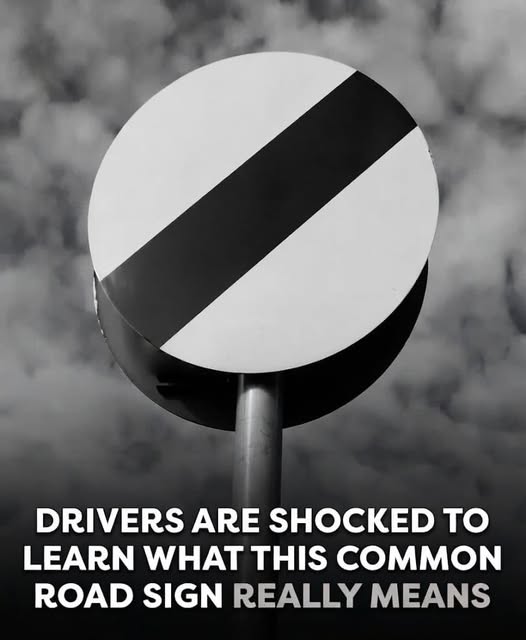
A white circle.
A thick black diagonal stripe.
No numbers.
No words.
Yet it is also one of the signs that regularly creates confusion online.
Some people jokingly describe it as permission to drive as fast as possible.
Others admit they are unsure what it means at all.
Its real meaning is much simpler.
The sign tells drivers that the national speed limit applies.
It Does Not Mean There Is No Speed Limit
One of the biggest misunderstandings is that the diagonal stripe means a previous speed restriction has ended and drivers can choose any speed they want.
That is incorrect.
The sign does end the previous locally displayed limit in many situations.
But it replaces that restriction with the appropriate national speed limit for the road and vehicle.
There is still a legal maximum.
The exact figure depends on the type of road and the vehicle being driven.
What Is the National Speed Limit for Cars?
For ordinary cars, motorcycles, car-derived vans and dual-purpose vehicles, the national speed limit is generally 60 mph on a single carriageway.
On dual carriageways, the national speed limit for those vehicles is generally 70 mph.
Motorways also generally have a 70 mph maximum for cars unless another limit is displayed.
These figures are maximum legal speeds.
They are not targets drivers are expected to reach.
How Can You Tell a Single Carriageway From a Dual Carriageway?
The distinction is important because it can change the national speed limit.
A dual carriageway is not simply a road with two lanes going in the same direction.
The key feature is a physical divider or central reservation separating opposing traffic flows.
A road can therefore have multiple lanes and still be a single carriageway if traffic traveling in opposite directions is not physically separated.
For an ordinary car under the national speed limit, that difference can mean 60 mph rather than 70 mph.
What About Built-Up Areas?
Roads with regular street lighting are generally subject to a lower default limit unless signs say otherwise.
In England and Scotland, the general limit on roads with street lighting is 30 mph unless another limit is displayed.
In Wales, the general restricted-road limit is 20 mph unless signs indicate a different limit.
Drivers therefore should not assume that “national speed limit” always translates into one single number.
The road environment matters.
Different Vehicles Can Have Different Limits
Another common mistake is assuming every vehicle can travel at the same national speed limit as a car.
That is not always true.
Vehicles towing caravans or trailers are generally subject to lower national limits.
Some vans and goods vehicles also have different maximum speeds depending on their classification and weight.
Motorhomes can also be subject to different limits depending on their specifications.
Drivers need to know the rules that apply to their particular vehicle.
Towing Changes the Limit
For a car towing a caravan or trailer, the national speed limit is generally 50 mph on a single carriageway.
On dual carriageways and motorways, the maximum is generally 60 mph.
That means a driver following an ordinary car on a national-speed-limit road may legally have to travel more slowly if towing.
The sign itself does not display those different figures.
Drivers are expected to know the limit that applies to their vehicle.
Why Does the Sign Not Simply Display a Number?
The national speed limit sign works differently from a normal speed-limit sign because the applicable maximum can vary.
A red-bordered circular sign containing “40,” for example, gives drivers a specific maximum speed.
The black diagonal stripe instead tells drivers to apply the national rules for their road and vehicle.
That allows one sign to cover several different situations.
It Often Appears When Leaving a Lower-Speed Area
Drivers commonly encounter the sign after leaving villages, roadworks, temporary restrictions, or other lower-speed sections.
For example, a road may have been limited to 40 mph.
Once the national-speed-limit sign appears, the 40 mph restriction ends and the relevant national limit begins.
That does not necessarily mean drivers should immediately accelerate to the maximum.
Road conditions still matter.
The Speed Limit Is a Maximum, Not a Recommended Speed
This point is especially important.
A 60 mph national limit does not mean that 60 mph is automatically safe.
A narrow rural road may legally carry a 60 mph limit while having blind bends, poor visibility, pedestrians, cyclists, farm traffic, or difficult weather conditions.
Drivers remain responsible for choosing a speed appropriate for what they can see and safely respond to.
The Highway Code makes clear that the legal speed limit is the absolute maximum rather than a target.
A Narrow Country Road Can Still Be 60 mph
This surprises some motorists.
A road does not need to look like a high-speed route to have the national speed limit.
Many rural single carriageways carry the national limit even though driving at 60 mph along the entire road would be inappropriate.
The sign establishes the legal ceiling.
The driver still has to judge bends, visibility, road width, weather, traffic, and other hazards.
Weather Can Make the Legal Limit Unsafe
Rain, ice, snow, fog, and standing water can dramatically change safe driving conditions.
If a national-speed-limit sign indicates a legal maximum of 60 or 70 mph, poor conditions may require a much lower speed.
Stopping distances increase on wet or icy surfaces.
Visibility can also decrease rapidly.
Responsible driving means adjusting to those conditions rather than treating the number as a target.
The Same Applies at Night
Darkness can make bends, pedestrians, animals, and roadside hazards more difficult to identify.
A driver should always be able to stop within the distance they can reasonably see to be clear.
That can require driving considerably below the national maximum on an unlit country road.
Why the Sign Generates So Many Jokes Online
The lack of a number makes the sign an easy target for jokes.
Social media users have jokingly described it as everything from an unrestricted-speed zone to a special area for enthusiastic driving.
Those jokes work precisely because the symbol does not explain itself to anyone unfamiliar with the Highway Code.
But for licensed UK drivers, its meaning is important basic road knowledge.
It Can Appear on Motorways Too
The national-speed-limit symbol is also seen on motorways.
It can appear after temporary or variable speed restrictions have ended.
For an ordinary car, the normal motorway national limit is 70 mph.
Drivers still need to watch for overhead signs because lower variable limits may be introduced when traffic, incidents, roadworks, or weather conditions require them.
Variable Speed Limits Override the Normal Maximum
Smart motorways and other controlled sections may display temporary limits on overhead signs.
If a lower mandatory speed limit is displayed, drivers must follow it.
The national limit resumes only when the road signage indicates that the restriction has ended.
Drivers should therefore pay attention to the latest sign rather than relying solely on what normally applies to the road.
Why Knowing Your Vehicle Matters
A driver who moves from a car to a van, towing vehicle, or larger motorhome may discover that familiar roads have different legal maximums.
The national-speed-limit sign remains the same.
What changes is the maximum associated with the vehicle.
That is why knowing only that the symbol means “national speed limit” is not quite enough.
You also need to know what that limit means for the vehicle you are operating.
Do Not Copy the Speed of the Car Ahead
Another vehicle traveling faster does not establish what your legal speed is.
The driver ahead may be operating a different class of vehicle.
They may also simply be exceeding the limit.
Drivers are responsible for knowing their own maximum speed rather than matching surrounding traffic automatically.
Speed-Limit Signs Are Designed to Work as a System
The black diagonal stripe is only one part of the UK road-sign system.
Numbers inside red circles indicate specific maximum speeds.
National-speed-limit signs indicate that the relevant national rules have resumed.
Repeater signs can remind motorists of the restriction currently in force.
Together, these signs allow drivers to understand when limits change as they move between different roads and areas.
Why Drivers Can Become Confused
Many motorists remember the basic 60 and 70 mph figures from driving lessons but may forget the exceptions over time.
The situation can become more confusing when towing, driving a van, crossing into Wales, or moving between single and dual carriageways.
That is why periodically reviewing the Highway Code can be useful even for experienced drivers.
The Simple Meaning Behind the Sign
Ultimately, the symbol is not mysterious.
When you see the white circle crossed by a black diagonal stripe, it means the national speed limit applies.
For an ordinary car, that generally means 60 mph on a single carriageway and 70 mph on a dual carriageway or motorway.
Different rules can apply to other vehicle classes, towing combinations, and built-up roads.
And regardless of the legal maximum, drivers must always adjust their speed to the conditions.
One Sign, Several Possible Limits
That is perhaps the most important detail to remember.
The symbol does not mean one universal speed.
It means: apply the national limit appropriate to this road and your vehicle.
Once that distinction is understood, the black diagonal stripe becomes one of the simplest signs on the road rather than one of the most confusing.