
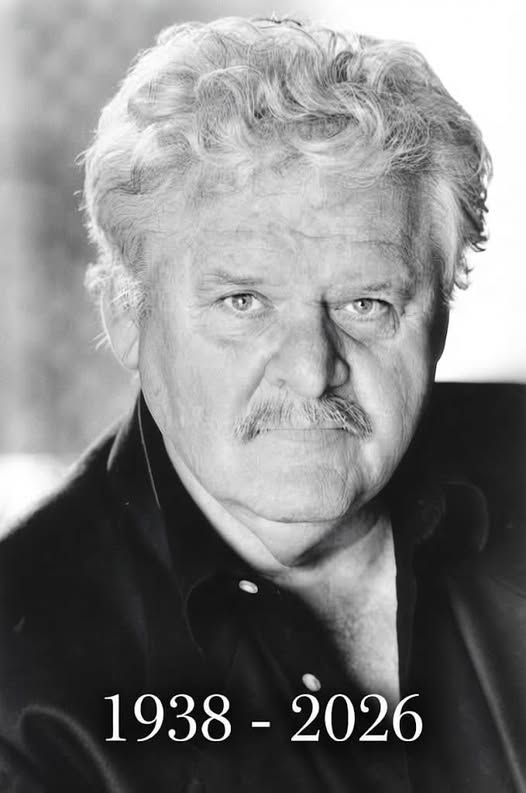
‘The Shawshank Redemption’ Actor Dion Anderson Dies at 87 After a Decades-Long Career
A Veteran Character Actor Has Died
Dion Anderson, the veteran actor whose long career included appearances in The Shawshank Redemption, Gilmore Girls, The X-Files, Mr. Deeds, and dozens of other film and television productions, has died at the age of 87.
According to his family obituary, Anderson died peacefully on April 26, 2026.
No cause of death was publicly provided.
While Anderson was rarely the leading name on a movie poster, his face became familiar to generations of viewers through a career filled with memorable supporting roles.
His work stretched across film, television, theater, education, broadcasting, and international cultural projects.
It was a remarkably varied life that went far beyond Hollywood.
He Was Born in Texas in 1938
Dion Anderson was born on August 6, 1938, in Cameron County, Texas.
Long before acting became his primary profession, Anderson built an unusually broad academic and professional background.
He served in the United States Army Finance Corps.
After his military service, he pursued higher education across several fields.
His studies included English literature, history, television production, economics, political science, and fine arts.
That educational background would later influence a career that moved easily between teaching, broadcasting, theater, and acting.
His Education Took Him From Texas to London
Anderson earned a bachelor’s degree in English Literature from Sam Houston State University.
He later completed graduate work in history and television production at the University of Texas.
His education eventually took him overseas.
He studied economics and political science at the London School of Economics and later earned a Master of Fine Arts from the London Academy of Music and Dramatic Arts.
For an actor who would later become known for authoritative characters such as judges, officers, and officials, his own life had already included years of formal education and public-service experience.
He Began by Teaching Shakespeare
Anderson’s professional life did not begin on a movie set.
He first worked teaching Shakespeare in Florida.
Theater and classical literature remained important throughout his life.
His stage experience eventually included major works by Shakespeare and Tennessee Williams.
Those early years helped build the voice, presence, and confidence that later became recognizable features of his screen performances.
His Career Took an Unexpected International Turn
Anderson later worked with Voice of America, where he became involved in film and television programming.
During the Vietnam War era, he helped establish television network facilities in South Vietnam and trained local staff.
His work then took him to Iran through the U.S. Foreign Service and State Department.
There, he helped develop radio and television operations while also teaching English and producing plays, film programs, and art exhibitions.
Those experiences made his career unlike that of many actors who followed a more traditional route from drama school directly into entertainment.
Theater Remained an Important Part of His Life
After completing his studies in London, Anderson became a theater director at the Opera House in Charles Town, West Virginia.
His stage work included Shakespearean productions as well as American classics.
His family later highlighted performances connected to Shakespeare and Tennessee Williams among the important achievements of his career.
Theater gave Anderson an opportunity to play larger and more complex roles than some of the supporting characters audiences later knew him for on television.
He Eventually Moved Into Screen Acting
By the early 1980s, Anderson had begun building a substantial career in television and film.
His distinctive appearance and commanding delivery made him a natural fit for authority figures.
He frequently played police officers, military personnel, judges, priests, government officials, and other characters who needed to establish a strong presence quickly.
Character actors often appear for only a few scenes, but their performances can give an entire production credibility.
Anderson became particularly skilled at that kind of work.
The Shawshank Redemption Became His Best-Known Film
For many viewers, Anderson is most closely associated with the 1994 film The Shawshank Redemption.
He played Head Bull Haig, one of the prison officials at Shawshank State Penitentiary.
The role was not among the movie’s largest.
But Anderson’s imposing presence fit naturally into the institutional world surrounding Andy Dufresne and Ellis “Red” Redding.
The film, directed by Frank Darabont and based on a story by Stephen King, later became one of the most widely admired dramas of its era.
Its enduring popularity meant even smaller supporting performances continued reaching new audiences decades later.
His Role Helped Build Shawshank’s Atmosphere
The Shawshank Redemption depended heavily on its supporting cast.
The prison had to feel like a functioning institution filled with guards, administrators, inmates, and routines beyond the central characters.
Anderson’s Head Bull Haig contributed to that atmosphere.
His character appears during memorable moments inside the prison, including the discovery of Andy Dufresne’s empty cell.
For viewers who revisit the film repeatedly, Anderson became one of those instantly recognizable faces associated with Shawshank.
His Career Extended Far Beyond One Movie
Although The Shawshank Redemption became the credit most frequently mentioned after his death, Anderson accumulated dozens of television and film appearances.
His screen career included roles in Dying Young, Mr. Deeds, The Distinguished Gentleman, and other movies.
He also appeared throughout American television during the 1980s, 1990s, and early 2000s.
That work allowed him to move between drama, comedy, science fiction, crime stories, and family programming.
He Appeared in The X-Files
Among Anderson’s many television credits was The X-Files.
The series became one of the defining science-fiction dramas of the 1990s.
Anderson was one of many experienced character actors whose guest appearances helped give the show its distinctive world.
His ability to move easily between serious and unusual material made him useful across genres.
He Also Appeared in Star Trek: Deep Space Nine
Anderson’s television work also included Star Trek: Deep Space Nine.
Science fiction gave him the opportunity to step into a very different kind of role from the officials and authority figures he often portrayed.
The credit became another example of how broadly his television career stretched.
Few character actors remain associated with only one genre, and Anderson was no exception.
Comedy Was Part of His Resume Too
Anderson was equally comfortable appearing in comedy.
His television credits included programs such as The Golden Girls, Murphy Brown, Married… with Children, Home Improvement, Sabrina the Teenage Witch, Will & Grace, and Reba.
He also appeared in the Adam Sandler comedy Mr. Deeds.
That range allowed Anderson to spend more than two decades moving regularly between different kinds of productions.
Gilmore Girls Introduced Him to Another Generation
Years after The Shawshank Redemption, Anderson appeared in Gilmore Girls as Burt.
The series developed a large and lasting fan base of its own.
Anderson appeared in episodes during the show’s original run, adding another well-known title to his extensive television resume.
Because Gilmore Girls has continued attracting viewers through streaming and reruns, his work remained visible to younger audiences long after those episodes were first broadcast.
He Had Previously Worked With Lauren Graham
Before Gilmore Girls, Anderson had been a regular on the 1996 sitcom Townies.
The short-lived series featured Molly Ringwald and Lauren Graham, years before Graham became widely known as Lorelai Gilmore.
Anderson’s later Gilmore Girls appearances therefore represented a small professional reunion.
It was one of many connections created during a career spent working across numerous television productions.
He Was a Classic Character Actor
Hollywood depends heavily on performers whose names may not always be immediately familiar even when their faces are.
Dion Anderson belonged firmly to that tradition.
Character actors often have only minutes to establish who someone is.
A judge must immediately look authoritative.
A police officer must seem experienced.
A prison official must appear as though he has spent years inside that institution.
Anderson repeatedly delivered those kinds of performances.
His Life Was Not Defined Only by Acting
The obituary released by Anderson’s family makes clear that entertainment represented only one chapter of a much broader life.
He had served in the military.
He had taught Shakespeare.
He had worked internationally in broadcasting.
He had helped train television personnel overseas.
He had produced plays and cultural programs.
And he had directed theater before building his screen career.
Those accomplishments help explain why his family remembered far more than his most famous film role.
He Had Many Interests Away From the Camera
Anderson’s family said his interests included painting, music, nature, and animals.
Those quieter parts of his life existed largely outside public attention.
Like many working actors, his professional credits tell only part of his story.
The people closest to him knew the husband, father, grandfather, great-grandfather, friend, artist, and animal lover behind the familiar screen presence.
He Is Survived by a Large Family
According to his obituary, Anderson is survived by his wife, Lucinda Anderson.
He is also survived by his children, Philip and Leigh, as well as grandchildren, great-grandchildren, and extended family.
The obituary reflects a life that had become increasingly centered around multiple generations of family by the time of his death.
Those relationships were understandably more important to those closest to him than any individual film credit.
His Family Suggested Charitable Donations
Rather than focusing only on flowers or public tributes, Anderson’s obituary invited people wishing to honor him to consider several organizations.
Among them was the Search Dog Foundation, reflecting his documented love of animals.
The family also mentioned local community and church organizations.
Those requests offered another glimpse into the causes and institutions that mattered to him outside acting.
His Death Came Quietly
Anderson died peacefully on April 26, 2026.
The family obituary did not disclose a cause of death.
A visitation and burial were arranged in Santa Paula, California, where he had been living.
The simple nature of the announcement contrasted with the unusually broad life it described.
There was military service.
International broadcasting.
Academic achievement.
Theater.
Film.
Television.
And decades spent contributing to projects millions of people eventually watched.
Fans Remembered a Familiar Face
Following news of his death, viewers began sharing memories of Anderson’s performances.
Some knew him primarily from The Shawshank Redemption.
Others recognized him from Gilmore Girls or one of his many television guest appearances.
That variety was fitting for an actor whose career rarely depended on one recurring character.
Instead, he spent decades becoming part of dozens of different fictional worlds.
The Shawshank Connection Will Likely Endure
For future audiences, Anderson’s appearance in The Shawshank Redemption will probably remain the most visible part of his film legacy.
The movie has continued reaching viewers generation after generation.
Every new audience that discovers Shawshank also encounters the supporting performers who helped build its world.
That means Anderson’s work is likely to remain familiar even to people who never knew his name while watching him.
A Long Career Built One Role at a Time
Dion Anderson never needed to be the star of every production to create a substantial career.
Instead, his professional life was built one supporting role at a time.
A prison official.
A judge.
A police officer.
A father.
A resident of Stars Hollow.
A character appearing for only a few scenes but helping make a story feel complete.
Across decades of work, those roles added up to an extensive body of performances.
Remembering Dion Anderson
Dion Anderson’s death closes the chapter on a career that traveled an unusually long road before and after Hollywood.
He went from Texas to military service, universities, international broadcasting, theater, and eventually film and television.
Millions of viewers will remember him as Head Bull Haig in The Shawshank Redemption.
Others will remember seeing him in Gilmore Girls, The X-Files, Mr. Deeds, or one of the many other projects in which he appeared.
His family will remember something more personal.
Anderson died at 87 after a life filled with education, travel, service, creativity, family, and decades of performance.
His name may not always have appeared above the title.
But his work became part of many stories audiences still watch today.