
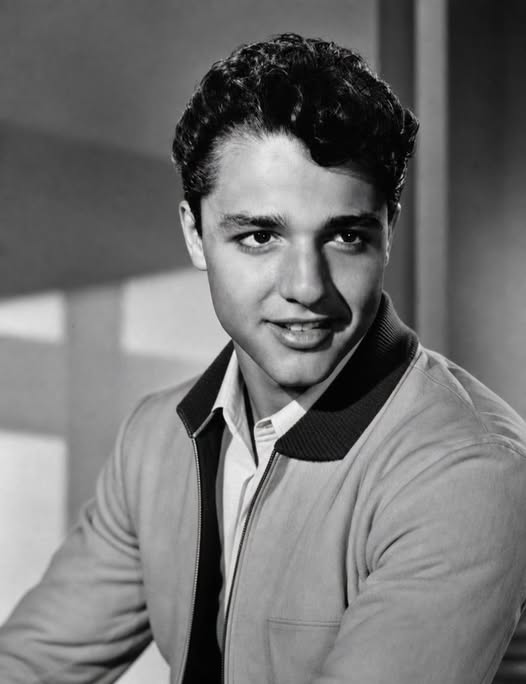
Sal Mineo Was Walking Home From Rehearsal — Minutes Later, Hollywood Lost One of Its Most Restless Young Stars
A Quiet Night Ended a Life That Had Been Lived in Public
Sal Mineo had spent much of his life in front of cameras.
He had been a teenage star.
An Oscar nominee.
A familiar face beside James Dean in Rebel Without a Cause.
By 1976, however, Mineo was working to reshape his career through theater and more challenging roles.
Then, on the night of February 12, everything stopped.
He Had Just Returned From Rehearsal
Mineo was 37 years old when he came home from rehearsing the play P.S. Your Cat Is Dead.
He parked near his West Hollywood apartment and began making his way inside.
There was nothing extraordinary about the setting.
No red carpet.
No film crew.
No audience waiting for him.
Just an ordinary evening after work.
Then He Was Attacked
Mineo was stabbed outside his apartment building and suffered a fatal wound.
A neighbor heard his cries and tried to help him, but Mineo collapsed and died at the scene.
The suddenness of the attack shocked Hollywood.
A life that had once seemed inseparable from fame had ended in a matter of moments on a quiet street.
There Was No Cinematic Ending
That is one of the reasons Mineo’s death has remained so unsettling.
His career had been filled with dramatic stories.
He had played troubled young men.
He had appeared in some of the most memorable films of his generation.
Yet his own final moments contained none of the structure of a movie.
There was no warning.
No second chance.
No final scene carefully written to provide meaning.
Hollywood Had First Known Him as a Teenage Sensation
Mineo was born in 1939 and began performing while still very young.
His early career included Broadway work before film turned him into one of the most recognizable young actors of the 1950s.
He possessed a combination of intensity and vulnerability that made directors notice him quickly.
His face could convey fear, longing and instability almost at once.
Then Came Rebel Without a Cause
In 1955, Mineo appeared opposite James Dean and Natalie Wood in Rebel Without a Cause.
His portrayal of John “Plato” Crawford became one of the defining performances of his career.
The role earned him an Academy Award nomination for supporting actor and permanently connected him to one of the most famous films of the era.
Plato Was Not a Conventional Teen Character
Mineo played him with a raw emotional loneliness that stood apart from many teenage roles of the period.
Plato was fragile.
Desperate for connection.
Searching for a sense of belonging.
Mineo gave the character an emotional complexity that audiences remembered long after the film ended.
His Career Continued Beyond James Dean
Mineo did not disappear after Rebel Without a Cause.
He appeared in Giant, Dino and other productions.
His performance in Exodus brought him a second Academy Award nomination and a Golden Globe.
For a time, he seemed positioned for a long career as one of Hollywood’s most distinctive young actors.
But Early Fame Can Become a Trap
Mineo had become famous for playing troubled young men.
As he grew older, the industry did not always know what to do with him.
The roles that had made him recognizable could also limit the way producers imagined him.
He was no longer the teenager audiences first discovered, yet Hollywood often struggles to allow young stars to evolve naturally.
Mineo Refused to Stop Working
Instead of surrendering to that problem, he pushed into theater, television and directing.
He sought roles that were darker and less predictable.
He directed stage productions and continued appearing on television.
By the 1970s, he was actively trying to build another phase of his career.
That Is What Made His Death Feel Especially Cruel
Mineo was not simply a former teenage star living in the past.
He was working.
He was rehearsing.
He was still trying to create.
His life had entered what many people around him saw as a fragile but meaningful revival.
Then the opportunity to see where that revival might lead disappeared.
Investigators Initially Faced Uncertainty
The attack did not immediately produce an obvious explanation.
Mineo was famous.
That meant investigators had to consider whether his public life, private relationships or career had anything to do with what happened.
For a time, speculation filled the absence of clear answers.
The Case Eventually Focused on Lionel Ray Williams
Years after the murder, Lionel Ray Williams was convicted of second-degree murder in Mineo’s death as well as a series of robberies.
He was sentenced in 1979 to 51 years in prison.
Authorities concluded that Mineo had been the victim of a robbery rather than a targeted Hollywood plot.
The Explanation Was Almost Harder to Accept
There was no elaborate conspiracy.
No dramatic feud.
No grand motive worthy of the life that had been lost.
According to the official case, Mineo had been caught in a random act of violence.
That ordinary brutality made the ending feel even more senseless.
A Conviction Could Not Restore What Was Gone
Legal closure is not the same as emotional closure.
A conviction could identify responsibility.
It could impose punishment.
It could answer some of the questions surrounding the attack.
But it could not return Mineo to rehearsal.
It could not give him another role.
It could not show the world what he might have done next.
His Friends Remembered More Than the Tragedy
Those who knew Mineo did not define him only by his final night.
They remembered energy.
Curiosity.
Ambition.
A performer who did not want to remain trapped inside the image Hollywood had created for him when he was young.
He Wanted Riskier Work
Mineo’s later career reflected a willingness to explore material that was more difficult and less commercially safe.
He became involved with theater and projects dealing with sexuality, power and complicated relationships.
That willingness to move beyond conventional roles helped reshape how later audiences viewed him.
His Career Also Took Place During a Very Different Hollywood Era
Mineo worked at a time when public expectations placed enormous pressure on actors to fit narrow identities.
Personal lives were often carefully managed.
Careers could be damaged by refusing to conform.
Mineo became one of the more visible actors associated with breaking some of those boundaries.
That Made His Later Work Particularly Significant
He was not simply trying to remain famous.
He was trying to find a way to work honestly in an industry that had once rewarded him for fitting a particular image.
For an actor who had become internationally known while still very young, that reinvention required unusual persistence.
Rebel Without a Cause Still Defines Much of His Public Memory
That is understandable.
The film became a cultural landmark.
James Dean became an icon after his early death.
Natalie Wood became one of Hollywood’s most famous actresses.
Mineo’s Plato remained one of the film’s emotional centers.
The Cast Later Became Associated With Tragedy
Dean died in a car crash at 24.
Mineo was murdered at 37.
Wood died years later under circumstances that continued to attract scrutiny.
The unusual deaths of the film’s principal young stars helped create a lasting mythology around Rebel Without a Cause.
But Mineo Deserves to Be Remembered Beyond That Mythology
Reducing him to a tragic member of a famous cast misses the larger story.
His career had already produced two Oscar nominations.
He had worked on stage and screen.
He had acted, directed and continued challenging himself even when the easiest opportunities disappeared.
His Restlessness Was Part of What Made Him Interesting
Mineo did not seem satisfied with simply repeating what had made him successful.
He wanted to move.
He wanted more complicated material.
He wanted to prove that the young actor audiences remembered could become something else.
That search remained unfinished when he died.
His Final Rehearsal Became Part of the Tragedy
On the night of his murder, Mineo had been rehearsing P.S. Your Cat Is Dead.
That detail has always given the story an especially painful quality.
He had spent the evening doing exactly what he had spent his life trying to continue doing.
Working.
Preparing.
Building another performance.
Then He Simply Went Home
That was all.
He was not attending a glamorous party.
He was not making headlines.
He was returning from rehearsal to his apartment.
The ordinary nature of the moment is what makes the ending so difficult to process.
Fame Offered No Protection
Mineo had known what it meant to be recognized everywhere.
He had appeared on magazine covers.
Fans had followed his work.
Audiences knew his face around the world.
Yet none of that mattered in the final seconds of his life.
Violence Reduced Everything to One Terrible Moment
The awards did not matter.
The films did not matter.
The future projects did not matter.
A single encounter ended a life containing decades of possibility.
That is the brutal truth at the center of Mineo’s story.
But Violence Did Not Get the Final Word
Mineo’s films remained.
His stage work remained part of theater history.
His performances continued to be discovered by audiences born long after his death.
The young man on screen never aged.
Each time Rebel Without a Cause begins again, Plato returns.
The Performance Still Feels Remarkably Vulnerable
That is one reason Mineo has endured.
His acting often carried a feeling of emotional exposure.
He could make a character appear uncertain without making him weak.
He could make loneliness visible without explaining it.
Those qualities have aged better than many of the conventions surrounding the films themselves.
Later Generations Have Reconsidered His Place in Hollywood History
Mineo is increasingly remembered not only as a young star whose life ended tragically, but as an actor whose work and identity challenged some of the expectations of his era.
His willingness to pursue unconventional material has made his career look more complex with distance.
That Complexity Was Always There
The teenager audiences adored.
The Oscar nominee.
The actor struggling to escape typecasting.
The theater director.
The man trying to rebuild his career.
All of those versions of Sal Mineo existed at once.
His Murder Froze Them in Time
When someone dies at 37, the future becomes permanently hypothetical.
There are no later roles to evaluate.
No mature career to compare with youthful fame.
No final interviews reflecting on decades of work.
Only possibilities.
That Is Part of Why His Story Still Feels Unfinished
Mineo had already lived several professional lives before reaching 40.
He had been a Broadway performer.
A teenage film star.
An Oscar nominee.
A recording artist.
A television actor.
A stage director.
There was every reason to believe more reinvention could have followed.
Instead, His Career Ends With a Question
What would Sal Mineo have become?
Would theater have become his primary home?
Would Hollywood eventually have rediscovered him?
Would he have moved increasingly toward directing?
Would a later generation have given him the kinds of roles he had spent years trying to find?
No one can know.
What We Do Know Is What He Left Behind
Rebel Without a Cause remains.
Exodus remains.
Giant remains.
His television appearances and stage history remain.
And so does the impression of an actor who refused to let early fame become the only thing that defined him.
His Final Night Should Not Overshadow His Entire Life
The murder is inevitably part of Mineo’s story.
It was sudden.
It was violent.
It shocked people who knew him and people who knew him only through movies.
But remembering only how he died would repeat another kind of injustice.
He Had Spent His Life Creating
Before the crime scene photographs.
Before the investigation.
Before the conviction.
There had been decades of work.
There had been risk.
There had been ambition.
There had been a young performer searching repeatedly for the next challenge.
Justice and Legacy Are Different Things
Lionel Ray Williams’ conviction gave the legal system an answer to the question of responsibility.
It did not answer the larger emotional question.
How do you measure what disappears when a life ends at 37?
The lost years cannot be sentenced back into existence.
That Is Why Legacy Matters
Legacy is not a replacement for life.
It is what remains when nothing else can be restored.
Mineo’s legacy survives through characters that still feel alive on screen.
Through the history of a performer who resisted easy categorization.
Through younger actors who can look back and see someone trying to push against the limitations of his time.
Sal Mineo’s Final Walk Home Exposed a Brutal Truth
Even a luminous life can end without warning.
Fame cannot guarantee safety.
Talent cannot bargain with chance.
A career can be flourishing again one evening and gone before the night is over.
But His Work Outlived the Violence
The man who attacked him could end his future.
He could not erase the films already made.
He could not remove Mineo from Hollywood history.
He could not stop generations of viewers from discovering Plato, Dov Landau and the many other characters Mineo brought to life.
Nearly Everything About the Ending Was Sudden
One moment, Mineo was returning from rehearsal.
The next, a career spanning stage, film and television had ended.
There was no final speech.
No curtain call.
No opportunity to understand that the walk home would be his last.
Perhaps That Is Why His Performances Matter Even More Now
Film preserves what life cannot.
Mineo can still walk into a scene.
He can still speak.
He can still make an audience feel the vulnerability that made him famous.
The ending never changes.
But neither does the life captured before it.
Sal Mineo Was More Than the Tragedy That Ended His Story
He was an actor who became famous extraordinarily young and spent the rest of his life trying not to be imprisoned by that success.
He was a performer willing to pursue work that challenged expectations.
He was an artist still moving forward when his life was taken.
And that is the image worth holding onto.
The Final Night Was Only One Moment
A terrible one.
An irreversible one.
But still only one moment in a life filled with performances that continue decades later.
Sal Mineo never received the chance to complete his comeback.
His work, however, never stopped speaking for him.
And while violence ended his life on February 12, 1976, it never erased the mark he had already left behind.