
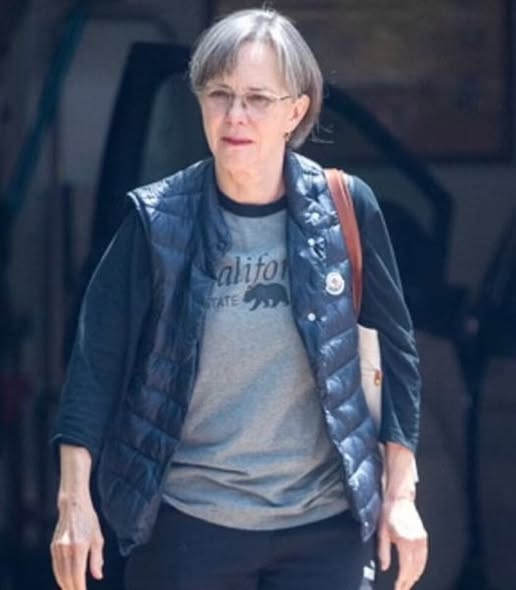
Sally Field’s Stand Against Ageism Has Become Part of Her Lasting Legacy
From early fame to enduring respect
Sally Field has spent decades building one of the most admired careers in American film and television, yet her influence reaches beyond the performances that made her famous.
Known for memorable roles in films such as Forrest Gump, Mrs. Doubtfire, and Steel Magnolias, she has also become recognized for the way she has handled the pressures placed on women in the entertainment industry.
Now in her late seventies, Field continues to draw attention not only for her body of work, but also for her refusal to follow the expectations often imposed on actresses as they grow older.
Her public attitude toward aging, appearance, and dignity has made her an important figure in conversations about ageism in Hollywood.
At 78, she remains admired for the confidence and honesty she brings to those discussions, even as she continues to face criticism about how she looks.
A difficult beginning behind a successful life
Field’s story began with personal hardship long before she became a familiar face on screen.
One of the most painful parts of her early life involved sexual abuse by her stepfather, Jock Mahoney, a traumatic experience she later revealed in her 2018 memoir.
That disclosure gave the public a deeper understanding of the private struggles she had carried while building a career in one of the most demanding industries in the world.
Despite that painful background, she moved into acting at a young age and quickly found herself in the spotlight.
Her first major role came in the 1960s sitcom Gidget, a breakthrough that introduced her to a wide audience and launched her into stardom.
That early success gave her a foothold in television, but it also opened the door to more dramatic and challenging work later on.
As her career progressed, she expanded far beyond youthful television fame and proved herself capable of carrying serious, emotionally complex roles.
Performances in projects such as Sybil and Norma Rae established her as a major talent, and Norma Rae earned her an Academy Award.
Over time, she built a reputation for depth, resilience, and emotional intelligence in her performances, qualities that helped her stand apart in an industry often shaped by narrow expectations for women.
A career shaped by strong, memorable characters
As the years passed, Field became especially well known for roles that centered on strong women and maternal figures.
Her screen presence brought warmth, authority, and emotional credibility to films that connected deeply with audiences.
She appeared in widely known titles including Soap Dish and Not Without My Daughter, adding to a long list of performances that reinforced her reputation as an actress capable of portraying both strength and vulnerability.
That balance became one of the defining qualities of her work.
Rather than relying on glamour alone, Field built her career on substance, discipline, and the ability to bring emotional realism to the characters she portrayed.
Her success was not simply a product of popularity. It was also the result of endurance, craft, and a willingness to continue growing as an artist.
Even during periods when she struggled personally, moments of support from others helped keep her moving forward.
Reflecting on one difficult period, she recalled help she received while working on The Flying Nun.
“The woman I worked with, a great actress, on The Flying Nun, grabbed me to the back of the sound stage and put a piece of paper in my hand because I was really depressed,” she recalled.
The remark offered a glimpse into the emotional weight she carried during the earlier stages of her career and the importance of encouragement during difficult times.
Choosing to age in her own way
One of the clearest ways Field has set herself apart in recent years is through her openness about aging.
While Hollywood has long rewarded youth and often pressured women to hide the natural signs of getting older, she has taken a different path.
Instead of trying to maintain an image tied to an earlier stage of life, she has spoken candidly about accepting age as an unavoidable part of living.
In a 2016 interview with Good Housekeeping, she described herself as an “old woman,” using the phrase not as an apology, but as an acknowledgment of reality.
That perspective reflected a broader philosophy about self-respect and acceptance.
Field has made clear that she prefers to age naturally rather than chase a version of her past appearance through plastic surgery.
For her, growing older is not something to hide from, and physical change is not something that should erase a woman’s value.
She has spoken openly about noticing those changes in herself, including the ordinary signs that come with time.
“I see myself on TV and say, ’Oh, I wish that weren’t happening to my neck.’ And your face is falling, and your eyes are so puffy,” Field explained.
Her comments stood out because they were both personal and unfiltered.
Rather than pretending immunity from insecurity, she admitted to the same moments of discomfort many people experience when seeing themselves age.
At the same time, she made it clear that discomfort does not mean regret or surrender to outside pressure.
Her approach has resonated with many people who are tired of the message that aging must always be disguised, corrected, or feared.
The pressure women face in Hollywood
Field’s stance carries added weight because the entertainment industry has a long history of treating aging differently for men and women.
Male actors have often been allowed to mature publicly while keeping access to serious roles, admiration, and authority.
Women, by contrast, have frequently been judged more harshly as they age, with appearance becoming a central focus of public discussion.
That unequal treatment has created intense pressure on actresses to preserve youth in ways that go beyond ordinary grooming or style.
For many women in Hollywood, the expectation is not only to remain successful, but to remain visually unchanged.
Field has challenged that standard simply by refusing to make her natural aging look like a problem that needs fixing.
Her choice is a personal one, but it also carries a wider cultural message.
By living visibly and honestly as an older woman in public life, she has resisted a system that too often tries to make women feel invisible once they no longer fit a youthful ideal.
That resistance is one reason her example continues to matter.
Online cruelty and personal resilience
Although many people admire her honesty, that same decision to age naturally has also exposed Field to harsh criticism online.
She has been targeted by internet trolls who focused on her looks and mocked her appearance.
The cruelty of those comments reflects a broader problem that many public figures, especially women, face in the digital age.
Social media has made it easier for strangers to turn appearance into a public spectacle, often with little thought for the person receiving the abuse.
In Field’s case, the criticism has centered on the very thing she has tried to normalize: the visible, ordinary process of growing older.
What makes that response especially troubling is how predictable it has become for women in public life.
Celebrities are often expected to endure personal attacks that would be unacceptable in almost any other setting.
Field, however, has not allowed those attacks to redirect her values.
She has continued to make it clear that she still prefers natural aging, regardless of the insults that have come her way.
That response has turned what could have been a defensive posture into something more powerful.
Instead of engaging with cruelty on its own terms, she has treated it as background noise and remained consistent in her message.
Her refusal to be shamed by those comments has become part of the reason many people see her as a source of inspiration.
Living with osteoporosis
In addition to facing public judgment about her appearance, Field has also dealt with a serious health issue that has shaped her later years.
She was diagnosed with osteoporosis in 2005 before turning 60, a condition she has rarely discussed in public.
Osteoporosis is especially significant for women because hormonal changes during menopause can contribute to declining bone density.
That makes the condition both common and serious, particularly because it can develop gradually and without obvious warning signs.
Field explained that even though she maintained healthy habits and exercised regularly, the diagnosis still came.
Her experience underscored the reality that personal discipline and healthy living do not always prevent illness.
For her, the diagnosis was especially striking because she already understood that she fit a known risk profile.
“I always knew I fit the risk profile. I was thin, small boned, Caucasian, and heading towards age 60. But I was amazed at how quickly a woman could go from being at risk to having full-fledged osteoporosis,” Field said.
That statement captured both her awareness and her surprise.
Even with that awareness, the speed at which the condition developed was difficult to absorb.
She also described the invisible nature of the illness.
“My bones appeared to be getting steadily thinner without any signs or symptoms I could see or feel.”
That description highlights why osteoporosis can be so dangerous. A person may feel normal while the condition quietly progresses.
In Field’s case, her openness about the diagnosis added another layer to public understanding of aging and women’s health.
Why her message continues to resonate
There is a particular sadness in seeing someone manage a silent illness while also being judged for the natural effects of age.
Field’s experience brings those two realities together in a way that feels especially unfair.
On one hand, she has dealt with the physical vulnerability that can come with osteoporosis. On the other, she has had to endure public mockery over the way aging appears on her face and body.
Yet the defining feature of her story is not victimhood.
It is resilience.
She has continued to work, to speak honestly, and to stand by her belief that aging does not diminish a woman’s worth.
That attitude has made her more than a respected actress. It has made her a symbol of self-possession in a culture that often rewards conformity over honesty.
For admirers of her work, that may be one of her most meaningful achievements.
The performances remain, of course, and films like Forrest Gump, Mrs. Doubtfire, and Steel Magnolias continue to introduce her to new generations.
But her off-screen example has taken on a life of its own.
In choosing not to chase impossible standards, she has quietly challenged the idea that women must apologize for growing older.
In refusing to let internet cruelty define her, she has shown that dignity can be stronger than ridicule.
And in speaking about osteoporosis, even sparingly, she has helped bring attention to a condition that affects many women as they age.
Sally Field’s career has lasted because of talent, discipline, and emotional truth.
Her continued relevance, however, also comes from something deeper: a willingness to live publicly without pretending that age, hardship, or illness should be hidden away.
That honesty is part of what keeps her legacy so powerful.
For many people, she remains not only a beloved actress, but also a reminder that grace does not come from resisting time at all costs. Sometimes it comes from facing it directly and refusing to let it take away your sense of self.