
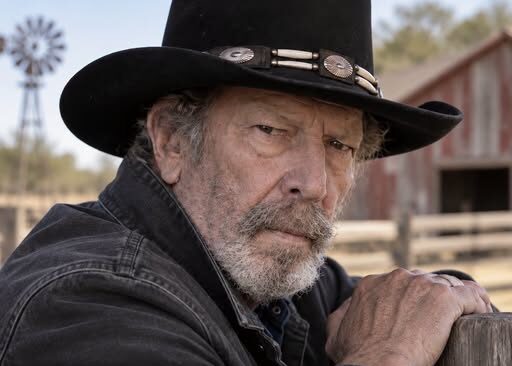
Kinky Friedman’s Death Left Texas Without One of Its Most Fearless and Unpredictable Voices
Kinky Friedman never fit comfortably inside a single description. He was a country singer, satirist, mystery novelist, columnist, animal advocate, and political candidate who spent decades challenging the expectations attached to each of those roles.
His death at the age of 79 brought an end to one of the most unconventional careers in Texas culture. Friedman died at Echo Hill Ranch near Medina, Texas, in June 2024 following a battle with Parkinson’s disease.
The announcement described him as having “stepped on a rainbow” while surrounded by family and friends. It was an appropriately distinctive farewell for a man who rarely allowed even the most serious moment to become ordinary.
More Than a Texas Entertainer
Friedman was often introduced as a Texas icon, but the familiar label never captured his complicated relationship with the state. He loved Texas deeply while questioning its institutions, traditions, political leaders, and carefully protected myths.
He did not present the state as simple or unified. His version of Texas was eccentric, contradictory, humorous, infuriating, generous, and occasionally absurd.
Friedman could praise the state’s independence in one moment and attack its failures in the next. That tension became central to his public identity and helped distinguish him from entertainers who offered audiences a safer, more polished image of Texas life.
He made people laugh, but his comedy was rarely empty. The jokes frequently carried criticism beneath them, forcing listeners to consider uncomfortable ideas after the laughter had faded.
From Richard Friedman to Kinky
He was born Richard Samet Friedman in Chicago on November 1, 1944. His family later moved to Texas, where his parents established Echo Hill Ranch near Kerrville.
The Hill Country property became an important part of Friedman’s personal story. It connected him to Texas while also giving him a place where he could write, care for animals, and retreat from the public characters he created.
The nickname Kinky came from his curly hair. What began as a simple description eventually became inseparable from his identity.
Richard Friedman might have sounded like the name of a conventional writer or businessman. Kinky Friedman sounded like someone prepared to walk onto a stage, challenge an audience, and leave people uncertain whether they had witnessed a concert, a comedy routine, or an argument.
Kinky Friedman and the Texas Jewboys
Friedman became widely known through Kinky Friedman and the Texas Jewboys, a country group whose name intentionally played with cultural expectations.
The band combined country and western traditions with Jewish humor, political commentary, and deliberately provocative material. Friedman used exaggeration, satire, and shock to examine prejudice, hypocrisy, violence, and the contradictions of American life.
The approach earned devoted admirers and fierce critics. Some listeners understood the social criticism inside the songs, while others found the language and subject matter offensive.
Friedman rarely tried to make the disagreement disappear. Controversy was not an accidental side effect of his work. It was often part of the method.
His debut album, Sold American, appeared in 1973. The title song became one of his signature compositions and demonstrated that his talent extended beyond comic provocation.
Friedman could write with genuine sadness and insight when he chose to lower the defensive shield of humor. His strongest songs revealed compassion beneath the cigar, jokes, and theatrical swagger.
Using Provocation as a Tool
Friedman belonged to a tradition of performers who used offensive or exaggerated characters to expose larger social problems. His work demanded that audiences distinguish between the attitudes being presented and the ideas being criticized.
That distinction was not always clear, and Friedman sometimes paid a professional price for refusing to make it easier.
He was not interested in universal approval. He preferred a strong reaction to polite indifference, even when that reaction placed him outside mainstream entertainment.
His public persona mixed the Jewish comic tradition with the familiar image of the independent Texas cowboy. The combination allowed him to stand both inside and outside the cultures he examined.
He could joke about Texas because he belonged to it. He could question Jewish stereotypes because he understood them personally. His work used identity as a source of both comedy and confrontation.
A Songwriter Beneath the Humor
The provocative reputation occasionally overshadowed Friedman’s abilities as a songwriter. Behind the outrageous titles and stage jokes was a musician capable of writing emotionally direct country songs.
He performed with major artists and developed friendships throughout the music world. His career placed him near figures such as Willie Nelson and Bob Dylan, while his work attracted listeners who appreciated country music that existed outside commercial formulas.
Friedman’s songs did not always provide easy comfort. They could be funny, mournful, confrontational, or deeply humane, sometimes within the same composition.
That range became essential to his longevity. An artist supported only by controversy can quickly become dated, but Friedman continued finding audiences because his strongest work contained more than the provocation surrounding it.
A Second Career as a Novelist
When his musical career slowed, Friedman reinvented himself as a mystery writer. His first novel, Greenwich Killing Time, was published in 1986.
The books featured a fictionalized version of Kinky Friedman as an amateur detective living in New York. The character shared the author’s name, humor, habits, friends, and unconventional worldview.
By turning himself into a literary character, Friedman blurred the boundary between autobiography and performance. Readers could never be entirely certain where the real man ended and the fictional personality began.
His mysteries developed an international following and introduced him to readers who may never have heard the Texas Jewboys. The novels combined detective plots with observations about friendship, mortality, politics, animals, and human foolishness.
Friedman ultimately produced a substantial collection of fiction and nonfiction. Writing was not merely an extension of his musical celebrity. It became a major career in its own right.
A Distinctive Voice in Texas Journalism
Friedman also became a columnist for Texas Monthly, where his humor and observations found a natural home.
His columns were personal, unpredictable, and unmistakably his. He could move from politics to music, from old friendships to beloved animals, without losing the distinctive rhythm of his voice.
He approached public life with suspicion toward rehearsed language. Political slogans, institutional explanations, and respectable appearances became targets because he believed they often concealed more than they revealed.
His writing did not always produce a clear policy argument or conventional conclusion. Instead, it challenged readers to question whatever had become too familiar to examine closely.
Taking His Political Persona to the Ballot
Friedman carried his outsider identity into politics when he ran for governor of Texas as an independent candidate in 2006.
His campaign slogan, “How Hard Could It Be?”, reflected the mixture of comedy and seriousness that defined the effort.
Some voters treated the campaign as performance art, while others viewed him as an authentic alternative to the established political parties. Friedman encouraged both interpretations.
He used humor to attract attention, but the campaign also addressed education, criminal justice, energy, immigration, and government reform. His positions did not fit neatly into a traditional partisan category.
Friedman received approximately 12.6 percent of the vote. He did not come close to winning, but his candidacy demonstrated the scale of dissatisfaction among Texans who felt disconnected from conventional politics.
The campaign also exposed the risks of translating satire into public policy. Statements that worked as jokes onstage could become more complicated when presented by someone seeking political authority.
Friedman nevertheless remained himself throughout the race. He did not transform into a carefully managed candidate, and he refused to remove the unpredictability that had made him famous.
Animal Rescue Behind the Public Persona
Beneath Friedman’s confrontational image was a sustained commitment to animals. He helped establish the Utopia Animal Rescue Ranch, a sanctuary dedicated to assisting abandoned and abused animals.
The work revealed a compassionate side that longtime friends and readers understood well. Friedman’s affection for dogs and other animals was not a publicity strategy. It remained one of the most consistent elements of his life.
Animals appeared throughout his writing and public remarks, often as examples of loyalty, dignity, and emotional honesty. He seemed to trust them more readily than many institutions or political leaders.
The rescue work provided a practical expression of values that could otherwise disappear beneath his comedy. Whatever contradictions surrounded his public persona, his concern for vulnerable animals was direct and enduring.
A Public Figure Who Resisted Classification
Friedman’s career contained contradictions because he refused to separate its different parts.
He was a serious songwriter who built a reputation through jokes. He was a political candidate who distrusted political language. He was a sharp critic who could show great tenderness, particularly toward friends and animals.
He could appear cynical while remaining deeply attached to Texas and the people around him. His mockery often came from disappointment rather than indifference.
Those contradictions made Friedman difficult to summarize, but they also made him memorable. He did not offer audiences a carefully filtered personality designed to avoid disagreement.
He took the risk of being misunderstood and sometimes seemed to welcome it. For Friedman, discomfort could be evidence that a joke or argument had reached a protected nerve.
His Final Years at Echo Hill Ranch
During his later years, Friedman spent significant time at Echo Hill Ranch. The property represented continuity in a life shaped by constant reinvention.
His health declined as he lived with Parkinson’s disease, but his creative identity remained intact. He continued to be remembered as a songwriter, novelist, humorist, and uniquely Texas public figure.
Friedman died at the ranch on June 26, 2024, surrounded by people close to him. News of his death was publicly announced the following day.
He was 79 years old.
The Silence Left Behind
Friedman’s absence was felt strongly because there was no obvious replacement for what he represented.
Texas has produced many celebrated singers, writers, political figures, and comedians. Few combined all four roles with the same willingness to provoke people across ideological and cultural boundaries.
He did not simply defend Texas or criticize it. He did both, often in the same sentence.
That ability allowed him to present the state as something more complicated than a collection of familiar symbols. His Texas contained ranches, campaign stages, literary detectives, rescue dogs, country songs, cigars, old friendships, and endless disagreements.
He understood that affection did not require silence. Loving a place could mean challenging it, exposing its failures, and refusing to participate in its preferred version of itself.
A Legacy Without a Simple Conclusion
Kinky Friedman did not leave behind a tidy lesson. His humor was too provocative, his politics too inconsistent, and his career too varied for a simple conclusion.
His legacy exists in the freedom with which he moved between forms. When music could no longer contain everything he wanted to say, he wrote novels. When fiction was not enough, he entered politics. When public performance became exhausting, he returned to the ranch and the animals he loved.
He remained willing to speak even when his words created discomfort. That quality could be exasperating, but it also made his voice difficult to ignore.
His songs, books, columns, and political adventures preserve different versions of the same restless personality. Together, they document a man who resisted being reduced to a respectable and easily marketable Texas legend.
Friedman’s death did not resolve the arguments surrounding his work. Some of his material will continue to offend, while other parts will continue to move people with their humor and unexpected tenderness.
That unresolved tension is appropriate. Kinky Friedman spent his life resisting comfortable conclusions, and his legacy deserves to remain as complicated as the man himself.
Texas continues without him, but it has lost a voice that made the state sound larger, stranger, funnier, and more honest. The songs remain, the books remain, and the jokes still carry their sting.
The man who delivered them is gone, leaving behind a silence that no polished replacement can easily fill.