
Tom Hanks’ Childhood of Loneliness and the Lessons That Shaped His Life
A Childhood Shaped by Constant Change
Before Tom Hanks became one of Hollywood’s most recognizable actors, his childhood was marked by frequent moves, independence, and long periods without close parental supervision.
Born in 1956, Hanks was only five years old when his parents divorced after almost 11 years of marriage. He and his older sister, Sandra, and older brother, Larry, moved with their father, Amos, while his younger brother, Jim, remained with their mother, Janet, a hospital worker who could not support all four children on her own.
Amos moved frequently as he searched for work, taking the children to different homes across California. Hanks later recalled that the family seemed to move constantly, sometimes changing homes roughly every six months.
By the time he was 10 years old, Hanks had lived in 10 different homes. The instability meant that he repeatedly had to adjust to new surroundings, new people, and new situations.
Although those circumstances could be difficult for a child, Hanks eventually came to see one part of the experience differently. He believed that constantly adapting helped him become comfortable entering unfamiliar social situations later in life.
Learning to Raise Himself
With his parents often absent from his daily life, Hanks and his siblings learned to handle many ordinary responsibilities on their own.
He has described spending time in a small apartment with his brother and sister and searching for food when they were hungry. One of the simplest meals of his childhood became particularly memorable: canned tomato soup.
The children were sometimes responsible for preparing their own meals. Tomato soup could easily become forgotten while they were occupied with other things, especially when television captured their attention.
Hanks later joked that the soup would boil over and burn on the stovetop, leaving behind a smell and layer of burnt food that became a lasting childhood memory.
He even recalled being distracted by an episode of Leave it to Beaver while the soup was cooking.
Hanks has said that he cannot stand tomato soup to this day. Yet the memory is connected to more than a disliked meal. It represents a childhood in which he and his siblings were often expected to manage things for themselves.
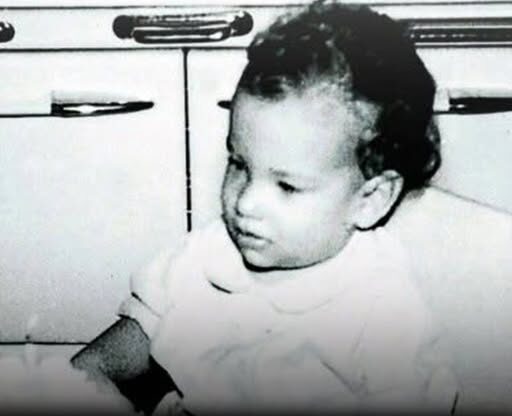
This kid had another birthday today. This photo seems like yesterday. Hanx. http://t.co/CFviGG6hrj
— Tom Hanks (@tomhanks) July 9, 2015
The Loneliness Behind the Independence
Hanks has spoken openly about feeling lonely during his childhood. He has also described himself as extremely shy when he was young.
In one recollection, he described himself as “A geek, a spaz. I was horribly, painfully, terribly shy,” while also explaining that he could make funny comments during school filmstrips without getting into trouble.
He considered himself a good and responsible child, even though he did not always have an adult nearby to guide him.
Hanks later explained that there was a degree of loneliness in his childhood and that he sometimes felt as though he had fallen through the cracks. He also made clear that he was not abused and that the situation was different from having no family at all.
Instead, he experienced a childhood in which his siblings were an important part of his daily life and in which independence came early.
He and his siblings even developed their own ways of keeping track of time. Hanks recalled using television programs as a reference for knowing what time it was.
He also began going to the movies alone when he was very young. The theater provided another place where he could spend time outside the home and discover a world that would eventually become central to his life.
Finding a Way to Belong
As a young person, Hanks searched for places where he could feel comfortable and connected. He tried different extracurricular activities, including track, soccer, and a church youth group.
Then something happened at school that changed the direction of his life.
Hanks was watching a friend perform the role of Dracula in a school play when he realized that acting was something he could pursue.
“Up until then I’d had no clue that acting was ever an option.”
Once he began taking drama classes and auditioning for school productions, he discovered that performing offered him something he had been searching for.
“[I] had more fun than I could possibly imagine.”
Acting gave Hanks a place where his shyness did not have to define him. The stage allowed him to experiment with different characters, interact with others, and develop confidence.
The young man who had spent so much of his childhood adapting to unfamiliar environments eventually found an activity in which adaptation became an advantage.
The Beginning of His Hollywood Career
Hanks studied theatre in college and approached his work with discipline. He later acknowledged that he did some “idiotic stuff,” but his college years were also marked by a strong sense of routine.
He did not use drugs, rarely drank, and was usually in bed by 10:10 p.m. His focus was increasingly directed toward acting.
His first film role came in the low-budget slasher movie He Knows You’re Alone. He then appeared in the television film Mazes and Monsters in 1982.
He also took a leading role in the television series Bosom Buddies, which ran for two seasons from 1980 to 1982.
During a guest appearance on Happy Days, Hanks met writers Lowell Ganz and Babaloo Mandel, who were working on a film called Splash.
The opportunity eventually helped introduce Hanks to a much wider audience.
Young Tom Hanks. https://t.co/XZ5H2k2esq
— History Photographed (@HistoryInPics) October 22, 2015
From Splash to Hollywood Stardom
In 1984, Hanks starred in Splash, a romantic comedy in which his character catches the attention of a beautiful mermaid played by Daryl Hannah.
The movie became an important step in his rise to mainstream recognition.
His next major success came with Big. His performance earned him his first Academy Award nomination and established him as a leading actor capable of carrying a major film.
Then came an extraordinary period in his career. Hanks won back-to-back Academy Awards for his performances in Philadelphia in 1993 and Forrest Gump in 1994.
The roles transformed him into one of the most respected and recognizable actors of his generation.
He later became known to another generation of viewers as the voice of Woody in Toy Story.
His filmography continued to expand through movies including Apollo 13, Saving Private Ryan, Sleepless in Seattle, Cast Away, and Elvis.
Building a Family of His Own
As Hanks built his career, his personal life also developed into a large blended family.
He was previously married to Samantha Lewes from 1978 to 1987. They had two children, Elizabeth Hanks and Colin Hanks.
Colin went on to become an actor himself, appearing in television productions including Roswell, Dexter, and Fargo, as well as films such as Orange County and King Kong.
Hanks married Rita Wilson in 1988. Together they have two sons, Truman and Chet, with Chet also pursuing a career in acting.
His experiences as a child gave him a different perspective when he became a father and eventually a grandfather.
Rather than repeating the circumstances of his own childhood, Hanks has spoken warmly about spending time with his grandchildren and making sure they are surrounded by affection.
A Grandfather Who Loves to Cook
Hanks has also developed a reputation within his family for taking food seriously, particularly when it comes to preparing meals for his grandchildren.
In 2023, he joked about his granddaughter before immediately correcting himself.
“All you gotta do is love those little brats, and they’re better than TV”
He quickly added: “They’re not little brats; they’re extraordinary young women. They are extraordinary young women.”
His relationship with his grandchildren also brought his childhood memories of food into a completely different setting.
Hanks has explained that feeding grandchildren properly requires getting their favorite foods just right.
“You have [to] make their macaroni and cheese just perfectly,”
For a man who spent part of his childhood preparing canned tomato soup, the contrast is striking. The meals he prepares for his grandchildren represent a different kind of family experience from the one he knew as a boy.
Big Day for Skyline High School in Oakland, CA! Glad to be a part of it! Hanx, ‘74. https://t.co/XWna7mdiYa
— Tom Hanks (@tomhanks) May 22, 2020
The Memory of Burnt Tomato Soup
The tomato soup story remains one of the clearest examples of how Hanks can look back at difficult memories with humor.
He and his siblings were responsible for preparing the soup for lunch and dinner, and television could easily distract them from what was happening on the stove.
The result was often a pot that boiled over and burned, leaving residue on the stovetop.
Hanks once joked that the amount of burnt soup would have been so extensive that cleaning it could have resembled an archaeological excavation.
“If you scraped the amount of burnt tomato soup off the stove, it would have been like an archeological dig!”
Despite the loneliness he sometimes experienced, Hanks does not describe every part of his childhood negatively. He has also remembered moments of laughter with his siblings.
“In some ways it was very cool, because we laughed a lot.”
That ability to hold both difficult and happy memories together has become an important part of the way Hanks describes his early years.
What His Childhood Meant to Him
Hanks has said that moving so often helped him become flexible. Each new home required him to adjust, meet new people, and figure out how to function in a different environment.
“It made me flexible…It gave me confidence to think I can be in any sort of social situation and know how to gracefully get out of it.”
The circumstances that once made childhood uncertain later became experiences he could draw upon in his adult life and career.
Acting itself requires constant adjustment. Actors enter new sets, work with different people, adopt different personalities, and repeatedly place themselves in unfamiliar situations.
For Hanks, learning how to adapt was something that began long before Hollywood.
A Different Feeling at Home
Hanks has also spoken about the difference that his relationship with Rita Wilson has made in his life.
After years of moving as a child and experiencing periods of loneliness, he found a sense of stability in his adult family life.
Speaking about Wilson, Hanks said: “Oh, she gets it. Oh, guess what, I don’t think that I’ll ever be lonely anymore.”
The statement offers a striking contrast with the young boy who once spent long periods without the presence of an adult to guide him.
His childhood was filled with change, but his later life became defined by a long marriage, children, grandchildren, and a career that connected him with millions of people around the world.
From a Lonely Childhood to a Remarkable Career
Tom Hanks’ story is not simply about becoming a successful actor. It is also about how the experiences of childhood can remain part of a person long after the circumstances themselves have changed.
The boy who moved from home to home, learned to prepare his own meals, discovered movies on his own, and struggled with shyness eventually found his place through acting.
The same independence that came from an unusual childhood became one of the qualities he carried into adulthood.
His memories of tomato soup, television, siblings, school, and constant moving remain small but meaningful pieces of a much larger story.
Today, those memories can be viewed alongside his decades of work in film and television and his role as a husband, father, and grandfather.
For Hanks, the past was not erased by success. Instead, the experiences of his early years became part of the perspective he carried with him.