
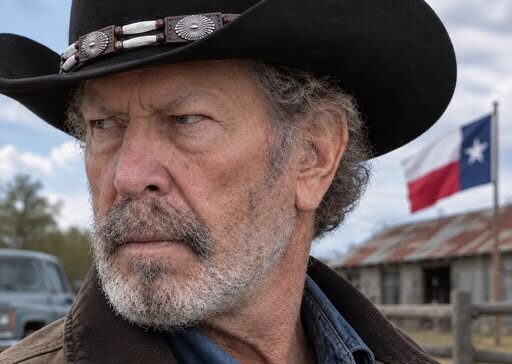
Kinky Friedman Dies at 79, Leaving Behind a Texas Legacy Built on Music, Satire, Politics, and Defiance
From the Texas Jewboys and Mystery Novels to an Independent Run for Governor, Friedman Built a Career Around Refusing to Fit Neatly Into Anyone Else’s Expectations
Texas lost one of its most unconventional voices when Kinky Friedman died in June 2024 at the age of 79.
Friedman spent much of his life doing precisely what people did not expect him to do.
He made music that mixed country traditions with sharp satire.
He turned his irreverent personality into fiction.
He entered politics without abandoning the humor and independence that had already defined him.
And through it all, respectability never seemed to be the goal.
Friedman Built His Identity Around Refusing the Expected Role
Some public figures spend their careers carefully constructing an image designed to offend as few people as possible.
Friedman followed almost the opposite path.
His appeal came partly from his willingness to challenge expectations.
He could be funny, provocative, uncomfortable, affectionate, and deliberately difficult to categorize.
That refusal to behave conventionally became one of the most recognizable parts of his public identity.
Music Was One of the First Places He Made That Attitude Clear
With the Texas Jewboys, Friedman combined country music with satire.
The result could amuse listeners.
It could also offend them.
Sometimes it did both at once.
That tension was central to the kind of performer Friedman became.
He did not seem interested in making art that disappeared harmlessly into the background.
The Texas Jewboys Made Provocation Part of the Performance
The name alone announced that Friedman was not interested in conventional presentation.
His music often relied on humor that pushed against social expectations and accepted boundaries.
For admirers, that made him distinctive.
For critics, it could make him frustrating or offensive.
Friedman did not require those two reactions to be reconciled.
Contradiction was part of the point.
His Humor Was Rarely Designed to Be Comfortable
Friedman’s satire could be playful, but it was not always gentle.
He understood that humor could entertain while also creating discomfort.
That quality followed him throughout his career.
The same instinct that appeared in his music later surfaced in his writing and political life.
Whatever medium he entered, Friedman remained unmistakably himself.
He Eventually Carried That Voice Into Fiction
Friedman also became known as a mystery novelist.
The move from music to books might have seemed like a dramatic change for another performer.
For Friedman, the underlying sensibility remained familiar.
His irreverence moved from songs onto the page.
The setting changed.
The personality did not.
Writing Gave Him Another Way to Play With His Public Persona
Friedman’s fiction became another outlet for the humor and mischief associated with his name.
Rather than leaving his established identity behind, he carried elements of it into his literary work.
That continuity helped make the different stages of his career feel connected.
Music, books, public appearances, and politics all belonged to the same larger persona.
He Was Difficult to Place in a Single Category
Calling Friedman only a musician leaves out the novelist.
Calling him only a writer leaves out the political candidate.
Calling him only a political personality leaves out the performer whose humor had already made him recognizable.
His career resisted easy labels because Friedman himself seemed to resist them.
That made his public life unusually difficult to summarize in one title.
Then He Took His Unconventional Style Into Texas Politics
In 2006, Friedman ran for governor of Texas as an independent candidate.
The campaign brought him another audience.
It placed the entertainer and writer into a setting where public image, policy, personality, and voter expectations collided.
He did not ultimately win the office.
But the campaign added another significant chapter to a career already built on unlikely turns.
His Campaign Was Consistent With the Rest of His Life
For Friedman, entering politics did not require suddenly becoming conventional.
He approached that world with the same personality that had shaped his music and books.
The campaign extended rather than erased his public identity.
Even without victory, it became part of how people remembered him.
He had once again stepped into a role that people might not have expected him to occupy.
Winning Office Was Not the Only Thing the Campaign Achieved
Friedman’s independent run introduced him to people who may not have known the Texas Jewboys or read his novels.
Politics expanded his audience.
It also reinforced his status as someone comfortable standing outside traditional structures.
An independent campaign suited a man whose career had rarely depended on fitting neatly within established categories.
His Public Persona Was Built Around Independence
That independence did not mean everyone agreed with him.
Quite the opposite.
Friedman’s provocations could divide audiences.
Some admired his refusal to conform.
Others disliked the things he said or the way he said them.
His legacy does not need to erase either reaction.
Universal Approval Was Never Necessary to His Appeal
One of the easiest ways to flatten a complicated public figure is to remove everything that made the person controversial.
That approach would make little sense with Friedman.
The rough edges were not incidental.
They were part of the identity he constructed across decades.
To remember only the harmless jokes would be to remember only a portion of him.
His Legacy Is More Complicated Than a Collection of Punch Lines
Friedman was unquestionably associated with humor.
But reducing him to jokes would overlook the larger pattern of his life.
He repeatedly used humor as a way to challenge expectations.
He could express affection while refusing obedience.
He could belong to a place while still criticizing it.
He could embrace Texas without pretending that embracing something required agreement with everything about it.
That Contradiction Became Central to His Texas Identity
Friedman was deeply associated with Texas.
Yet his relationship with the state was not built around simple conformity.
For admirers, that was part of what made him compelling.
He demonstrated that attachment to a place could exist alongside criticism of it.
Belonging did not require silence.
He Made Room for Affection Without Obedience
That may be one of the most useful ways to understand the personality Friedman presented publicly.
He could care about something and still challenge it.
He could be part of a culture without surrendering his outsider perspective.
That tension allowed him to occupy an unusual position.
He was both inside and outside the world he commented on.
Humor Did Not Always Mean Comfort
Friedman’s comedy and satire could create laughter.
But laughter was not always the final destination.
Sometimes discomfort remained.
Sometimes disagreement remained.
Sometimes a joke forced listeners to decide how they felt about the assumptions behind it.
That made his work more complicated than simple entertainment.
Not Everyone Welcomed His Provocations
Any honest account of Friedman’s legacy has to leave room for people who found some of his material offensive or objectionable.
His style was not designed for universal acceptance.
That means admiration for his independence can exist alongside criticism of particular choices.
Those responses do not have to cancel one another out.
Polishing Away the Controversy Would Distort the Man
After a public figure dies, there is often a temptation to simplify the story.
Difficult moments fade.
Sharp edges are softened.
The person becomes easier to celebrate.
With Friedman, that kind of polishing would remove too much of what made him recognizable.
The Rough Edges Were Part of the Legacy
His willingness to irritate people was connected to the same quality that allowed him to remain independent.
The provocateur and the outsider were not separate characters.
They were parts of the same public identity.
That identity could attract one person and repel another.
Friedman seemed willing to live with that.
He Showed That an Outsider Could Still Belong
One of the most interesting contradictions in Friedman’s story was that someone so committed to independence could become so closely associated with Texas identity.
He did not become part of that identity by disappearing into it.
He became part of it by remaining distinctive.
The outsider eventually became inseparable from the place he continued to challenge.
His Career Crossed Several Worlds Without Fully Settling Into Any of Them
Country music gave him one audience.
Satire gave him another dimension.
Mystery novels expanded his creative life.
Politics put his personality in front of voters.
Each chapter could have existed as a separate career.
Friedman connected all of them through the same refusal to become predictable.
That Predictability Would Have Been Easier
A musician can remain a musician.
A novelist can remain a novelist.
A political candidate can adopt the language expected of politicians.
Friedman repeatedly chose a more complicated path.
He crossed boundaries between those worlds while carrying the same unmistakable attitude with him.
His 2006 Campaign Became Another Form of Public Performance
The campaign was serious in the sense that he was genuinely running for office.
But it also existed within the broader personality Friedman had spent years developing.
He did not suddenly abandon wit or provocation simply because the setting had changed.
Politics became another arena in which he challenged expectations.
He Did Not Need to Win to Become Part of the Political Story
Friedman never became governor of Texas.
That fact matters.
But losing the election did not erase the campaign’s place in his public life.
The run demonstrated his willingness to move from commentary into participation.
Instead of merely joking about politics from outside, he stepped directly into the contest.
For Admirers, His Independence Was the Point
People who valued Friedman often valued him precisely because he resisted the pressure to become easier to categorize.
He could remain affectionate toward Texas while challenging it.
He could entertain people while making them uncomfortable.
He could participate in public life without sounding like everyone else participating in it.
That Kind of Voice Is Difficult to Replace
When a highly individual public figure dies, the loss can feel larger than the absence of one performer or writer.
The particular combination disappears too.
Another musician may be funny.
Another writer may be irreverent.
Another political outsider may challenge convention.
But the combination that made Friedman recognizable belonged to him.
His Death Leaves Behind a Question About Defiance
For people who cherished Friedman’s refusal to conform, his death raises an uncomfortable question.
Who will occupy that space now?
Who will be willing to provoke without first making sure everyone approves?
Who will challenge a place while still expressing attachment to it?
There is no simple replacement for a personality built across decades.
Friedman’s Legacy Does Not Require Agreement
Remembering him does not require accepting every joke, every provocation, or every position.
In fact, a legacy centered on independence would be poorly served by demanding unanimous approval.
People can admire some aspects of Friedman and criticize others.
That complexity fits the life he lived.
He Made Contradiction Look Like a Form of Identity
Friedman could be a Texas insider and an outsider.
A country musician and a satirist.
A novelist and a political candidate.
A source of affection and irritation at the same time.
Those contradictions did not weaken his identity.
They created it.
His Work Often Asked People to Tolerate Discomfort
That discomfort could come from humor.
It could come from politics.
It could come from the simple refusal to behave as expected.
Friedman seemed comfortable occupying spaces where other people were less comfortable.
That trait made him memorable even to people who disagreed with him.
His Texas Identity Was Never Based on Quiet Loyalty
For Friedman, loving a place did not appear to mean refusing to challenge it.
That idea became an important part of how admirers understood him.
Criticism and belonging could coexist.
One did not automatically cancel the other.
He Became Part of the Culture by Remaining Distinct From It
There is an irony in Friedman’s story.
A person who spent so much time resisting expectations eventually became an unmistakable part of Texas cultural identity.
He did not achieve that by becoming more conventional.
He achieved it while remaining difficult, humorous, provocative, and independent.
The Music Remains Only One Part of the Story
The Texas Jewboys introduced many people to Friedman’s style.
But the story continued.
The mystery novels allowed him to extend that sensibility into another form.
The gubernatorial campaign placed it into politics.
Each stage reinforced the idea that Friedman was unwilling to remain where people expected to find him.
The Books Added Mischief to His Creative Legacy
His move into mystery fiction showed that the personality behind the songs could survive on the page.
The irreverence remained.
The humor remained.
The sense that Friedman was enjoying the disruption of expectations remained.
The medium changed without erasing the voice.
Politics Added Yet Another Layer
Running for governor meant putting that voice into a setting where consequences extended beyond entertainment.
The campaign exposed Friedman to different forms of scrutiny.
It also proved that he was willing to test his outsider status in an institution built around organized political competition.
He did not win, but the campaign became impossible to separate from his larger story.
His Public Life Was Never About Neat Progression
There was no simple ladder.
Music did not merely lead to books.
Books did not merely lead to politics.
Instead, the different chapters overlapped around a consistent personality.
Friedman remained the connection between them.
That Personality Could Be Both Charming and Challenging
Admiration for Friedman often came with an awareness that he could push too far for some audiences.
His provocations were part of the attraction for certain people and part of the problem for others.
That disagreement is itself part of the legacy.
A man remembered for resisting conformity should not be remembered through a perfectly polished consensus.
His Death at 79 Closed an Unusually Varied Public Career
By the time Friedman died in June 2024, he had accumulated several identities.
Musician.
Satirist.
Novelist.
Political candidate.
Texas personality.
None entirely replaced the others.
For His Admirers, the Loss Is About More Than Nostalgia
They are not only mourning old songs, books, jokes, or campaign memories.
They are mourning a certain type of public independence.
Friedman demonstrated that a person could resist easy approval and still become deeply connected to a place and its culture.
That combination is difficult to reproduce.
He Never Needed to Become Universally Acceptable
That may be one of the clearest threads running through his life.
Friedman did not seem to build his career around the hope that everyone would eventually agree with him.
He built it around having a voice recognizable enough that people knew exactly when Kinky Friedman had entered the conversation.
His Legacy Is Strongest When Its Contradictions Remain Visible
There is little value in turning him into a universally agreeable figure after his death.
That was not who he was.
The humor could offend.
The politics could divide.
The public persona could frustrate.
And the independence could inspire.
All of those things can exist in the same memory.
Kinky Friedman Made Being Unclassifiable Part of the Point
He moved between music, fiction, satire, and politics without surrendering the qualities that made him immediately recognizable.
He challenged the place he belonged to while remaining unmistakably connected to it.
He entertained people without promising to make them comfortable.
And he showed that an outsider does not always remain outside forever.
Sometimes the outsider becomes part of the identity of the place itself.
The Question Left Behind Is Difficult to Answer
Who becomes the next voice willing to be that stubbornly independent?
Who risks irritation instead of carefully pursuing approval?
Who can belong without conforming?
There may never be a direct answer.
Perhaps there should not be.
Kinky Friedman spent his life resisting predictable roles.
Replacing him with someone who simply copied the performance would miss the lesson entirely.
His most enduring legacy may be the permission he gave others to remain complicated: to love without obeying, to joke without always comforting, to belong without surrendering individuality, and to refuse the idea that every rough edge needs to be polished away.
Friedman is gone, but the defiance that made him impossible to ignore remains part of how Texas will remember him.