
Princess Diana’s Quietest Moments Reveal the Humanity Behind the Royal Image
The Crown Was Only One Part of Diana’s Story
Princess Diana became one of the most photographed women in the world, yet the images that continue to resonate most strongly are often not the grandest ones.
They are the quieter photographs.
A smile exchanged with one of her sons.
A conversation with someone who needed comfort.
A moment of laughter away from formal ceremony.
A hand extended toward a stranger.
Those scenes help explain why Diana’s appeal extended far beyond royal titles and official duties.
People Saw Something Familiar in Her
Diana lived inside an extraordinary institution.
There were palaces, state occasions, formal engagements, international travel and constant media attention.
Yet many of her most memorable moments felt strikingly ordinary.
She laughed openly.
She knelt to speak with children.
She listened closely when people talked to her.
In photographs, those small gestures often seemed to reduce the distance between royalty and everyone watching.
Her Public Image Was Built on Contrasts
Diana represented glamour and tradition, but she was also associated with vulnerability and emotional openness.
She could appear in an elegant gown at a major event and later be remembered just as strongly for a candid moment with her children.
That contrast became one of the defining qualities of her public image.
The formality surrounding her never completely concealed the person beneath it.
She Was Born Into Privilege but Not Simplicity
Diana was born into an aristocratic family in 1961.
Her upbringing gave her familiarity with privilege and the social world that eventually surrounded her as a member of the royal family.
But privilege did not mean an absence of personal pressure.
Her life would eventually become one of the most intensely observed in modern celebrity culture.
Almost every public appearance could be photographed, analyzed and discussed.
Royal Life Magnified Everything
Once Diana entered the royal family, ordinary experiences became public events.
Clothing choices generated headlines.
Facial expressions were interpreted.
Relationships were scrutinized.
Even quiet family moments could become international news.
That level of attention created an unusual tension between the public role she was expected to perform and the private life she was trying to protect.
Motherhood Became One of the Most Important Parts of Her Life
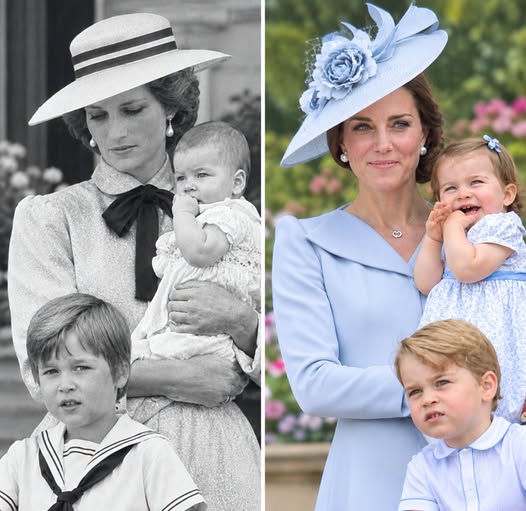
Photographs of Diana with Princes William and Harry remain among the most enduring images associated with her.
They often show something very different from formal royal portraiture.
There is movement.
There is laughter.
There is physical affection.
Instead of emphasizing rank, the images emphasize the relationship between a mother and her sons.
She Tried to Give Her Sons Ordinary Experiences
One of the most frequently discussed aspects of Diana’s parenting was her desire to expose William and Harry to experiences beyond the formal world surrounding them.
That effort carried particular meaning because their childhoods were never going to be completely ordinary.
They were growing up within a royal family and under intense public attention.
Small attempts at normality therefore became especially important.
The Contrast Made Those Family Photos Powerful
There is something poignant about seeing a globally recognizable princess sharing an ordinary moment with her children.
The title remains.
The security remains.
The cameras remain.
But for a moment, the photograph appears to contain only a parent and her children.
That is why such images continue to feel intimate even decades later.
Diana’s Appeal Extended Beyond Her Family
Her public reputation was also shaped by the way she interacted with people during charitable work.
Photographs frequently captured her listening rather than simply posing.
She appeared willing to move closer to people who were often treated as distant from society.
That quality became central to the way many people remembered her.
Small Gestures Could Carry Enormous Meaning
A conversation can seem insignificant when compared with major political or ceremonial events.
But for the person being spoken to, it may matter enormously.
Diana’s ability to make individuals feel noticed became part of her public identity.
She often appeared focused on the person directly in front of her rather than on the crowd or photographers around them.
That is difficult to capture in an official biography but easy to recognize in a photograph.
Her Empathy Became Part of Her Legacy
Diana’s memory remains strongly connected with ideas of compassion and service.
Those qualities were reinforced through the causes she supported and through the way she interacted publicly with people facing illness, exclusion or hardship.
Her legacy cannot be reduced to any single photograph or charitable appearance.
But repeated moments helped create a consistent impression.
People felt that she cared.
The Most Memorable Images Often Lack Ceremony
Official royal photographs have their own historical value.
They document weddings, state visits, formal appearances and major public events.
Yet the photographs people often return to are different.
Diana laughing.
Diana watching her children.
Diana leaning forward during a conversation.
Diana caught in an expression that appears completely unplanned.
Those Images Feel More Personal
Part of their power comes from the sense that the viewer is seeing something unscripted.
The posture is less formal.
The smile feels spontaneous.
The distance between public figure and private person seems temporarily reduced.
Of course, no photograph can reveal an entire personality.
But a series of candid moments can help explain why people felt such a strong emotional connection to her.
Not Every Photograph Needs to Reveal a Secret
Old images of Diana regularly resurface online.
Sometimes they are described as rare, forgotten or newly discovered.
That language can create the impression that every photograph must reveal something previously unknown.
It does not.
A photograph can matter simply because it allows people to notice a familiar quality again.
The Value Can Be in Recognition Rather Than Revelation
An overlooked image might show Diana laughing with her sons.
Another might capture an attentive conversation during an engagement.
Those pictures may not alter the historical record.
They can still deepen the emotional understanding people already have of her.
Sometimes a quiet photograph says more through recognition than a dramatic headline could say through revelation.
Her Life Contained Contradictions No Image Can Fully Explain
Diana’s story was complicated.
Public affection existed alongside intense scrutiny.
Privilege existed alongside personal difficulty.
Royal duty existed alongside a desire for greater independence.
She could be surrounded by enormous crowds and still become a symbol of loneliness to many observers.
No single photograph can resolve those contradictions.
That Complexity Is Part of Why Interest Has Endured
People continue revisiting Diana’s life because it cannot be reduced easily to one description.
She was a princess.
She was a mother.
She was a public figure dealing with extraordinary pressure.
She was also a person capable of moments that felt surprisingly intimate despite occurring in front of cameras.
The Cameras That Pursued Her Also Preserved Her
Diana’s relationship with photography was complicated.
The relentless attention could be intrusive.
Yet those same decades of photographs created an enormous visual record of her life.
Today, those images allow people who never saw her in person to encounter something of her personality.
They capture expressions and interactions that written descriptions alone cannot fully reproduce.
Her Smile Became One of Her Most Recognizable Features
Many photographs show Diana smiling broadly rather than maintaining a carefully controlled formal expression.
That openness contributed to the sense that she was approachable.
The effect was particularly strong when she was photographed with children or during less formal engagements.
The smile often seemed to belong to the moment rather than the cameras.
Listening Was Just as Important as Speaking
One of the quieter qualities visible in many images is attention.
Diana often appeared intensely focused on whoever was speaking to her.
She leaned in.
She maintained eye contact.
She seemed willing to pause.
Those gestures can sound insignificant, yet they were part of what made her public interactions distinctive.
Being Seen Can Matter Deeply
For someone experiencing illness, grief or exclusion, being acknowledged by a prominent person can carry symbolic weight.
Diana’s public work repeatedly produced images in which the emphasis was not simply on her presence but on the connection taking place.
The other person mattered in the photograph.
That helped separate those encounters from purely ceremonial appearances.
Her Human Approach Challenged Royal Distance
Royal institutions traditionally depend on a certain degree of formality.
Distance reinforces ceremony and hierarchy.
Diana often seemed most memorable when she reduced that distance.
Whether she was speaking with a child, sitting beside a patient or appearing informally with her sons, she made the interaction feel less ceremonial.
Her Sons Carry Different Parts of Her Public Legacy
William and Harry grew into adults with very different public roles and paths.
Yet both have participated in charitable and service-oriented work that can be viewed alongside values long associated with their mother’s memory.
Those similarities should not erase the differences between them.
Each son has developed his own public identity.
But Diana’s influence remains an unavoidable part of how their lives are interpreted.
For Them, Her Legacy Was Never Merely Public
The world remembers Princess Diana through photographs, speeches and charitable work.
William and Harry remember their mother.
That difference is easy to overlook.
Images that have become historical documents for millions of people may represent personal family memories for her sons.
The public symbol and private relationship existed at the same time.
Her Effort to Create Normality Became Part of the Memory
The ordinary experiences Diana sought for her children are often remembered because they contrasted so sharply with royal life.
She could never remove the extraordinary circumstances surrounding them.
But she could create moments in which those circumstances mattered less.
That effort remains visible in many of the photographs people still treasure.
Diana’s Humanity Became More Powerful Than Her Title
Titles can establish status.
They cannot create affection on their own.
Diana’s lasting popularity seems to have depended on something beyond being Princess of Wales.
People responded to what they believed they saw beneath the role.
Warmth.
Vulnerability.
Humor.
Empathy.
The Most Powerful Photos Capture a Person, Not a Symbol
A formal portrait captures history.
A candid photograph can capture personality.
That distinction helps explain why quieter images of Diana continue to circulate decades later.
They appear to offer brief glimpses beyond the carefully constructed public world surrounding her.
Whether every interpretation is accurate is impossible to know.
But the emotional response those photographs generate is undeniable.
People Continue Looking for the Woman Behind the Image
Diana became an icon during her lifetime.
After her death, that status only grew.
Icons can become simplified over time.
Real people are more complicated.
That may be one reason audiences continue returning to less formal photographs.
They offer an opportunity to see Diana not only as a historical figure but as a person moving through ordinary moments.
Her Legacy Is Also About How People Remember Feeling
Historical legacies are not built exclusively from official accomplishments.
They are also shaped by emotional memory.
People remember how someone made them feel.
Diana became associated with making people feel noticed.
That impression survived long after individual engagements and headlines faded.
Kindness Became Part of the Story That Outlived Her
Decades later, the public conversation surrounding Diana still returns frequently to kindness.
It appears in memories of her charitable work.
It appears in stories about her interactions with ordinary people.
It appears in photographs of her with her children.
Those memories have become part of how later generations encounter her story.
Time Has Changed How Her Photographs Are Viewed
When many of the photographs were taken, they were part of current celebrity and royal coverage.
Today they are historical images.
The passage of time changes their meaning.
A photograph that once accompanied a daily newspaper story can now feel like a window into another era.
Expressions that seemed ordinary then can feel especially poignant now.
The Quietest Photographs Can Feel the Most Powerful
There is no crown in some of the most memorable images.
No grand room.
No carefully arranged ceremony.
Sometimes there is simply Diana laughing.
Or listening.
Or reaching toward someone.
Those moments strip away much of the symbolism surrounding royal life.
They Remind Us Why Her Memory Endures
Diana’s life has been examined through countless books, documentaries and articles.
Every part of it has been interpreted repeatedly.
Yet photographs still have an unusual power.
They ask for only a few seconds of attention.
And sometimes, those few seconds communicate more effectively than pages of explanation.
No Crown Could Tell the Whole Story
Princess Diana’s title placed her inside history.
Her public role made her famous around the world.
But the photographs people continue returning to suggest that neither fame nor royalty fully explains why she remains so emotionally significant.
The lasting fascination lies in quieter details.
A mother trying to create ordinary memories for her sons.
A woman taking time to listen.
A spontaneous smile escaping the formality around her.
A gesture of comfort offered to someone who needed it.
The crown was part of Diana’s story.
But the humanity visible beneath it is what made so many people remember her long after the ceremonies ended.