
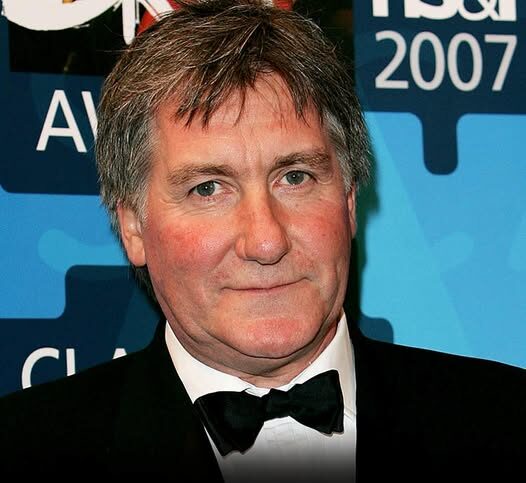
George Fenton Dies at 76: The Legendary Composer Behind Groundhog Day, Gandhi, and David Attenborough’s Nature Documentaries
Hollywood and the Music World Mourn the Loss of Five-Time Oscar Nominee George Fenton, Whose Unforgettable Scores Brought Emotion to More Than 100 Films and Some of Television’s Most Beloved Documentaries
The entertainment world is mourning the loss of one of Britain’s most accomplished and influential composers.
George Fenton, the celebrated musician whose extraordinary career included the soundtracks of Groundhog Day, Gandhi, Dangerous Liaisons, and some of David Attenborough’s most beloved nature documentaries, has died at the age of 76.
His death was confirmed on Monday, October 5, 2026, through an announcement from his family and management.
Fenton had spent more than five decades creating music that helped audiences experience the emotions of stories told on cinema screens and television.
His compositions accompanied moments of romance, tragedy, humor, triumph, and extraordinary natural beauty.
Millions of people knew his music without necessarily knowing the man behind it.
From the moving score of Gandhi to the unforgettable atmosphere of Groundhog Day, his work became part of the emotional identity of some of entertainment’s most recognizable productions.
He also helped transform the way viewers experienced wildlife documentaries, composing orchestral music that brought drama and beauty to images of the natural world.
Although his name was less familiar to general audiences than those of the actors and presenters associated with his work, Fenton’s influence was enormous.
His death marks the loss of a composer whose music touched generations across film, television, and the concert stage.
George Fenton’s Death Was Confirmed on October 5, 2026
George Fenton died unexpectedly on Monday, October 5, 2026.
He was 76 years old.
The announcement was shared by his family and representatives, with a statement also appearing on his official website.
The family confirmed that he was survived by his wife Amanda, his former wife Jane, and his three daughters, Gemma, Grace, and Bridget.
He also leaves behind six grandchildren: Lola, Audrey, Alfred, George, Frank, and Beatrice.
The announcement emphasized not only the loved ones he leaves behind but also the extraordinary body of music he created.
No specific medical cause of death was disclosed in the initial official statement.
That distinction is important, as reports describing his passing as unexpected should not be interpreted as confirmation of any particular illness or medical event.
The Music Industry Responded to the Loss
Following the announcement, tributes appeared from organizations and professionals across the entertainment industry.
The Society of Composers & Lyricists remembered Fenton as a versatile musician whose work enriched film, television, theater, and popular music.
Broadcast Music, Inc., known as BMI, also published a tribute recognizing his remarkable career and artistic range.
Those remembrances reflected the respect Fenton had earned among fellow composers, performers, and filmmakers.
He was known for his ability to create music that supported a story without overwhelming it.
His scores could be grand and orchestral when the subject demanded scale.
At other times, he used restrained melodies to create a deeply personal emotional response.
That versatility helped make him one of the most sought-after composers in British and international screen entertainment.
Who Was George Fenton?
George Fenton was born George Richard Ian Howe on October 19, 1949, in Bromley, Kent, England.
He grew up in a household where music played an important role.
His father was a drummer, while his mother played the piano.
From an early age, Fenton developed an interest in performing.
He began learning guitar as a child and later studied the organ.
These experiences provided the foundation for a musical career that would eventually reach audiences across the world.
However, his path into film composing was far from straightforward.
As a young man, he considered several possibilities, including acting and performing as a musician.
Those early ambitions would eventually introduce him to the world of theater, where his professional journey began.
His First Ambition Wasn’t Necessarily Composing Film Music
Long before he became an Oscar-nominated composer, Fenton was interested in the excitement of live performance.
He played guitar and explored acting opportunities.
His musical interests were broad, incorporating popular music as well as the more formal traditions he encountered through studying instruments.
During his youth, he did not imagine that writing music for a living would become his defining career.
On his official website, he later reflected on how unexpected that professional direction had been.
Nevertheless, music remained central to his interests.
As opportunities emerged, he discovered that composing offered a way to combine his musical abilities with his understanding of dramatic storytelling.
He Made His West End Debut in 1968
One of Fenton’s earliest professional milestones came in 1968.
He appeared in Alan Bennett’s stage production Forty Years On.
The production also featured the distinguished actor John Gielgud.
It was during this period that the young performer began using the name George Fenton.
He adopted Fenton, his mother’s maiden name, because another performer was already registered professionally under the name George Howe.
The change became permanent.
It was the name he would use throughout his successful career as a composer.
His experience in the theater also introduced him to the close relationship between music, dialogue, performance, and storytelling.
A Career in Theater Helped Shape His Musical Style
After his early acting work, Fenton became increasingly involved in composing music for theatrical productions.
He worked with important British theater institutions, including the Royal Shakespeare Company and the National Theatre.
In 1974, he received a significant opportunity involving a production of Twelfth Night.
His responsibilities included composing and musical direction.
The experience strengthened his ability to create music around characters, dramatic pacing, and emotional atmosphere.
Unlike a standalone song, theatrical music often needs to respond to the timing and meaning of a performance.
Fenton became highly skilled at that kind of musical storytelling.
Those abilities would later become essential to his work in television and film.
Television Opened the Door to a Larger Audience
As Fenton’s reputation grew, he began receiving opportunities to compose for television.
His work during the 1970s and 1980s helped establish him as a significant creative figure within British broadcasting.
He contributed music to television dramas and other productions that required different emotional approaches.
Some projects called for tension and mystery.
Others required warmth, humor, or a more reflective musical atmosphere.
Fenton’s ability to adjust his style made him particularly valuable.
His work on British television eventually became so widespread that many viewers heard his compositions regularly without recognizing his name.
He Created Music for Some of Britain’s Best-Known Television Programs
Fenton’s television credits included the detective drama Bergerac and the acclaimed series The Jewel in the Crown.
He also composed music associated with Alan Bennett’s Talking Heads.
His work on these productions demonstrated that music could play a central role in establishing the identity of a television series.
A memorable theme can make a program instantly recognizable.
Even years after a show has ended, a familiar melody may remind viewers of particular characters or stories.
Fenton possessed a talent for creating music that remained connected to those memories.
That talent would eventually bring him to the attention of major filmmakers.
His Breakthrough Came With the Film Gandhi
In 1982, Fenton reached a major turning point in his career.
He worked with legendary Indian musician Ravi Shankar on the score for Gandhi.
The historical drama was directed by Richard Attenborough and starred Ben Kingsley as Mahatma Gandhi.
The film became a major international success, earning widespread critical acclaim.
Its music played an important role in supporting the story’s historical scale and emotional themes.
Fenton and Shankar’s collaboration combined different musical influences to create a distinctive soundtrack.
The score earned an Academy Award nomination.
For Fenton, it was the beginning of a remarkable period of recognition in international cinema.
Richard Attenborough Became One of His Most Important Collaborators
Following Gandhi, Fenton developed a long professional relationship with director Richard Attenborough.
The two worked together on several acclaimed films.
Their collaborations included Cry Freedom, Chaplin, and Shadowlands.
These productions explored very different subjects, requiring Fenton to adapt his musical approach accordingly.
Historical drama, biography, and deeply personal storytelling each present distinct challenges for a composer.
Fenton responded by creating scores that emphasized the emotional meaning of the scenes.
His work helped establish him as a musician capable of handling major international productions.
It is important to distinguish Richard Attenborough, the film director, from his younger brother David Attenborough, the celebrated natural history broadcaster.
Fenton worked extensively with both men, but in different areas of entertainment.
Cry Freedom Brought Two More Oscar Nominations
One of Fenton’s most significant achievements came through the 1987 film Cry Freedom.
Directed by Richard Attenborough, the film told the story of South African anti-apartheid activist Steve Biko and journalist Donald Woods.
Fenton worked with South African musician Jonas Gwangwa on the score.
The collaboration reflected the film’s setting and themes.
The music earned an Academy Award nomination for Best Original Score.
Fenton and his collaborators also received recognition for the original song Cry Freedom.
The film brought him two Oscar nominations associated with the same production.
It further strengthened his reputation as a composer capable of combining musical ambition with dramatic sensitivity.
Five Academy Award Nominations Marked His Career
Across his career, Fenton received five Academy Award nominations.
His nominated work included the scores for Gandhi, Cry Freedom, Dangerous Liaisons, and The Fisher King.
He also received a nomination for the original song associated with Cry Freedom.
Although he never won a competitive Academy Award, the nominations reflected the extraordinary range of his work.
His music appeared in historical dramas, romantic stories, and psychologically complex films.
That range distinguished him from composers primarily associated with one genre.
Fenton could move comfortably between different cinematic worlds while maintaining his own artistic identity.
Groundhog Day Introduced His Music to a New Generation
One of the most beloved films associated with Fenton is Groundhog Day.
Released in 1993, the comedy starred Bill Murray as Phil Connors, a television weatherman who repeatedly experiences the same day.
The film was directed by Harold Ramis and became a classic of American cinema.
Its story combines humor, romance, personal growth, and questions about the meaning of life.
Fenton’s music supported those changing emotional tones.
At times, the film is playful and absurd.
At other moments, it becomes surprisingly thoughtful.
The score helps connect those shifts without losing the story’s warmth.
Decades later, Groundhog Day remains one of the films for which Fenton is best remembered.
His Music Helped Make Groundhog Day More Than a Comedy
Groundhog Day initially presents a humorous situation involving a man trapped in an endless repetition of events.
But as the story progresses, its emotional themes become more complex.
Phil Connors begins reconsidering his choices and his relationships with others.
He gradually learns that personal growth requires more than manipulating circumstances for his own benefit.
Fenton’s score supports that transformation.
Instead of treating every scene as a joke, the music helps create moments of tenderness and reflection.
The result is a film that combines entertainment with an unexpectedly meaningful story.
That emotional range is part of why Groundhog Day remains popular more than three decades after its release.
Dangerous Liaisons Showed Another Side of His Talent
In 1988, Fenton composed music for Dangerous Liaisons.
The historical drama was directed by Stephen Frears and starred Glenn Close, John Malkovich, and Michelle Pfeiffer.
Set in aristocratic French society, the film explored manipulation, seduction, power, and betrayal.
Its period setting required a musical approach very different from contemporary comedies.
Fenton created a score suited to the film’s elaborate atmosphere and emotional tension.
The music earned him another Academy Award nomination.
It demonstrated his ability to support a visually sophisticated period drama while contributing to its psychological intensity.
The Fisher King Added to His Oscar Recognition
Fenton also received an Academy Award nomination for The Fisher King.
Released in 1991, the film was directed by Terry Gilliam and starred Robin Williams and Jeff Bridges.
Its story combined emotional drama with imaginative and sometimes surreal elements.
The score needed to reflect the film’s unusual mixture of realism, fantasy, grief, and hope.
Fenton’s music contributed to that atmosphere.
The nomination further demonstrated his versatility.
By this stage, his reputation extended far beyond British television and historical drama.
He had become an established name in Hollywood film scoring.
His Hollywood Career Included Romantic Comedies and Major Dramas
Fenton continued composing music for a wide range of American and international productions.
His credits included You’ve Got Mail, Sweet Home Alabama, Ever After, Anna and the King, and Hitch.
He also worked on The Madness of King George and The Lady in the Van.
These films differed significantly in tone and subject matter.
Some relied on romantic warmth and humor.
Others explored historical figures or emotionally difficult themes.
Fenton adjusted his compositions to suit each project.
His ability to move across genres helped sustain a career that included music for more than 100 feature films.
His Work With Ken Loach Became Another Defining Partnership
Alongside his Hollywood achievements, Fenton developed a longstanding collaboration with British filmmaker Ken Loach.
Loach is known for films exploring working-class life, social inequality, and personal struggles.
Fenton composed scores for numerous Loach productions, including The Wind That Shakes the Barley, I, Daniel Blake, Sorry We Missed You, and The Old Oak.
These films often require a restrained musical approach.
The stories focus on ordinary people confronting difficult circumstances.
Music that is too dramatic can overwhelm the realism of such scenes.
Fenton was skilled at creating compositions that supported the emotional atmosphere without distracting from the performances.
The partnership became one of the most enduring of his career.
David Attenborough’s Nature Documentaries Brought His Music Into Millions of Homes
For many viewers, George Fenton’s most recognizable contributions may be his scores for nature documentaries presented by Sir David Attenborough.
These productions introduced audiences to extraordinary landscapes and wildlife from around the planet.
Fenton’s music helped transform the imagery into a deeply emotional experience.
A sequence showing an animal navigating danger could become tense and suspenseful.
A wide view of the ocean could feel majestic and mysterious.
A tender moment involving wildlife could become unexpectedly moving.
His compositions gave these sequences an emotional structure that complemented the narration and photography.
Through these documentaries, his work reached viewers across generations and continents.
The Blue Planet Became a Landmark in Natural History Television
One of Fenton’s greatest achievements was composing music for The Blue Planet.
The BBC documentary series premiered in 2001 and explored life beneath the world’s oceans.
Presented by David Attenborough, it introduced audiences to extraordinary marine environments and creatures.
The program’s visual achievements were remarkable.
But its music became equally memorable.
Fenton created sweeping orchestral compositions that reflected the vastness and mystery of the underwater world.
The score moved between excitement, tension, wonder, and quiet beauty.
His work earned major awards and helped establish a new standard for documentary music.
Planet Earth Further Established His Legacy
Fenton also composed for the acclaimed BBC documentary series Planet Earth, released in 2006.
The production explored habitats and wildlife across the globe.
It featured extraordinary cinematography and detailed natural history storytelling.
Fenton’s music brought additional emotional depth to the visual material.
His score helped emphasize the scale of mountains, forests, deserts, and other environments.
It also supported individual animal stories.
The documentary became internationally celebrated and introduced his work to another enormous audience.
For many people, Fenton’s compositions became inseparable from the breathtaking images shown on screen.
Frozen Planet Showed His Ability to Capture Extreme Environments
In 2011, Fenton contributed the music for Frozen Planet.
The documentary explored life in the Arctic and Antarctic regions.
Its images presented landscapes of extraordinary beauty alongside harsh environmental conditions.
Fenton created music that reflected the scale and emotional complexity of those environments.
His compositions could evoke isolation and danger while also communicating wonder.
The score helped viewers connect with animals surviving in difficult conditions.
Through the combination of cinematography, narration, and music, Frozen Planet became another celebrated BBC natural history production.
Wild Isles Was Among His Later Nature Documentary Achievements
Fenton’s collaboration with natural history television continued into the 2020s.
In 2023, he composed music for Wild Isles.
The BBC series focused on wildlife in Britain and Ireland.
Presented by David Attenborough, it explored familiar landscapes and the remarkable animal life found within them.
Fenton’s score once again helped create an atmosphere of discovery and emotional connection.
The production demonstrated that he remained creatively active decades after beginning his career.
His ability to respond musically to the natural world continued to be an important part of his artistic identity.
His Documentary Music Was Performed Beyond Television
Fenton’s nature scores also found audiences in concert settings.
He became involved in live performances combining music with wildlife imagery.
These events allowed audiences to experience documentary compositions through full orchestral arrangements.
The performances highlighted the complexity and richness of the original scores.
They also demonstrated how music written to accompany images could stand as a significant artistic achievement in its own right.
For Fenton, conducting his music before live audiences became another way to share his work.
The concerts brought together people interested in classical performance, film music, and nature documentaries.
Millions Heard His BBC Themes Without Knowing His Name
Another extraordinary aspect of Fenton’s career was his work for television news.
He composed music associated with BBC news and current affairs programs.
His credits included themes for Newsnight and major BBC news bulletins.
He also contributed music connected with programs such as The Money Programme.
For viewers in Britain, these compositions became familiar through repeated broadcasts.
The music often played during introductions, headlines, and transitions.
Although audiences may not have consciously noticed the composer, the themes helped establish each program’s identity.
This everyday presence made Fenton one of the most widely heard composers in British broadcasting.
His Recognition Extended Far Beyond the Academy Awards
Fenton’s achievements were recognized by several major award organizations.
In addition to his five Academy Award nominations, he received three BAFTA Awards and two Emmy Awards.
He also earned five Ivor Novello Awards.
His work brought Grammy and Golden Globe nominations, alongside recognition from other organizations in the music industry.
These honors reflected his success across different forms of entertainment.
Film scores, documentary music, and television compositions each require distinct creative skills.
Fenton’s ability to excel in all of them made his career particularly remarkable.
He Was Appointed a CBE in 2023
In 2023, Fenton received another major honor.
He was appointed Commander of the Order of the British Empire, commonly abbreviated as CBE.
The recognition was awarded for his services to music.
It acknowledged decades of creative contributions that had reached audiences in Britain and internationally.
For a composer who began his career playing guitar and working in theater, the appointment represented an extraordinary professional milestone.
It also recognized the lasting cultural significance of music created for film and television.
He Continued Working Until the Final Months of His Life
Despite his long career, Fenton remained professionally active in his later years.
He continued creating scores and participating in musical projects.
In September 2026, his work was associated with the film Up Against It, directed by Trudie Styler.
The film premiered at the Toronto International Film Festival on September 12.
That project demonstrated that Fenton was still contributing to contemporary cinema shortly before his death.
His continuing activity made the announcement of his passing especially unexpected for colleagues and admirers.
He had not become a composer remembered only for work from decades earlier.
His professional life remained connected to new productions and creative opportunities.
His Final Film Work Became Part of an Extraordinary Legacy
The release of Up Against It shortly before Fenton’s death provided another example of his enduring commitment to composing.
Throughout his career, he worked with directors from different generations and artistic backgrounds.
He did not limit himself to productions of one scale or genre.
Some of his scores accompanied internationally successful Hollywood films.
Others supported smaller British dramas focused on social realism.
His documentary music reached audiences who might never attend a traditional orchestral concert.
And his television themes became part of daily broadcasting.
Few composers achieve such a broad and lasting presence across entertainment.
The Secret to His Success Was Understanding the Story
One of Fenton’s greatest strengths was his ability to write music that served the production rather than competing with it.
He understood that a powerful score does not always need to dominate a scene.
Sometimes music must create energy and excitement.
At other moments, restraint can be more effective.
A quiet melody may communicate sadness without requiring dialogue.
A sweeping orchestral passage can give an image a sense of grandeur.
Fenton demonstrated both approaches throughout his career.
That sensitivity helped him develop lasting working relationships with directors who trusted his musical judgment.
His Music Connected Generations of Viewers
Fenton’s compositions reached audiences in remarkably different ways.
Movie lovers heard his music in cinemas during the 1980s and 1990s.
Families encountered his work through nature documentaries.
British television viewers heard his themes during regular news broadcasts.
Younger generations discovered his music through streaming platforms and repeat screenings of classic films.
The result was a body of work that crossed age groups and entertainment formats.
Even people unfamiliar with his name may have heard his compositions many times.
That reach is one of the defining features of his legacy.
His Family Was at the Center of the Official Announcement
While Fenton’s professional achievements received worldwide recognition, the announcement of his death also emphasized his family.
He is survived by his wife Amanda and his former wife Jane.
His daughters, Gemma, Grace, and Bridget, were named in the statement.
So were his six grandchildren.
These family connections reflect the personal life behind a career that spanned more than five decades.
For audiences, Fenton was the creator of unforgettable music.
For his loved ones, he was also a husband, father, grandfather, and member of a family now mourning his loss.
Why George Fenton’s Death Matters to Film and Television
The loss of a composer can sometimes be less immediately visible than the death of a famous actor or performer.
Audiences often associate films with the people they see on screen.
But composers shape much of the emotional experience without appearing in front of the camera.
Fenton’s music helped establish the atmosphere of historical dramas, romantic comedies, wildlife documentaries, and television programs.
His contributions were essential to productions that became cultural landmarks.
When viewers remember a moving scene from Gandhi or a breathtaking sequence from The Blue Planet, music is often part of what makes that memory powerful.
That is why his career holds such importance in entertainment history.
A Composer Whose Name Deserves to Be Remembered
George Fenton’s work demonstrates that influence in entertainment is not always measured by public recognition.
Some of the industry’s most important creative figures work primarily behind the scenes.
Their contributions shape how audiences experience stories even when their names remain unfamiliar.
Fenton helped define the atmosphere of films watched by millions.
He created themes that became part of daily television life.
And he transformed extraordinary wildlife images into deeply emotional experiences through orchestral music.
His achievements represent a remarkable combination of artistic versatility and professional longevity.
Remembering George Fenton, 1949–2026
George Fenton died on October 5, 2026, at the age of 76, leaving behind one of the most impressive bodies of work in modern film and television music.
Born George Richard Ian Howe in Bromley, England, he began his professional life as a musician and actor before discovering his extraordinary talent for composing.
His career took him from British theater to major Hollywood productions.
Along the way, he earned five Academy Award nominations and worked with celebrated filmmakers including Richard Attenborough, Stephen Frears, Terry Gilliam, Nora Ephron, and Ken Loach.
His film scores accompanied unforgettable productions such as Gandhi, Cry Freedom, Dangerous Liaisons, Groundhog Day, and The Fisher King.
His work with David Attenborough brought music to some of television’s greatest natural history documentaries, including The Blue Planet, Planet Earth, Frozen Planet, and Wild Isles.
He also created themes heard by generations of British television viewers.
In 2023, his achievements were recognized with a CBE for services to music.
And even in the final months of his life, he remained involved in new creative projects.
For his family, his passing represents a deeply personal loss.
For the entertainment industry, it marks the end of a remarkable career that influenced how audiences experience films, documentaries, and television.
But his music will continue reaching people who may never have known his name.
Every time someone revisits Groundhog Day, watches a celebrated Attenborough documentary, or hears one of his unforgettable television themes, a part of George Fenton’s artistic legacy remains alive.
He was a composer who understood that the most powerful music does not always demand attention.
Sometimes it quietly gives a scene its heart.
And that is why George Fenton’s work will continue to be remembered long after the final notes of his extraordinary career.