
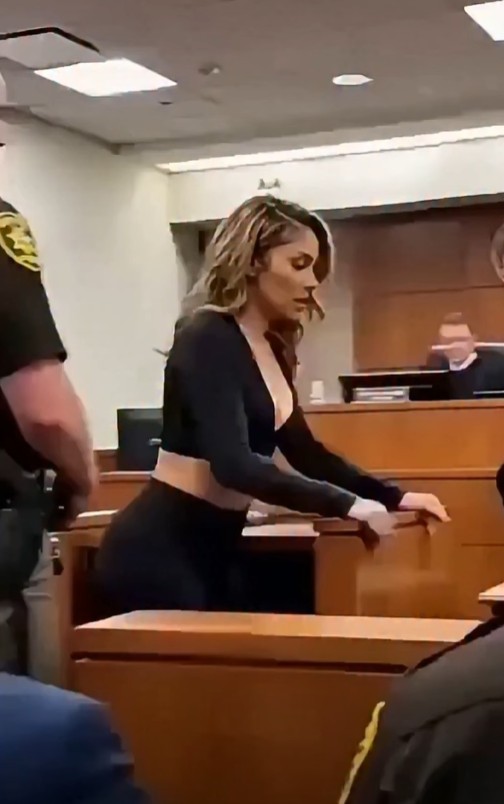
Arizona Teacher Sentenced to 187 Years—But One Detail in the Viral Story Is Wrong
A Viral Story About a Sixth-Grade Teacher in Goodyear, Arizona, Claims an Educator Received a 187-Year Prison Sentence After Parents Uncovered Inappropriate Messages. Official Records Reveal a Different Story: Two Serious Criminal Cases Appear to Have Been Mixed Together.
When parents send their children to school, they place enormous trust in the adults responsible for their education.
They expect classrooms to be places where children can learn, make friends, and feel safe.
They expect teachers to maintain appropriate professional boundaries.
And they expect schools to respond seriously when concerns arise.
That is why a widely circulated story involving an Arizona teacher and a 187-year prison sentence has attracted attention online.
The account describes a sixth-grade teacher in Goodyear whose misconduct was reportedly exposed after a parent became suspicious.
It claims that an investigation eventually led to a punishment totaling 187 years in prison.
But there is a problem with that version of events.
Official prosecution records show that the widely shared account appears to combine details from two different Arizona cases.
One involved a sixth-grade teacher named Brittany Zamora.
The other involved an educator named Cory Kapahulehua.
Both cases involved serious offenses against students.
Both resulted in substantial prison sentences.
But the defendants, schools, victims, and sentences were different.
Understanding that distinction is essential to reporting what actually happened.
The First Case Began in Goodyear, Arizona
In March 2018, police in Goodyear began investigating allegations involving Brittany Zamora.
Zamora was a sixth-grade teacher at Las Brisas Academy, part of the Liberty Elementary School District.
At the time, she was 27 years old.
The investigation began after parents discovered inappropriate communications between Zamora and their 13-year-old son.
According to authorities, the parents had been using a phone-monitoring application.
The application alerted them to concerning language in their child’s messages.
They examined the communications and became alarmed.
What they discovered prompted them to contact school officials.
The Parents Found Messages That Raised Serious Concerns
According to reporting by CBS News and the Associated Press, the parents’ monitoring application helped reveal messages between the teacher and student.
The communications suggested that the relationship had crossed professional boundaries.
Authorities were notified.
Police began investigating the allegations.
Investigators subsequently established that the misconduct extended beyond inappropriate communication.
The case became a criminal matter involving serious offenses against a child.
The discovery demonstrated why parents, schools, and law enforcement must take credible reports of boundary violations seriously.
The School Reported the Allegations to Police
According to the Maricopa County Attorney’s Office, police were alerted on March 21, 2018.
The notification followed the parents’ discovery of evidence on their son’s phone.
Officers investigated the circumstances and gathered information.
Zamora was arrested.
The case drew significant media attention in Arizona and beyond.
For the affected families, however, the consequences were deeply personal.
The investigation concerned the safety and well-being of children who had been placed in an educator’s care.
The Teacher Eventually Pleaded Guilty
Zamora’s case progressed through the criminal justice system.
On June 11, 2019, she pleaded guilty to offenses involving a student.
The charges included sexual conduct with a minor, attempted molestation of a child, and public sexual indecency.
Her guilty plea meant the case would proceed to sentencing without a full trial verdict on those charges.
At the sentencing hearing, the court considered the offenses and their impact.
The outcome was serious.
But it was not the 187-year sentence described in some viral posts.
Brittany Zamora Received a 20-Year Prison Sentence
On July 12, 2019, Maricopa County Superior Court Judge Sherry Stephens sentenced Brittany Zamora to 20 years in prison.
The court also imposed lifetime probation terms in connection with additional offenses.
The sentencing was confirmed publicly by the Maricopa County Attorney’s Office.
Prosecutors emphasized that Zamora had abused her position of trust as a teacher.
Families affected by the misconduct also described its emotional consequences.
Those consequences extended beyond the courtroom.
The case raised questions about school safeguards, professional boundaries, and the importance of reporting concerning behavior.
So Where Did the 187-Year Sentence Come From?
The 187-year punishment belongs to a separate Arizona criminal case.
On October 28, 2025, the Maricopa County Attorney’s Office announced that Cory Kapahulehua had been sentenced to 187 years in prison.
Kapahulehua was a former teacher at the Arizona Agribusiness and Equine Center’s Mesa campus.
His case involved two teenage students.
According to prosecutors, the students were 14 and 17 when they met him in August 2021.
The misconduct led to a major criminal investigation and prosecution.
A jury eventually convicted him on 17 criminal charges.
Those convictions resulted in the exceptionally lengthy prison sentence.
The Second Case Involved a Different School
Unlike the Zamora investigation, the Kapahulehua case did not center on Las Brisas Academy in Goodyear.
He worked at the Arizona Agribusiness and Equine Center in Mesa.
That distinction matters because the two schools are separate institutions.
They had different staff members.
The investigations involved different victims.
And the resulting criminal proceedings occurred years apart.
Combining the details can mislead readers about what happened and where.
Prosecutors Said Kapahulehua Abused His Position of Trust
According to the Maricopa County Attorney’s Office, Kapahulehua engaged in criminal misconduct involving two students.
Prosecutors described behavior that took place both on and away from school property.
The case involved serious violations of the responsibilities entrusted to an educator.
Investigators and prosecutors gathered evidence that was eventually presented to a jury.
The jury convicted him on all 17 charges.
Those convictions included offenses involving sexual conduct with minors, molestation, sexual abuse, attempted sexual conduct, and aggravated assault.
The prosecution’s official announcement provides a clear record of the outcome.
A Jury Convicted Him on 17 Counts
In the Kapahulehua case, the jury’s verdict was central to the eventual sentence.
The defendant faced multiple separate charges arising from the misconduct.
The court considered those convictions under Arizona’s sentencing laws.
Some offenses involving children can carry substantial prison terms.
When a defendant is convicted of numerous crimes, the combined punishment can be exceptionally long.
Kapahulehua’s total sentence reached 187 years.
That figure was confirmed by county prosecutors in October 2025.
It should not be attributed to Zamora’s separate 2019 case.
Why a 187-Year Prison Sentence Is Possible
A prison sentence that exceeds an ordinary human lifespan can seem difficult to understand.
But criminal courts may impose separate punishments for different convictions.
Some sentences run at the same time.
These are called concurrent sentences.
Others must be served one after another.
These are called consecutive sentences.
When multiple lengthy sentences are imposed consecutively, the combined total may exceed a century.
Sentencing rules depend on the jurisdiction, the offenses, and the circumstances of the case.
A long aggregate sentence does not mean a person could realistically live long enough to serve every year.
It reflects how the court applies punishment across multiple convictions.
Both Cases Raised Questions About Student Safety
Although the cases were different, they shared an important concern.
Both involved adults entrusted with educating children.
Teachers occupy positions of responsibility.
They interact with students regularly.
They may communicate about assignments, grades, activities, and personal challenges.
Those interactions require clear professional boundaries.
When a teacher exploits that relationship, the consequences can be serious and lasting.
Families need confidence that schools have policies for recognizing, reporting, and responding to inappropriate behavior.
Why the First Warning Signs Matter
Concerns about inappropriate educator-student communication do not always begin with a dramatic incident.
Sometimes, they emerge through unusual messages.
Sometimes, a parent notices changes in communication habits.
At other times, a student confides in a trusted adult.
None of these observations automatically establishes a crime.
But credible concerns should be documented and evaluated appropriately.
In the Zamora case, the parents’ discovery of messages helped initiate official action.
That sequence demonstrates how timely reporting can bring concerning behavior to the attention of authorities.
Technology Can Help Identify Concerning Communication
Communication between teachers and students increasingly takes place through digital systems.
Schools may use learning platforms, email services, and approved educational applications.
These tools can support legitimate learning activities.
But clear boundaries remain necessary.
Parents should understand which communication channels their child’s school authorizes.
Schools should explain expectations for professional messages.
And concerns about private or inappropriate contact should be handled through established procedures.
Technology can provide evidence, but it is not a substitute for responsible adult supervision and institutional accountability.
Schools Have a Responsibility to Respond
When credible concerns arise, school administrators must take appropriate steps under applicable policies and laws.
Those steps may include documenting reports.
Preserving relevant evidence.
Assessing immediate safety needs.
And notifying law enforcement or child-protection authorities when required.
It is important that investigations be conducted by qualified professionals.
Families should not be expected to establish criminal responsibility on their own.
Likewise, school officials should not dismiss serious concerns simply because an educator has a positive reputation.
The Privacy of Students Must Come First
Cases involving children require particular care in public reporting.
News organizations should avoid unnecessary details that might identify victims.
Families may already be dealing with significant stress.
Public speculation can make that situation worse.
Sensitive messages or images should not be circulated on social media.
The fact that a case attracts widespread attention does not remove a child’s right to privacy.
Reporting can explain the legal outcome without exposing details that serve no legitimate public interest.
The Emotional Impact Can Continue After Sentencing
A criminal sentence is an important legal conclusion.
But it does not necessarily end the effects of misconduct.
Children and families may require ongoing support.
Some may experience difficulty with trust, relationships, or their sense of safety.
Appropriate counseling and family support can play a role in recovery.
Schools may also need to review their policies and strengthen safeguards.
Accountability therefore extends beyond the date of sentencing.
Why Viral Stories Sometimes Mix Separate Cases
When criminal cases become popular on social media, information can lose its original context.
An article may repeat details from an older investigation.
A later report may feature a different defendant with a more dramatic prison sentence.
Over time, portions of both stories may appear together.
The result can be a compelling narrative containing inaccurate details.
In this instance, the Goodyear sixth-grade teacher case and the 187-year sentence belong to separate prosecutions.
The first is documented in 2018 and 2019 records.
The second is documented in an October 2025 prosecution announcement.
The official records establish the distinction.
Why Accurate Dates and Names Matter
It is not enough to say that an Arizona teacher received a lengthy prison sentence.
The identity of the defendant matters.
The school matters.
The victims’ ages and privacy matter.
And the date and terms of the punishment matter.
Incorrectly attributing one person’s conviction to someone else can misrepresent the criminal justice process.
It can also confuse families, school communities, and readers trying to understand what happened.
That is why court records and official prosecutor announcements are especially valuable when checking viral claims.
What the Official Records Confirm
The Maricopa County Attorney’s Office confirms that Brittany Zamora was sentenced on July 12, 2019.
She received 20 years in prison after pleading guilty to offenses involving a student.
Her case originated in Goodyear, where she had taught sixth grade at Las Brisas Academy.
The investigation followed the discovery of concerning communications by the victim’s parents.
Separately, the prosecutor’s office confirms that Cory Kapahulehua was sentenced to 187 years in prison in October 2025.
His case involved two teenage students at a Mesa school.
A jury convicted him of 17 criminal charges.
These are two distinct cases with different legal outcomes.
What Parents Can Learn From the Cases
Both cases highlight the importance of clear communication between families and schools.
Parents should know how to report concerns.
Students should understand that they can speak with a trusted adult if an interaction makes them uncomfortable.
Teachers should receive clear training about professional boundaries.
And administrators should understand their obligations when allegations are reported.
Safety depends on a combination of preventive policies, responsible reporting, appropriate investigations, and ongoing support.
No single technology or procedure can replace those responsibilities.
The Difference Between Allegations and Convictions
Another important lesson concerns the language used in criminal reporting.
An allegation is a claim that requires investigation.
An arrest does not establish guilt.
A guilty plea is a formal legal admission to specified offenses.
A jury conviction is a finding of guilt after trial.
And a sentence is the punishment imposed by a court.
These stages should not be treated as interchangeable.
Zamora pleaded guilty before her 2019 sentence.
Kapahulehua was convicted by a jury before his 2025 sentence.
That procedural difference is another reason the two stories should not be combined.
The Larger Question Is How Schools Protect Children
Beyond the confusion surrounding the viral headline lies a serious issue.
Families depend on schools to provide safe learning environments.
That responsibility requires more than hiring qualified teachers.
It includes maintaining clear policies.
Providing appropriate supervision.
Creating trusted reporting channels.
And acting responsibly when concerns emerge.
Educators who maintain appropriate boundaries help preserve the trust essential to teaching.
When misconduct occurs, thorough investigations and lawful accountability are necessary.
And when criminal proceedings conclude, affected children and families should remain the priority.
The Truth Behind the Arizona Teacher Story
Online posts describing a Goodyear sixth-grade teacher receiving 187 years in prison do not accurately combine the available court records.
The Goodyear case involved Brittany Zamora.
Her misconduct was uncovered after a student’s parents discovered concerning messages.
She pleaded guilty and was sentenced to 20 years in prison in July 2019.
The 187-year prison sentence was imposed in a different case involving Cory Kapahulehua.
He worked at a Mesa school and was convicted of 17 charges involving two teenage students.
His sentence was announced in October 2025.
Both cases involved serious abuses of professional trust.
Both resulted in substantial legal consequences.
And both demonstrate why safeguarding students must remain a central responsibility for educational institutions.
But the facts should not be merged simply to produce a more dramatic headline.
The actual records are serious enough.
They describe real criminal convictions, families affected by misconduct, and legal proceedings that required significant investigation.
For parents, the most important message is that credible concerns deserve attention.
For schools, it is that policies and reporting responsibilities must be taken seriously.
And for readers, it is that a shocking viral sentence should always be checked against the official case before being repeated.
Editor’s note: This article distinguishes two separate Arizona prosecutions. Brittany Zamora received a 20-year sentence in July 2019. Cory Kapahulehua received a 187-year sentence in October 2025. The viral account combining the Goodyear sixth-grade teacher case with the 187-year punishment is inaccurate.