
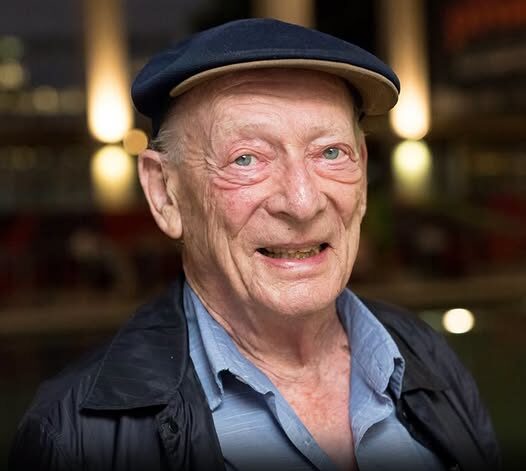
Beloved Actor Alan Mandell Dies at 98—The Extraordinary Prison Performance That Changed His Life and Left a Lasting Legacy
Alan Mandell Spent More Than Seven Decades Bringing Difficult Characters to Life, From the Plays of Samuel Beckett to Memorable Hollywood Films. But One Performance Inside San Quentin Prison in 1957 Helped Change the Direction of His Career—and Opened an Unexpected Door for People Behind Bars.
The entertainment world is remembering Alan Mandell, the acclaimed stage and screen actor whose extraordinary career spanned generations.
Mandell died on Tuesday, October 13, 2026, at his home in Westwood, Los Angeles.
He was 98 years old.
His family confirmed his death to major entertainment news outlets, bringing renewed attention to a life devoted to acting, directing, theater leadership, and artistic mentorship.
For movie audiences, Mandell was a familiar character actor whose performances included a memorable appearance in the Coen brothers’ film A Serious Man.
For theater audiences, however, his legacy was even greater.
He became one of the leading interpreters of Irish playwright Samuel Beckett.
He worked with influential theater companies.
He performed on stages in the United States and Europe.
And he continued contributing to the arts long after many performers would have retired.
But perhaps the most remarkable chapter of his career began in an unexpected place.
A prison.
In 1957, Mandell participated in a production of Waiting for Godot performed for approximately 1,400 incarcerated men at San Quentin State Prison.
It was an unusual setting for a groundbreaking work of modern theater.
Yet the performance made a lasting impression.
Its influence helped inspire a theater workshop established with an incarcerated man named Rick Cluchey.
That workshop would become a defining part of Mandell’s remarkable life.
Alan Mandell Died at His Home in Los Angeles
According to reporting published by the Los Angeles Times on October 14, 2026, Mandell died at his home in the Westwood neighborhood of Los Angeles.
Representatives for his family confirmed the news.
The Hollywood Reporter also reported his death, citing confirmation from his son, Peter Mandell, and daughter-in-law, Sarah Mandell.
Mandell had spent decades as an important figure in American theater.
His influence extended beyond the roles he played.
He helped run theatrical organizations.
Supported fellow artists.
And became a respected source of knowledge for actors exploring some of the most demanding works in modern drama.
His passing represents the loss of a performer whose contributions reached well beyond the screen.
His Remarkable Story Began in Toronto
Alan Mandell was born Albert Mandell on December 27, 1927, in Toronto, Canada.
He grew up during an era of extraordinary economic and social change.
The Great Depression shaped much of his childhood.
And theater offered him a way to explore human experiences through language, performance, and imagination.
He developed an interest in acting while still young.
As a schoolboy, he began discovering the possibilities of the stage.
Those early experiences eventually grew into a lifelong commitment.
Mandell would become an actor, director, manager, artistic collaborator, and supporter of other performers.
He was never content to define theater through one kind of role.
He wanted to understand the entire creative process.
He Began His Professional Career in Canadian Theater
During the early 1950s, Mandell worked as artistic director of Theater ’49 in Toronto.
The experience gave him an opportunity to explore both performance and theatrical leadership.
It also helped establish the skills that would later make him valuable to major theater organizations.
At the time, his career was still developing.
He had not yet become a widely recognized interpreter of Samuel Beckett.
And the performance that would shape his connection to prison theater was still several years away.
Then, in 1954, a personal visit unexpectedly changed his direction.
A Short Trip to San Francisco Became a Turning Point
Mandell traveled to San Francisco to visit his sister.
What began as a brief stay turned into a major chapter of his professional life.
While looking for opportunities to work with other actors, he discovered the San Francisco Actor’s Workshop.
The company had been founded by Herbert Blau and Jules Irving.
It was part of a growing movement toward experimental and regional theater in the United States.
Mandell became involved with the group.
His work there expanded beyond acting.
He contributed to the organization’s management and development.
And he began forming relationships that would influence his career for decades.
Years later, he recalled that an intended short visit had turned into twelve years in San Francisco.
The Actor’s Workshop Was Willing to Take Risks
The San Francisco Actor’s Workshop was not interested only in conventional entertainment.
Its productions explored challenging material.
Its artists experimented with theatrical ideas.
And its leadership was willing to present modern plays to audiences unfamiliar with them.
Among the works it embraced was Waiting for Godot.
Written by Samuel Beckett, the play had already attracted international attention.
Its unusual structure, seemingly simple conversations, and exploration of human uncertainty challenged traditional expectations of dramatic storytelling.
Mandell would develop a particularly important relationship with Beckett’s work.
But first, a performance inside a California prison would change everything.
In 1957, a Theater Company Entered San Quentin Prison
In November 1957, members of the San Francisco Actor’s Workshop performed Waiting for Godot at San Quentin State Prison.
Approximately 1,400 incarcerated men attended.
Mandell portrayed Lucky, a difficult and memorable character in Beckett’s play.
The setting was extraordinary.
Waiting for Godot was an unconventional work even for experienced theater audiences.
Presenting it in a prison environment was a bold artistic decision.
But the performance demonstrated that challenging theater could resonate in places far removed from traditional cultural institutions.
It also became the foundation of one of Mandell’s most significant contributions.
Why Waiting for Godot Was Such an Unusual Choice
Waiting for Godot follows two men, Vladimir and Estragon, as they wait for a mysterious figure who never arrives.
The play explores uncertainty, repetition, friendship, suffering, and the search for meaning.
It does not follow a conventional adventure plot.
Much of its drama emerges from conversations and the passage of time.
Its characters grapple with questions that remain unresolved.
For audiences accustomed to straightforward theatrical storytelling, Beckett’s approach could be challenging.
But that was also part of its power.
It invited people to interpret the experiences on stage through their own lives.
The prison performance became an important example of how widely such work could resonate.
Mandell Played One of the Play’s Most Demanding Characters
Lucky is among the most distinctive figures in Waiting for Godot.
He is subjected to the commands of another character, Pozzo.
His presence raises questions about power, dependence, and human dignity.
He also delivers a famously difficult speech.
Performing the role requires precise timing, physical commitment, and a deep understanding of Beckett’s language.
Mandell’s portrayal formed part of the production presented to the San Quentin audience.
It was an early milestone in what became a lifelong association with the playwright.
One Prisoner Saw Possibilities Beyond the Performance
Among those affected by the theater company’s visit was Rick Cluchey, an incarcerated man at San Quentin.
The production helped inspire a broader interest in creating theater inside the prison.
Cluchey would become a central figure in that development.
He and Mandell went on to establish the San Quentin Drama Workshop.
The organization gave incarcerated participants opportunities to engage with dramatic literature and performance.
It also created a connection between professional theater and people whose access to such opportunities was extremely limited.
For Mandell, it became an important part of his work.
For Cluchey, theater would become a major element of his subsequent life and career.
The San Quentin Drama Workshop Was Born
The workshop began operating in 1958.
It continued through 1965 as an extended prison theater initiative.
Contemporary accounts described it as a pioneering program created with the involvement of incarcerated participants.
It offered opportunities to rehearse, perform, and explore dramatic works.
Participation required cooperation and discipline.
Actors had to learn lines.
Work together.
Develop their characters.
And take responsibility for a shared production.
The workshop represented more than a single visit from professional performers.
It provided an ongoing opportunity for creative work.
The Program Demonstrated the Value of Creative Expression
The San Quentin Drama Workshop became an example of the potential role of theater within correctional institutions.
It offered a constructive activity that required imagination and collaboration.
Participants could explore ideas through the experiences of dramatic characters.
They could practice communication and teamwork.
And they could take part in a demanding artistic discipline.
In 1963, a recreation supervisor at San Quentin described the program’s creative and emotional value.
The workshop provided an example of how structured arts activities could contribute to prison life.
Its influence extended beyond the original production.
Rick Cluchey’s Life Became Closely Connected to Theater
Cluchey eventually developed his own career as an actor and playwright.
His experience with the workshop helped connect him to the larger world of theatrical production.
He became associated with Beckett’s plays and continued working in theater after his imprisonment.
His career provided a striking illustration of the long-term possibilities that began with the San Quentin production.
It would be inaccurate to suggest that one performance single-handedly changed every participant’s life.
But the documented connection between the production, the workshop, and Cluchey’s subsequent career remains extraordinary.
It is one of the most distinctive parts of Mandell’s legacy.
Mandell’s Relationship With Samuel Beckett Deepened
Over the years, Mandell became increasingly involved in productions of Beckett’s work.
His understanding of the playwright’s unusual rhythms made him a respected interpreter.
He performed in numerous Beckett productions.
He worked in the United States and Europe.
And he eventually collaborated directly with Beckett himself.
That connection was especially meaningful because Beckett’s plays demand careful attention to language and timing.
Small pauses can change the atmosphere of a scene.
Repetition can reveal emotion.
And understated physical movement can carry substantial dramatic meaning.
Mandell’s sensitivity to those details became central to his reputation.
He Saw Beckett’s Writing Almost Like Music
Mandell often discussed the importance of rhythm in Beckett’s plays.
He described how the playwright approached performance through the arrangement of language and pauses.
Rather than relying only on elaborate psychological explanations, Beckett paid close attention to the musical structure of a scene.
That approach required actors to be exceptionally precise.
They had to understand the tempo of the dialogue.
The silences.
And the relationship between speech and movement.
Mandell’s experience made him particularly valuable to productions seeking to honor those details.
His Career Reached Major Theater Institutions
Mandell’s theatrical contributions were not confined to San Francisco or the prison workshop.
He also worked in theater administration and management.
When Jules Irving and Herbert Blau became involved with the Repertory Theatre of Lincoln Center in New York, Mandell joined the organization in a managerial role.
The position placed him within another important American theater institution.
He continued building relationships with performers, directors, and artistic leaders.
His ability to work both on stage and behind the scenes made him unusually versatile.
He understood the practical demands of running a company.
And he remained deeply interested in the art those companies created.
Los Angeles Eventually Became His Artistic Home
Mandell later moved to Los Angeles.
There, he became involved with the Los Angeles Actors’ Theatre and organizations connected to the city’s developing theater scene.
He worked as an actor and consulting director.
He also helped support literary and poetry programs.
Over the following decades, he became a respected figure in Southern California theater.
His presence extended beyond his own performances.
He offered guidance.
Encouraged creative work.
And supported artistic projects that he believed deserved attention.
For many colleagues, his influence was both professional and personal.
Hollywood Audiences Recognized Him From A Serious Man
While Mandell’s greatest influence was in theater, movie audiences also encountered his work.
One of his most recognizable film performances came in the Coen brothers’ 2009 movie A Serious Man.
Mandell portrayed Rabbi Marshak.
The character is an elderly religious figure whose limited appearance carries unusual dramatic weight.
His scene combines mystery, humor, and the film’s wider questions about meaning and uncertainty.
Mandell’s performance is memorable partly because of its restraint.
He brings a theatrical precision to a brief but distinctive screen role.
For viewers unfamiliar with his long stage career, the movie became an introduction to his talent.
He Also Appeared in Other Notable Films
Mandell’s film credits included Hedwig and the Angry Inch and Shortbus, both associated with filmmaker John Cameron Mitchell.
He also appeared in Peter Bogdanovich’s Illegally Yours.
His later work included the 2019 film Velvet Buzzsaw.
His screen appearances often featured unusual or memorable supporting characters.
He did not need to dominate a film to leave an impression.
His stage experience helped him bring specificity and presence to smaller roles.
For a performer who had spent much of his life exploring complex theatrical material, screen acting offered another form of creative expression.
Television Viewers May Also Recognize His Face
Mandell appeared in several television productions over the decades.
His credits included Cannon.
The Six Million Dollar Man.
Baretta.
Eight Is Enough.
And Grey’s Anatomy.
These roles introduced him to audiences who may never have attended one of his theatrical productions.
His television work was only one part of his career.
But it demonstrated the range of platforms through which he continued working as an actor.
He Was Still Delivering Acclaimed Performances in His Eighties
Many performers reduce their stage commitments as they grow older.
Mandell continued taking on demanding roles.
In 2007, at age 79, he appeared in the play Trying at the Colony Theatre in Burbank.
He portrayed an elderly former judge whose relationship with a younger secretary forms the heart of the drama.
The performance received significant critical praise.
Los Angeles Times critics highlighted the subtlety and emotional complexity of his work.
Mandell demonstrated that age had not eliminated his ability to deliver powerful performances.
Instead, his experience added new dimensions to the characters he portrayed.
His Work in No Man’s Land Earned Recognition
In 2009, Mandell appeared in Harold Pinter’s No Man’s Land at the Odyssey Theatre in Los Angeles.
He played Spooner, one of the play’s central characters.
Pinter’s writing shares some qualities with Beckett’s work.
Both playwrights explore language, uncertainty, silence, and the difficulty of understanding human relationships.
Mandell’s interpretation received an Ovation Award.
The recognition reflected the continuing strength of his work during a period when he was already in his eighties.
He Returned to Waiting for Godot Decades After San Quentin
In 2012, Mandell appeared in another major production of Waiting for Godot.
This time, he played Estragon at the Mark Taper Forum in Los Angeles.
His stage partner was acclaimed Irish actor Barry McGovern.
The production was directed by Michael Arabian.
For Mandell, the role brought him back to a work that had shaped his career since the 1950s.
But he approached it with decades of additional experience.
The performance received critical acclaim.
It also earned him another Ovation Award.
His Stage Partnership With Barry McGovern Was Memorable
McGovern had extensive experience performing Beckett’s work.
Pairing him with Mandell brought together two artists with deep knowledge of the playwright.
Their 2012 production emphasized the comedy and emotional complexity within Waiting for Godot.
Critics praised the precision of their performances.
Their stage relationship demonstrated how carefully timed humor could exist alongside profound uncertainty.
For audiences, it was an opportunity to see two veteran actors interpreting one of modern theater’s defining works.
He Kept Performing After His Eightieth Birthday
Mandell remained active at an age when most people have long since retired.
In 2015, he appeared in Arthur Miller’s The Price at the Mark Taper Forum.
He played Gregory Solomon, an elderly furniture dealer.
The character required humor, vulnerability, and considerable dramatic control.
Mandell approached the role with the same seriousness he brought to Beckett’s work.
He also spoke lightheartedly about portraying a character slightly older than himself.
Even as his career approached its later years, his sense of humor remained part of his artistic personality.
At 88, He Returned to Beckett Once More
In 2016, Mandell directed and starred in a production of Endgame at the Kirk Douglas Theatre.
He played Hamm.
Barry McGovern appeared as Clov.
The production reunited artists with extensive experience performing Beckett.
It was an ambitious undertaking for Mandell, who was 88 at the time.
The Los Angeles Times praised the result.
For many observers, it was a fitting late-career achievement.
Mandell had spent decades exploring Beckett’s writing.
And he continued finding new ways to bring those plays to life.
Even Keanu Reeves and Alex Winter Sought His Advice
One particularly remarkable detail from Mandell’s later years concerns actors Keanu Reeves and Alex Winter.
The two performers prepared to star in a Broadway revival of Waiting for Godot in 2025.
Before the production, they sought Mandell’s expertise.
According to The Hollywood Reporter, Reeves and Winter visited him at his home to discuss the play.
It was an extraordinary meeting across generations of performers.
Mandell had participated in a landmark production of Godot in 1957.
Nearly seventy years later, two internationally recognized actors wanted to learn from his experience.
That exchange demonstrated how enduring his knowledge had become.
Why His Advice Was Valuable
Waiting for Godot is a demanding work for actors.
Its comedy can appear deceptively simple.
But successful performances require close attention to language, pacing, physical movement, and the relationship between the two central characters.
Mandell had spent much of his life studying those details.
He had performed Beckett’s work repeatedly.
He had worked directly with the playwright.
And he had observed how different productions approached the material.
For performers preparing to take on such roles, his insights were particularly valuable.
His willingness to share them also reflected his generosity toward fellow artists.
His Legacy Extended Beyond His Own Performances
Mandell was widely respected within the Los Angeles theater community.
He helped support artistic projects.
He encouraged younger performers.
And he maintained relationships with people across different generations of theatrical work.
Los Angeles Times theater critic Charles McNulty remembered him not merely as an acclaimed actor but also as someone who helped bring artists together.
Mandell’s home became a place where theater professionals could meet, exchange ideas, and maintain friendships.
His support for the arts included philanthropic activity.
He believed in the value of sustaining theater as a community rather than focusing only on individual success.
Friends Remembered His Humor and Generosity
Mandell’s colleagues often described his precision as a performer.
But their memories also reflected affection for the man himself.
He was known for a sharp sense of humor.
An enthusiasm for artistic discussion.
And a willingness to support work he believed in.
His understanding of theater came from decades of practice.
Yet he remained engaged with other people’s creative projects.
That generosity became part of his reputation.
His influence continued through the performers and institutions he helped throughout his career.
His Work Was Grounded in an Unusual Understanding of Language
Mandell’s longtime assistant, Daniel Segura, remembered the musical quality of his performances.
That observation reflected an important part of Mandell’s approach.
For him, acting was not simply about reciting dialogue.
It involved rhythm.
Breath.
Silence.
And the emotional possibilities within the words.
Those qualities were especially important in Beckett’s plays.
His careful interpretation helped audiences engage with material that might otherwise seem difficult or unfamiliar.
He Also Contributed Through Audio Performances
In his later years, Mandell appeared in serialized audio productions.
He voiced Friar Laurence in an adaptation of Romeo and Juliet.
He also contributed to projects including Anthem: Homunculus and A Voice From Darkness.
These performances allowed him to continue using his distinctive voice and command of language.
They represented another chapter in a career that repeatedly adapted to new artistic formats.
Even without a traditional theater stage, Mandell could bring depth to a character through vocal performance.
His Marriage Was Also Part of His Story
Mandell was married to Elizabeth Heller Mandell, an arts patron and gallery owner.
She died in June 1997.
The couple shared a deep involvement in cultural life.
Elizabeth’s own work supported artistic and community organizations.
After her death, Mandell continued participating in cultural and philanthropic activities.
Their shared interest in the arts remained an important part of his life.
He Leaves Behind Children and Grandchildren
Mandell is survived by his son Peter and daughter Olivia.
His surviving family also includes three grandchildren.
For relatives and friends, his passing is a personal loss.
For the broader artistic community, it marks the end of a remarkably long career.
He had been part of theater productions across several generations.
He worked with influential artists who shaped modern drama.
And he lived long enough to advise performers who were approaching those same works decades later.
The San Quentin Performance Remains an Extraordinary Achievement
Looking back over Mandell’s career, the San Quentin production stands out for a particular reason.
It connected an experimental theater company with an audience rarely reached by such performances.
The experience helped lead to a sustained prison theater workshop.
And the work of Rick Cluchey demonstrated that artistic opportunities could have lasting personal and professional consequences.
Mandell did not abandon traditional theater afterward.
He went on to perform in major productions and work with celebrated artists.
But the workshop remained a distinctive part of his legacy.
It showed how theater could extend beyond established venues and conventional audiences.
Why His Work With Rick Cluchey Matters
Rick Cluchey’s involvement in the San Quentin Drama Workshop is one of the clearest examples of the initiative’s lasting influence.
Cluchey developed as an actor and playwright.
He became closely associated with Beckett’s work.
And his subsequent career connected him to the broader international theater world.
The workshop provided an opportunity to pursue a demanding artistic discipline.
It also created relationships that extended beyond the original prison production.
For Mandell, that experience demonstrated that the power of theater was not limited by the location of the stage.
His Career Defied Expectations About Age
Mandell’s late-career work was especially remarkable.
He continued delivering major stage performances in his seventies and eighties.
At 79, he won praise for Trying.
In his eighties, he received recognition for No Man’s Land and Waiting for Godot.
At 88, he directed and performed in Endgame.
Those achievements challenged assumptions about when an actor’s most compelling work must occur.
His decades of experience became a strength.
He brought accumulated knowledge and emotional depth to his roles.
And he continued contributing long after achieving professional recognition.
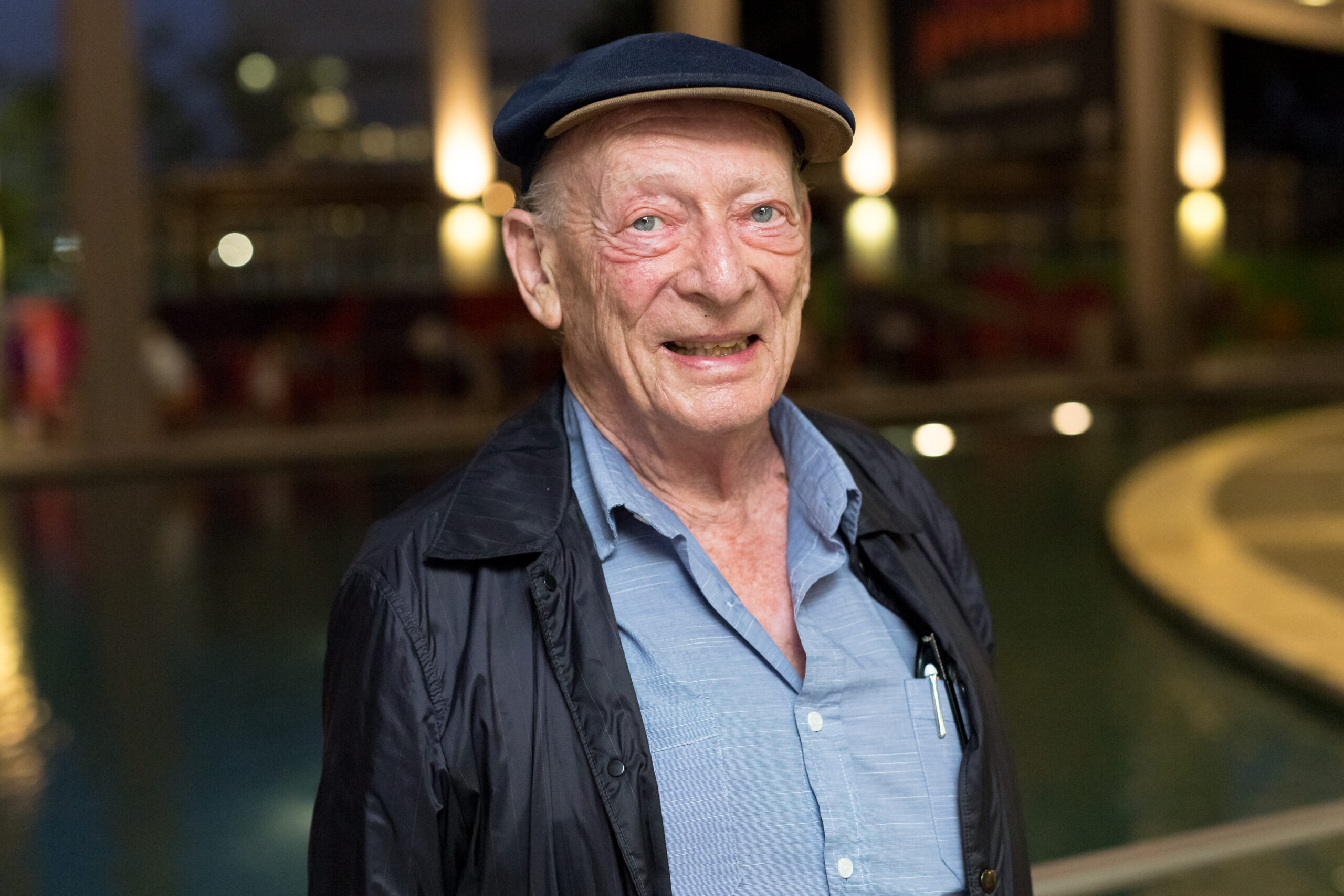
He Remained Connected to Theater Until the End
Mandell’s life continued revolving around art and theatrical friendships well into his final years.
He remained a respected presence in Los Angeles.
Other performers sought his perspective.
Critics and colleagues continued celebrating his contributions.
And his home remained a gathering place for people connected to the arts.
His involvement with the 2025 Broadway revival of Waiting for Godot demonstrated that his knowledge was still valued.
Nearly seven decades after San Quentin, the work that helped define his career remained relevant to a new generation.
What Made Alan Mandell Different?
Many actors are remembered for one famous role.
Others become known for a particular film or television series.
Mandell’s legacy was more expansive.
He was a performer.
A director.
A theater administrator.
A mentor.
And an advocate for meaningful artistic experiences.
He helped create opportunities for others while continuing to develop his own craft.
His work demonstrated that success in theater can involve far more than personal recognition.
It can also mean sustaining organizations, encouraging colleagues, and helping bring difficult art to new audiences.
For Movie Fans, Rabbi Marshak Will Remain Unforgettable
Audiences who know Mandell primarily through A Serious Man may remember the unusual presence of Rabbi Marshak.
The character’s appearance is brief but distinctive.
The film itself explores questions about uncertainty, faith, and the search for answers.
Those themes have interesting connections with the Beckett plays that shaped Mandell’s stage career.
In both settings, he brought careful attention to language and ambiguity.
Even a relatively small film role could reveal the discipline developed through decades of theater.
For Theater Lovers, His Beckett Performances Define an Era
Mandell’s work with Beckett connected several periods of modern theatrical history.
He performed Waiting for Godot during the 1950s.
He worked directly with the playwright.
He returned to the play decades later.
And he continued sharing his expertise with actors preparing their own interpretations.
Very few performers have such an extended relationship with a single playwright’s work.
That continuity made Mandell a particularly important artistic resource.
His performances helped preserve approaches to language and rhythm informed by direct experience.
The Real Meaning of His Lasting Legacy
Alan Mandell’s career cannot be understood through Hollywood credits alone.
His work reached from Canadian stages to California prisons.
From experimental theater companies to major Los Angeles venues.
From demanding works of modern drama to memorable screen performances.
He was part of conversations that shaped how theater developed in the United States.
He helped establish a prison theater workshop.
He supported fellow artists.
And he continued sharing knowledge well into his nineties.
His legacy is therefore both artistic and institutional.
It lives in the performances audiences remember.
And in the opportunities and relationships his work helped create.
A Voice That Helped Shape Generations of Theater
For decades, Alan Mandell brought unusual characters to life.
He mastered demanding dialogue.
Understood the power of silence.
And treated language with the precision of a musician.
He became a trusted interpreter of Samuel Beckett.
He performed on major stages.
And he appeared in films that introduced his talents to wider audiences.
But perhaps the clearest illustration of his influence remains the unlikely meeting of theater and prison life in 1957.
That performance helped inspire a workshop that lasted for years.
It connected him with Rick Cluchey.
And it demonstrated that artistic opportunity could reach people outside traditional theater audiences.
Remembering Alan Mandell, 1927–2026
Alan Mandell lived for nearly a century.
He experienced enormous changes in the theater industry.
He witnessed the rise of new dramatic movements.
He participated in the development of influential American theater companies.
And he remained active in the arts long after many of his contemporaries had retired.
His career was not defined by one blockbuster film.
It was built through decades of careful artistic work.
Performances that challenged audiences.
Productions that explored difficult ideas.
And relationships that helped sustain a creative community.
His death on October 13, 2026, brings that extraordinary personal journey to a close.
But the influence of his work continues through the actors, directors, and organizations that learned from him.
The stage is now without one of its most experienced voices.
Yet the work he helped create remains part of theatrical history.
For film audiences, he will be remembered for his memorable screen characters.
For theater professionals, he will be remembered as a master of language and performance.
And for those who study the history of prison theater, his connection to the San Quentin Drama Workshop remains an extraordinary achievement.
Almost seventy years after that remarkable performance, its significance has not disappeared.
It remains a reminder of what can happen when artists bring their work to unexpected places and make room for new voices.
Mandell spent his life demonstrating that theater was not simply a form of entertainment.
It was also a way of creating connections between people.
That is the legacy he leaves behind.
And it is why his influence will continue to be felt long after the final curtain.
Editor’s note: Alan Mandell died on October 13, 2026, at age 98. His death was confirmed by his family and reported by The Hollywood Reporter and the Los Angeles Times. This tribute is based on verified reporting and historical theater coverage. It does not attribute invented conversations, private thoughts, or unverified final words to Mandell.