
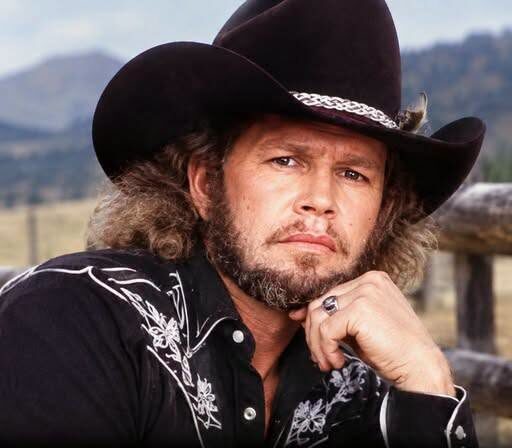
David Allan Coe’s Troubled Past and Controversial Songs Reveal the Complicated Legacy Behind the Outlaw Country Legend
David Allan Coe’s Troubled Past and Controversial Songs Reveal the Complicated Legacy Behind the Outlaw Country Legend
Few figures in outlaw country music have inspired the same complicated mixture of admiration, criticism, and debate as David Allan Coe.
For generations of listeners, his music has represented something deeply personal. His songs often speak to loneliness, regret, struggle, and the desire to survive circumstances that seem impossible to overcome.
But there is another side to his musical legacy that cannot simply be ignored.
Alongside the recordings that earned him devoted fans are deeply offensive songs that have continued to attract criticism.
That contrast creates a difficult question for anyone attempting to understand his place in country music history.
Can an artist’s most meaningful work be appreciated without excusing the material that caused harm?
For Coe, the answer has never been simple.
His life story includes childhood hardship, years of incarceration, and an unconventional path into the music industry.
Those experiences shaped the identity that eventually became central to his career.
Yet his reputation cannot be explained by hardship alone.
The same artist who connected with listeners through emotional honesty also released recordings that remain troubling to many people.
Understanding David Allan Coe means acknowledging both sides of that history.
A Country Music Career Built Outside the Mainstream
David Allan Coe developed a musical identity that differed from the polished image associated with much of traditional country entertainment.
Rather than presenting himself as a conventional performer, he embraced an outsider image shaped by difficult life experiences.
His songs frequently explored subjects that were uncomfortable, emotionally complicated, or rarely discussed in mainstream country music.
That approach helped establish his reputation within the outlaw country movement.
The movement became associated with performers who challenged established expectations about how country music should sound and how its artists should behave.
For Coe, the rebellious identity was closely connected to his personal history.
He had experienced circumstances that many listeners knew only through stories.
His music reflected those experiences through themes of confinement, loss, resentment, independence, and survival.
The result was a body of work that some listeners found unusually authentic.
Others found elements of his public identity and recordings deeply difficult to accept.
That disagreement has remained part of the conversation surrounding his career.
David Allan Coe’s Difficult Childhood Shaped His Story
Coe’s troubled upbringing became an important part of the narrative surrounding his life.
His early years were marked by instability and experiences that placed him outside the ordinary path many young people follow.
Those struggles eventually became closely associated with the themes appearing throughout his music.
Rather than writing exclusively about idealized romance or uncomplicated happiness, he frequently addressed emotional pain.
His songs reflected people living with consequences, carrying regrets, and attempting to make sense of difficult decisions.
Listeners who had experienced their own hardships sometimes recognized familiar feelings in those stories.
For them, the attraction was not necessarily the rebellious image itself.
It was the feeling that the music understood experiences that were often overlooked.
Coe’s childhood did not determine every decision he would later make, but it became an important influence on how audiences understood his artistic identity.
Years of Incarceration Became Part of His Outlaw Identity
Another defining part of Coe’s history involved time spent in correctional institutions.
His experiences with incarceration became central to his public image and to the stories associated with his music.
For many listeners, those experiences appeared to distinguish him from performers who merely adopted rebellious characters for entertainment.
Coe’s background gave his songs about isolation, confinement, and life outside conventional society a particular emotional context.
However, having experienced hardship does not automatically make every artistic statement valuable or justified.
Personal suffering may help explain why certain themes emerge in someone’s work.
It does not remove responsibility for the choices that person makes.
This distinction is especially important when evaluating Coe because his life experiences have sometimes been used to frame nearly every aspect of his controversial reputation.
His past helps explain his musical perspective, but it cannot settle every question about his legacy.
Why His Songs Connected With People Who Felt Forgotten
At their strongest, Coe’s songs offered recognition to people who rarely saw their experiences reflected in popular entertainment.
His music often portrayed emotional struggles without attempting to make them appear attractive or uncomplicated.
Loneliness could remain lonely.
Regret could remain unresolved.
Anger might appear alongside vulnerability rather than replacing it.
That combination appealed to listeners who believed that much of mainstream music overlooked the messier parts of everyday life.
They heard songs about people making mistakes, losing relationships, and attempting to continue despite disappointment.
For those audiences, the music could feel unusually direct.
It suggested that difficult experiences were not necessarily reasons to feel invisible or ashamed.
The emotional connection helped Coe develop an enduring following.
It also explains why some admirers continue separating his most meaningful recordings from the controversies surrounding other parts of his work.
The Emotional Honesty That Defined His Best-Known Approach
One of the recurring characteristics of Coe’s writing is the contrast between toughness and vulnerability.
His public image emphasized independence and resistance to authority.
Yet the emotional world of his music could be much more fragile.
Some songs explored the consequences of broken relationships and difficult personal choices.
Others centered on isolation or the desire to belong somewhere.
This contrast made his work more complicated than a straightforward celebration of rebellion.
The same performer associated with an uncompromising outsider identity could also communicate sadness and longing.
For listeners who connected with those themes, the music offered a form of companionship.
It did not necessarily solve their problems.
But it gave recognizable language to feelings that could otherwise be difficult to express.
Outlaw Country Was About More Than Breaking Rules
The outlaw country identity is often reduced to images of rebellion, confrontation, and independence.
But the artistic appeal of the movement also involved challenging expectations about storytelling.
Performers associated with outlaw country frequently explored characters and experiences that did not fit neatly into idealized narratives.
Coe’s music reflected that broader approach.
He wrote about people facing consequences and carrying emotional wounds.
His material often embraced subjects that conventional entertainment treated more cautiously.
For some fans, this willingness to explore uncomfortable themes became evidence of artistic authenticity.
However, there is an important distinction between challenging convention and causing harm through offensive expression.
Not every controversial statement becomes meaningful simply because it rejects established expectations.
That distinction lies at the center of the debate about Coe’s legacy.
The Controversial Recordings That Cannot Be Ignored
Any serious examination of David Allan Coe’s career must also acknowledge the offensive recordings associated with his catalog.
Some of that material has drawn criticism for racist language and degrading portrayals.
These recordings remain part of his artistic history.
They cannot be erased by pointing exclusively to his more emotionally powerful songs.
For listeners who have been hurt or alienated by such material, the controversy is not a minor detail.
It affects how they understand the performer and whether they wish to engage with his music at all.
Others may value particular songs while rejecting the language and messages found elsewhere in the catalog.
Both responses reflect the difficulty of evaluating an artist whose work contains such sharp contradictions.
Appreciating a musical achievement does not require defending every recording the artist released.
Why Personal Suffering Does Not Excuse Harmful Expression
Coe’s difficult childhood and experiences with incarceration help explain aspects of his artistic identity.
But explanation and justification are not the same thing.
A person may endure serious hardship and still remain responsible for how they treat others or express harmful ideas.
That principle applies to public figures as much as anyone else.
Some admirers may believe that Coe’s personal history should be considered when examining his controversial material.
Understanding that history can provide context.
However, context does not require listeners to dismiss the concerns raised by offensive lyrics.
People affected by those messages may reasonably view them as incompatible with the emotional connection other songs created.
The tension between suffering and responsibility makes his career unusually difficult to summarize.
It also prevents a balanced account from treating hardship as an automatic defense of everything an artist has produced.
Can Fans Appreciate the Music Without Defending the Artist?
One of the most persistent questions surrounding controversial performers concerns the relationship between creative work and personal conduct.
Some listeners believe that artistic achievement can be evaluated separately from the person responsible for creating it.
Others find that troubling elements of an artist’s history change the meaning of the music itself.
There is no single response that every listener must adopt.
Someone may find comfort in a particular song while openly criticizing another recording by the same performer.
Another person may decide that the offensive material prevents them from enjoying any part of the catalog.
Both responses involve personal judgments about artistic value, responsibility, and the emotional impact of music.
Coe’s career illustrates why those judgments can be complicated.
His songs have provided comfort for some listeners while other recordings have caused deep offense.
Why Loyalty to an Artist Can Become Complicated
Music often becomes connected to personal memories.
A song may remind someone of a difficult period they survived, a relationship they lost, or a place they once called home.
When that connection is strong, criticism of the artist can feel personal.
Listeners may defend a performer because they associate the music with an important part of their own lives.
But emotional attachment does not eliminate the need for honest evaluation.
Loyalty can become problematic when it requires ignoring material that has harmed others.
With Coe, the challenge is especially apparent because the emotional qualities that attract admirers coexist with recordings many people strongly reject.
Fans do not have to deny their meaningful experiences with his music.
They can also acknowledge that other listeners may have entirely different reactions for legitimate reasons.
A Musical Legacy That Resists Simple Labels
Public figures are often described through a single defining characteristic.
They may be remembered as legends, rebels, pioneers, or controversial personalities.
But those labels rarely capture the full complexity of a long artistic career.
Coe’s work resists an uncomplicated description.
He developed a distinctive place in outlaw country through personal storytelling and an outsider identity.
His music gave voice to themes that resonated with people experiencing hardship.
At the same time, parts of his catalog attracted criticism that cannot be responsibly dismissed.
Acknowledging both realities allows for a more complete understanding of his career.
It avoids turning admiration into unquestioning approval or reducing every artistic achievement to the controversy surrounding the performer.
The Difference Between Authenticity and Accountability
Authenticity is a quality frequently associated with Coe’s music.
Listeners often value performers who appear willing to express difficult emotions without disguising them.
But authenticity does not automatically make every message admirable.
An artist can communicate genuine feelings while producing work that others find offensive or harmful.
That difference is important when discussing controversial music.
Coe’s experiences may have contributed to the force of his storytelling.
They may also help explain the confrontational nature of parts of his catalog.
Yet accountability involves considering the content of the work and its effects, not merely the experiences that inspired it.
Recognizing that distinction allows listeners to appreciate emotional honesty without assuming that every expression of it deserves approval.
What His Career Reveals About Country Music’s Outsiders
Country music has long included stories about people living outside conventional expectations.
Its themes frequently involve heartbreak, disappointment, resilience, and complicated relationships.
Coe built much of his identity around those subjects.
His music gave prominence to experiences that could be overlooked in more polished forms of entertainment.
That approach helped him develop a recognizable artistic voice.
However, outsider status does not prevent an artist from being examined critically.
Being unconventional may create opportunities for compelling storytelling, but it does not place a performer beyond accountability.
Coe’s reputation demonstrates how rebellion can become both an artistic strength and a source of controversy.
The same refusal to follow expectations that attracted fans also complicated the reception of his most provocative material.
Why His Music Still Generates Strong Reactions
For some listeners, Coe’s songs remain connected to deeply personal experiences.
They hear reflections of difficult childhoods, fractured relationships, or efforts to rebuild after serious mistakes.
The music can provide a sense of recognition.
For others, the offensive portions of his catalog make that emotional connection difficult or impossible.
They hear material that conflicts with their values and causes genuine discomfort.
These contrasting responses explain why discussion of his career remains challenging.
Neither artistic admiration nor criticism can erase the existence of the other.
The catalog contains work that listeners experience in fundamentally different ways.
Understanding that divide requires listening to more than the voices of his most devoted admirers.
Remembering the Songs Without Ignoring the Controversies
A thoughtful approach to Coe’s career does not require pretending that every song occupies the same artistic or moral position.
His recordings can be examined individually and within the broader context of his life.
Some may stand out for their emotional honesty and portrayal of difficult experiences.
Others deserve criticism for offensive language or degrading messages.
It is possible to recognize musical influence while remaining clear about troubling content.
Such an approach does not erase the artist’s achievements.
Nor does it minimize the experiences of people who object to parts of his work.
Instead, it acknowledges that cultural legacies often contain contradictions that cannot be resolved through simple praise or condemnation.
The Question That Follows David Allan Coe’s Legacy
David Allan Coe’s place in outlaw country is defined by more than his unconventional life story.
His difficult upbringing and years of incarceration became important influences on the themes and identity associated with his music.
His strongest songwriting offered emotional recognition to listeners who felt forgotten or misunderstood.
But the offensive recordings within his catalog remain part of that history.
For admirers, the challenge is deciding how to honor meaningful music without defending everything its creator released.
For critics, the question may be whether artistic achievements can retain value when accompanied by material they find unacceptable.
Neither position removes the underlying contradictions.
His legacy requires a willingness to recognize the music’s emotional power while confronting the harm associated with other recordings.
David Allan Coe’s Story Leaves No Easy Answer
David Allan Coe built his reputation through a combination of personal history, unconventional storytelling, and a refusal to fit neatly within mainstream country music expectations.
His songs connected with people who knew what it meant to struggle, feel excluded, or search for belonging.
That connection helps explain why his music remains meaningful to devoted listeners.
Yet his controversial recordings present a different reality, one that cannot be overlooked simply because other songs provided comfort.
The most balanced understanding of his work requires both recognition and criticism.
Admiration for powerful songwriting does not have to become an excuse for offensive expression.
Likewise, acknowledging troubling material does not require pretending that the emotional impact of his other songs never existed.
For every listener, the balance between those truths may be different.
Ultimately, the enduring question surrounding David Allan Coe is not whether his story is complicated.
It clearly is.
The question is how people choose to remember an artist whose music could make some listeners feel understood while leaving others deeply hurt.
And perhaps that tension, more than any single song or chapter of his life, is what makes his legacy so difficult to settle.