
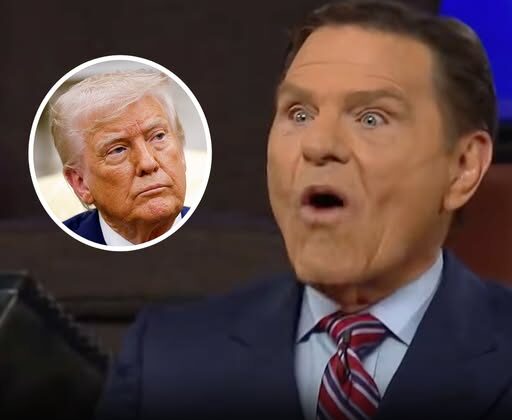
Kenneth Copeland’s Warning About Voters and Judgment Day Resurfaces — Here’s What He Actually Said
The Televangelist’s Remarks About Divine Judgment Sparked Controversy After Trump’s 2024 Victory. Now, With the 2026 Midterms Approaching, the Comments Are Drawing Attention Again.
A controversial warning from televangelist Kenneth Copeland has returned to public discussion as the United States approaches another major election.
The prominent religious broadcaster, known for his televised sermons and longstanding association with conservative Christian political activism, made a striking claim about what could happen to people who failed to vote.
Copeland said he had experienced a spiritual vision involving Judgment Day.
According to his account, people who had neglected what he believed was their religious responsibility to vote would face a disturbing form of accountability.
His remarks connected voting, religious obligation, and abortion in a way that immediately attracted criticism.
But an important detail has sometimes been lost as the video circulated online.
The comments were originally reported in November 2024, shortly after Donald Trump’s presidential election victory.
They were not a new warning issued specifically about the 2028 presidential election.
And while Copeland’s political support for Trump provided context for the remarks, the quoted warning itself did not explicitly name Trump as the candidate people were required to support.
What Did Kenneth Copeland Actually Say?
During a church service following the 2024 presidential election, Copeland described what he characterized as a spiritual vision of Judgment Day.
In his account, Jesus confronted people who had failed to vote or had not followed what Copeland believed were divine instructions concerning their participation in an election.
The televangelist then described a punishment involving the names of millions of babies whose lives had ended through abortion.
He suggested that those he considered responsible would be required to hear those names and face accountability.
The comments reflected Copeland’s religious and political views.
They were not an established theological fact or a prediction that can be independently verified.
His description of a supernatural judgment was a personal religious claim.
Nevertheless, the imagery was powerful enough to provoke considerable discussion.
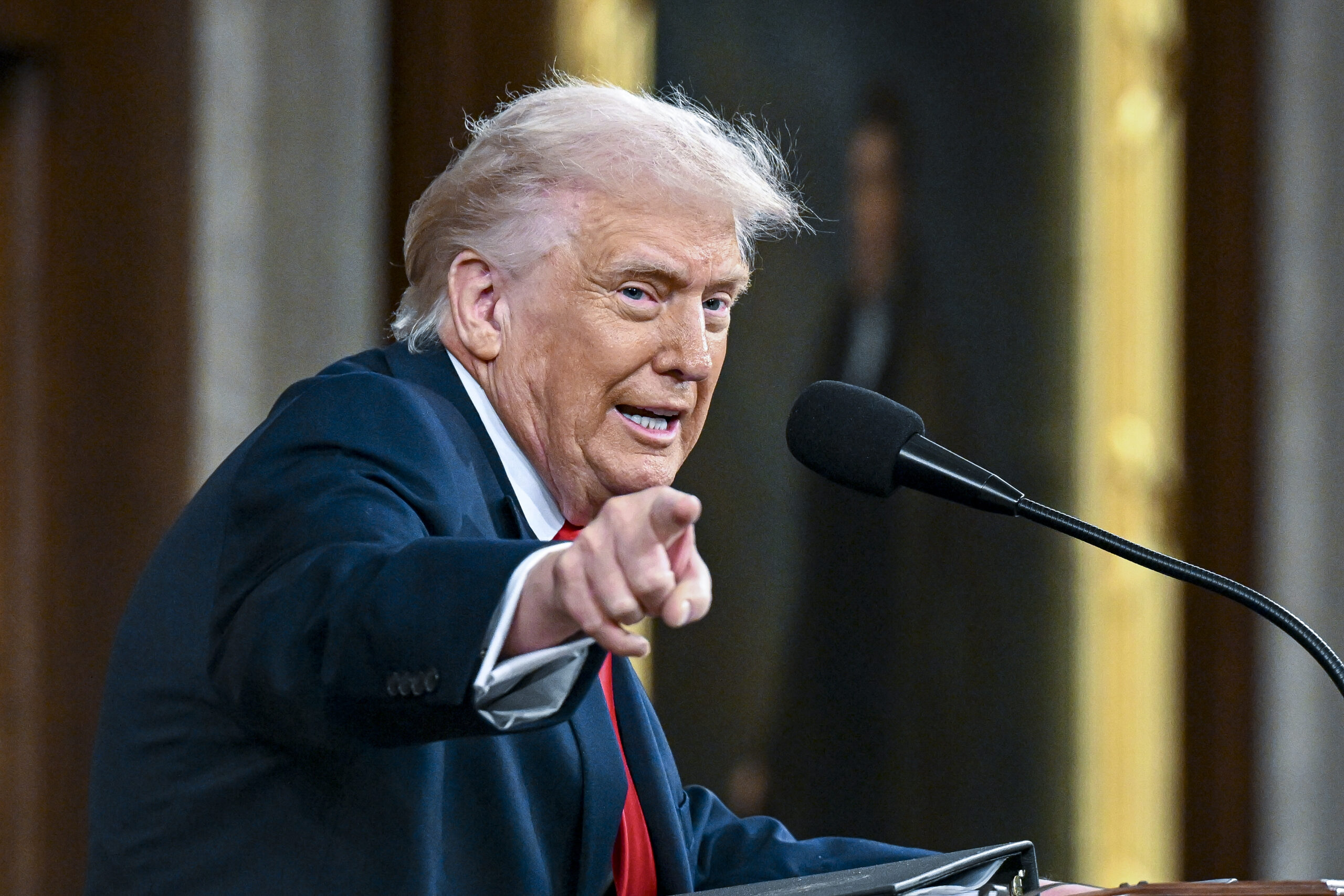
Why the Remarks Became Connected to Donald Trump
Copeland has maintained a visible relationship with Donald Trump’s political movement for years.
During Trump’s first presidential campaign, he was associated with the candidate’s evangelical advisory efforts.
His public statements have frequently connected political developments with his religious beliefs.
Following Trump’s 2024 election victory, Copeland spoke positively about the outcome and presented it as spiritually significant.
That context explains why his Judgment Day remarks were widely interpreted as a warning to people who had not supported Trump.
However, context and direct quotation are not the same thing.
In the specific passage that circulated online, Copeland referred to not voting or failing to vote as he believed God had instructed.
He did not explicitly identify a particular candidate in those words.
That distinction matters when assessing the accuracy of headlines describing his statement.
The Original Comments Date Back to 2024
Although the warning has resurfaced in discussions surrounding the 2026 elections, it is not a newly delivered message.
The remarks were reported on November 13, 2024, following a service at Eagle Mountain International Church.
That service took place shortly after Trump’s victory over Kamala Harris in the presidential election.
Copeland’s comments were part of a broader religious response to the election result.
At the time, the televangelist presented the outcome as an important development for the country.
Clips of his remarks subsequently circulated online and attracted criticism from commentators who questioned his portrayal of divine punishment.
The video has continued to appear in political discussions, sometimes without its original date or surrounding context.
That can create the impression that an older statement was made in response to more recent events.
Who Is Kenneth Copeland?
Kenneth Copeland is an American televangelist and founder of Kenneth Copeland Ministries.
He has spent decades preaching through television broadcasts, religious gatherings, and other media.
His ministry is based in Texas and has attracted an international audience.
Copeland is closely associated with teachings commonly described as the prosperity gospel.
These teachings emphasize connections between religious faith, spiritual declarations, health, and material prosperity.
Supporters regard his ministry as an important source of religious instruction and encouragement.
Critics have questioned aspects of his teachings, financial practices, and public statements.
His ownership and use of private aircraft have also attracted scrutiny over the years.
Despite the controversies, Copeland remains a recognizable figure in American televangelism.
His Political Statements Have Attracted Attention Before
The Judgment Day warning was not Copeland’s first controversial political statement.
During earlier election cycles, he publicly discussed voting through the lens of his religious beliefs.
He has repeatedly emphasized abortion as an important political issue.
In 2016, his statements about Christian voters and the presidential election also attracted attention.
His political messaging has often treated voting as more than an ordinary civic decision.
Instead, he has presented electoral participation as something with spiritual consequences.
That approach resonates with some religious conservatives who believe their faith should strongly influence political choices.
Other Christians disagree with such interpretations, including the idea that a particular electoral decision determines a person’s standing before God.
Christian communities hold a wide range of views about politics, abortion, religious authority, and the relationship between faith and government.
Televangelist Kenneth Copeland claims he was shown the punishment those who didn't vote for Trump will face on Judgment Day: They'll spend eternity listening to the names of all the babies killed by abortion pic.twitter.com/QBDhUnZYBU
— J (@jbulldogs4) October 20, 2026
Why the Judgment Day Claim Sparked Backlash
The most controversial element of Copeland’s remarks was his description of punishment after death.
His statement suggested that people who failed to meet what he considered their voting obligations could face responsibility for abortions.
Critics questioned both the theological reasoning and the use of such frightening imagery in a political context.
Some argued that invoking divine judgment could place inappropriate religious pressure on voters.
Others focused on the connection Copeland drew between individual voting decisions and the number of abortions in the United States.
Supporters of religiously motivated political participation may view voting as a moral responsibility.
But the specific claim that people will face the punishment Copeland described remains his personal religious assertion.
There is no objective method of verifying the supernatural event he said he witnessed.
Social Media Users Responded With Criticism and Questions
As the clip circulated, social media users reacted to both the substance of Copeland’s warning and his prominence as a wealthy religious broadcaster.
Some questioned whether a religious leader should connect voting decisions to the threat of punishment after death.
Others criticized what they regarded as an attempt to influence political behavior through fear.
Another group focused on the specific imagery used in the statement, questioning the reference to millions of names being read aloud.
Discussion also turned to Copeland’s finances and the public scrutiny surrounding his ministry.
These reactions illustrate why his remarks continued attracting attention long after the original service.
For some observers, the controversy concerned the relationship between religion and politics.
For others, it raised questions about the responsibilities of influential religious broadcasters when discussing elections.
The Controversy Resurfaces During a Difficult Political Period
The renewed attention comes as the United States prepares for the November 3, 2026, midterm elections.
President Donald Trump’s approval ratings have declined in several recent surveys.
One Reuters/Ipsos poll published on October 19 found that 31 percent of American adults approved of his job performance.
That represented the lowest approval figure recorded for Trump in Reuters/Ipsos polling across his two presidential terms up to that point.
The survey also found significant dissatisfaction with economic conditions.
Those findings have contributed to debate about the political environment facing Republicans as voters prepare to choose members of Congress.
However, presidential approval ratings are only one measure of public opinion.
They do not directly determine the outcome of individual congressional races.
What the Reuters/Ipsos Poll Actually Found
The Reuters/Ipsos survey collected responses from 1,679 American adults, including 1,279 registered voters.
Its presidential approval findings showed that 31 percent approved of Trump’s performance in office.
On the question of which party respondents would support in a congressional election, registered voters favored Democrats by 47 percent to 35 percent.
That was a 12-percentage-point advantage for Democrats in the national generic-ballot question.
The poll had a margin of error of approximately two percentage points for the full adult sample and three percentage points for registered voters.
These figures offer a snapshot of national opinion during the survey period.
They should not be interpreted as a guaranteed result for the midterm elections.
Congressional elections are decided through individual state and district contests, where local candidates, turnout, and other factors can affect outcomes.
What Is at Stake in the 2026 Midterm Elections?
On November 3, American voters will choose all 435 voting members of the House of Representatives and elect senators in the seats scheduled for that cycle, alongside numerous state and local officials.
The results will determine which party controls the House and Senate during the second half of Trump’s current presidential term.
Congressional control affects the legislative agenda, federal spending decisions, oversight investigations, and the ability of an administration to advance its priorities.
Republicans and Democrats are approaching the election with different policy priorities and messages to voters.
National polling can help describe the political climate, but it cannot fully capture every competitive race.
The outcome will depend on votes cast in the individual contests.
Can Donald Trump Run for President Again in 2028?
The approaching midterms have also prompted discussion about the next presidential election in 2028.
Under the Twenty-Second Amendment to the United States Constitution, no person may be elected president more than twice.
Trump won presidential elections in 2016 and 2024.
Under the Constitution’s existing rules, he cannot be elected to a third presidential term in 2028.
That constitutional restriction is separate from Copeland’s religious statements.
There is no basis for treating the televangelist’s 2024 warning as an announcement that Trump will be a candidate in 2028.
The identities of the major parties’ 2028 presidential nominees have not yet been determined.
Religion and Voting Remain Closely Connected for Some Americans
Religious beliefs have long influenced political participation in the United States.
Many voters consider their faith when evaluating issues such as abortion, religious freedom, immigration, economic policy, and social services.
Religious organizations and leaders also participate in public debate about these questions.
But religious communities are not politically uniform.
Christians can disagree about which policies best reflect their values.
They can also disagree about whether religious leaders should publicly support candidates or describe particular voting choices as divine obligations.
Copeland’s comments reflect one approach to those questions.
They do not represent a universally accepted Christian position.
The Difference Between Religious Belief and a Verifiable Claim
Copeland described his warning as a spiritual experience.
Such claims are matters of religious belief rather than events that can be independently established through ordinary reporting.
Journalists can verify that a statement was made, identify when it was delivered, and explain the context surrounding it.
They cannot verify that the supernatural judgment described in the statement will occur.
That distinction is especially important when religious predictions become part of political discussion.
Readers should be able to distinguish between a public figure’s stated belief and an independently confirmed fact.
In this case, the documented event is Copeland’s 2024 sermon and the reaction it generated.
The punishment he described remains an unverified religious claim.
Why the Timing of the Video Matters
Political clips frequently circulate again during later elections.
Sometimes they remain relevant because they reveal a public figure’s longstanding views.
But an older recording can become misleading when presented as though it were a fresh statement.
Copeland’s remarks were originally made in the aftermath of the 2024 presidential election.
The 2026 midterms involve a different set of candidates and congressional contests.
And the 2028 presidential election is still more than two years away.
Understanding that timeline helps prevent an inaccurate impression of what Copeland said and when he said it.
His words may remain controversial, but they should be evaluated in their proper context.
What the Controversy Reveals About Political Messaging
Copeland’s statement illustrates how religious language can become part of electoral messaging.
His remarks linked civic participation to moral accountability and used imagery associated with Judgment Day.
For audiences who share his religious perspective, that framing may carry particular significance.
For audiences who disagree, it raises questions about political pressure and the role of religious authority.
These disagreements are part of a broader national conversation about the relationship between personal faith and democratic participation.
Voters may draw on their religious beliefs when making political decisions while also evaluating candidates, policies, and public records.
There is no single political position shared by all members of a religious tradition.
The Bottom Line on Kenneth Copeland’s Warning
Kenneth Copeland did make a controversial statement about voting and Judgment Day.
He described a spiritual vision in which people who failed to vote as he believed they should would face punishment connected to abortion.
The remarks were delivered after Donald Trump’s 2024 election victory and attracted criticism when they circulated online.
But the claim that Copeland has just issued a new warning specifically instructing people to vote for Trump in the next presidential election is not supported by the original quotation.
The statement is from 2024, and Trump is constitutionally barred from being elected to a third presidential term under current law.
Meanwhile, the latest Reuters/Ipsos polling provides a separate picture of public opinion ahead of the 2026 midterms, with Trump’s approval at 31 percent and Democrats leading the national congressional preference question.
These are distinct developments, even if they appear together in political discussions.
Copeland’s comments remain an example of the controversial intersection of religion, political participation, and public influence.
Whether people agree with his religious interpretation or reject it, understanding the original statement and its context is essential to evaluating the controversy accurately.