
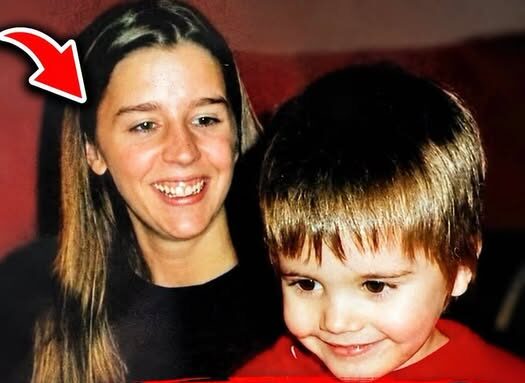
Justin Bieber’s Mother Was Pregnant at 17 and Faced an Uncertain Future — Her Emotional Story Behind Raising a Global Superstar
Long Before Justin Bieber Became One of the World’s Biggest Music Stars, His Mother, Pattie Mallette, Was a Frightened Teenager Struggling With a Painful Past. Years Later, She Revealed the Difficult Decisions, Personal Battles, and Unforgettable Moment That Changed Her Life.
Before the sold-out concerts, international fame, and millions of devoted fans, Justin Bieber was simply a baby born to a young mother who had no idea what the future would bring.
His mother, Pattie Mallette, was only 17 when she learned she was pregnant.
She had already experienced more hardship than many people face in a lifetime.
Her childhood had been marked by abuse, instability, and emotional pain.
During her teenage years, she struggled with depression and substance use.
She had also survived a suicide attempt.
And now, while still trying to rebuild her own life, she faced the enormous responsibility of becoming a parent.
People around her questioned whether she was ready.
Some encouraged her to end the pregnancy.
But Mallette later explained that she had made a deeply personal decision to continue it.
She did not know how she would manage.
She did not have financial security.
And she could not have imagined that the child she was carrying would one day become a global music sensation.
Years later, she shared the remarkable story of her early life in a memoir that revealed how much she had endured before the world knew her as Justin Bieber’s mother.
The Difficult Childhood Behind a Familiar Name
To millions of people, Pattie Mallette is known as the mother of Canadian pop star Justin Bieber.
But her life story began long before her son became famous.
Born in Canada, Mallette grew up facing difficult family circumstances and experiences that would affect her well into adulthood.
In her 2012 memoir, “Nowhere but Up: The Story of Justin Bieber’s Mom,” written with A.J. Gregory, she discussed childhood sexual abuse and the emotional consequences that followed.
Her account described experiences that no child should have to endure.
She later explained that the abuse affected how she understood relationships, personal boundaries, and her own worth.
Those experiences contributed to feelings of shame and confusion that followed her through adolescence.
By sharing her story publicly, Mallette hoped to help other people who had experienced trauma recognize that they were not alone.
Her memoir was not simply a collection of memories about raising a famous child.
It was also an attempt to tell the story of the young woman she had been before becoming a mother.
She Carried Shame That Was Never Hers to Bear
One of the most difficult subjects Mallette addressed was the self-blame she experienced after childhood abuse.
Survivors of abuse can sometimes internalize feelings of guilt or shame, even though responsibility belongs entirely to the person who caused the harm.
Mallette described how those feelings influenced her self-image.
For years, she struggled to understand why she felt so much emotional pain.
She also described seeking acceptance and affection while carrying unresolved hurt.
Her experiences reflected a difficult reality: trauma can continue affecting someone’s emotional well-being long after the original events have ended.
But Mallette’s decision to discuss those experiences was significant.
She wanted readers to understand that the painful things that happened to her were part of her history, not a measure of her value as a person.
And she wanted young people facing similar difficulties to know that seeking support and recovery was possible.
Her Teenage Years Became Increasingly Difficult
As Mallette entered adolescence, her struggles intensified.
She later spoke openly about depression, substance use, and feeling disconnected from the people around her.
Alcohol and drugs became part of a period she described as deeply troubled.
Instead of resolving her emotional distress, substance use added further difficulties to her life.
Her relationships and living circumstances also became unstable.
She left home during her teenage years and experienced a period of significant uncertainty.
At 17, she survived a suicide attempt and subsequently received mental health care.
In later interviews, she described this period as a turning point in her life.
Recovery was not immediate or simple.
But she began receiving support and reconsidering the direction she wanted her life to take.
Faith and counseling became important parts of her personal journey.
Finding Hope After a Painful Period
Mallette has credited her Christian faith and the people who supported her with helping her find a renewed sense of purpose.
In interviews surrounding the publication of her memoir, she spoke about the importance of counseling, encouragement, and learning to view herself differently.
She did not present her life as a perfect transformation in which every difficulty suddenly disappeared.
Instead, she described a gradual process of trying to move forward.
That distinction matters.
Emotional recovery can take time, and different people need different forms of support.
For Mallette, faith played a central role in how she understood her experiences.
For others, recovery may involve therapy, medical care, supportive relationships, or a combination of approaches.
What made her story meaningful was her willingness to acknowledge both the pain she had experienced and the effort required to rebuild her life.
Then came another major turning point.
She discovered she was pregnant.
Pregnant at 17, She Faced an Uncertain Future
When Mallette learned she was expecting a baby, she was still a teenager.
She had not yet established financial independence.
Her relationship with Justin’s father, Jeremy Bieber, had been complicated.
And she was facing the prospect of raising a child while still working through her own difficulties.
It was a frightening situation.
In her memoir and subsequent interviews, Mallette described receiving pressure from people who believed she should end the pregnancy.
They questioned whether she could support a child.
They worried about her age and circumstances.
And they saw the practical challenges that lay ahead.
But Mallette said she had already reached her own decision.
She wanted to continue the pregnancy.
Her choice was personal and shaped by her own beliefs.
She also acknowledged that she had no clear plan for how she would manage the responsibilities ahead.
Her Decision Was Personal, Not a Prediction of Fame
Looking back at the story today, it is easy to focus on the extraordinary success Justin Bieber eventually achieved.
But that success was not something Mallette could have anticipated when she was pregnant.
She did not know she was carrying a future recording artist.
She did not know he would become internationally famous.
And she certainly did not know that his music would eventually reach millions of people around the world.
Her decision came long before any of those possibilities existed.
In a 2012 television interview, she explained that she felt unable to choose abortion and was determined to do her best as a mother.
Her account describes her own circumstances and beliefs, rather than a universal answer for everyone facing an unexpected pregnancy.
For Mallette, the immediate question was not whether her child might someday become successful.
It was how she could provide love, care, and stability for a baby when she had so few resources herself.
One Important Detail About Her Age
Accounts of Mallette’s pregnancy sometimes describe her as being 17, while others say she became a mother at 18.
Both details can be understood through the timeline of her life.
She became pregnant during her teenage years and gave birth after turning 18.
Justin Bieber was born on March 1, 1994, in London, Ontario, Canada.
Mallette was still several weeks away from her 19th birthday.
She was entering motherhood at an age when many young adults are only beginning to make decisions about education, work, and independence.
And the years that followed would bring significant challenges.
The Moment She Heard Her Baby Cry
One of Mallette’s most memorable recollections concerns the moment Justin was born.
In an interview with Kathie Lee Gifford on NBC’s “Today” in September 2012, she described hearing her newborn son cry for the first time.
What stayed with her was the sound.
She remembered thinking that his cry sounded almost musical.
It was an emotional memory, made even more remarkable in hindsight because Justin would eventually become a singer.
But at the time, it was simply a mother hearing her baby’s voice.
There were no cameras documenting a future superstar.
No fans waiting outside.
No record contracts or world tours.
Just a young mother and her newborn child.
For Mallette, that moment became one of the most treasured memories of her life.
She Had Once Considered a Different Name
Another interesting detail from Mallette’s memoir concerns Justin’s name.
Before his birth, she had considered naming him Jesse.
But after meeting her baby, she decided that Justin suited him better.
It was an ordinary parenting decision at the time.
Years later, the name Justin Bieber would become familiar across the world.
His songs would dominate charts.
His performances would fill arenas.
And his career would make him one of the most recognizable entertainers of his generation.
But none of that was apparent in the early days.
For Mallette, he was simply her son.
Raising Justin Was Not Easy
After Justin’s birth, Mallette faced the practical realities of raising a child with limited financial resources.
She has described periods when she and Justin lived below the poverty line and relied on public assistance.
Money was often tight.
Everyday expenses required careful planning.
And the responsibilities of parenting could be overwhelming.
Although she received support from family members and others, she carried much of the day-to-day responsibility for raising her son.
She wanted him to have opportunities she had struggled to find herself.
She also wanted him to feel loved and secure despite their financial circumstances.
In interviews, Mallette recalled making small sacrifices to ensure Justin had what he needed.
Those early years were far removed from the lifestyle later associated with his international success.
A Mother Who Noticed Her Son’s Love of Music
As Justin grew older, his musical interests became increasingly apparent.
He enjoyed singing and learned to play instruments.
His mother encouraged those interests, even though she had no reason to believe they would become a professional career.
Like many parents, she wanted to preserve memories of her child’s accomplishments.
She recorded videos of Justin singing and performing.
Eventually, she began uploading clips to YouTube so relatives and friends could watch them.
At first, the videos were simply a way to share his talent with people close to the family.
But something unexpected happened.
Strangers began discovering them.
Views increased.
And Justin’s performances started reaching an audience far beyond the people Mallette had originally intended.
The YouTube Videos That Changed Their Lives
In the late 2000s, Justin’s online performances attracted growing attention.
His voice and musical ability caught the interest of people in the entertainment industry.
Talent manager Scooter Braun eventually discovered his videos and became involved in developing his career.
Justin went on to work with established music professionals, including Usher.
What began as homemade recordings gradually developed into a major recording career.
In 2009, Justin released his debut single, “One Time.”
His popularity grew rapidly.
His music reached international audiences.
And the young boy whose performances had first been shared with relatives became a global teenage sensation.
For Mallette, the transformation was extraordinary.
But fame also introduced new challenges.
Success Brought a Different Kind of Pressure
Justin Bieber’s rise to fame happened at a remarkably young age.
As his popularity increased, his life became the subject of intense public attention.
Millions of people followed his music, relationships, performances, and personal decisions.
Mallette had to adjust to watching her son grow up under circumstances very different from those she had experienced.
In interviews, she spoke about trying to keep him grounded.
She wanted him to remember his early life and appreciate the opportunities that had come his way.
She also wanted him to understand that money and recognition were not the only measures of success.
Those values were shaped partly by the years they had spent living with financial uncertainty.
And they reflected the lessons Mallette had learned through her own experiences.
Why Pattie Mallette Decided to Tell Her Story
By 2012, Justin Bieber was already one of the world’s most recognizable young performers.
His mother could have remained known primarily through his fame.
Instead, she chose to publish her own story.
“Nowhere but Up: The Story of Justin Bieber’s Mom” was released in September 2012.
The memoir, written with A.J. Gregory, explored her childhood, teenage struggles, faith, and experiences raising Justin.
Its publication required her to revisit deeply painful memories.
She discussed abuse, depression, substance use, and the difficult circumstances surrounding her early adulthood.
But she also described the people and experiences that helped her move forward.
Her stated goal was to offer hope to readers who might be facing their own struggles.
She wanted her story to be about more than the challenges she had survived.
She wanted it to show that a person’s future does not have to be defined entirely by their past.
Justin Bieber Read His Mother’s Memoir
One of the most personal aspects of the book was Justin’s involvement.
He wrote the foreword to his mother’s memoir.
He also read the manuscript before publication.
Mallette later acknowledged that some parts were difficult for him to read.
Learning about a parent’s experiences with abuse and severe emotional distress can be painful.
For Justin, the book revealed details of his mother’s life that he had not fully understood as a child.
But Mallette said he supported her decision to share her experiences.
She believed that telling the truth could help other people facing similar difficulties.
And she appreciated her son’s willingness to support that purpose.
Her Story Was About More Than Raising a Famous Son
There is an understandable temptation to tell Mallette’s story entirely through Justin Bieber’s success.
After all, his rise from homemade YouTube videos to international fame is remarkable.
But that perspective can overlook the central message of her memoir.
Mallette’s experiences mattered before Justin became famous.
Her childhood trauma mattered.
Her struggle to find support mattered.
Her decision to seek help mattered.
And her efforts to build a stable life for herself and her child mattered.
Those experiences would still be significant even if Justin had never become a recording artist.
His success is part of the story, but it is not the only reason her journey deserves attention.
The Importance of Speaking Openly About Trauma
By discussing her past, Mallette helped bring attention to experiences that many survivors find difficult to talk about.
Childhood sexual abuse can have long-lasting effects on emotional health, relationships, and self-esteem.
Survivors may experience shame, anxiety, depression, or other difficulties.
However, these outcomes are not inevitable, and every survivor’s experience is different.
Professional support, trusted relationships, and appropriate mental health care can play important roles in recovery.
Mallette’s account also illustrates why survivors should not be blamed for the harm they experienced.
Responsibility for abuse belongs to those who commit it.
Her willingness to share her story was a personal decision, and not every survivor needs to speak publicly to heal.
For Mallette, writing became one way to reflect on her experiences and connect with others.
Faith Played a Central Role in Her Journey
Throughout her memoir and interviews, Mallette spoke about her Christian faith.
She described it as an important source of hope during periods of uncertainty.
Her religious beliefs also influenced the way she understood motherhood and personal responsibility.
She has been open about the role those beliefs played in her decision to continue her pregnancy.
But her story is best understood as an account of her own life rather than a prescription for the decisions other people should make.
Pregnancy, parenting, and reproductive decisions involve deeply personal circumstances.
People facing those decisions deserve accurate information, appropriate healthcare, and support without coercion.
For Mallette, faith was one of the foundations that helped her navigate a difficult period.
And she has consistently identified it as a meaningful part of her life.
What She Wanted Young People to Understand
In interviews about her memoir, Mallette expressed particular concern for teenagers and young adults struggling with difficult circumstances.
She understood how isolating emotional distress could feel.
She also knew how easily young people might believe that mistakes or painful experiences had permanently damaged their future.
Her message emphasized the possibility of change.
She encouraged people not to give up on themselves.
She also stressed the importance of seeking support and recognizing that difficult circumstances can improve.
Her story did not suggest that determination alone can solve every problem.
Rather, it showed how personal choices, supportive people, professional care, and opportunities can all contribute to rebuilding a life.
The Memory That Stayed With Her Through Everything
Of all the moments Mallette has discussed publicly, the memory of hearing Justin cry for the first time remains especially moving.
It was a simple experience shared by countless parents.
But for her, it represented the beginning of a new chapter.
She was young.
She was uncertain about the future.
And she knew raising a child would require tremendous effort.
Yet the sound of her newborn’s voice stayed with her.
Years later, when she described it in an interview, she remembered it as almost musical.
The detail became especially poignant after Justin developed his extraordinary singing career.
But its emotional meaning did not depend on his fame.
It was the memory of a mother meeting her child.
Looking Back at an Extraordinary Journey
Today, Justin Bieber’s name is recognized around the world.
His music has reached millions of listeners, and his career has included major albums, international tours, and numerous awards.
But his mother’s story began in circumstances far removed from that success.
Pattie Mallette was a teenager dealing with emotional pain and an uncertain future.
She had experienced childhood trauma.
She had struggled with mental health and substance use.
And she had faced the challenges of becoming a young parent with limited resources.
Her memoir revealed the complicated journey behind the public image.
It also demonstrated that the people connected to famous performers often have important stories of their own.
Stories that deserve to be understood with compassion rather than reduced to celebrity headlines.
A Mother’s Love Before the World Knew Her Son’s Name
When Pattie Mallette learned she was pregnant, she could not see the future.
She did not know about the YouTube videos that would eventually attract attention.
She did not know about recording contracts, chart-topping songs, or international concerts.
And she did not know that millions of people would one day recognize her son’s voice.
She knew only that she was facing a major decision during an already difficult period of her life.
She chose to continue her pregnancy and committed herself to raising her child.
What followed was not an effortless journey.
There were financial struggles, personal challenges, and years of hard work.
But there were also moments of love, encouragement, and unexpected opportunity.
And among all those memories, one remained especially meaningful.
The first time she heard her baby cry.
Long before the world heard Justin Bieber sing, his mother remembered hearing something musical in the voice of her newborn son.
Her story is not simply about the birth of a future superstar. It is about a young woman confronting an uncertain future, seeking healing from a painful past, and finding meaning in the responsibilities and relationships that shaped her life.
What part of Pattie Mallette’s journey moved you most: her willingness to share her difficult past, her determination as a young mother, or the unforgettable memory of hearing Justin’s first cry?