
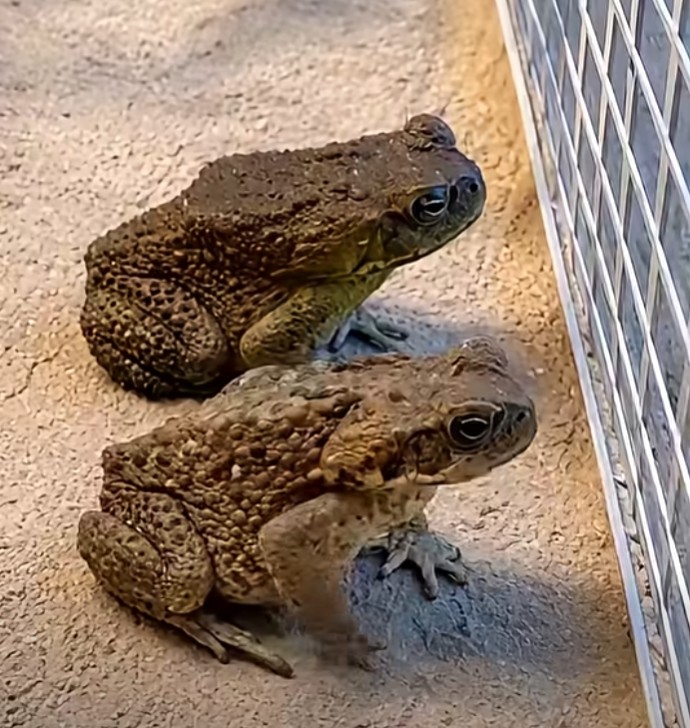
If Toads Keep Appearing Around Your House, Here’s What It Could Mean — And What Homeowners Should Know
Finding Toads Near Your Front Door, Garden, or Patio May Seem Strange, but Their Presence Can Reveal Important Clues About Moisture, Insects, and the Environment Around Your Home
Imagine stepping outside your front door one evening and noticing a small toad sitting beside the steps.
You think little of it until another appears near the garden.
Then, a few nights later, you discover several more gathered around the patio or garage.
For some homeowners, these unexpected visitors raise an immediate question: Why are toads suddenly appearing around the house?
Some people associate toads with good fortune, seasonal changes, or traditional beliefs. Others worry that their presence could indicate a problem with the property.
In most cases, however, the explanation is much more straightforward.
Toads are attracted to environments that provide moisture, protection, and a reliable supply of insects.
Even small changes in rainfall, temperature, outdoor lighting, or garden conditions can make a property more appealing to these amphibians.
Understanding why they appear can help you determine whether anything needs attention and how to manage their presence safely.
Why Toads Suddenly Start Appearing Around Your Home
Toads do not usually appear around houses without an environmental reason.
Like other wild animals, they seek locations that provide the resources necessary for survival.
Three factors are especially important: moisture, food, and shelter.
A garden with damp soil, shaded corners, and plenty of insects can provide an attractive habitat.
Toads may also become more visible after rainfall, when outdoor conditions are favorable for movement.
During warm, humid evenings, they may venture into areas where homeowners rarely notice them during the day.
This sudden increase in activity can make it seem as though toads have arrived unexpectedly.
In reality, some may have been living nearby for some time, remaining hidden beneath vegetation, stones, or other sheltered areas.
Their appearance is usually connected to natural activity rather than anything mysterious.
Rainfall Is One of the Biggest Reasons Toads Become More Active
If you have recently experienced several rainy days, that may help explain why toads are appearing around your property.
Amphibians depend on suitable moisture conditions to maintain normal bodily functions.
Dry environments can be challenging for them, particularly when temperatures are high.
Rainfall increases moisture in the soil and surrounding vegetation, creating conditions that may allow toads to move around more comfortably.
After rain, they may emerge from hiding places and explore gardens, pathways, and other outdoor spaces.
Some species also become more active during seasonal breeding periods, when rainfall and temperature can influence their movements.
The timing varies depending on the species and geographic region.
Therefore, finding several toads after a storm does not necessarily mean something is wrong with your home.
It may simply mean the weather has created favorable conditions for amphibian activity.
Your Porch Light Could Be Attracting Them
One surprising reason toads gather near homes is outdoor lighting.
Porch lights, garden lamps, and bright fixtures around entrances can attract insects after sunset.
Flying insects may gather around illuminated areas, creating convenient feeding opportunities for animals that eat them.
Toads are opportunistic predators that consume various small invertebrates.
When insects are concentrated near a doorway or patio, toads may begin visiting the same location regularly.
This can explain why you repeatedly notice them beneath the same porch light.
The animals are not necessarily attracted to the light itself.
They may be responding to the food available nearby.
Switching off unnecessary outdoor lights or using motion-activated fixtures may reduce insect activity around entrances.
In some situations, this can also make those locations less appealing to toads.
Toads May Be Finding Plenty of Food in Your Garden
Another common explanation involves the availability of insects.
Many toads feed on beetles, flies, ants, caterpillars, and other small invertebrates.
Gardens naturally support a wide range of insect life, especially when they contain flowers, shrubs, soil, and sheltered vegetation.
For a toad, such an environment can offer an accessible source of food.
That does not automatically mean your yard has a pest infestation.
Even a well-maintained garden may support enough insects to attract amphibians.
In fact, toads can play a useful role in the local food web by consuming some insects that may otherwise become nuisances.
However, they should not be considered a complete solution to pest problems.
Their feeding habits vary by species, season, and the prey available.
Finding Toads Could Tell You Something About Moisture Around Your Property
Toads often seek damp, sheltered environments.
As a result, repeated sightings may encourage homeowners to examine moisture conditions around the house.
Shaded garden beds, damp soil, areas beneath outdoor steps, and spaces near water features can provide suitable resting places.
Some of these conditions are entirely natural.
Others may be connected to maintenance issues, such as a leaking outdoor faucet or poor drainage.
If toads repeatedly gather in one unusually wet location, it may be worth checking for standing water or persistent dampness.
Look for leaking pipes, blocked gutters, or containers that collect rainwater.
These issues can also encourage certain insects to gather around the property.
However, the presence of toads alone cannot confirm a leak or drainage problem.
Visible water damage, persistent puddles, or other signs of excess moisture are more useful indicators.
Why Toads Sometimes Appear Near Your Front Door
Finding a toad directly outside the front door can feel particularly unusual.
But entrances often provide several features that amphibians find attractive.
Doorsteps may offer shaded spaces during the day.
Nearby plants can provide shelter.
Outdoor lights may attract insects at night.
And small gaps beneath steps or around landscaping can create places where toads can hide.
If the entrance is close to a garden, lawn, or wooded area, toads may naturally move through the space while searching for food.
The location may simply be part of their usual route.
There is no reliable scientific evidence that a toad sitting near a doorway predicts a particular future event.
Its presence is generally better explained by the surrounding habitat and environmental conditions.
What If You Find a Toad Inside Your Garage?
Discovering a toad inside a garage can be surprising, especially if you do not normally see amphibians around your home.
Garages often have small gaps beneath doors or around exterior openings.
A toad exploring the surrounding area may enter through one of these spaces.
Once inside, it may find a cool, sheltered environment.
However, the animal can also become trapped if it cannot locate an exit.
Smooth flooring and enclosed walls may make escape difficult.
If you encounter a toad indoors, avoid frightening or injuring it.
When it is safe to do so, gently guide the animal into a suitable container and move it to a nearby sheltered outdoor location.
Minimize direct handling and avoid leaving the animal exposed to strong sunlight.
If the species is unfamiliar or potentially hazardous, seek local wildlife guidance before handling it.
Why Toads Sometimes Enter Basements
Basements can attract toads for reasons similar to garages.
They may contain cool, damp areas that provide temporary shelter from outdoor conditions.
Open basement windows, damaged screens, uncovered vents, or other accessible gaps can allow small animals to enter.
In some cases, a toad may simply wander inside accidentally.
Once there, it may struggle to return outdoors.
Repeated sightings inside a basement should prompt an inspection of possible entry points.
Check window screens, door seals, and accessible openings.
If the basement also has persistent dampness, investigate the source separately.
Addressing moisture problems and repairing gaps can help make the space less accessible to wildlife.
Are Toads Actually Good for Your Garden?
Although some homeowners consider toads unwelcome visitors, these amphibians can contribute to a balanced garden ecosystem.
Many feed on insects and other small invertebrates that live among plants and soil.
Depending on the species, their diet may include organisms that damage garden vegetation.
This makes them part of the natural relationships between predators and prey.
Toads also form part of the wider food web, interacting with other wildlife in the environment.
A garden that supports native amphibians may provide suitable shelter, moisture, and food for multiple species.
However, seeing toads does not prove that a garden is perfectly healthy or free from pollution.
Their presence is one observation among many when considering environmental conditions.
Homeowners can appreciate their ecological role while still managing where they gather around the property.
Do Toads Mean You Have an Insect Problem?
Not necessarily.
Because toads consume insects, their presence may indicate that food is available nearby.
But insects are a normal part of outdoor environments.
A few toads in a garden do not automatically mean there is a serious pest infestation.
Flower beds, lawns, trees, and compost areas can support many types of small invertebrates.
Toads may feed on these animals without causing any problem for the homeowner.
If you are noticing unusually large numbers of insects around doors or windows, it may be useful to investigate the cause.
Outdoor lighting, standing water, uncovered waste, and seasonal insect activity can all influence what you see.
Identifying the actual source is more reliable than assuming the toads themselves indicate a pest problem.
Are Toads Dangerous to Humans?
Most toads encountered in ordinary residential gardens are not aggressive toward people.
They generally attempt to escape when approached.
However, that does not mean every species is harmless to touch or handle.
Many toads possess glands that produce defensive substances.
These secretions help protect them from predators.
The effects vary considerably between species.
It is best to avoid unnecessary handling, especially when you cannot identify the animal.
Children should be encouraged to observe toads without picking them up.
If accidental contact occurs, wash your hands thoroughly and avoid touching your eyes or mouth beforehand.
When in doubt, contact a local wildlife authority for species-specific information.
Pet Owners Should Be Especially Careful
One of the most important concerns involves dogs and other pets that may investigate toads with their mouths.
Some toad species release substances that can be harmful when a pet bites, licks, or swallows them.
The level of danger depends on the species and the circumstances of exposure.
Dogs may be particularly vulnerable because they often explore unfamiliar animals by sniffing or mouthing them.
Warning signs after contact can include excessive drooling, vomiting, weakness, tremors, or unusual behavior.
If you suspect your pet has mouthed a toad, contact a veterinarian or animal poison-control service promptly.
Do not wait for severe symptoms before seeking professional advice.
Supervising pets outdoors, particularly during evenings when amphibians are active, can help reduce unwanted encounters.
How to Keep Toads Away From Your Door Without Hurting Them
If you would prefer not to have toads gathering around entrances or outdoor seating areas, there are several humane approaches to consider.
The goal should be to make specific locations less attractive rather than harming the animals.
Start by reducing unnecessary outdoor lighting.
Because lights may attract insects, limiting illumination around doors can reduce feeding opportunities for toads.
Next, inspect door seals and window screens.
Repairing gaps can prevent amphibians from entering garages, basements, and other enclosed spaces.
Remove unnecessary clutter from immediately beside entryways.
Damp leaves, unused containers, boards, and similar objects can provide shelter.
Finally, address leaking faucets and unwanted standing water.
These changes may help reduce repeated visits without disturbing suitable wildlife habitat elsewhere in the garden.
Why You Should Avoid Using Chemicals Against Toads
Applying chemicals directly to toads is not an appropriate way to manage their presence.
Such substances can injure or kill wildlife and may create additional risks for pets, children, and the surrounding environment.
Broad pesticide use can also affect non-target organisms, including beneficial insects.
Because amphibians have sensitive skin and depend on suitable environmental conditions, unnecessary chemical exposure can be especially concerning.
If insects are attracting toads to a particular area, identify the insect problem before considering any control method.
Targeted, lower-impact approaches may be more suitable than widespread chemical treatments.
For toads themselves, habitat adjustments and exclusion from indoor spaces are generally more humane strategies.
What Does It Mean When a Toad Appears at Your Door in Folklore?
Beyond their biological role, toads have appeared in stories, traditions, and folklore across many cultures.
Depending on the tradition, they may be associated with transformation, renewal, fertility, or prosperity.
These symbolic meanings often reflect the unusual life cycle of amphibians.
Many begin life as eggs in water, develop into tadpoles, and later transform into land-dwelling adults.
That visible transformation has made them powerful symbols of change in different storytelling traditions.
Some people also interpret unexpected wildlife encounters as personally meaningful experiences.
However, cultural symbolism should be distinguished from scientific explanations.
A real toad appearing at your doorstep does not provide reliable evidence that good fortune, financial gain, or misfortune is approaching.
The Three-Legged Toad and the Symbol of Prosperity
One of the better-known symbolic representations of a toad appears in certain Chinese cultural and Feng Shui traditions.
The three-legged money toad, sometimes called Jin Chan, is associated with prosperity and wealth.
Decorative representations are sometimes placed in homes or businesses as symbols of financial good fortune.
This tradition concerns a symbolic figure rather than the ordinary biological behavior of wild toads.
Seeing a living toad near a house should not be interpreted as scientific evidence of future financial success.
People may still appreciate the cultural meaning associated with these symbols.
But the appearance of an amphibian in a garden is usually explained by food, shelter, weather, and moisture.
Could Toads Be a Sign of a Healthy Environment?
Amphibians are often discussed in connection with environmental health because many species are sensitive to habitat changes.
Their survival can depend on suitable moisture, water quality, food availability, and shelter.
Finding native toads in a garden may indicate that some of these resources are available nearby.
However, their presence alone cannot establish whether an entire environment is healthy.
Different species tolerate different conditions, and some may persist even in disturbed habitats.
Assessing environmental quality requires more than observing one type of animal.
Nevertheless, toads can remind homeowners that gardens and residential landscapes form part of a larger ecosystem.
Even a small yard may provide habitat for birds, insects, amphibians, and other wildlife.
Should You Move Toads Away From Your Property?
Relocating toads is not always necessary or advisable.
If an animal is outdoors in a safe location, allowing it to continue its normal activity is often the simplest approach.
If it has entered a building, carefully guiding it outside may be appropriate.
However, moving amphibians long distances can create problems.
Relocation may expose them to unsuitable habitat or unfamiliar environmental conditions.
It can also contribute to the spread of wildlife diseases.
In some areas, particular amphibian species are protected, and local regulations may restrict handling or relocation.
Introduced or invasive species may require different management.
For these reasons, homeowners should consult local wildlife guidance before moving unfamiliar animals beyond the immediate area.
When Should You Contact a Wildlife Professional?
Most occasional toad sightings do not require professional intervention.
However, some circumstances justify additional advice.
If large numbers of toads repeatedly enter a building, a local wildlife professional may help identify entry points and appropriate prevention measures.
If an animal appears injured or trapped in a hazardous location, professional assistance may be safer than attempting a rescue yourself.
Species identification may also be important when pets or children could encounter an unfamiliar amphibian.
If the problem involves persistent dampness, leaks, or drainage concerns, a qualified building professional may be better suited to investigate.
The appropriate response depends on whether the issue is wildlife access, property maintenance, or animal safety.
How to Create a Garden That Works for Both People and Wildlife
It is possible to maintain a comfortable outdoor space while allowing native wildlife to remain part of the environment.
One practical approach is to keep busy areas near entrances relatively clear while preserving suitable shelter in less frequently used parts of the garden.
Native vegetation can provide habitat for a variety of beneficial organisms.
Thoughtful lighting choices may reduce unnecessary insect concentrations around doors.
Proper drainage and routine maintenance can help prevent unwanted moisture problems.
Homeowners should also consider the safety of children and pets when maintaining ponds or other water features.
These measures allow people to manage their property without attempting to eliminate every animal that enters the yard.
A balanced approach can support both household comfort and local biodiversity.
What You Should Do the Next Time You See a Toad
If you notice a toad sitting near your porch, the first step is usually simple: observe it without disturbing it.
Look at the surrounding conditions.
Has it recently rained?
Are insects gathering around a nearby light?
Is the area shaded or damp?
Does the garden contain plants, stones, or other objects that provide shelter?
These observations may help explain why the animal has chosen that location.
If it is outdoors and not in immediate danger, there may be no need to intervene.
If it is inside your home or garage, take appropriate precautions and consult local guidance if necessary.
And if you have pets, make sure they do not attempt to bite or lick the animal.
The Real Meaning Behind Toads Appearing Around Your House
Finding toads around your property can seem strange, particularly when several appear within a short period.
But their presence usually has a natural explanation.
Rainfall, humidity, insects, shelter, and seasonal activity can all influence where these amphibians spend their time.
They may gather beneath outdoor lights because insects are available.
They may rest in shaded gardens because the conditions help them avoid drying out.
And they may occasionally enter garages or basements through accessible openings while seeking shelter.
Although folklore gives toads a variety of symbolic meanings, there is no scientific basis for treating an unexpected sighting as a prediction of future events.
For homeowners, the most useful response is to understand the conditions attracting them, check for any genuine maintenance concerns, and avoid unnecessary harm to wildlife.
The next time you find a small toad beside your front door, it may not be a warning or a mysterious sign.
It may simply be a wild animal that has discovered your garden offers exactly what it needs: a little moisture, a safe place to rest, and something to eat.