
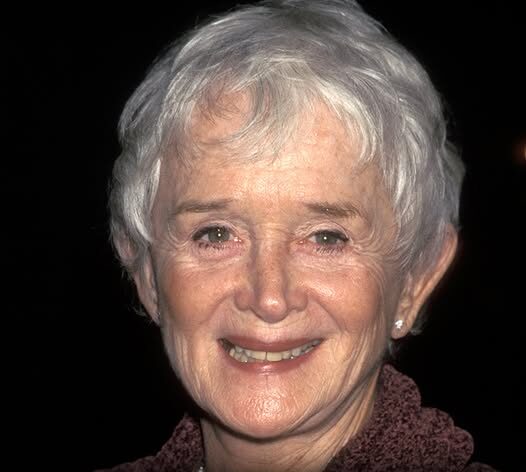
Beloved ‘Barney Miller’ and ‘Breaking Away’ Actress Barbara Barrie Dies at 95 — Her Family Reveals Details of Her Final Days
Academy Award-Nominated Actress Barbara Barrie, Whose Remarkable Career Spanned More Than Six Decades, Died at Her Manhattan Home Following a Terminal Cancer Diagnosis. Her Daughter Confirmed That Her Death Was Medically Assisted, Bringing an End to an Extraordinary Life in Hollywood and on Broadway.
Hollywood and Broadway are mourning the loss of a beloved actress whose performances touched generations of audiences.
Barbara Barrie, the acclaimed performer remembered for her roles in Breaking Away, Barney Miller, and Suddenly Susan, has died at the age of 95.
Her death was confirmed on Wednesday, October 28, 2026, by her daughter, Jane Harnick.
According to the family, Barrie died at her home in Manhattan, New York, following a terminal cancer diagnosis.
Her daughter also revealed a deeply personal detail about the actress’s final chapter.
Barrie’s death was medically assisted, in accordance with New York’s Medical Aid in Dying law, her representatives confirmed.
The news marks the end of an extraordinary career that stretched across theater, television, and film.
For some viewers, Barrie will always be the warm and supportive mother in the Oscar-winning film Breaking Away.
Others remember her as Elizabeth Miller, the wife of Captain Barney Miller in the beloved television sitcom.
And another generation came to know her through the comedy Suddenly Susan, where she played the grandmother of Brooke Shields’ character.
But behind her memorable performances was a woman who faced serious health challenges, became an outspoken advocate for cancer awareness, and used her experiences to help others.
Her life was defined not only by the characters she portrayed but also by her determination to speak openly about subjects many people preferred to avoid.
Barbara Barrie Dies at 95 After Terminal Cancer Diagnosis
Barbara Barrie died on October 28, 2026, at her home in New York City.
Her daughter, Jane Harnick, confirmed the news to The New York Times.
The family said Barrie had received a terminal cancer diagnosis.
Her representatives subsequently confirmed that her death had been medically assisted under New York State law.
The announcement attracted attention because Barrie had been a supporter of legislation allowing qualifying terminally ill adults to request medical aid in dying.
New York’s Medical Aid in Dying law had taken effect in August 2026.
The family did not publicly provide every detail of her final illness.
However, Barrie’s long history of health advocacy was already well known.
She had previously spoken about surviving rectal cancer in the 1990s and about living with a progressive lung disease.
Her passing brought renewed attention to those experiences and the openness with which she had discussed them.
Her Family Confirmed That Her Death Was Medically Assisted
In a statement provided to entertainment news outlets, Barrie’s representatives confirmed that her passing occurred through medical assistance in accordance with New York law.
The statement also described her as an advocate for the legislation.
Medical aid in dying is a legally regulated end-of-life option available to qualifying patients under certain state laws.
It involves specific eligibility requirements and medical procedures intended for adults with terminal illnesses.
The subject remains a matter of medical, ethical, and legal discussion across the United States.
In Barrie’s case, the family’s statement connected her final decision to a cause she had supported.
Her representatives did not disclose every medical detail surrounding her final days.
For those who admired her, the announcement was an opportunity to reflect on a woman who had long believed in speaking honestly about serious illness.
From Chicago to Texas: Barbara Barrie’s Early Life
Barbara Barrie was born Barbara Ann Berman in Chicago, Illinois, in 1931.
Her family later moved to Corpus Christi, Texas, where she spent much of her childhood.
Growing up, she developed an interest in performance and storytelling.
But her path toward becoming a professional actress was not immediate.
She initially attended Del Mar College, where she studied journalism.
Her academic interests eventually shifted toward drama.
She transferred to the University of Texas at Austin and began developing her skills as a performer.
During her time at the university, she earned recognition for her acting talent.
The experience helped convince her that theater could become more than a personal interest.
It could become her life’s work.
After graduating, Barrie moved to New York City to pursue acting professionally.
It was a decision that would lead to one of the most varied careers in American entertainment.
She Never Expected to Become a Hollywood Actress
In her early years, Barrie imagined herself primarily as a stage performer.
She did not initially believe that Hollywood would offer her the kinds of opportunities she wanted.
In a 1963 interview with the Akron Beacon Journal, she spoke candidly about how she viewed her appearance when she was younger.
She recalled feeling that she did not fit the conventional image of a movie star.
Instead of allowing those doubts to stop her, she focused on theater.
That decision proved important.
The stage gave her opportunities to develop characters, explore complex emotions, and work with respected directors and fellow performers.
Her early theatrical experience also helped establish the naturalistic acting style that would later become one of her defining strengths.
Audiences responded to the honesty she brought to her performances.
And eventually, film and television producers began recognizing those qualities as well.
Her Broadway Career Began in the 1950s
Barrie’s professional career developed during a period of tremendous change in American theater.
She made her Broadway debut in The Wooden Dish in 1955.
From there, she continued building her reputation through stage productions in New York and elsewhere.
She appeared in works by established playwrights and became known for her ability to bring depth to complicated characters.
Her theatrical credits eventually included The Beaux’ Stratagem, The Crucible, California Suite, Torch Song Trilogy, and Significant Other.
She also performed Off-Broadway and participated in Shakespeare productions.
Unlike some performers who leave the theater after achieving success on screen, Barrie maintained her connection to the stage throughout her career.
For her, theater was not simply a stepping stone to Hollywood.
It was an important artistic home.
Her Performance in Company Earned a Tony Nomination
One of Barrie’s most significant Broadway achievements came in 1970.
She joined the original production of Company, the groundbreaking musical created by Stephen Sondheim and George Furth.
The show explored relationships, marriage, friendship, and the complexities of adult life.
Barrie originated the role of Sarah.
Her performance helped establish one of the musical’s memorable married couples.
She received a Tony Award nomination for Best Featured Actress in a Musical.
Although she did not win the Tony, the nomination recognized her work in a production that would become a landmark of American musical theater.
Company remains one of Sondheim’s most celebrated works.
And Barrie’s participation in its original cast became an important part of her theatrical legacy.
Her First Major Film Role Tackled a Controversial Subject
Before her Academy Award nomination, Barrie had already made an impression on international cinema.
In 1964, she starred in One Potato, Two Potato.
The film examined an interracial marriage and the social prejudice surrounding it.
Barrie portrayed Julie Cullen Richards, a white woman whose relationship with a Black man becomes the center of a custody dispute.
At the time, interracial marriage remained illegal in some parts of the United States.
The film addressed a subject that was both socially significant and controversial.
Barrie’s performance received international recognition.
She won the Best Actress award at the 1964 Cannes Film Festival.
The achievement demonstrated her ability to handle emotionally demanding material.
It also established her as an actress willing to take on roles that reflected difficult realities in American society.
Breaking Away Became One of Her Most Beloved Films
For many moviegoers, Barbara Barrie’s most memorable performance came in the 1979 film Breaking Away.
Directed by Peter Yates, the coming-of-age comedy-drama followed four young men in Bloomington, Indiana, as they struggled with identity, friendship, and the transition into adulthood.
The story centered on Dave Stohler, played by Dennis Christopher, a young man fascinated by competitive cycling and Italian culture.
Barrie portrayed his mother, Evelyn Stohler.
Her character brought warmth, humor, and emotional grounding to the film.
Rather than being simply a background parent, Evelyn played an important role in the story’s exploration of family and growing up.
Barrie’s understated performance made the character feel genuine.
Her work was recognized with an Academy Award nomination for Best Supporting Actress.
The film itself became a critical success and won the Academy Award for Best Original Screenplay.
Why Her Oscar-Nominated Performance Was So Special
Breaking Away explored the frustrations and hopes of young people trying to find their place in the world.
But the film also showed the emotional experiences of their parents.
Barrie’s Evelyn Stohler was compassionate without being unrealistic.
She loved her son, but she also understood that he needed room to make his own decisions.
Her scenes offered moments of tenderness and humor amid the film’s larger story.
That balance became one of Barrie’s trademarks.
She could portray an ordinary person with such honesty that the character became unforgettable.
Her Academy Award nomination reflected the impact of that performance.
And decades later, Breaking Away remains one of the films most closely associated with her name.
She Reprised Her Role in the Television Adaptation
The success of Breaking Away led to a television adaptation in 1980.
Barrie returned to portray Evelyn Stohler.
The series continued exploring the lives of the characters introduced in the film.
Although the television adaptation was short-lived, Barrie’s performance again received recognition.
She earned an Emmy Award nomination for her work.
The nomination added to a growing collection of honors across different entertainment mediums.
By this point, Barrie had demonstrated that she could move between Broadway, film, and television without losing the qualities that made her performances distinctive.
Television Audiences Loved Her on Barney Miller
Another defining role came through the popular sitcom Barney Miller.
The series followed the everyday lives of detectives working in a New York City police precinct.
Hal Linden starred as Captain Barney Miller.
Barrie played his wife, Elizabeth Miller.
Although her character was not present in every episode, she helped provide a glimpse into the captain’s personal life outside the police station.
Her scenes added a domestic dimension to a comedy largely set in the workplace.
Viewers appreciated the relationship between Elizabeth and Barney.
Barrie’s performance offered warmth and realism while fitting naturally into the show’s understated humor.
For many fans of classic television, she remains closely associated with the series.
She Reached Another Generation Through Suddenly Susan
Decades after her early television success, Barrie found another memorable role.
In 1996, she joined the NBC sitcom Suddenly Susan, starring Brooke Shields.
Barrie played Helen Keane, the grandmother of Shields’ character.
The series followed a young woman navigating her professional and personal life after ending a relationship.
Barrie’s character added humor, family perspective, and emotional support.
The show introduced her to viewers who might not have seen Breaking Away or Barney Miller during their original releases.
It also demonstrated the remarkable longevity of her career.
More than forty years after beginning professional acting, she remained an active and recognizable television performer.
Her Voice Was Heard in Disney’s Hercules
Barrie’s work extended beyond live-action performances.
In 1997, she contributed her voice to Disney’s animated film Hercules.
She portrayed Alcmene, the mortal mother who raises Hercules.
The role was smaller than some of her best-known performances, but it added another notable credit to her career.
The animated film became popular with families and introduced her voice to younger audiences.
Her filmography also included Private Benjamin, Judy Berlin, and numerous independent productions.
Across different genres, she repeatedly demonstrated her ability to create believable characters.
Barbara Barrie Earned Multiple Emmy Nominations
Throughout her television career, Barrie received three Primetime Emmy Award nominations.
One recognized her work in the television adaptation of Breaking Away.
Another came for a guest appearance on Law & Order.
She received a third nomination for Law & Order: Special Victims Unit.
These honors reflected her continued relevance across different generations of television.
She appeared in dramas, comedies, and guest roles, often bringing emotional depth to relatively brief appearances.
Her later credits included Dead Like Me, Pushing Daisies, Nurse Jackie, and Enlightened.
She was also recognized for her stage work with Obie and Drama Desk honors.
Her career was distinguished by nominations and awards across multiple artistic disciplines.
In 1994, Her Life Changed After a Cancer Diagnosis
Behind her professional success, Barrie faced a serious personal health challenge.
In 1994, she was diagnosed with rectal cancer.
The diagnosis changed her life.
She underwent treatment and later spoke publicly about the physical and emotional consequences of the disease.
At a time when many people were reluctant to discuss colorectal cancer and related medical procedures, Barrie chose to share her experience.
She believed that embarrassment and silence could prevent people from seeking appropriate medical attention.
Rather than keeping her illness entirely private, she began using her public platform to encourage greater awareness.
Her openness became an important part of her legacy outside acting.
She Became an Advocate for Cancer Awareness
Following her diagnosis and treatment, Barrie spoke about the importance of early detection and honest conversations about cancer.
She wanted people to understand that serious medical conditions should not be surrounded by shame.
Her advocacy focused particularly on the experiences of people living with colorectal cancer and colostomies.
These subjects can be difficult for patients to discuss.
But Barrie believed that speaking openly could help reduce fear and isolation.
In interviews, she expressed the hope that her efforts to educate others would become a meaningful part of her legacy.
Her willingness to share personal experiences offered encouragement to people facing similar medical challenges.
She Wrote Books About Her Cancer Experience
Barrie did not limit her advocacy to interviews.
She also became an author.
Her books included Second Act and Don’t Die of Embarrassment: Life After Colostomy and Other Adventures.
Through her writing, she described the challenges of illness, treatment, recovery, and adapting to changes in her body.
She approached these subjects with honesty and humor.
Her goal was to help readers feel less alone.
She wanted people to understand that life could continue after major medical treatment.
Her books also reflected a broader message about resilience and self-acceptance.
They became another way for Barrie to connect with audiences beyond the stage and screen.
She Later Revealed Another Serious Health Condition
In 2014, Barrie publicly disclosed that she was living with idiopathic pulmonary fibrosis.
The condition is a chronic lung disease characterized by progressive scarring of lung tissue.
It can make breathing increasingly difficult and affect everyday activities.
There is currently no cure, although medical treatments may help slow progression in some patients.
Barrie discussed the uncertainty that came with the diagnosis.
Despite the seriousness of the condition, she continued to express appreciation for her life and the opportunities she had experienced.
Her public comments reflected an awareness that the future was uncertain while also emphasizing the importance of living meaningfully in the present.
Reports about her death in 2026 confirmed a terminal cancer diagnosis, but did not establish that it was a recurrence of the rectal cancer she had experienced decades earlier.
Her Final Chapter Reflected a Cause She Supported
In the years before her death, Barrie supported the right of qualifying terminally ill patients to access medical aid in dying.
Her representatives confirmed that she was an advocate of New York’s Medical Aid in Dying Act.
The law took effect in August 2026.
Her death on October 28 was medically assisted in accordance with that legislation, according to the family statement.
The disclosure brought renewed attention to a subject that continues to generate discussion among patients, healthcare professionals, lawmakers, and advocacy groups.
Supporters of medical aid in dying often emphasize patient autonomy and relief from suffering.
Opponents raise concerns about ethical safeguards, vulnerable patients, and the role of medicine at the end of life.
In Barrie’s case, her family chose to publicly acknowledge the circumstances of her passing.
The announcement was consistent with the openness she had demonstrated throughout her experiences with serious illness.
Her Marriage to Jay Harnick Lasted More Than Four Decades
Beyond her professional achievements, Barrie shared a long marriage with theater producer and director Jay Harnick.
The couple married in 1964.
They built a family together while both remained connected to the entertainment world.
Harnick was known for his contributions to theater, including his work with TheaterWorks/USA.
The couple had two children, Jane and Aaron.
Their marriage continued until Jay Harnick’s death in 2007.
His passing marked a significant personal loss for Barrie.
But her family remained an important part of her life.
At the time of her death, she was survived by her two children and three granddaughters.
She Was More Than an Actress
Although Barrie achieved fame through her performances, her life extended far beyond Hollywood.
She was a mother, grandmother, wife, author, and health advocate.
She valued theater and remained involved in the performing arts for decades.
She also wrote fiction for younger readers, including the novels Adam Zigzag and Lone Star.
Her interests reflected a curiosity about people and the different ways their experiences could be expressed.
Whether acting in a film, performing on Broadway, or writing about illness, she sought to communicate something meaningful.
That versatility helped make her career unusually rich.
Her Acting Career Continued Into Her Later Years
Many performers gradually disappear from public view as they grow older.
But Barrie continued accepting roles and participating in productions well into later life.
Her credits extended into the 2020s.
One of her final screen appearances was in the 2025 romantic comedy Things Like This.
She had also appeared in the Broadway production Significant Other in 2017.
These later projects demonstrated that her commitment to acting remained strong.
She continued working in an industry that had changed dramatically since her early years in New York.
And she remained respected for the same qualities that had defined her performances from the beginning: honesty, intelligence, and emotional precision.
Why Her Performances Connected With So Many Viewers
Barbara Barrie was never limited to one type of character.
She played mothers, wives, grandmothers, and women navigating difficult personal circumstances.
But she brought individuality to each role.
Her characters often felt like real people rather than familiar stereotypes.
In Breaking Away, she portrayed a mother who understood her son’s hopes and frustrations.
In Barney Miller, she offered a glimpse into the personal life of a hardworking police captain.
In Suddenly Susan, she brought warmth and humor to a multigenerational family relationship.
On Broadway, she explored more complex and sometimes uncomfortable aspects of human relationships.
That ability to move between different emotional registers made her a valuable performer across generations.
Her Work Helped Shape an Era of American Entertainment
Barrie’s career began when television was still establishing itself as a dominant form of home entertainment.
She witnessed the growth of modern sitcoms, the transformation of Hollywood filmmaking, and major changes in American theater.
Her early film work addressed social issues that were controversial at the time.
Her Broadway performances contributed to productions that became part of theatrical history.
Her television roles introduced her to millions of households.
And her later appearances connected her with new generations of viewers.
Few performers successfully sustain careers across so many different periods of the entertainment industry.
Barrie did so without abandoning her commitment to character-driven acting.
Hollywood and Broadway Remember a Remarkable Talent
Following the announcement of her death, entertainment publications revisited Barrie’s most memorable performances.
Tributes highlighted her Academy Award nomination, her work in Stephen Sondheim’s Company, and her recognizable television roles.
They also emphasized her advocacy for cancer awareness and her willingness to speak openly about serious illness.
Her legacy includes the 1964 Cannes Best Actress award, an Oscar nomination, a Tony nomination, three Emmy nominations, and respected theatrical honors.
But awards tell only part of the story.
For audiences, her most enduring achievement may be the emotional connection she created through her characters.
Her performances could be funny, tender, uncomfortable, or heartbreaking.
And they often stayed with viewers long after the credits ended.
The Legacy Barbara Barrie Leaves Behind
Barbara Barrie’s life offers a remarkable example of artistic longevity.
She began her professional journey in the 1950s, when she was a young actress pursuing theater in New York.
Over the following decades, she became a celebrated performer on Broadway, earned recognition at Cannes, received an Academy Award nomination, and appeared in some of television’s most familiar productions.
She also faced serious illness and chose to share those experiences publicly.
Her books and advocacy encouraged conversations about cancer, treatment, and living with medical challenges.
And in her final years, she remained connected to issues of patient autonomy and end-of-life care.
Her story is one of creativity, determination, personal loss, and the desire to make difficult experiences meaningful to others.
A Final Farewell to Barbara Barrie
On October 28, 2026, the entertainment world lost a performer whose work had enriched American theater, television, and film for more than sixty years.
Barbara Barrie was 95.
She died at home in Manhattan after receiving a terminal cancer diagnosis.
Her daughter, Jane Harnick, confirmed her passing, while the family’s representatives explained that her death had been medically assisted under New York law.
She leaves behind her children, grandchildren, and a body of work that continues to be discovered by audiences.
For fans of Breaking Away, she will be remembered as Evelyn Stohler, the loving mother whose quiet strength helped give the film its emotional heart.
For viewers of Barney Miller, she will remain Elizabeth, the woman who brought warmth to the captain’s life beyond the precinct.
And for theater lovers, she will be remembered as an accomplished Broadway actress who helped bring some of the stage’s most celebrated productions to life.
But perhaps her most meaningful legacy extends beyond any single performance.
Barbara Barrie used her talent to tell human stories.
And when life confronted her with serious illness, she used her voice to help others feel less afraid and less alone.
Her extraordinary career has come to an end, but the characters she brought to life and the conversations she helped inspire will continue.
Rest in peace, Barbara Barrie (1931–2026).
Editor’s note: Barbara Barrie’s death was confirmed on October 28, 2026. Her family and representatives stated that her passing was medically assisted following a terminal cancer diagnosis. Barrie was nominated for an Academy Award, a Tony Award, and three Primetime Emmy Awards; she did not win those particular awards. She did receive the Best Actress award at the 1964 Cannes Film Festival, along with theatrical honors.