
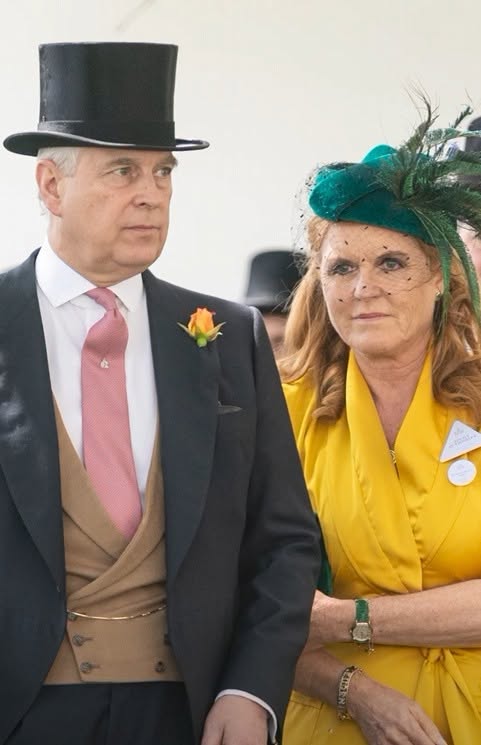
Prince Andrew and Sarah Ferguson Back Together? The Truth Behind Royal Remarriage Rumors After 30 Years Apart
They Divorced in 1996 but Remained Remarkably Close—Now Speculation About a Second Wedding Has Renewed Questions About Their Unusual Relationship
For many royal couples, divorce marks the end of a shared life. For Prince Andrew and Sarah Ferguson, the story has been considerably more complicated.
Nearly three decades after their marriage legally ended, their enduring connection has continued to attract public attention, raising questions about whether the former couple might ever consider marrying again.
Their relationship has been marked by royal celebrations, personal difficulties, public controversy, and an unusually close friendship that survived their separation.
Reports suggesting that Andrew wanted to remarry Ferguson have periodically revived interest in their relationship. However, speculation about a possible reunion should not be confused with a confirmed engagement or wedding announcement.
The central question remains unanswered: could two people who ended their marriage in 1996 eventually choose to make their relationship official again?
To understand why the possibility continues to fascinate royal watchers, it is necessary to examine their history, their family life, and the circumstances that have shaped their connection.
A Royal Wedding That Captured International Attention
Prince Andrew and Sarah Ferguson married on July 23, 1986, at Westminster Abbey in London.
Andrew, the son of Queen Elizabeth II and Prince Philip, was one of the most prominent members of the British royal family.
Ferguson entered royal life at a time when public interest in the monarchy was exceptionally intense.
The wedding attracted enormous attention, with audiences following the ceremony, the celebrations, and the couple’s future plans.
Following their marriage, Andrew and Ferguson became the Duke and Duchess of York.
Their early years together appeared to represent another important chapter in the royal family’s public story.
But behind the celebrations, the couple would eventually encounter pressures that made maintaining their marriage increasingly difficult.
Two Daughters Became the Center of Their Family
The couple welcomed their first daughter, Princess Beatrice, in August 1988.
Their second daughter, Princess Eugenie, was born in March 1990.
Both daughters became central figures in Andrew and Ferguson’s lives.
Even after the marriage ended, their shared responsibilities as parents helped maintain a connection between them.
Unlike some former couples who establish largely separate family lives, Andrew and Ferguson continued to appear together at family occasions.
Their relationship demonstrated that a legal divorce does not necessarily end every form of partnership between two people.
Parenthood, shared experiences, and longstanding personal ties can remain important even when a romantic relationship changes.
For Andrew and Ferguson, those connections would become a defining feature of their post-divorce relationship.
Why Prince Andrew and Sarah Ferguson Separated
By the early 1990s, their marriage was experiencing significant difficulties.
Andrew’s naval career involved periods away from home, while Ferguson faced the demands and scrutiny associated with royal life.
The couple announced their separation in 1992.
The decision marked a major change in a marriage that had once been celebrated internationally.
Public attention surrounding their personal lives continued throughout the separation.
Ferguson remained a recognizable public figure, while Andrew continued his royal and professional responsibilities.
Their divorce was finalized in 1996, ten years after their wedding.
Legally, their marriage was over.
Yet the relationship between them did not disappear.
Why Their Divorce Never Looked Like a Complete Goodbye
One of the most unusual aspects of Andrew and Ferguson’s story is how closely connected they remained after divorcing.
They continued participating in family events and maintaining a relationship centered on their daughters.
Ferguson also spoke publicly about Andrew in affectionate terms on various occasions.
Rather than consistently portraying their marriage as a relationship she wanted to leave entirely behind, she has often emphasized the significance of their shared history.
That approach helped create an enduring public impression that their emotional connection was different from a conventional post-divorce arrangement.
For some observers, their continued closeness suggested the possibility of reconciliation.
For others, it represented a lasting friendship built on mutual familiarity and family responsibilities.
Neither interpretation, by itself, establishes that the former couple intended to marry again.
The Royal Lodge Living Arrangement That Sparked Questions
Public curiosity increased because Andrew and Ferguson continued sharing Royal Lodge in Windsor for years after their divorce.
The arrangement was frequently discussed in reports about their personal lives.
For a divorced couple, living under the same roof can appear unusual, particularly when both individuals are internationally recognized public figures.
Their shared residence encouraged speculation about whether their relationship was more than a friendship.
However, living together does not automatically establish a renewed romantic partnership.
Former spouses may share accommodation for family, financial, practical, or personal reasons.
In Andrew and Ferguson’s case, their longstanding connection and shared family history provided important context for the arrangement.
The fact that they maintained a close domestic relationship was noteworthy, but it was not proof of a planned remarriage.
Sarah Ferguson’s Affectionate Comments About Their Marriage
Ferguson has repeatedly reflected on her relationship with Andrew and the significance of their wedding.
Her public comments have often emphasized affection, family loyalty, and the connection that remained after their marriage ended.
Such remarks have contributed to the public’s continuing fascination with the former couple.
When someone speaks warmly about an ex-spouse decades after a divorce, observers may interpret that affection as evidence that romantic feelings remain.
But personal affection can take many forms.
A former couple may value their shared memories and maintain a meaningful relationship without deciding to remarry.
Ferguson’s comments demonstrate the importance of Andrew in her personal history, but they should not be treated as a formal announcement of a future wedding.
How the Remarriage Rumors Gained Attention
Reports suggesting that Andrew wanted to remarry Ferguson have appeared periodically.
Some accounts connected the renewed speculation to the amount of time the former couple spent together during the COVID-19 pandemic.
The pandemic changed living arrangements and personal routines for many families, including people who were already sharing a residence.
In the case of Andrew and Ferguson, their continued closeness became another reason for commentators to revisit the possibility of reconciliation.
Stories about a potential second wedding attracted attention because the couple’s history already seemed unusual.
They had married in a major royal ceremony, divorced after a decade, and remained closely connected for years afterward.
That combination made the idea of remarriage an especially compelling subject for speculation.
Nevertheless, reports about someone’s private wishes do not establish that both individuals have agreed to marry.
A wedding would require an actual decision and confirmation, neither of which is established by the claims presented here.
Why a Second Royal Wedding Would Be Significant
If Andrew and Ferguson were ever to remarry, the decision would attract attention because of their longstanding public history.
Their original wedding was a major royal occasion.
Their separation and divorce became prominent subjects of media coverage.
Their post-divorce friendship subsequently challenged conventional expectations about how former spouses behave.
A second marriage would therefore represent an unusual continuation of a relationship that has already undergone several major changes.
It would also invite discussion about the couple’s family, their public roles, and the circumstances surrounding their personal lives.
However, the potential significance of such an event does not make it more likely to occur.
There is an important distinction between explaining why a hypothetical wedding would attract interest and claiming that one is being planned.
Serious Allegations Have Changed the Public Conversation
Discussion of Andrew’s personal life cannot be separated from the serious allegations and legal controversies that have affected his public standing.
Andrew faced allegations of sexual abuse made by Virginia Giuffre, which he denied.
In 2022, he reached an out-of-court settlement with Giuffre in a civil lawsuit. The settlement did not amount to a judicial finding that the allegations were proven.
The controversy contributed to substantial changes in Andrew’s public royal role and the way his activities were discussed.
It also affected public conversations about his relationships and the people who continued to associate with him.
Ferguson’s longstanding connection with Andrew has therefore been considered in a broader context than ordinary speculation about former spouses.
Any discussion of a possible remarriage must distinguish established events from unverified claims about private intentions.
How Public Scrutiny Complicates Their Relationship
Andrew and Ferguson’s relationship has unfolded under circumstances very different from those experienced by most divorced couples.
Their decisions have been scrutinized because of their connections to the British monarchy.
Public appearances, comments, and living arrangements can quickly become subjects of interpretation.
A photograph showing them together may prompt speculation about reconciliation.
An affectionate remark may be interpreted as evidence of a romantic relationship.
A report from an unnamed source may be repeated as though it were a confirmed development.
But none of those details necessarily reveals what either person privately intends.
The distinction is particularly important when serious controversies are also part of the public discussion.
Personal relationships can be described accurately without assuming that closeness amounts to endorsement of another person’s conduct or that friendship guarantees future marriage.
Princess Beatrice and Princess Eugenie Remain Part of Their Shared Story
Whatever the future holds for Andrew and Ferguson, their daughters remain an enduring connection between them.
Princess Beatrice and Princess Eugenie have grown into adults with their own families and responsibilities.
Their parents’ relationship has therefore evolved from raising young children together to maintaining family connections across generations.
Shared celebrations, important milestones, and family traditions can provide reasons for former spouses to remain in regular contact.
For Andrew and Ferguson, those connections have been visible throughout much of their post-divorce history.
Their continued involvement in family life offers one explanation for why their relationship has endured.
It also demonstrates why a close relationship between former spouses should not automatically be interpreted as an impending remarriage.
Can Former Spouses Remain Close Without Remarrying?
The story of Andrew and Ferguson raises a broader question about relationships after divorce.
Some former spouses choose to establish significant distance from one another.
Others maintain friendships, collaborate as parents, or continue sharing aspects of their daily lives.
Neither approach is inherently universal.
Relationships can change over time, and a marriage that ends legally may leave behind meaningful emotional ties.
In some circumstances, those ties may eventually lead to reconciliation.
In others, they remain friendships or family partnerships without returning to marriage.
Andrew and Ferguson’s history illustrates how difficult it can be for outsiders to distinguish between those possibilities.
Their continued closeness is observable through their shared history and public comments.
Their future intentions, however, cannot be established simply by examining the past.
Why Royal Reunion Stories Continue to Fascinate Readers
Stories about former couples finding their way back to one another often attract attention because they challenge the idea that a divorce must be a permanent emotional ending.
When the individuals involved are members of a royal family, the interest becomes even greater.
Royal relationships combine personal decisions with public expectations, established traditions, and extensive media coverage.
Andrew and Ferguson’s story contains many of the elements that make such narratives compelling.
There was a celebrated wedding, a difficult separation, a completed divorce, and decades of continued contact.
There is also the unresolved question of what their closeness means today.
But a compelling narrative should not replace careful consideration of the evidence.
Reports about reconciliation may reflect genuine public curiosity without establishing that a second marriage is being arranged.
What Is Confirmed About Andrew and Ferguson’s Relationship?
Several important details about their history are established.
Andrew and Ferguson married in 1986.
They separated in 1992 and finalized their divorce in 1996.
They have two daughters, Princess Beatrice and Princess Eugenie.
They maintained a close relationship after their divorce and shared Royal Lodge for years.
Ferguson has also spoken publicly about their connection in affectionate terms.
Those facts explain why speculation about reconciliation has persisted.
What remains unconfirmed in the account is whether the former couple have jointly decided to remarry or established any wedding plans.
Without a reliable announcement or direct confirmation, reports about a possible second marriage should remain clearly identified as speculation.
Why Affection Is Not the Same as an Engagement
One of the most important distinctions in stories about celebrity and royal relationships is the difference between emotional closeness and a formal commitment.
Two people can care deeply about one another without being romantically involved.
They can share a residence without planning a wedding.
They can speak fondly about their marriage while accepting that it ended.
They can also change their minds about the future without publicly announcing every private conversation.
For these reasons, even repeated reports about Andrew and Ferguson’s closeness cannot independently confirm a remarriage.
The only reliable basis for treating a future wedding as established would be clear, credible confirmation.
Until then, their relationship remains a subject of public interest rather than evidence of an announced royal reunion.
What Happens Next for the Former Duke and Duchess of York?
The future of Andrew and Ferguson’s personal relationship is ultimately a matter for them.
Their history shows that they have maintained a connection through major changes in their lives.
It does not establish what decisions they will make next.
Any future developments would need to be evaluated in light of reliable information rather than assumptions drawn from their past.
For readers following the story, the distinction matters.
A report that someone wishes to remarry is not the same as an engagement.
An affectionate public statement is not a wedding announcement.
And a longstanding friendship, however unusual, does not guarantee a particular outcome.
The former couple’s relationship has already lasted far beyond their marriage, but its next chapter remains uncertain.
Nearly Three Decades After Their Divorce, the Biggest Question Remains Unanswered
Prince Andrew and Sarah Ferguson’s relationship has never followed a simple path.
They married in front of a global audience, separated six years later, and completed their divorce in 1996.
Yet they continued to share important parts of their lives, particularly their commitment to their daughters and their longstanding personal connection.
That enduring relationship has made speculation about a possible second marriage difficult to ignore.
At the same time, serious allegations against Andrew, which he has denied, have shaped the wider public context surrounding his life and relationships.
The available account does not establish that Andrew and Ferguson have announced an engagement or made plans for another wedding.
What it does show is that their connection continued long after their marriage legally ended.
Whether that relationship ever becomes a marriage again is a question that only confirmed future developments can answer.
For now, the most remarkable part of their story may not be the possibility of another royal wedding, but the fact that their relationship has remained a subject of fascination for so many years after their divorce.