
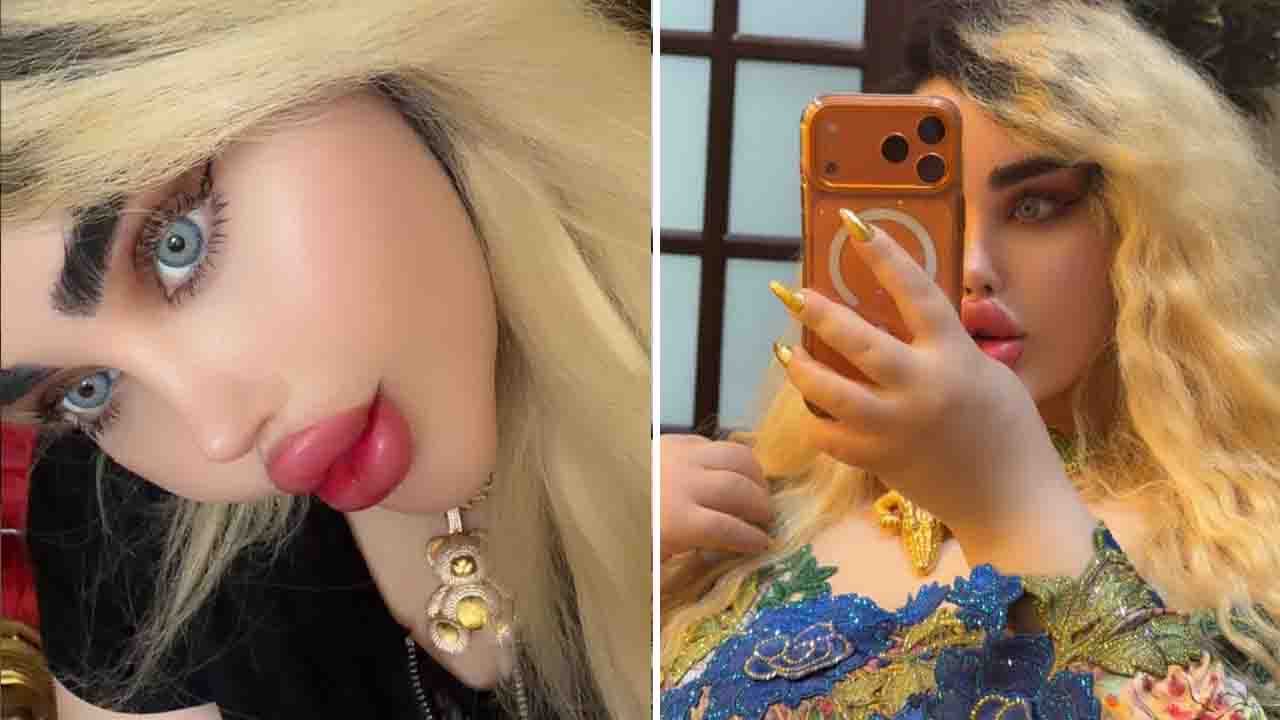
Woman Dubbed the “Iraqi Barbie” Looks Dramatically Different After Reportedly Undergoing 43 Cosmetic Procedures
Dalia Naeem’s Doll-Inspired Appearance Has Attracted Worldwide Attention, Sparking Conversations About Cosmetic Enhancements, Beauty Standards, and Personal Choice
Beauty means something different to everyone.
For some people, changing their appearance means trying a new hairstyle, experimenting with makeup, or updating their wardrobe.
For others, the transformation they imagine involves more significant changes, including cosmetic treatments and plastic surgery.
One woman whose appearance has generated widespread online attention is Dalia Naeem, a media personality from Baghdad, Iraq, who became known internationally as the “Iraqi Barbie.”
Her distinctive appearance, particularly her pronounced lips, carefully styled blonde hair, and doll-inspired makeup, has prompted countless reactions on social media.
Reports have claimed that Naeem underwent at least 43 cosmetic procedures while pursuing her preferred look.
However, the precise number and types of procedures have not been independently established through publicly available medical records.
What is clear is that her appearance has become the subject of an international conversation about cosmetic enhancements, individuality, and the pressure to meet particular beauty ideals.
Who Is Dalia Naeem, the Woman Known as the Iraqi Barbie?
Dalia Naeem is an Iraqi media personality and social media figure who has attracted attention for her striking appearance.
Originally from Baghdad, she became widely discussed after photographs and videos showing her cosmetic transformation circulated online.
Her nickname, the “Iraqi Barbie,” reflects the comparisons viewers have made between her appearance and the famous fashion doll.
Barbie has long been associated with blonde hair, dramatic eye makeup, and a highly stylized aesthetic.
Naeem’s own look incorporates several of those recognizable elements, including long blonde hairstyles, carefully applied makeup, and prominent facial features.
As her photographs reached wider audiences, curiosity about her appearance grew.
Many viewers wanted to know how she had changed her look, what procedures she might have undergone, and why she had chosen such a distinctive style.
The Reported 43 Cosmetic Procedures That Made Headlines
One of the most frequently repeated claims about Dalia Naeem is that she has undergone at least 43 cosmetic procedures.
The figure appeared in international entertainment and lifestyle coverage discussing her transformation.
It is important, however, to distinguish between reported procedures and medically verified information.
Public accounts do not provide a complete, independently confirmed breakdown of every treatment Naeem has received.
Cosmetic procedures can include surgical operations as well as nonsurgical treatments such as injectable fillers and other aesthetic interventions.
These are different categories of treatment, with different risks, recovery periods, and long-term considerations.
Therefore, a reported total of 43 procedures should not automatically be interpreted as 43 major surgeries.
Nevertheless, the widely circulated number became a central part of the attention surrounding Naeem’s appearance.
Her Transformation Became a Viral Topic in 2023
In 2023, Naeem attracted renewed attention after a video showing her appearance following a cosmetic treatment circulated online.
Viewers focused particularly on her facial features and the noticeable difference between her newer images and photographs from earlier years.
Her lips became one of the most discussed aspects of the transformation.
Other observers commented on her makeup, hairstyle, and overall doll-inspired presentation.
The video was shared and discussed across social media platforms, introducing Naeem to audiences who had not previously followed her work.
As often happens with viral celebrity content, public curiosity soon extended beyond the original footage.
People began comparing older and newer photographs, discussing cosmetic procedures, and offering opinions about her appearance.
Before-and-After Photographs Sparked Widespread Curiosity
Before-and-after photographs can attract significant attention because they show how someone’s appearance has changed over time.
In Naeem’s case, comparisons highlighted differences in facial proportions, lip volume, makeup, and styling.
However, photographs alone cannot establish exactly which procedures someone has undergone.
Lighting, camera angles, facial expressions, cosmetics, filters, and image editing can all affect how a person appears in photographs.
For that reason, viewers should be cautious about diagnosing or identifying specific cosmetic treatments solely from pictures.
Only the individual and their qualified medical professionals can reliably confirm their treatment history.
Why Dalia Naeem’s Lips Received So Much Attention
Among the most recognizable features of Naeem’s appearance are her prominently enhanced-looking lips.
Lip augmentation has become a widely discussed area of cosmetic medicine, particularly with the increasing visibility of injectable treatments on social media.
Dermal fillers are commonly used to add volume or alter the shape of the lips.
However, the appearance of fuller lips does not establish which treatment was used or how often it was performed.
Individual results vary depending on anatomy, treatment choices, product characteristics, and the skill of the medical professional.
Some people prefer subtle changes, while others deliberately choose a more pronounced aesthetic.
Naeem’s appearance has attracted attention partly because it differs from the understated results that some patients seek.
Why Some People Want to Resemble Barbie
Barbie has been a recognizable cultural figure for generations.
Introduced in 1959, the doll became associated with fashion, beauty, and imaginative play.
Over the years, Barbie has also been the subject of discussions about body image, representation, and unrealistic beauty standards.
For some adults, a Barbie-inspired appearance is a form of personal expression.
They may enjoy dramatic makeup, blonde hairstyles, carefully coordinated clothing, or an intentionally doll-like presentation.
Others may pursue cosmetic treatments to achieve features they associate with that aesthetic.
There is no single explanation for why someone chooses such a look.
Personal preferences, fashion influences, cultural trends, and individual experiences can all play a role.
It would be inappropriate to assume someone’s psychological motivations simply from their appearance.
Social Media Reactions Were Strongly Divided
As Naeem’s photographs and videos circulated, reactions varied considerably.
Some viewers expressed admiration for her confidence and willingness to present herself in a distinctive way.
Others questioned the extent of her apparent cosmetic transformation.
Unfortunately, some comments went beyond criticism and included insulting comparisons about her appearance.
Such reactions demonstrate how easily discussions about cosmetic procedures can become personal attacks.
People may reasonably disagree about beauty trends or the desirability of particular treatments.
But disagreement does not require ridicule or dehumanizing language.
A person’s appearance should not determine whether they are treated with dignity.
How Cosmetic Enhancements Became More Visible
Cosmetic procedures have existed for decades, but social media has made them much more visible.
People can now follow transformations through photographs, videos, personal accounts, and treatment updates.
Influencers and public figures frequently discuss beauty routines and aesthetic treatments with large audiences.
This visibility has helped make conversations about cosmetic medicine more common.
At the same time, it can create unrealistic expectations.
Photographs rarely show every stage of recovery, possible complications, maintenance requirements, or the financial cost of treatment.
Online transformations can therefore appear simpler and more predictable than they actually are.
What Is the Difference Between Plastic Surgery and Nonsurgical Cosmetic Treatments?
Although the terms are sometimes used interchangeably in entertainment reporting, cosmetic surgery and nonsurgical aesthetic treatments are not the same.
Cosmetic surgery generally involves an operation intended to change physical features.
Examples include certain facial procedures, breast surgery, and body-contouring operations.
Nonsurgical treatments may include injectable fillers, botulinum toxin injections, and selected skin procedures.
Some nonsurgical treatments have relatively short recovery periods, but they still carry medical risks.
Possible complications depend on the treatment and may include infection, allergic reactions, tissue damage, and other adverse outcomes.
Even treatments commonly described as minimally invasive should be performed by appropriately qualified professionals using suitable products and techniques.
Why Repeated Cosmetic Procedures Require Careful Consideration
Anyone considering multiple cosmetic procedures should understand that the effects of repeated treatments can vary considerably.
Factors such as tissue condition, previous treatments, underlying health, and individual anatomy may influence outcomes.
Some procedures require ongoing maintenance, while others create longer-lasting changes.
Repeated interventions may also complicate future treatment decisions.
Qualified medical professionals should evaluate each procedure individually, explain realistic outcomes, and discuss possible complications.
The fact that a cosmetic treatment is popular online does not automatically make it appropriate for everyone.
The Influence of Online Beauty Standards
Social media exposes people to a wide range of beauty ideals.
Some trends emphasize natural-looking features, while others celebrate dramatic transformations.
Filters, professional lighting, editing, and carefully selected photographs can make particular appearances seem more attainable than they are.
For viewers, repeated exposure to idealized images may affect expectations about their own appearance.
This makes it important to distinguish between personal aesthetic choices and pressure to conform to online trends.
Choosing to undergo a cosmetic procedure is a personal decision that should be informed by realistic expectations and reliable medical guidance.
Does a Dramatic Transformation Mean Someone Is Unhappy With Their Natural Appearance?
Not necessarily.
People change their appearance for many reasons, including fashion, creativity, personal preference, and a desire to explore different styles.
Some people enjoy dramatic cosmetic enhancements without viewing their previous appearance negatively.
Others may have more complicated feelings about beauty and self-image.
Without a person’s own explanation, it is not possible to determine their motivations.
In Naeem’s case, the public has seen the results of her changing appearance, but those images alone cannot explain every personal decision behind it.
Why Public Figures Face Intense Scrutiny Over Their Looks
Public figures often experience a level of scrutiny that most people do not encounter in everyday life.
Changes in hairstyle, makeup, weight, clothing, or facial appearance may become subjects of online discussion.
When a transformation is particularly noticeable, attention can intensify.
For women in entertainment and social media, appearance-related commentary can become a major part of public coverage.
This creates a difficult contradiction.
People may be criticized for not meeting conventional beauty standards, yet also criticized when they pursue cosmetic changes.
Naeem’s experience reflects that broader tension between personal expression and public judgment.
Beauty Is Not Defined by One Particular Look
Beauty standards differ across cultures, generations, and individuals.
Features admired in one place or period may be viewed differently elsewhere.
Some people prefer minimal makeup and subtle enhancements.
Others enjoy bold styling and dramatic changes.
Neither preference should be treated as a universal requirement.
While cosmetic procedures deserve informed medical consideration, personal appearance is not a measure of someone’s worth or character.
The discussion surrounding Naeem provides an opportunity to consider how quickly aesthetic preferences can turn into judgments about individuals.
What Anyone Considering Cosmetic Procedures Should Know
Before undergoing cosmetic treatment, it is important to seek advice from an appropriately licensed and qualified medical professional.
A proper consultation should address the person’s goals, medical history, available treatment options, expected results, recovery requirements, and possible complications.
Patients should also understand the total cost and whether future maintenance may be necessary.
For injectable treatments, product authenticity and professional training are especially important.
Decisions should not be based solely on viral photographs or promises of dramatic results.
Taking time to consider the benefits, limitations, and risks is an essential part of making an informed choice.
Baghdad-born Dalia Naeem has reportedly undergone 43 cosmetic procedures #dontdobarbie https://t.co/pJ9pcJmsI0
— ArtfulDodger (@Metaverse_Degen) July 29, 2023
What Dalia Naeem’s Story Reveals About Internet Culture
Naeem’s transformation attracted attention because her appearance is distinctive and closely associated with a familiar cultural image.
But the response also reveals something about how online audiences discuss beauty.
Photographs and short videos can circulate rapidly, sometimes reaching millions of people who know very little about the person featured.
Opinions can form almost immediately.
Some viewers respond with curiosity or admiration, while others post harsh judgments.
Yet the person behind the images has a life and identity that extend beyond their appearance.
Recognizing that distinction makes discussions about cosmetic enhancements more thoughtful and respectful.
Final Thoughts: The Iraqi Barbie Continues to Spark Conversations About Beauty
Dalia Naeem became internationally known for her doll-inspired appearance and the reports that she had undergone at least 43 cosmetic procedures.
Her photographs and videos attracted widespread attention, with viewers offering sharply different opinions about her transformation.
Some admired her distinctive style, while others questioned the extent of her cosmetic enhancements.
Although the precise details of her treatment history have not been independently verified, her story illustrates the growing visibility of cosmetic procedures in modern culture.
It also raises broader questions about personal choice, online criticism, and the influence of beauty standards.
Ultimately, people have different ideas about what makes someone attractive.
Some prefer natural-looking features, while others appreciate dramatic aesthetics.
But no matter how someone chooses to present themselves, appearance alone cannot tell the full story of who they are.
And perhaps that is the most important lesson behind the attention surrounding the woman known as the Iraqi Barbie: beauty may attract opinions, but respect should never depend on whether someone fits another person’s ideal.