
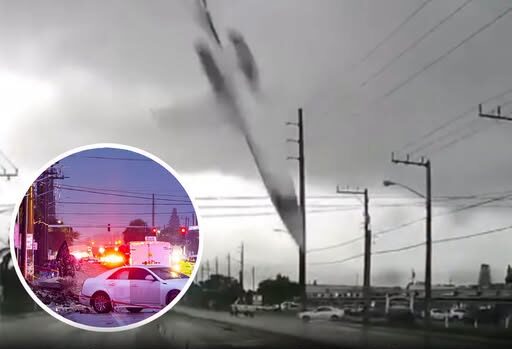
Nine Killed After Private Jet Crashes Into Florida Neighborhood Following Midair Emergency
A Learjet 60 Reportedly Encountered Icing and Turbulence Before Descending Rapidly and Crashing in Greenacres, Leaving Nine People Dead
Nine people lost their lives after a Learjet 60 crashed near a residential neighborhood in Greenacres, Florida, on November 1, 2026, following a reported emergency involving icing, turbulence, and a rapid loss of altitude.
The business jet was traveling from Austin, Texas, to North Eleuthera in the Bahamas when the flight ended in disaster near West Palm Beach. The aircraft struck an area close to South Military Trail and Marilyn Drive, where the impact left wreckage, a crater, and fires.
All nine people aboard the aircraft died. Transportation Secretary Sean Duffy confirmed the fatalities, while authorities continued examining the circumstances surrounding the crash.
Air traffic control recordings captured a tense exchange between the pilot and a controller as the situation deteriorated. The pilot had raised concerns about icing and requested permission to climb before declaring an emergency during the aircraft’s rapid descent.
In one of the most troubling moments of the exchange, the controller attempted to maintain communication with the struggling pilot, saying, “I’m here with you, talk to me.”
Among the pilot’s final reported words were: “We’re out of time.”
The crash prompted emergency operations, road closures, and the evacuation of approximately 600 residents from a nearby mobile home community.
Flight From Texas to the Bahamas Ended in Florida
The Learjet 60 had been traveling from Austin toward North Eleuthera, a destination in the Bahamas, before encountering difficulties over South Florida.
The aircraft was a business jet carrying nine people. The flight’s planned destination was outside the United States, but it never completed the journey.
Instead, the aircraft crashed in Greenacres, a community near West Palm Beach, after the pilot communicated concerns about conditions affecting the flight.
The sequence described in the available information indicates that the emergency developed while the aircraft was still airborne. The pilot initially communicated about icing and turbulence before requesting a climb.
Those exchanges became particularly significant because they preceded the declaration of an emergency and the rapid descent that followed.
The available details do not establish exactly when the aircraft first experienced difficulties or how much time elapsed between the initial report and the impact.
They do, however, describe a rapidly worsening situation that ended before the crew could regain control of the flight.
Pilot Reported Icing Before Declaring an Emergency
One of the central details emerging from the incident concerns the pilot’s communication about icing.
The pilot reported icing conditions and requested a climb while the aircraft was experiencing turbulence. These communications indicated that the crew was dealing with challenging circumstances before the aircraft began descending rapidly.
Icing was among the conditions identified during the emergency, but its precise role in the crash had not been determined.
The presence of an icing report does not, by itself, establish what caused the aircraft to lose altitude. Investigators must examine the broader circumstances before identifying the factors responsible.
The pilot’s request to climb was followed by an increasingly urgent situation. As the aircraft descended, the pilot declared an emergency.
At that stage, the exchanges with air traffic control reflected the seriousness of the developing incident.
The controller remained in contact with the aircraft and attempted to keep the conversation going as the emergency unfolded.
Despite those efforts, the aircraft continued toward the ground.
Air Traffic Controller Tried to Maintain Contact
The recorded communication between the pilot and air traffic control provides one of the most distressing elements of the tragedy.
As the jet descended, the controller attempted to communicate with the pilot and maintain contact during the emergency.
The words “I’m here with you, talk to me.” reflected the controller’s effort to obtain a response while the aircraft was in difficulty.
The pilot’s reported statement, “We’re out of time.”, conveyed the urgency of the final moments described in the recording.
These exchanges have drawn attention because they capture the human dimension of an aviation emergency that was unfolding in real time.
Although the recorded statements establish that the pilot recognized the seriousness of the situation, they do not explain the technical cause of the crash.
Determining why the aircraft descended so rapidly requires examination of evidence beyond the conversations themselves.
The final communication remains an important part of the known sequence, particularly because it occurred shortly before the aircraft struck the residential area.
Jet Crashed Near South Military Trail and Marilyn Drive
The aircraft came down near South Military Trail and Marilyn Drive in Greenacres, close to a residential neighborhood.
The impact left a crater and scattered aircraft wreckage across the crash area. Fires also developed following the collision.
The location brought the emergency directly into a populated community, creating concerns that extended beyond the nine people aboard the aircraft.
Residents near the crash site were confronted with the consequences of the impact, including debris and flames.
The area required an emergency response, and roads were closed as authorities dealt with the aftermath.
The combination of wreckage, fire, and proximity to homes made the scene especially serious for people living nearby.
Although the crash occurred close to residential properties, Governor Ron DeSantis said no injuries on the ground had been reported.
That distinction was significant because the aircraft struck an area where people were living, rather than an isolated location.
The nine fatalities were confined to those aboard the aircraft in the information available at the time.
Resident Described Debris Striking His Home
One nearby resident, Anthony Blackmon, described the frightening consequences of the crash in his neighborhood.
Blackmon said debris struck his house and that flames covered the road following the aircraft’s impact.
His account illustrates how the crash affected people who were not involved in the flight but happened to be near the impact area.
For residents, the emergency was not limited to the sight of a damaged aircraft. Debris, fires, and road closures created immediate disruption around their homes.
The description of wreckage reaching a nearby property also highlights the extent to which the impact affected the surrounding environment.
The available information does not specify the damage to Blackmon’s house or whether other nearby properties sustained similar damage.
However, the presence of debris and flames close to residential buildings explains why the situation required a substantial emergency response.
The neighborhood became the focus of rescue, safety, and investigation activities following the crash.
Approximately 600 Residents Evacuated From Nearby Community
Authorities evacuated around 600 residents from a neighboring mobile home community following the crash.
The evacuation reflected the immediate safety concerns created by the incident, particularly the fires and scattered wreckage near residential areas.
Moving residents away from the affected location was part of the response to conditions that remained hazardous after the aircraft struck the ground.
The evacuation also demonstrated how a single aviation incident can disrupt a much larger community than the number of people directly involved in the flight.
Families living near the impact site faced uncertainty while emergency personnel worked in the area.
Road closures further affected access to the neighborhood as the response continued.
The available details do not establish how long the evacuation lasted or when residents were permitted to return.
What is known is that hundreds of people were moved from the nearby community while authorities responded to the crash and its aftermath.
All Nine People Aboard the Aircraft Died
The loss of all nine people aboard the Learjet 60 made the incident a fatal aviation disaster.
Transportation Secretary Sean Duffy confirmed that everyone on the aircraft had died.
The information provided does not identify the passengers or crew members individually, nor does it establish their relationships or reasons for traveling.
The confirmed death toll nevertheless underscores the severity of the crash and the consequences of the emergency that developed during the flight.
There was no indication in the available account that anyone aboard survived the impact.
At the same time, the absence of reported injuries on the ground meant that the tragedy did not produce an additional confirmed casualty toll among nearby residents.
That outcome was particularly notable given the aircraft’s impact near homes, the scattered debris, and the fires that followed.
For the families of the nine people aboard, the central fact remained the devastating loss of life.
Heavy Rain Was Present as Investigators Examined the Crash
Heavy rain affected the area around the time of the incident, adding another weather-related detail to the circumstances under examination.
The pilot had already reported icing and turbulence during the flight, but the available information does not establish whether any particular weather condition directly caused the crash.
Weather conditions formed part of the circumstances surrounding the emergency, rather than a confirmed explanation for the aircraft’s loss of altitude.
Federal investigators were working to determine what went wrong.
The investigation needed to establish how the reported flight difficulties developed into an emergency and why the aircraft ultimately struck the ground.
The recorded communications, the rapid descent, and the condition of the crash site were among the known elements of the incident.
However, the existence of those details did not mean that the cause had been established.
At the time described, the crash remained under investigation, with no definitive explanation available.
Emergency Response Continued Around the Residential Crash Site
The aftermath of the crash extended across the affected area of Greenacres, where road closures and evacuation measures disrupted normal activity.
Emergency personnel faced a scene involving a crater, aircraft debris, and fires near a neighborhood.
Those conditions required attention to both the crash site and the surrounding residential community.
For people living nearby, the immediate concern was the safety of their homes and families following an incident that had unfolded without warning.
The evacuation of hundreds of residents showed the scale of the precautionary measures taken around the affected area.
Meanwhile, the continuing investigation meant the location was also important for determining the sequence of events that led to the disaster.
The reported absence of ground injuries offered some reassurance, but it did not diminish the seriousness of the impact or the nine lives lost aboard the aircraft.
Questions Remain About the Aircraft’s Final Minutes
The crash left several important questions unanswered, particularly about the circumstances that caused the Learjet 60 to descend so rapidly.
The pilot’s initial report of icing, the request to climb, and the subsequent emergency declaration form a sequence of events that investigators must examine together.
The controller’s efforts to maintain communication and the pilot’s final reported words reveal how urgent the situation had become.
Yet the recordings alone cannot establish the precise technical or operational explanation for the crash.
Heavy rain in the area and the reported turbulence are additional circumstances, but their contribution to the accident remained undetermined.
Federal investigators continued working to establish what happened during the aircraft’s final minutes.
Until that work produces findings, the cause cannot be stated with certainty.
Florida Community Confronts the Aftermath of a Fatal Aviation Disaster
The November 1 crash transformed an ordinary residential area of Greenacres into the scene of a deadly aviation emergency.
A business jet traveling from Texas to the Bahamas ended its flight near South Military Trail and Marilyn Drive, leaving nine people dead and hundreds of nearby residents temporarily displaced.
The pilot’s communications about icing and the increasingly desperate exchange with air traffic control provided a troubling account of the emergency in progress.
On the ground, the impact created fires, scattered wreckage, damaged surroundings, and prompted road closures.
Although no injuries on the ground had been reported, the consequences were felt throughout the surrounding community.
For investigators, the priority remained establishing why the aircraft lost altitude and crashed.
For the families of those aboard, the disaster represented an irreversible loss.
And for residents of Greenacres, the crash left a disturbing reminder of how quickly an emergency in the sky can become a tragedy on the ground.