
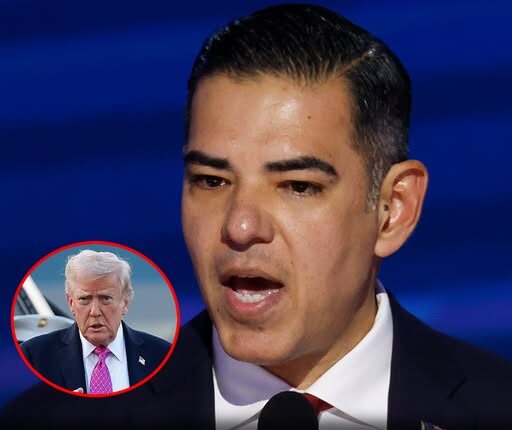
Top Democrat Sends Trump a Chilling Two-Word Warning After Election Results — Here’s What Happens Next
As Democrats Prepare to Take Control of the House, Robert Garcia’s Message to Donald Trump Signals a New Wave of Congressional Investigations
Just minutes after Democrats were projected to regain control of the U.S. House of Representatives in the November 3, 2026, midterm elections, one prominent Democratic lawmaker delivered a message that immediately attracted national attention.
It contained only two words.
“Lawyer up.”
The warning came from California Representative Robert Garcia, the top Democrat on the House Oversight and Government Reform Committee and the lawmaker expected to become its chairman when the new Congress begins in January 2027.
Garcia’s statement was more than an election-night reaction. It signaled his intention to pursue investigations involving President Donald Trump’s administration, members of the president’s family, federal agencies, and several controversial government matters.
With Democrats projected to control the House, Garcia is preparing for a significant change in congressional authority. The party’s victory would give Democratic committee leaders investigative powers they did not possess while Republicans controlled the chamber.
For the White House, that could mean a new period of hearings, document requests, and legal disputes over congressional oversight.
Robert Garcia’s Two-Word Message Came Almost Immediately After the Election Projection
As election results began revealing Democratic gains across the country, major news organizations projected that the party would secure enough seats to regain the House majority.
Garcia responded on social media with the short warning that quickly became one of the most discussed political statements of election night.
The House Oversight Democrats account also circulated the message as a statement from the incoming chairman.
The timing was significant. Garcia had already been preparing an investigative agenda, but Republican control of the House had limited his ability to compel testimony and obtain certain records.
With the majority changing hands, the balance of authority on congressional committees is expected to shift as well.
According to ABC News, Garcia’s office identified several areas he intends to examine, including alleged corruption involving the Trump family, corporate influence, immigration enforcement, and records associated with Jeffrey Epstein.
These are proposed investigative subjects, not findings that the individuals or organizations involved have committed wrongdoing.
Why Control of the House Changes Everything for Congressional Investigations
The House Oversight and Government Reform Committee is one of Congress’s principal investigative bodies.
Its responsibilities include examining federal government operations, spending, administrative practices, and allegations of misconduct involving public officials or government programs.
When a party controls the House, its members generally hold committee chairmanships and determine much of the committees’ agendas.
That authority can include scheduling hearings, requesting documents, calling witnesses, and issuing subpoenas under applicable House and committee rules.
A congressional subpoena is a formal legal demand that may require an individual or organization to provide documents or testimony.
Failure to comply can lead to enforcement proceedings or contempt referrals, although subpoenas may also face legal challenges involving privilege, jurisdiction, or other constitutional questions.
For Garcia, becoming chairman would mean moving from demanding information as a minority-party lawmaker to directing investigations with the institutional authority of the committee.
The Trump Family Could Face New Questions About Business Dealings
One of Garcia’s stated priorities involves examining alleged conflicts of interest and business arrangements connected to President Trump and members of his family.
According to ABC News, Garcia is expected to seek information from Jared Kushner, Trump’s son-in-law, and potentially other family members about business activities that Democrats believe deserve congressional scrutiny.
Investigators may examine whether private financial interests intersected with government decisions or created potential conflicts.
However, the announcement of an investigation does not establish that a crime occurred.
Any committee inquiry would need to develop evidence, obtain relevant records, and allow witnesses to respond to questions and allegations.
Republicans may also challenge the scope or political motivations of particular investigations.
The resulting disputes could become a prominent feature of Washington politics as the new Congress begins its work.
The Jeffrey Epstein Files Are Expected to Become Another Major Focus
Garcia has also emphasized the release and examination of government records connected to Jeffrey Epstein, the late financier and convicted sex offender.
The handling of Epstein-related documents has remained a subject of public controversy, with lawmakers and members of the public demanding greater transparency about government investigations and previously undisclosed material.
While serving as the committee’s leading Democrat, Garcia pushed for additional records from the Department of Justice.
He has accused officials of withholding information and has indicated that he intends to use expanded oversight authority to pursue answers.
As chairman, Garcia could seek additional documents and testimony, although access to some materials may remain limited by court orders, privacy protections, grand jury secrecy, or other legal restrictions.
The appearance of a person’s name in an Epstein-related document would not, by itself, establish criminal conduct.
Any investigation would need to distinguish between verified evidence, allegations, and information that has no demonstrated connection to wrongdoing.
Immigration Enforcement and Federal Agencies Are Also on His List
Another major area Garcia intends to examine involves the Department of Homeland Security and Immigration and Customs Enforcement.
Democratic lawmakers have raised concerns about immigration enforcement practices, detention conditions, and the treatment of individuals affected by federal operations.
Garcia has identified alleged abuses involving these agencies as subjects for future oversight.
Potential investigations could include requests for agency records, testimony from officials, and reviews of whether particular policies complied with federal law.
The Trump administration and Republican lawmakers have defended stricter immigration enforcement as an important part of border security and the application of immigration law.
Congressional oversight may therefore involve significant disagreements about the legality, effectiveness, and consequences of administration policies.
The committee’s findings would depend on the evidence gathered rather than the political positions announced before hearings begin.
Corporate Donors and the White House Ballroom Project Could Face Scrutiny
Garcia has also signaled interest in examining corporate influence over the administration.
One potential subject is the financing of the White House ballroom project and the involvement of corporate donors.
Democratic investigators have raised questions about whether contributions from businesses or wealthy individuals could create conflicts of interest or expectations of favorable government treatment.
Such concerns would require examination of donation arrangements, communications, and any relevant government decisions.
Corporate contributions do not automatically establish improper conduct, and determining whether a conflict exists requires evidence about the circumstances involved.
Nevertheless, congressional committees have broad authority to examine government ethics and the relationship between private interests and public responsibilities.
Garcia’s planned agenda suggests that these questions may receive renewed attention once Democrats assume control of the committee.
Donald Trump Responded to the Election Results With a Different Message
President Trump did not directly address Garcia in his initial public reaction to the projected results.
Instead, he emphasized that he had not personally appeared on the ballot.
Writing on Truth Social, Trump argued that Republicans would have performed much better if he had been a candidate, claiming they would have won by a landslide.
The statement reflected his interpretation of the election outcome rather than an independently verifiable assessment of how a hypothetical election would have unfolded.
Reports also indicated that Trump was considering how to respond to potential Democratic investigations.
According to reporting cited by the Washington Examiner, Trump discussed the possibility of preemptive pardons for himself or aides if he believed they were necessary.
Presidential pardon authority concerns federal criminal offenses and does not automatically eliminate congressional investigative authority or compel a committee to abandon an inquiry.
Could Congressional Subpoenas Lead to a Legal Battle?
One of the biggest questions facing the incoming House majority is whether the administration and other potential witnesses will cooperate with committee requests.
Congressional subpoenas can be powerful investigative tools, but they do not guarantee immediate access to every requested document or witness.
Recipients may challenge subpoenas in court, and disputes involving executive privilege or other legal protections can take considerable time to resolve.
Congress also has several potential methods for responding to noncompliance, including contempt proceedings and civil litigation.
These processes can become complicated when the dispute involves senior executive branch officials or sensitive government information.
For Garcia, issuing subpoenas would therefore represent only one stage of an investigation.
Obtaining records, reviewing evidence, conducting hearings, and producing findings could take months or longer.
Democrats Also Face Pressure to Address Everyday Economic Concerns
Although Garcia’s statement attracted considerable attention, investigations are only one part of the agenda facing the incoming Democratic majority.
Democratic leaders have also emphasized the cost of living, healthcare, and other economic issues.
House Democratic leader Hakeem Jeffries has identified affordability and accountability as important priorities for the new Congress.
That creates a political and legislative challenge: conducting oversight of the administration while also attempting to advance policies that address voters’ everyday concerns.
Even with control of the House, Democrats would not have unlimited legislative authority.
Major legislation generally requires approval from both chambers of Congress and the president’s signature, unless lawmakers can override a presidential veto.
As a result, the party’s ability to pass legislation may depend on negotiations, the composition of the Senate, and the administration’s willingness to cooperate.
What Happens When the New Congress Begins in January?
The new Congress is scheduled to begin on January 3, 2027.
With Democrats projected to hold the House majority, party leaders are expected to organize committees, select chairpersons, and establish their legislative and investigative priorities.
Garcia is positioned to become chairman of the House Oversight and Government Reform Committee, although committee leadership arrangements remain subject to the formal organizational process.
Once the committee is organized, members can begin scheduling hearings and pursuing information relevant to their oversight agenda.
The first major investigations could provide an indication of how aggressively Democrats intend to exercise their new authority.
They could also reveal how the White House plans to respond to demands for documents and testimony.
For now, Garcia’s statement establishes his intentions, but the specific sequence of investigations and their eventual outcomes remains uncertain.
A Two-Word Warning Signals a New Political Confrontation
The 2026 midterm election projections have created a significant change in Washington’s political landscape.
For the first time during Trump’s second presidency, Democrats are positioned to control the House of Representatives and its powerful investigative committees.
Robert Garcia’s election-night warning offered an unusually direct preview of the oversight agenda he hopes to pursue.
His planned investigations could involve members of the Trump family, federal agencies, corporate donors, and the handling of Epstein-related records.
But congressional investigations are not criminal convictions, and allegations must be examined through evidence and appropriate legal procedures.
Whether the coming months produce major disclosures, prolonged court disputes, or a combination of both will depend on the committee’s actions and the responses of those under scrutiny.
For Americans following the election results, the larger question is how the new balance of power will affect government accountability, legislation, and the relationship between Congress and the White House.
Garcia has already made clear that he intends to use the authority available to him.
What remains to be seen is how far those investigations will go and what they will ultimately establish.
What do you think the new Congress should prioritize after the 2026 midterm elections: government investigations, economic legislation, or both? Share your thoughts in the comments.