
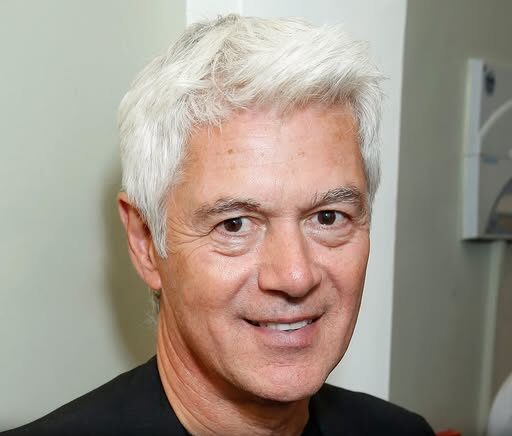
John Frieda, Celebrity Hairstylist Behind Frizz-Ease and the “Purdey” Cut, Dies at 75
His Salon Team Announces His Death
John Frieda, the British hairstylist whose work with Joanna Lumley helped make him a household name and whose products brought his name into bathrooms far beyond his London salons, has died at 75. His salon team announced his death on November 4, saying he died peacefully with his family around him. Gail Federici, his longtime business partner, said the cause was cancer.
Frieda spent his career in two parts of the beauty business. At the salon, he worked with clients including Princess Diana, Madonna and Paul McCartney. In the shops, customers knew him through products such as Frizz-Ease and Sheer Blonde. A person could recognize the name John Frieda from a bottle they used every morning without knowing that three generations of his family had worked as hairdressers.
After his death was announced, the tributes reflected a more personal side of that career. McCartney remembered his friend’s charm and sense of humor. Frieda’s stepdaughter, Asia, shared a brief farewell that spoke to his place in the family he leaves behind.
A London Apprenticeship Continued a Family Tradition
Born Alan Howard Frieda in 1951, he followed his father and grandfather into hairdressing. He began as an apprentice in London, learning the trade that both men had made their profession. His surname would eventually become the name of an international product business, but its association with hairdressing started before his own career.
Frieda first became known for the work he did with individual clients. His client list would eventually span royalty, music and television, fields in which a public appearance could put a haircut in front of a large audience. One of the clearest examples came in 1976, when he gave Joanna Lumley a cut that people came to know by the name of the character she played.
That early success also helps explain why Frieda’s career is remembered through both the people he styled and the products he later sold. The apprenticeship was the beginning of a working life spent dealing with hair as an everyday concern. The audience grew dramatically, from the person in the salon chair to the customer choosing a product to use at home.
Joanna Lumley’s “Purdey” Cut Became a Sensation
The “Purdey” cut Frieda created for Lumley in 1976 became one of his best-known pieces of salon work. It had a name people could remember and a wearer they recognized. For members of the public who had never booked a haircut with Frieda, Lumley gave them a way to see his work and identify it.
Over the course of his career, Frieda also worked with Princess Diana and Madonna. Their names help convey how widely his work circulated, although the “Purdey” remains a particularly direct example of the connection between a public figure and the person who styled her hair. Decades later, the name of that cut still identifies a specific moment in Frieda’s career.
McCartney was another of Frieda’s well-known clients, and the two were also friends. In remembering Frieda, McCartney spoke about his charm and his wonderful sense of humor. Those were qualities he could describe from knowing Frieda personally, and they gave readers a sense of the man they might otherwise have known only through famous clients and salon products.
Frizz-Ease and Sheer Blonde Took the Business Beyond the Salon
Frieda and Federici built a business around bringing salon expertise into the home. Products such as Frizz-Ease and Sheer Blonde became part of that effort. The names gave shoppers a quick idea of what each range was for, whether they were looking to manage frizz or choosing products for blonde hair.
Salon appointments and home hair care offered two very different ways for people to encounter Frieda’s work. A haircut was shaped around a single client and delivered in person. A product could travel much farther and become part of someone’s regular routine, even if that person had never visited London or followed the work of celebrity hairdressers.
Frieda and Federici’s company was sold to Kao Corporation in 2002 for approximately $450 million. The sale came 26 years after the haircut that had brought Frieda attention through Lumley. By then, the business carried his name into a market far larger than the audience for any one celebrity look.
The product names also gave customers a way to remember his work that had little to do with celebrity. Someone who knew him through Frizz-Ease had a practical reason to remember the name. Someone who knew him through the “Purdey” could place it in a moment in television and style. Both associations grew out of the trade Frieda had entered as a London apprentice.
His Family and Friends Remember the Man They Knew
Frieda leaves his wife, Frances Avery Agnelli, as well as children and grandchildren. His salon team said his family was with him when he died. His stepdaughter Asia put her loss into one sentence: “Today we lost the best man to ever exist.”
Federici and McCartney had known Frieda through different parts of his life. Federici had worked alongside him as the product company grew, while McCartney’s remembrance centered on a friendship. Their words and Asia’s farewell recalled relationships that had developed around a career often described through famous names, recognizable products and a major sale.
For readers looking back on that career, the touchstones are easy to place. There was the haircut Lumley wore in 1976, the products that customers could take home and the 2002 sale that showed how far the company had grown. The announcement of Frieda’s death returned the story to a much smaller circle, with his family beside him and people close to him remembering how he made them feel.