
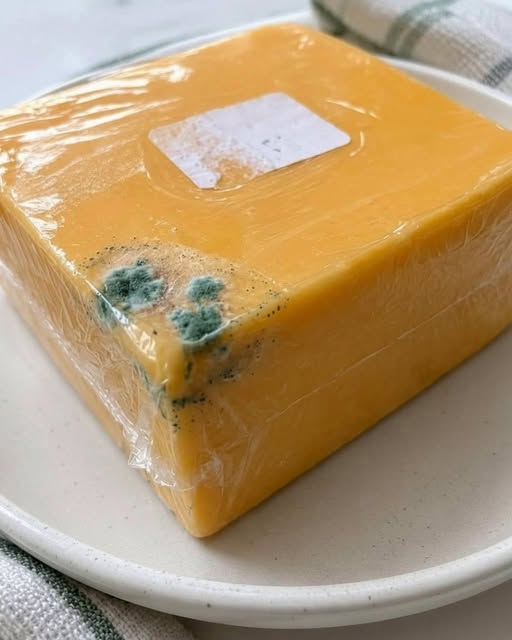
Found Mold on Your Cheese? Here’s When to Cut It Off and When to Throw It Away
The Type of Cheese Matters More Than the Color of the Mold
A green or blue spot on a block of cheese can leave you wondering whether any of it is still usable. Start by checking what kind of cheese you have. A small spot on a solid block of hard cheese can often be removed with a generous cut. Unexpected mold on a soft cheese, or on cheese that has been shredded, sliced or crumbled, is a reason to discard it.
Some cheeses are deliberately made with mold cultures. The blue veins in Roquefort, Stilton and Gorgonzola are part of how those cheeses are made. A new patch of mold that develops during storage is a separate issue. Its color alone gives you little information about whether the cheese is safe to keep.
When You Can Trim a Block of Hard Cheese
Dense cheeses such as Parmesan, firm cheddar and Swiss contain less moisture than soft varieties. Mold has a harder time spreading through them, which is why a small, isolated patch on an intact block can often be cut away. The amount you remove matters because growth can extend beyond the spot you see.
Use a clean knife to cut at least one inch, or about 2.5 centimeters, around and below the mold. Keep the blade from touching the mold as you cut so it does not carry it onto the portion you plan to keep. After removing the affected piece, wrap the remaining cheese in fresh packaging and return it to the refrigerator.
This approach depends on having enough cheese to leave that margin. A small remnant or thin wedge may give you too little room to cut an inch below the spot. If the mold is widespread or you cannot remove a generous section around it, discarding the cheese is the safer choice.
Why Soft Cheese Should Be Discarded
Cream cheese, ricotta, cottage cheese and fresh mozzarella hold more moisture. Mold can spread through these cheeses below the surface, and harmful bacteria can grow alongside it. Scooping out a discolored patch can leave contamination behind even when the rest looks unchanged.
The same caution applies when Brie or Camembert develops mold that is foreign to the cheese. Their usual white rind comes from cultures used in cheesemaking. An unexpected patch of mold on either soft cheese is a reason to discard it.
Shredded, sliced and crumbled cheeses should also be discarded if mold appears. This applies even if the original cheese was hard. Once it has been cut into smaller pieces, trimming one visible spot cannot reliably address what may have spread through the rest of the package.
Smell and Color Give an Incomplete Picture
Mold can appear in different colors, and looking at a patch will rarely tell you which kind is growing. Some molds can produce substances called mycotoxins. The shade of a spot cannot tell you whether those substances are present or how far the mold has spread.
A familiar smell can be misleading too. Some spoiled foods develop a noticeable odor, while others may smell much as they did when you opened them. A normal smell therefore gives you little basis for keeping soft cheese that has visible mold. People with weakened immune systems should be especially cautious when they are unsure about a food’s safety.
Better Storage Helps Cheese Stay Fresh
Keep cheese refrigerated and return it promptly after serving. Wrap blocks or wedges appropriately and close containers of fresh cheese after opening them. Different varieties have different storage needs, so any directions on the packaging are a useful starting point.
Clean utensils matter when serving cheese. Use a clean knife to cut what you need, and keep the remaining portion covered. If you trim mold from an intact block of hard cheese, replacing the old wrapping keeps the freshly cut surface away from packaging that was in contact with the affected area.
When a spot appears, check both the variety and the form. An intact block of hard cheese may have enough room for a full inch of trimming around and below a small patch. A soft cheese or a package of slices, shreds or crumbles should go in the trash. If you cannot tell which rule applies, discard it.