
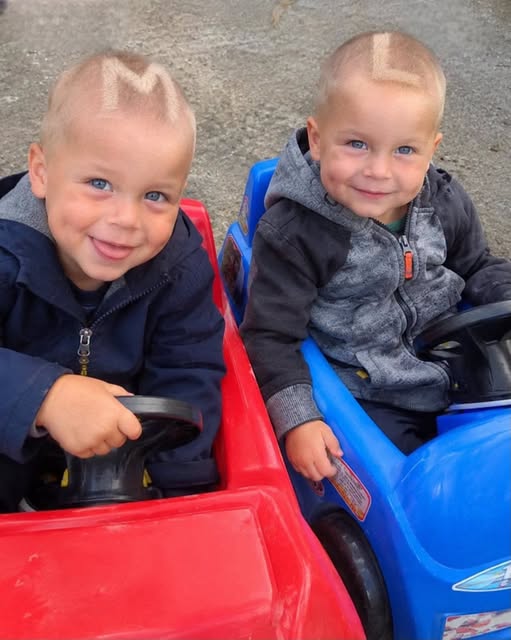
I Found My Husband Holding Hair Clippers. Then One of Our Twins Told Me What He’d Overheard
Fiction | The Haircuts Were Already Gone When I Learned Why Henry Thought He Was Failing Our Boys
Henry had the clippers in his hand when I opened the door. Both boys were awake and grinning. The haircuts I’d hated were gone, and for a second I thought that was what I’d come in to be upset about.
Then one of the boys leaned toward me and whispered that Daddy had said he was bad at being their daddy.
I looked at Henry. He was still holding the clippers, though there was nothing left to cut. I’d expected him to give me the look he gave me when the boys had talked him into something he knew I wouldn’t like. Instead, he looked down at his hand as if he’d only just noticed what was in it.
The Boys Thought They Could Fix It
I had gone into the room ready to ask why the twins were still awake and what had happened to their hair. Now I wanted to know when they’d heard their father say that and how long they’d been thinking about it. They were still smiling. They’d come up with a solution and were waiting for me to see what they’d done.
It took Henry a while to explain. He had been having trouble telling our identical twins apart, and he was ashamed of how often it happened. Every time he hesitated, he worried that one of them would notice. Every time he got a name wrong, he wondered what it felt like to be the child standing there, waiting for his own father to know him.
At some point he’d said aloud what he usually kept to himself. The boys had heard him. They understood that Daddy was upset and that it had something to do with how alike they looked. A haircut was a problem they could get their hands on. I could imagine the two of them coming to that conclusion together and thinking the grown-ups would be delighted they’d worked it out.
That was the first moment all evening when I felt like laughing, and it was a terrible time for it. There was hair to clean up, my husband could barely look at me, and the boys were examining each other’s heads with real satisfaction. They’d taken his worry seriously enough to do something about it. I wished they’d never thought it was theirs to solve.
Henry Had Been Trying to Hide the Pause
Once Henry started talking, I could picture the seconds he meant. One boy would come into a room and Henry would look up. Sometimes he’d wait for the boy to speak before he answered. I’d seen him do that. I’d assumed he was finishing a thought or trying to remember what he’d been about to say.
I began to wonder how many of those pauses he had spent looking for a clue. He knew which stories each boy liked to tell and what made each of them laugh. Seeing one face by itself still sometimes left him unsure. It was a particular difficulty, but he’d let it stand for everything he thought a father ought to be able to do.
There were things I’d made harder without realizing it. I could say a name across a room without thinking about how I’d arrived at it. When Henry took longer, I sometimes supplied the answer quickly and moved on. I knew I was helping with the immediate problem. I hadn’t thought about how it might feel to have someone give you the answer to a question you were hoping no one could see you struggling with.
The boys had their own understanding of the night. They wanted their dad to feel better, and they had taken him at his word when he said he was doing a bad job. I wanted them to hear from us that this was something the adults could figure out. Their hair could grow out any way they liked.
A Specialist Helped Us Understand What Henry Was Experiencing
Later, a specialist explained that Henry processed faces differently. Suddenly, he had a way to describe what happened when one of the boys appeared in front of him and the answer took longer than he expected. I could understand why he might listen for a voice or wait to see how a child moved before saying a name.
The explanation also changed the conversations we could have at home. Henry could talk about when recognition came easily and when he needed a little more time. I could tell him which details I picked up without having to think about them. Sometimes those were details he’d noticed too. He’d been so focused on finding the answer in a face that he hadn’t given himself much credit for everything else he knew.
We began paying more attention to the differences that belonged to the boys themselves. They had different ways of joining a conversation and different things they wanted to tell us about their day. One might want to get to the funniest part of a story first. The other might need to start at the beginning. Listening long enough gave Henry a chance to recognize the child telling it and gave the child a chance to finish.
We Stopped Making Their Names a Test
Little by little, the stakes of an ordinary greeting came down. If Henry needed another moment, he could take it. If he made a mistake, he could correct it and keep going. There was usually something more interesting happening than whether he’d got the name right on the first try. One of the boys would have something to show him, or they’d both be talking at once and he’d have to work out whose story started where.
I still think about the way our son leaned in to whisper what he’d heard. He was trying to help his father, and he trusted me enough to tell me why. I’d walked into the room looking at two haircuts. He’d been waiting for me to look at Henry.
It took us longer than one night to get comfortable with all of it. The clippers went away, the boys’ hair grew, and we got better at letting a pause be a pause. When one of them came in bursting to tell his dad something, Henry could give himself a second, listen to the voice he knew, and hear what his son had come to say.