
Jennifer Aniston’s Old Letterman Interviews Are Drawing New Attention for Uncomfortable Moments
Clips From 1998 and 2006 Have Prompted Discussion About Personal Questions, Comments on Her Appearance, and Interview Boundaries
Jennifer Aniston arrived on The Late Show with David Letterman in 2006 to promote The Break-Up, the romantic comedy she made with Vince Vaughn. Parts of the conversation instead focused on her legs and her relationship with her co-star. Years later, those exchanges have become a reason viewers are watching the interview again.
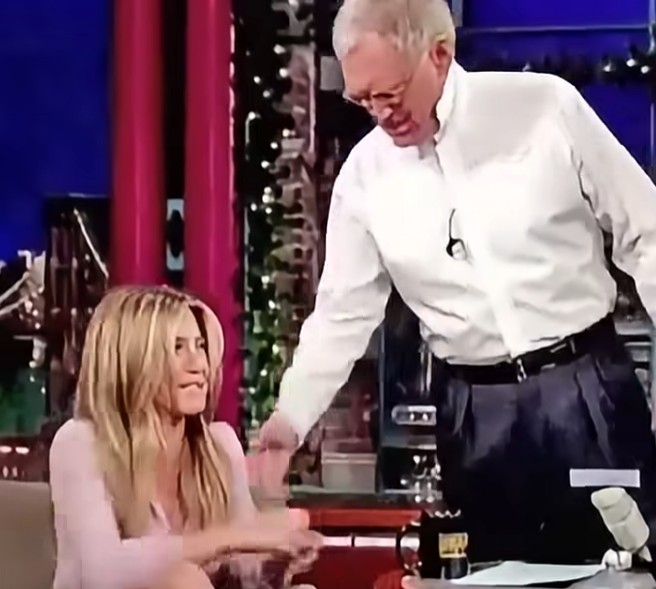
An earlier appearance from 1998 has also resurfaced. In that segment, Letterman leaned toward Aniston’s hair and appeared to put a strand in his mouth. The clips have renewed discussion about what guests were expected to accept as part of a late-night appearance and how audiences interpret their reactions now.
The 2006 Conversation Kept Returning to Her Appearance
Aniston wore a black blouse and black shorts for the appearance promoting The Break-Up. Letterman complimented the outfit, then explained his interest by referring to her legs. He continued describing their appearance as the conversation went on.
The repeated remarks became a noticeable part of an interview that had begun with a film to discuss. Aniston laughed and tried to move the exchange along. Letterman returned to the subject, keeping attention on how she looked rather than the character she played or her experience making the movie.
For viewers revisiting the conversation, the repetition matters. A brief compliment can pass quickly before an interview turns to the work a guest has come to discuss. Repeated comments make appearance an ongoing topic, leaving the guest to respond again or attempt another change of subject.
The clip gives viewers the words and reactions that were broadcast. Aniston’s laughter and efforts to continue the conversation are visible. How she understood the exchange privately remains something only she could explain.
Questions About Vince Vaughn Added Another Personal Subject
Letterman also asked about Aniston’s relationship with Vaughn. Their work together on The Break-Up had attracted interest, and speculation about their private relationship accompanied the film’s promotion. The interview moved between the movie and questions about the people who had made it.
One question concerned whether Vaughn had influenced a particular scene. Aniston appeared surprised and suggested Letterman should have asked Vaughn when he had been on the program. Her answer directed the question toward the person it concerned while allowing the conversation to continue.
That response illustrates a practical challenge for a guest. Actors can discuss a scene, a character, or the process of working with a co-star. When a question blends those subjects with a private relationship, answering one part may invite further questions about the other.
Aniston kept participating in the interview. For viewers watching it later, her response has become part of the discussion about how performers manage personal questions during appearances arranged to promote their work.
The 1998 Hair Incident Has Also Been Revisited
The earlier footage shows a different kind of interaction. During the 1998 interview, Letterman moved close to Aniston and placed his mouth near her hair, appearing to take a strand into his mouth. Aniston pulled away.
Letterman then handed her a tissue, which she used to wipe her hair. The interview continued, but the physical interaction remained a distinct moment within it. It has attracted renewed criticism from viewers who see it as a question of personal boundaries.
A television guest has little time to decide how to respond when something unexpected happens. The exchange is unfolding in front of the host, the studio audience, and the cameras. Aniston’s immediate movement away from Letterman can be observed directly without assigning her an explanation she has never given.
The clip’s return has also highlighted how much weight people sometimes place on a guest continuing an interview. Remaining in the conversation may tell viewers that the appearance went on. It offers limited insight into what the person thought about a particular gesture or joke.
Her 2008 Visit Included a More Playful Exchange
Aniston later returned to Letterman’s show in 2008 while promoting Marley & Me, in which she starred alongside Owen Wilson. During that appearance, she brought the host an early Christmas gift: a Brooks Brothers necktie similar to one she had worn in a GQ photo shoot.
Letterman began changing out of his own tie, and Aniston joined in the exchange by joking that she was dressing him. When he noticed the new tie seemed short, he made another joke that drew a reaction from the audience.
The gift gave both participants something to work with. Aniston introduced it, Letterman tried it on, and they responded to what happened. The sequence had a lighter tone than the moments from 1998 and 2006 that have drawn the most criticism.
Her return also shows how a professional relationship can involve appearances with different tones. One playful segment provides a record of that particular conversation. The earlier footage remains available to consider on its own, with its specific comments, gestures, and responses.
Why Viewers Interpret the Same Interviews Differently Years Later
Archived television lets people encounter an interview long after its original broadcast. Some viewers remember watching it at the time. Others see a short segment for the first time through a social media post and then look for more of the conversation.
The questions they bring can differ from those that shaped the original reception. Viewers may pay closer attention to whether a guest can redirect a topic, how often a host returns to someone’s body, or whether a physical interaction appears welcome. Those details can become central to a discussion that once focused mainly on whether the segment was funny.
Late-night interviews often depend on spontaneity, and hosts have frequently used teasing or personal questions to keep a conversation moving. The resurfaced Aniston clips have prompted viewers to examine how that style works when a guest is repeatedly required to handle an unexpected remark or gesture.
Much of the discussion also concerns the different roles in the room. The host sets the pace, introduces subjects, and can choose when to move on. The guest responds while trying to complete the appearance and discuss the project that brought them there. Those responsibilities shape how each person can react in the moment.
Aniston’s Responses Deserve Careful Interpretation
Aniston’s career, including her role as Rachel Green on Friends, has involved years of promotional appearances and public conversations. In the Letterman footage, she draws on that experience by answering, laughing, and redirecting questions as the interviews continue.
Viewers can discuss whether a host’s conduct was appropriate without claiming to know the guest’s private feelings. They can also recognize that an accomplished performer may keep an exchange moving even when it takes an unexpected turn.
The interviews preserve three specific encounters: a physical gesture involving Aniston’s hair in 1998, repeated comments and personal questions in 2006, and a gift exchange in 2008. Looking closely at those moments allows the discussion to remain grounded in what happened on screen and in the choices available to the people taking part.