
Iran Strikes Exposed a Foreign Policy Divide Within Trump’s Conservative Coalition
The Opening Attacks Triggered Retaliation and Criticism From Prominent Conservatives
The American and Israeli military campaign launched against Iran on February 28, 2026, created consequences beyond its immediate targets. As Iran retaliated and American casualties were announced, disagreements emerged among conservatives over the purpose, authority, and potential cost of the operation.
President Donald Trump defended the attacks as necessary to address threats to American security. Several prominent figures associated with his political movement challenged that reasoning, questioning whether the campaign matched the restrained foreign policy they wanted Washington to pursue.
The dispute became especially visible during the opening days of the conflict. Supporters of military action emphasized the danger posed by Iran, while critics warned about another overseas war with uncertain boundaries.
The initial casualty figures and political responses belong to that early period. They describe the immediate aftermath of the February 28 attacks rather than a current accounting of the conflict.
Trump Presented the Campaign as a Security Necessity
American and Israeli forces attacked Iranian targets, including locations in Tehran. Iran’s Supreme Leader, Ayatollah Ali Khamenei, and other senior figures were killed during the opening operation.
Trump praised the campaign in an interview with Fox News, portraying it as successful and moving rapidly. He also asserted that 48 Iranian leaders had been killed, a figure that should remain identified as his claim rather than an independently established count within this account.
The president said military operations would continue until American objectives had been achieved. His position signaled that the opening attacks were part of a broader campaign, rather than an isolated action whose completion had already been announced.
He also warned Iranian security forces to surrender or face lethal consequences. That message accompanied his argument that the operation addressed a threat Washington could not afford to ignore.
Central to his defense was the prospect of an Iran possessing nuclear weapons alongside long-range missiles. He presented that combination as a serious danger to the United States.
Critics did not accept that the administration’s security argument settled the question of whether the campaign was justified. Their objections focused on the relationship between the stated threat, the decision to use force, and the risks of continuing the operation.
Iran’s Response Extended the Confrontation Across the Region
Iran answered the attacks with missile and drone strikes directed toward American military facilities and other regional targets. The retaliation widened the confrontation beyond Iranian territory.
The Gulf region became part of the immediate security picture. Attacks and threats involving locations around Bahrain, Qatar, and the United Arab Emirates underscored the exposure of American forces stationed outside Iran.
On March 1, U.S. Central Command announced that three American service members had been killed and five others seriously wounded. Those were early figures, not a final tally.
The announcement gave the domestic debate an immediate human dimension. Arguments about strategic objectives were unfolding alongside confirmation that American personnel had already lost their lives.
For opponents of the campaign, the retaliation demonstrated the danger of a confrontation expanding beyond its opening targets. For the administration, the operation remained tied to its stated intention to remove security threats.
The competing interpretations reflected different assessments of what military action could accomplish. They also revealed disagreement over how much uncertainty and potential sacrifice the United States should accept in pursuit of those objectives.
Tucker Carlson Publicly Rejected the Decision
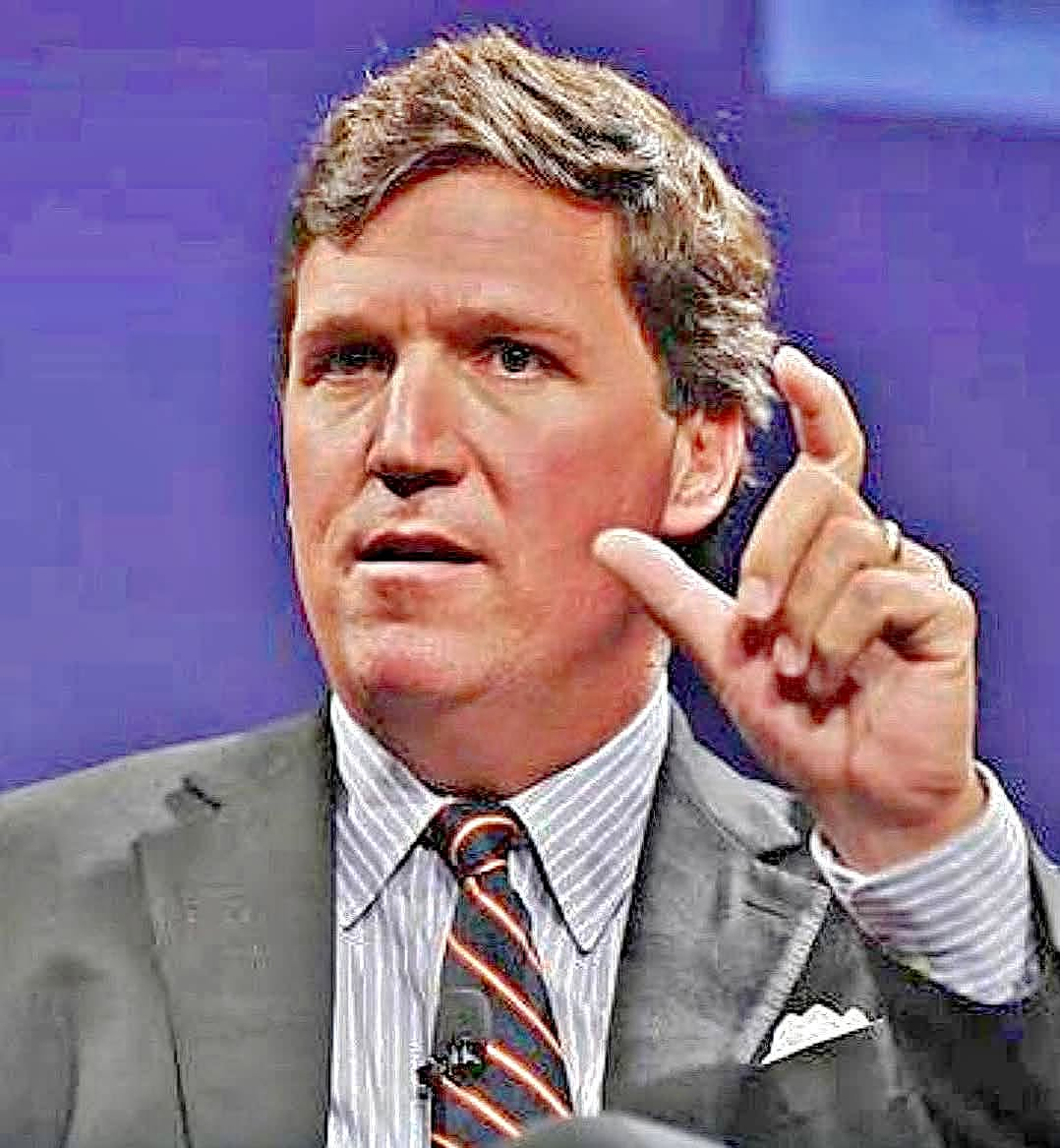
Tucker Carlson, the independent commentator and former Fox News host who had supported Trump, delivered one of the strongest objections from within the broader conservative movement.
During an interview with Jonathan Karl, Carlson described the decision to attack Iran as “absolutely disgusting and evil,” making his opposition unmistakable.
He also said he had personally urged Trump against launching an attack during a meeting before the operation. His criticism therefore reflected a disagreement he had attempted to communicate privately as well as publicly.
The exchange illustrated that support for Trump did not translate into agreement with every major foreign policy decision. Carlson’s reaction challenged the assumption that influential conservative voices would automatically defend the campaign.
His objection also concerned the decision itself, rather than merely the effectiveness of its execution. Describing an operation as successful on military terms would not answer a criticism rooted in opposition to undertaking it.
That distinction became a recurring feature of the wider debate. Some critics were questioning the underlying policy choice, making battlefield progress only one part of the discussion.
Greene Questioned the Burden of Another Overseas War
Former Representative Marjorie Taylor Greene also opposed the campaign. Her criticism emphasized the sacrifices Americans had already made in prolonged foreign conflicts.
She challenged the idea that military intervention should be justified as a means of liberating Iranians. In her view, determining Iran’s political future should not become an American responsibility.
That objection raised a question about the scope of the operation. A campaign described as protecting American security could prompt different expectations from one associated with changing another country’s political direction.
Greene’s position placed the interests and obligations of American citizens at the center of her criticism. She questioned whether another major military commitment would serve those priorities.
Her remarks also showed that dissatisfaction was not limited to commentators outside elected politics. A former member of Congress closely associated with conservative activism was challenging the administration’s approach in direct terms.
The disagreement concerned more than a preference for different language. It reflected a substantive dispute over what responsibilities Washington should assume beyond its borders.
Rand Paul Raised the Question of Congressional Authority
Senator Rand Paul approached the operation through concerns about presidential power and Congress’s constitutional role. He emphasized that the authority to declare war belongs to Congress.
His position separated support for American service members from approval of the decision that placed them in the conflict. He expressed concern for their safety while opposing another war initiated by the president.
The distinction prevented the debate from being reduced to a simple choice between supporting troops and criticizing military policy. Paul’s objection addressed the process through which the country entered a confrontation.
It also introduced a question that battlefield results alone could not resolve. Even a militarily effective operation could still face criticism over the authority used to launch it.
Within the conservative movement, that concern added another dimension to the disagreement. Opposition involved constitutional limits as well as the expected costs and strategic purpose of the campaign.
Matt Walsh Emphasized American Interests
Conservative commentator Matt Walsh expressed a related objection centered on national priorities. He argued that American foreign policy should serve American interests rather than assume responsibility for securing other nations’ freedom.
His position overlapped with Greene’s concern about liberation as a justification for intervention. Both questioned whether Washington should take ownership of political outcomes inside Iran.
These objections did not require the critics to hold identical views on every aspect of foreign policy. They shared a narrower concern that the campaign could move beyond a clearly defined American interest.
Together with Carlson’s denunciation and Paul’s constitutional argument, Walsh’s remarks demonstrated that criticism was emerging through several different lines of reasoning.
The resulting divide could not be explained as a single dispute over tactics. It involved the moral justification for force, the limits of American responsibility, and the distribution of power within the United States.
An Existing Confrontation Became a Political Test
The February 28 campaign followed earlier American attacks on Iranian nuclear facilities, including Fordow, Natanz, and Isfahan. Those actions formed part of the background to the new escalation.
As the confrontation widened, the administration maintained that military action was necessary to confront longstanding threats. Opponents warned that the United States could become committed to an expensive and prolonged conflict.
The opening days consequently became a test of competing conservative foreign policy priorities. One approach favored forceful action against perceived threats, while another emphasized restraint, limited commitments, and congressional involvement.
Trump’s political coalition contained voices on both sides of that disagreement. Their public responses showed that shared domestic priorities did not guarantee a common view of war.
The lasting significance of the initial backlash lay in those unresolved questions: what objectives justified the operation, who had authority to commit the country, and how the administration would determine that its mission had been completed.