
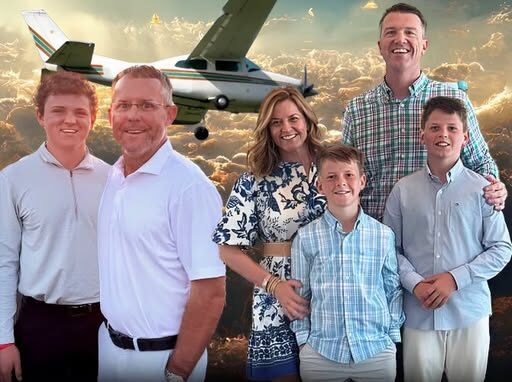
Six Relatives Died Returning From a Fishing Trip—Two Family Members Had Taken a Different Flight Home
A Thanksgiving Journey Ended Off the Mississippi Coast
A fishing getaway that brought members of the Stokes and Knox families together in Louisiana ended in tragedy when their small aircraft crashed into the water off Mississippi. Six relatives, including three children, died while traveling home to Fort Myers, Florida.
The November 24 crash happened two days before Thanksgiving. The families had planned to return from their trip and spend the holiday with other loved ones.
Instead, relatives were left awaiting news as emergency crews searched near Horn Island. Floating wreckage was found first, followed later by the submerged aircraft and everyone who had been aboard.
As the victims were identified, the extent of the loss became clear. A brother and sister, her husband and three children from the two households had died together.
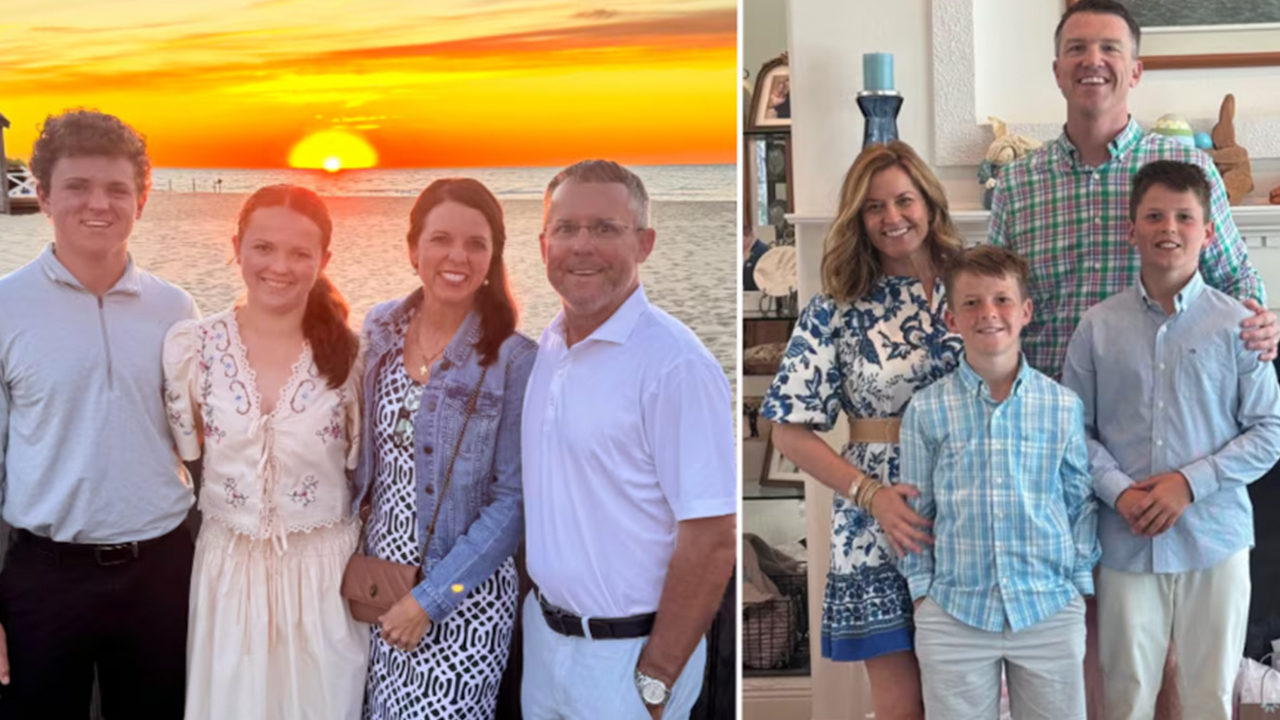
Two other members of the extended family had also attended the fishing trip but made separate travel arrangements. Brent Stokes’ wife, Dominique, and their daughter, Addison, returned on a commercial flight and were not aboard the Cessna.
Investigators are examining the aircraft’s final movements, including a reported descent of approximately 10,000 feet per minute. That figure describes the severity of the descent, but it does not establish what caused the crash.
The Six People Aboard the Cessna
Jackson County Coroner Bruce Lynd Jr. identified the pilot as Brent Stokes, 50. His son, Hunter Stokes, 16, was traveling with him.
The other passengers were Brent’s sister, Arlyn Knox, 43; her husband, Michael Knox, 43; and their sons, Charles Holden Knox, 12, and Truett Knox, 10.
The two households were based in Fort Myers. Their shared interests had brought them to Venice, Louisiana, for a fishing trip before the Thanksgiving holiday.
For the relatives, time on the water was a familiar part of family life. Children had grown up around boats and fishing excursions, sharing experiences with their parents, cousins and other relatives.
This journey was intended to add another set of memories to that history. The plan was to enjoy the getaway and then return to the wider family waiting in Florida.
The aircraft departed New Orleans Lakefront Airport bound for Page Field in Fort Myers. It never reached its destination.
The six-seat, single-engine aircraft was a 1972 Cessna 210L Centurion, registered as N29002. It came down in the Mississippi Sound near Horn Island, between the island and the mainland coast.
A Weather Warning Before Contact Was Lost
Available flight information placed the Cessna at approximately 8,800 to 9,000 feet before its final descent. Its recorded movements included a sudden right turn followed by a rapid loss of altitude.
Publicly available air traffic control recordings did not appear to contain a distress call from the pilot. Nor did they reveal an obvious declaration of a developing emergency.
However, shortly before contact was lost, a controller at Gulfport-Biloxi International Airport advised the pilot about precipitation and potentially adverse weather in the area.
That warning is part of the sequence investigators will need to examine. It does not establish that weather caused the aircraft to descend or that any particular atmospheric condition affected the flight.
The absence of a distress call also leaves important questions unanswered. A recording can preserve communications, but it cannot explain everything happening inside the cockpit.
The Coast Guard received notification at approximately 3:45 p.m. that contact with the aircraft had been lost. The emergency response then shifted toward locating the plane and its occupants in the waters off Mississippi.
The Reported Rate of Descent
One detail drew particular attention as information about the flight emerged: the FAA communicated to the Coast Guard that the aircraft had been descending at approximately 10,000 feet per minute when contact was lost.
Expressed another way, that rate represents a loss of more than 166 feet of altitude each second. It indicates an exceptionally steep descent, although the number alone cannot reveal the events that produced it.
Investigators must consider the figure alongside the aircraft’s path, altitude, systems, maintenance history and conditions along the route. A descent rate is one piece of evidence within that larger examination.
It would be premature to attribute the crash to pilot actions, a mechanical problem or the weather on the basis of that single measurement.
The flight information also does not establish what the passengers experienced during those final moments. Their circumstances cannot be reconstructed through speculation about a tracking display.
As of November 27, investigators had announced no official cause. The FAA and National Transportation Safety Board remained responsible for examining the circumstances surrounding the accident.
Search Crews Find Debris Near Horn Island
The search brought together Coast Guard aircraft and boats, personnel from the Mississippi Department of Marine Resources and local emergency agencies.
At approximately 5:40 p.m., crews located debris about two miles northeast of Horn Island. The items included part of the aircraft’s cabin, three life jackets and a life raft.
Those discoveries helped establish the location of the crash, but the six people aboard remained missing. Finding emergency equipment on the surface did not answer whether anyone had escaped the aircraft.
The operation continued as daylight faded. A weather front moving through the area brought stronger winds and rougher conditions, adding difficulty to the work on the water.
Search personnel used sonar to look beneath the surface, while location information helped narrow the area being examined. Divers eventually reached the submerged wreckage.
All six victims were found inside the fuselage. The discovery ended the search for the occupants and confirmed the outcome their relatives had feared.
“This is a heartbreaking outcome, and our deepest sympathies are with the families and loved ones who are facing an unimaginable loss,” Cmdr. Trevor Blount, the Coast Guard Sector Mobile Search and Rescue Mission Coordinator, said in a statement.
Arlyn Knox Had Recently Celebrated Both Sons
In the weeks before the crash, Arlyn Knox had shared affectionate accounts of family milestones. Her sons had both recently celebrated birthdays.
For Holden’s 12th birthday in October, she described a child with an adventurous spirit, curiosity and a sense of humor. Fishing and sports were among the interests she celebrated.
“We love your adventurous spirit, your curiosity, your silliness, your obsession with fishing and passion of sports. You made me a momma 12 years ago, and life has been wild ever since! … We love you so much, Holden,” Arlyn wrote.
A few weeks later, Truett turned 10. His mother called him their “little human exclamation point,” an affectionate description of his lively presence in the family.
The boys attended St. Francis Xavier Catholic School in Fort Myers. Holden was in sixth grade, and Truett was in fourth.
Those details offer a picture of their lives before the accident: school, birthdays, sporting interests and opportunities to spend time outdoors with their parents. Their mother’s messages preserved the qualities she enjoyed watching develop as they grew.
Shared Interests at Home and on the Water
Arlyn had also begun a new stage in her professional life. After more than 20 years in the corporate world, she became chief marketing officer at the technology business her husband had founded in 2012.
Her interests extended beyond her career. Fishing, Pilates, mahjong and supporting her children at their sporting events were all part of the life described in her professional biography.
She and Michael shared a love of boating and fishing. Anniversary photographs showed the couple together on the water, seated in chairs marked “captain” and “first mate.”
The Louisiana getaway continued an activity that was familiar to both generations. For the parents, fishing offered time together; for the children, it was something to enjoy alongside their family.
The Knox household lost both parents and both sons in the crash. Their deaths were also a profound loss for the grandparents, aunts, uncles and cousins connected to them through years of shared experiences.
Brent Stokes Built His Career Around the Waterfront
Brent Stokes’ connection to the water extended into his work. He founded Stokes Marine in 2003 and developed the business from an operation with three employees into an established southwest Florida marine contractor.
The company’s projects included work connected with Sanibel’s fishing pier and the boardwalk at the J.N. “Ding” Darling National Wildlife Refuge.
His longtime friend Mike Gavala remembered the risks Brent took to establish the business. Before entering marine construction, Brent had worked in medical sales.
He pursued the new venture without formal experience in the industry, building a career that reflected his interest in boats and the waterfront.
His involvement also reached beyond commercial projects. After Hurricane Dorian devastated parts of the Bahamas in 2019, he helped organize relief efforts through the boating community.
Gavala had known Brent for approximately 30 years. Over that time, their friendship included business developments, family milestones and many hours spent fishing.
Those memories now include the occasions when Hunter accompanied them, allowing Gavala to watch his friend’s son grow up.
A Friend Remembers Hunter
Some of Brent, Hunter and Gavala’s fishing trips lasted 12 to 14 hours. Others continued overnight, providing long stretches of conversation alongside the activity they enjoyed.
Gavala remembered Hunter as “a fantastic young man.” He described a teenager who was comfortable speaking with adults and showed maturity beyond his years.
“I could see him following in his dad’s footsteps,” Gavala recalled.
He credited Brent and Dominique with raising their son well. When describing Brent’s priorities, he returned to the importance of family.
“It was always about the kids.”
Gavala had also flown with Brent during Labor Day weekend, less than three months before the accident. Aviation was another interest they shared alongside fishing and boating.
After the crash, those recent experiences became part of his recollections of Brent and Hunter. The everyday conversations and hours on the water offered a more personal picture than their names in an accident report.
Dominique and Addison Traveled Separately
Brent’s wife, Dominique, and their daughter, Addison, had joined the Louisiana fishing trip. They too planned to return to Fort Myers before Thanksgiving.
However, they booked a commercial flight rather than traveling aboard the Cessna. Neither was on the aircraft when it left New Orleans.
The reason for their separate arrangements has not been publicly explained. There is no basis for interpreting that decision as a response to a known problem with the aircraft or the planned flight.
For Dominique and Addison, the loss encompassed Brent and Hunter as well as the four Knox relatives traveling with them.
The consequences also extended to Wyman Stokes, the father of Brent and Arlyn. He lost his son, daughter, son-in-law and three grandchildren in the same crash.
While attempting to read a prepared family statement after the accident, he became overwhelmed as he reached the names and ages of the youngest victims.
The family later expressed gratitude for the support surrounding them. Their message focused on the love the six had given and the happiness they had shared before the tragedy.
Investigators Face Unanswered Questions
The official investigation must establish what happened between the Cessna’s departure and its impact with the water. The available information describes parts of that sequence, but important gaps remain.
Air traffic control recordings, radar information and flight-tracking data can help reconstruct the route. Maintenance documents and examination of the wreckage may provide further evidence about the aircraft.
Smaller planes such as the Cessna 210 generally do not carry the cockpit voice and flight data recorders commonly associated with commercial passenger aircraft. Investigators may therefore need to assemble the sequence from other records and physical findings.
The weather warning will also require examination alongside conditions at the aircraft’s location and altitude. Conditions experienced by search crews later in the day cannot automatically be treated as the conditions the pilot encountered earlier.
Aviation law firm Kreindler & Kreindler separately announced that it was examining the crash and monitoring the official investigation. That work is distinct from the federal process that will determine the accident’s probable cause.
Neither the reported right turn nor the rapid descent establishes a conclusion on its own. Until the evidence is examined, the cause remains unresolved.
A School Prepares to Support Its Community
At St. Francis Xavier Catholic School, the deaths of Holden and Truett left classmates, teachers and staff facing the loss of two familiar students.
Principal John Gulley informed the school community and described the deaths as an irreplaceable loss. He said support would be available when classes resumed on Monday, November 30.
The family’s association with the school extended across generations. The boys’ deaths therefore touched people who knew them through lessons, activities and longstanding family connections.
The principal encouraged families to keep their loved ones close during Thanksgiving. His message came as the community prepared for a holiday shaped by grief rather than the reunion the two households had expected.
Returning to school would bring its own difficult moments. For those who knew the brothers, ordinary routines would now carry their absence.
The Family’s Promise to Remember
Surviving relatives asked for privacy while they supported one another, particularly the children affected by the deaths. They also thanked the emergency personnel who worked to locate the aircraft and recover their loved ones.
The family wanted the six remembered through their relationships and the experiences they shared. Fishing had brought them together for years, and the Louisiana visit had been intended as another happy occasion before Thanksgiving.
Their statement acknowledged the grief while holding on to the affection that preceded it. Brent, Hunter, Arlyn, Michael, Holden and Truett had each occupied a place in the lives of people now mourning them.
Investigators will continue examining the flight. For the family, the memories include far more than its final minutes: birthdays, school days, conversations on boats and plans to spend another holiday together.
Their farewell ended with a promise that expressed what those relationships will continue to mean.
“We will carry them with us always.”