
Red Patch on a Child’s Ear? Here’s a Calm, Safe Way to Respond at Home
When a Small Skin Change Feels Bigger Than It Looks
Many parents know the feeling of spotting something unusual during an otherwise normal day. A small area of redness, dryness, or rough skin can quickly become a source of worry.
A patch on a child’s ear may not look dramatic, but it can raise a lot of questions. It is understandable to feel concerned when you are not sure what caused it or what to do next.
In many situations, the best first step is not panic, but calm observation. A closer look and gentle care can help you understand whether the area appears mild or whether it needs quicker medical attention.
Why the Ear Can Become Irritated So Easily
The skin on and around the ear is delicate. It is often exposed to wind, cold air, heat, sweat, and frequent touching, which can make it more likely to become irritated.
Children may also rub or scratch the area without realizing they are making it worse. Even mild irritation can become more noticeable when the skin is sensitive.
Because the ear is visible and easy to inspect, parents often notice changes there quickly. That can be helpful, since early attention makes it easier to monitor whether the patch stays the same, improves, or starts to worsen.
A Common Skin Issue Parents Often Hear About
One possible reason for a red, dry, or itchy patch is atopic dermatitis, often called eczema. This is a common skin condition in children and can appear in different areas of the body, including around the ears.
Atopic dermatitis usually involves irritation of the skin barrier. That can lead to dryness, redness, itchiness, and patches that feel rough or slightly scaly.
Not every patch means eczema, and not every skin change is serious. Still, it is useful to know that this type of irritation is common and often manageable with gentle skin care and close observation.
What the Area Might Look Like
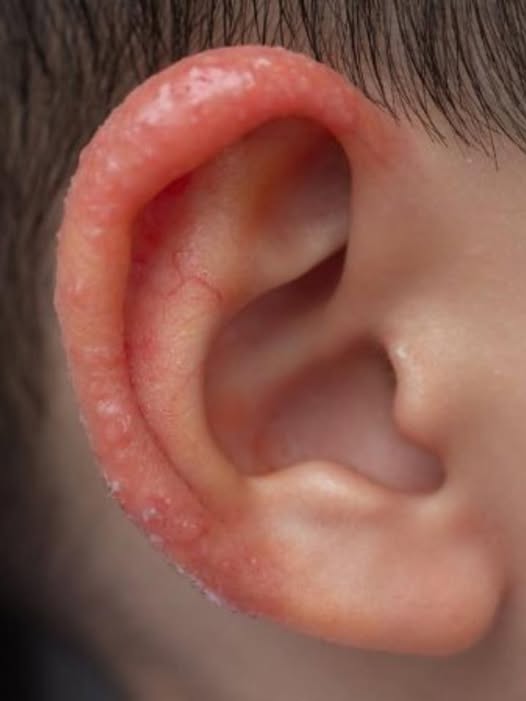
A mild patch may appear pink or red and feel dry to the touch. In some cases, the skin can look flaky, slightly raised, or rough.
Some children may try to scratch it if it feels itchy. Others may not seem bothered at all, even if the patch looks noticeable.
You may also see small bumps, peeling skin, or a scaly texture. These details can help you describe the problem clearly when you speak with a doctor.
What to Check Before You Do Anything Else
Take a moment to look at the patch in good light. Try to notice whether the redness is limited to one small area or whether it extends beyond the ear.
Check whether the skin looks dry, crusty, irritated, or swollen. Pay attention to whether your child seems uncomfortable when the area is touched.
It can also help to notice if there is any fluid, crusting, or visible scratching. These details matter because they can suggest whether the area is staying mild or becoming more inflamed.
Start With Gentle Care
If the area looks mild, gentle care is often the best place to begin. The goal is to avoid making the skin more irritated while keeping it clean and protected.
Use only mild, fragrance-free cleansing products if washing the area. Strong soaps, heavily scented products, or alcohol-based formulas can increase dryness and discomfort.
When drying the skin, pat it softly instead of rubbing. Friction can make a sensitive patch look redder and feel more irritated.
Keep the Area Dry but Not Harshly Treated
Moisture that stays trapped on the skin may make irritation worse in some cases. After washing, gently dry the area without scrubbing.
At the same time, avoid over-cleaning. Washing too frequently or using harsh products can strip the skin and leave it even more uncomfortable.
A simple routine is often more helpful than an aggressive one. Gentle cleansing and careful drying are usually enough while you monitor the area.
A Cool Compress Can Help With Comfort
If the patch seems itchy or uncomfortable, a cool, damp cloth may help calm the area. This can be a simple way to reduce irritation without using anything harsh.
Place the cloth on the area for a few minutes at a time. The sensation may help soothe the skin and reduce the urge to scratch.
The cloth should feel cool, not icy. The goal is comfort, not intense cold.
Why Scratching Can Cause More Trouble
Even a mild skin patch can become more irritated if a child keeps scratching it. Nails can break the surface of the skin, which may increase redness and discomfort.
Repeated scratching can also make it harder for the area to settle down. In some situations, broken skin can create a greater risk of infection.
Keeping your child’s nails trimmed and clean can help reduce accidental damage. If they tend to touch the area often, gentle distraction and reassurance may also help.
Moisturizing the Skin Carefully
For dry or rough patches, a simple fragrance-free moisturizer or emollient may help support the skin barrier. This can be especially useful if the patch looks flaky or feels dry.
Products made for sensitive skin are often a better choice than heavily scented lotions. The goal is to hydrate the skin without adding extra irritation.
Apply only a small amount and watch how the skin responds. If the area appears more irritated afterward, stop using that product and mention it during the doctor visit.
Low-Strength Over-the-Counter Creams
Some parents consider a low-strength hydrocortisone cream when a patch looks mildly inflamed. This type of product may help calm irritation in certain situations.
It should be used carefully and only as directed on the label. The ear is a sensitive area, so overuse is not a good idea.
If you are unsure whether it is appropriate for your child, it is best to wait for medical guidance rather than trying multiple products at once.
Using Simple Natural Products With Caution
Some families try options such as aloe vera or coconut oil on mild dry patches. While these may seem gentle, not every product suits every child’s skin.
If you choose to try something simple, test it cautiously on a small area first. If the skin becomes more red, itchy, or irritated, discontinue use.
It is also wise to avoid mixing several products together. Too many creams, oils, or remedies can make it harder to tell what is actually helping.
When the Patch Should Be Watched More Closely
Most mild patches improve gradually with basic care and observation. However, it is important to watch for changes that suggest the area is no longer mild.
If the redness becomes stronger, the skin starts to swell, or the area looks increasingly irritated from one day to the next, it deserves closer attention. Sudden changes are usually more important than a patch that stays stable.
Warmth, pain, fluid, or yellow crusting can also be important signs. These may suggest the skin needs medical evaluation sooner rather than later.
Signs That Need Prompt Medical Attention
Some situations should not wait for a routine appointment. A patch that rapidly worsens or appears infected should be evaluated by a medical professional.
Seek prompt care if the skin becomes very swollen, painful, warm, or begins to produce pus or yellow discharge. Fever along with worsening skin changes is another reason to contact a doctor right away.
If your child seems unusually uncomfortable or the area changes quickly over a short period, it is better to act promptly than to keep guessing at home.
Why Tracking Changes Can Be Helpful
Skin problems can shift from day to day. A patch that looks mild in the morning may appear more irritated later if it is scratched or exposed to something that triggers it.
That is why simple monitoring can be so useful. Notice when the patch first appeared, whether it seems more red after bathing, or whether certain products seem to make it worse.
Taking one clear photo each day can help you compare changes without relying only on memory. That record may also help the doctor understand how the area developed over time.
What to Tell the Doctor at the Appointment
When the visit arrives, a few basic details can make the conversation easier. Try to remember when you first noticed the patch and how it has changed since then.
It is also useful to know whether the area spread, whether your child scratched it often, and whether you tried any cleansers, creams, or moisturizers at home.
If your child has had similar skin issues before, or if there are known allergies or sensitive-skin reactions, mention those as well. Clear information can help the doctor assess the situation more efficiently.
Simple Habits That May Help Prevent Future Irritation
Even after one patch improves, gentle skin habits can help lower the chance of future flare-ups. Mild products and regular moisturizing often make a difference for sensitive skin.
Using fragrance-free cleansers, avoiding strong detergents, and choosing soft, breathable fabrics may help reduce irritation. These small steps are often easy to keep in a regular routine.
It can also help to notice patterns. Weather changes, new personal care products, and exposure to common irritants may all play a role in skin sensitivity.
The Worry Parents Feel Is Real
Even when a skin issue turns out to be mild, the stress of seeing something unusual on a child can feel intense. That reaction is normal.
Parents often carry the responsibility of deciding whether something is minor, whether it can wait, or whether it needs immediate attention. That uncertainty can feel overwhelming in the moment.
But noticing the change, checking it carefully, and responding calmly are all meaningful steps. Attention and observation matter, especially when something is new.
A Calm Approach Matters
Not every red patch means an emergency. Many cases are manageable with gentle care, patience, and close monitoring while you wait for professional advice.
The key is not to ignore the area, but also not to assume the worst right away. A measured response often gives you the clearest sense of whether the skin is stable, improving, or beginning to show warning signs.
Staying calm helps you make better decisions. It also helps your child feel more secure while you care for the area.
Final Thought
A red or dry patch on a child’s ear can look alarming at first, especially when it appears suddenly. But in many cases, the safest first response is simple: look closely, care gently, and monitor carefully.
Protect the skin, avoid harsh products, discourage scratching, and pay attention to any signs that the area is becoming worse. If the patch changes quickly or shows signs of infection, seek medical care promptly.
Most importantly, remember that noticing the problem early is already a positive step. Calm observation and thoughtful care can make a real difference while you wait for the doctor visit.