
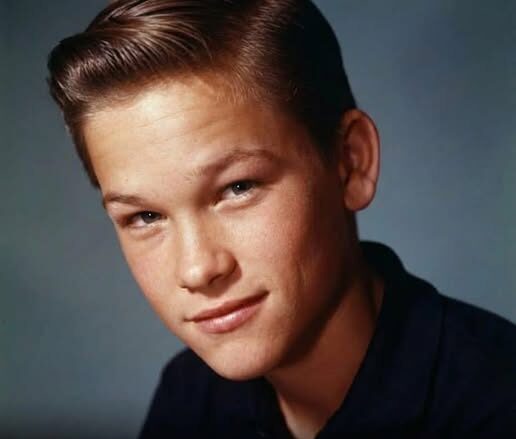
Patrick Swayze: A Life Shaped by Discipline, Adaptation, and Quiet Determination
Early Life in Houston
Patrick Swayze was born on August 18, 1952, in Houston, where his upbringing reflected a balance between structure and artistic expression.
His father worked as a draftsman, bringing a sense of precision and routine into the household, while his mother, Patsy Swayze, played a central role in shaping his creative path.
As the director of the Houston Jazz Ballet Company, she introduced him to dance at an early age, placing him in an environment where discipline and performance were closely connected.
From childhood, he was exposed to a wide range of interests, including ballet, music, athletics, and acting, allowing him to develop a diverse set of skills rather than focusing on a single pursuit.
Balancing Strength and Sensitivity
Growing up with a strong interest in dance came with challenges, particularly during his school years.
At a time when differences were not always accepted, his passion for ballet set him apart from his peers, making him a target for ridicule.
Rather than stepping away from what made him different, he continued to invest in his training, supported by the expectations established at home.
His mother encouraged him to remain steady in his choices, emphasizing consistency over confrontation.
This approach helped him develop resilience, not by reacting to criticism, but by continuing forward with focus and commitment.
A Shift from Sports to Performance
During his youth, Swayze also pursued athletics with dedication, at one point aiming for a future in football.
However, a serious knee injury forced him to reconsider that path, bringing an abrupt end to his ambitions in the sport.
Instead of remaining tied to what was no longer possible, he redirected his energy toward performance, an area where he had already built a foundation.
This turning point marked a significant transition, one that required both acceptance and a willingness to move forward in a new direction.
In his early twenties, he relocated to New York City to train more intensely, choosing a path that combined uncertainty with opportunity.
Building a Career Step by Step
His early professional years were defined by gradual progress rather than immediate recognition.
He worked consistently, refining his abilities across multiple disciplines while navigating the competitive environment of the performing arts.
Each role contributed to his development, even if it did not bring widespread attention at the time.
This steady progression reflected a pattern that would continue throughout his life, where persistence played a larger role than sudden breakthroughs.
Breakthrough with Dirty Dancing
His career reached a new level with the release of Dirty Dancing, where he portrayed the character Johnny Castle.
The role brought him broad recognition and connected him with a wide audience, marking a defining moment in his professional journey.
His performance stood out not only because of his acting but also due to the authenticity he brought to the role, shaped by years of disciplined training.
The film’s success introduced him to a global audience and positioned him as a prominent figure in the entertainment industry.
Success and Its Challenges
With increased recognition came a new set of pressures that extended beyond his work on screen.
Public attention often magnifies both achievements and personal struggles, and his life was no exception.
While his career continued to expand, he also faced periods of loss and difficulty that unfolded away from the spotlight.
Despite these challenges, he maintained a focus on his work, approaching each role as an opportunity to grow rather than simply maintain visibility.
A Steady Personal Foundation
Throughout his life, his marriage to Lisa Niemi remained a constant source of stability.
Their relationship provided continuity during periods of both success and uncertainty, offering a sense of balance that extended beyond his professional life.
This steady foundation allowed him to navigate changes without losing direction, reinforcing the importance of consistency in both personal and professional spheres.
He continued to take on a variety of roles, not solely to remain in the public eye, but to continue evolving within his craft.
Continuing Through Adversity
Later in life, Swayze faced a serious illness that introduced a new set of challenges.
Rather than stepping away from his work entirely, he chose to remain active for as long as he could.
This decision was not framed as a statement or an attempt to prove resilience, but as a continuation of the approach he had always followed.
He focused on what remained possible, continuing to engage with his profession despite the circumstances.
This period reflected the same pattern that had guided him earlier in life—adapting to change while maintaining forward movement.
A Life Concluded
Patrick Swayze passed away in 2009, bringing an end to a life defined by both achievement and adaptability.
His journey was not shaped by a single moment or role, but by a series of decisions that reflected his approach to change and challenge.
Each phase of his life demonstrated a willingness to accept what could not continue while remaining committed to what could.
Enduring Perspective
What remains beyond his body of work is the pattern he followed throughout his life.
From early challenges to professional success and later adversity, his path reflected a steady commitment to growth and adjustment.
He did not rely on recognition to define his direction, instead focusing on consistency and purpose.
His early experiences did not limit him, but they shaped the way he responded to each stage of his life.
This perspective, grounded in discipline and adaptability, continues to define how his story is remembered.