
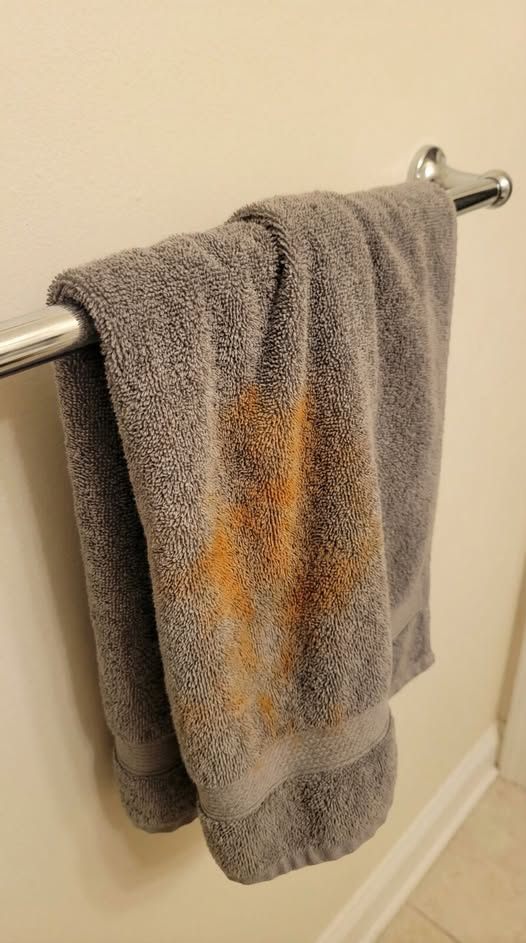
Why Your Towels Keep Getting Orange Stains
The Most Common Cause: Benzoyl Peroxide
If you’ve noticed strange orange or pinkish spots appearing on your towels, you’re not alone. One of the most common reasons behind these marks is benzoyl peroxide, a widely used ingredient in acne treatments.
Benzoyl peroxide is found in popular over-the-counter and prescription skincare products, including brands like PanOxyl, Clearasil, and Neutrogena. While it’s highly effective for managing breakouts, it can have an unexpected effect on fabrics.
This ingredient acts as a strong oxidizer. In simple terms, it behaves much like liquid bleach. When it comes into contact with colored fabric, it doesn’t create a traditional stain. Instead, it strips the dye from the fibers.
Why the Spots Appear Orange
On darker towels such as navy, charcoal, or black, the bleaching process often reveals bright orange, yellow, or even pink tones underneath. These shades are part of the underlying dye base that becomes visible once the darker pigments are removed.
The result can look dramatic and confusing, especially if you weren’t expecting it.
A quick way to identify the difference:
Lighter-than-usual patches are typically bleach marks caused by dye removal.
Darker spots are more likely to be traditional stains from dirt, oil, or other substances.
Why These Marks Don’t Wash Out
Unlike regular stains, bleach marks cannot be cleaned away. Once the fabric’s color has been stripped, it cannot be restored through washing or scrubbing.
No detergent, stain remover, or laundering method can bring back the original dye.
In some cases, residual benzoyl peroxide left on towels can transfer during washing, potentially causing additional discoloration on other fabrics.
This is why it’s important to separate affected items and take preventive steps.
Other Possible Causes of Orange Marks
While benzoyl peroxide is the most frequent culprit, there are other factors that can create similar discoloration.
One possibility is rust in water. Homes with older plumbing or iron-rich well water may experience reddish-brown streaks on laundry. Unlike acne-product bleaching, rust-related discoloration typically affects multiple items, not just face towels.
Another potential cause is Serratia marcescens, a bacteria commonly found in damp bathroom environments. It appears as a pink or orange film and often forms in areas that remain moist for long periods.
Unlike bleach-related marks, bacterial buildup can usually be cleaned with proper disinfectants or standard bleach products.
How to Prevent Towel Discoloration
You don’t need to stop using your skincare products to protect your towels. A few simple adjustments can make a noticeable difference.
First, consider using designated towels specifically for your face. Keeping two or three white towels for skincare routines can eliminate the risk of dye removal since white fabric cannot be bleached lighter.
Second, rinse thoroughly after applying acne treatments. Washing your face and hands for at least 30 seconds helps remove product residue that could transfer to towels.
Checking ingredient labels can also help. Products containing salicylic acid offer acne treatment benefits without the bleaching effects associated with benzoyl peroxide.
Many people choose to switch their bathroom linens to white altogether. This practical change removes the worry about color loss while keeping towels looking clean and consistent.
What to Do With Bleached Towels
Since dye removal is permanent, heavily marked towels may not return to their original appearance. However, they can still serve useful purposes around the home.
Old towels can be repurposed as cleaning cloths for household surfaces.
They also work well for car detailing tasks, absorbing spills, or handling messy projects.
Some people keep them as gym towels or for outdoor use where appearance is less important than function.
Repurposing instead of discarding helps reduce waste while extending the usefulness of the fabric.
Keeping Towels Fresh and Bright
Understanding the cause of orange towel spots makes them far less mysterious. In most cases, the issue stems from the bleaching effect of benzoyl peroxide rather than a traditional stain.
With small changes like using white towels, rinsing thoroughly, and separating laundry, you can prevent future discoloration.
A little awareness goes a long way in keeping your towels looking fresh, clean, and free from unexpected color changes.
By taking simple precautions, you can continue your skincare routine without sacrificing your favorite linens.