
What Happened Behind the Scenes of An Officer and a Gentleman
A Major Hit From 1982
An Officer and a Gentleman arrived in the summer of 1982 and quickly became one of the most successful films of its era.
Made for about $6–7 million, the movie went on to earn around $190 million and secured a lasting place in 1980s cinema.
The film combined military training, romance, and character drama in a way that connected with a wide audience.
Its central performances also helped define its legacy, with Richard Gere, Debra Winger, and Louis Gossett Jr. all leaving a strong impression.
The Story at the Center of the Film
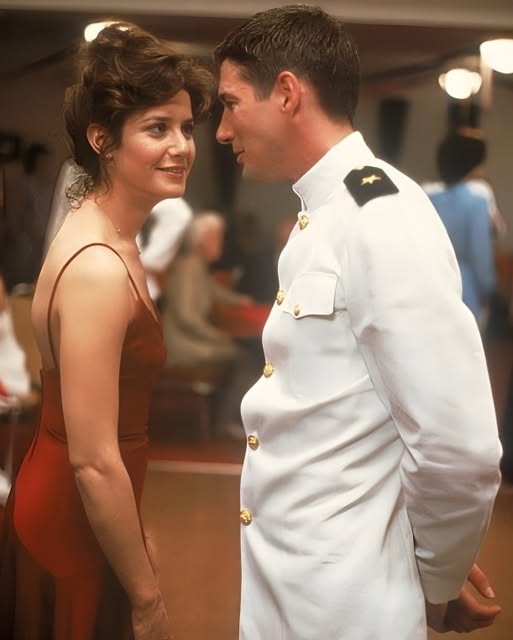
At the heart of the movie is Zack Mayo, played by Richard Gere, a U.S. Navy Aviation Officer Candidate entering the demanding environment of Aviation Officer Candidate School.
As Zack moves through the pressure of training, he begins a relationship with Paula, the local “townie” portrayed by Debra Winger.
At the same time, he faces constant pressure from Marine Corps Gunnery Sergeant Emil Foley, played by Louis Gossett Jr.
Foley is presented as strict, demanding, and determined to test every candidate to the limit.
That balance between personal struggle, romance, and discipline helped give the film its distinct identity.
How Real Experience Shaped the Script
The screenplay had a direct personal connection to its writer, Douglas Day Stewart.
He drew from his own time as a Naval Aviation Officer Candidate, an experience that began with hopes of becoming a pilot.
That path ended when he was disqualified for medical reasons, but the time he spent in training became the foundation for the film’s world.
The character of Paula also had a real-life basis.
She was inspired by a local factory worker Stewart met and dated during that period, which gave the romance a personal starting point inside the broader military setting.
The Long Search for Zack Mayo
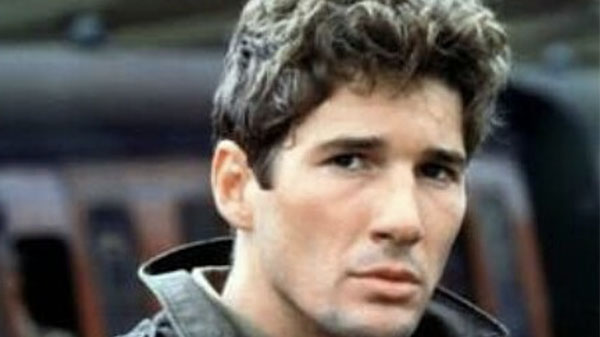
The lead role did not land with Richard Gere immediately.
At one point, John Denver had actually been signed to play Zack Mayo.
As the casting process continued, the role also involved names such as Jeff Bridges, Harry Hamlin, Christopher Reeve, and John Travolta.
Gere ultimately secured the part and turned it into one of the defining performances of his career.
Travolta passed on the opportunity, which placed the project on a different path.
Gere later told Barbara Walters that he initially accepted the role for financial reasons.
Even so, the film became his biggest box office success at that stage of his career, a mark later surpassed by Pretty Woman.
The Dynamic Between Richard Gere and Debra Winger
On screen, the connection between Richard Gere and Debra Winger appeared convincing and central to the story.
Off screen, the relationship between the two actors was described as more difficult.
Winger once referred to Gere as a “brick wall,” while Gere later said there had been “tension” between them during production.
Louis Gossett Jr. later wrote in An Actor and a Gentleman that the two leads generally kept their distance when cameras were not rolling.
He also indicated that Winger was not especially impressed with Gere’s acting.
The same account described friction between Winger and director Taylor Hackford, whom she reportedly referred to as “animal.”
Even with that strain behind the scenes, both actors delivered performances that became central to the movie’s success.
Winger’s work in particular stood out strongly enough to earn her an Academy Award nomination for Best Actress.
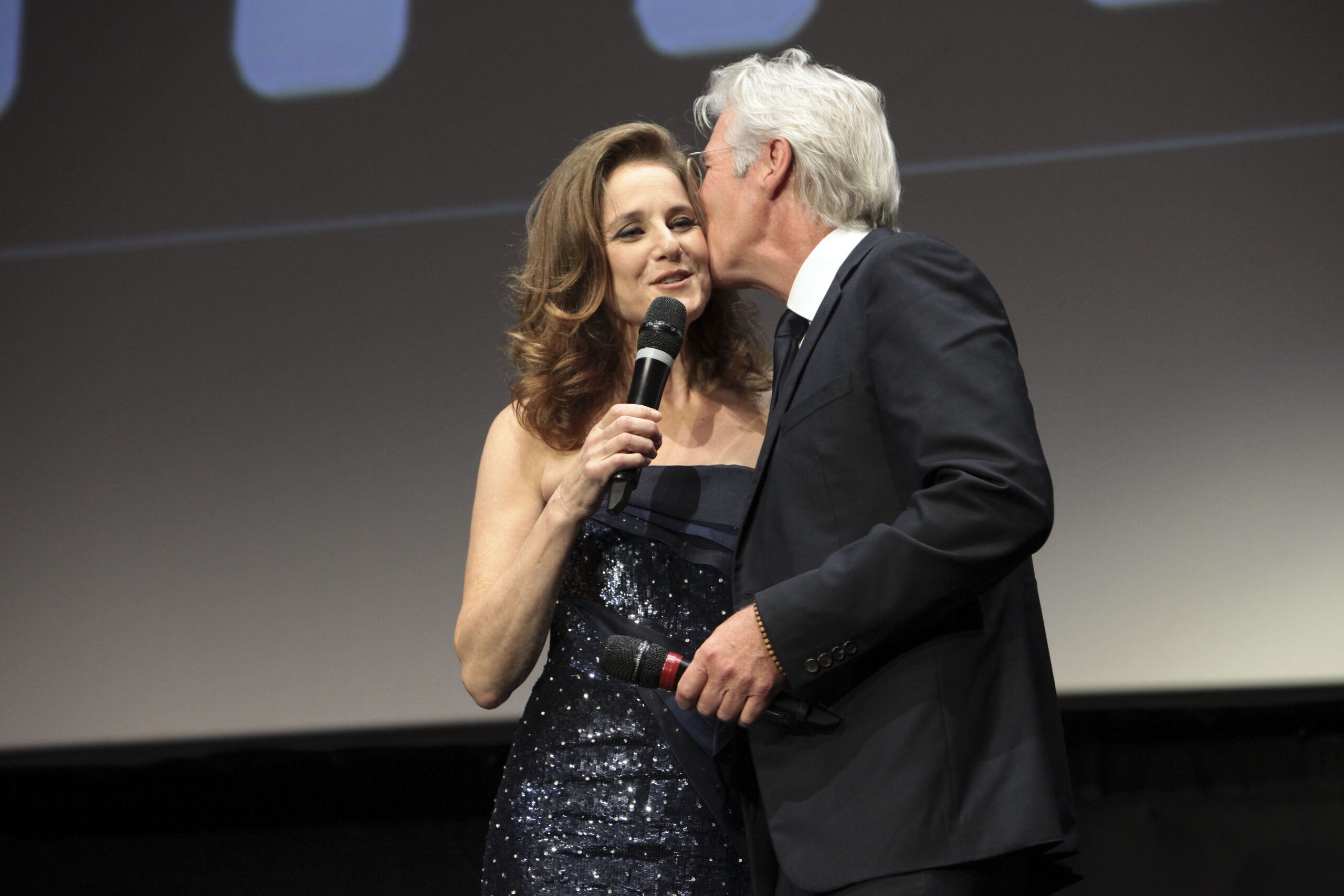
Years later, Gere spoke more warmly about her work, praising the openness she brought to the camera and showing appreciation when she presented him with an award at the Rome Film Festival.
A Difficult Production Experience for Debra Winger
Debra Winger’s involvement in the film also included contract and production concerns.
She reportedly negotiated her own contract without an agent and committed to the project before seeing the revised script.
Later, she learned that the role included a nude scene.
She asked to be covered for the moment, but because there was no “no nudity” clause in the contract, she was told the scene would go forward as written.
Winger later described the filming of the hotel-room material as one of the most uncomfortable parts of the production.
“It was one of the worst experiences of my life. Filming the hotel-room scenes was really uncomfortable,” she explained.
She also said the lack of closeness between her and Gere made even routine romantic scenes harder to perform.
“I didn’t feel especially close to Richard Gere and every time the director wanted us to kiss, I felt like bursting into tears,” she said.
Those comments added another layer to public understanding of how different the off-camera environment was from the finished film.
Louis Gossett Jr. and an Oscar-Winning Role
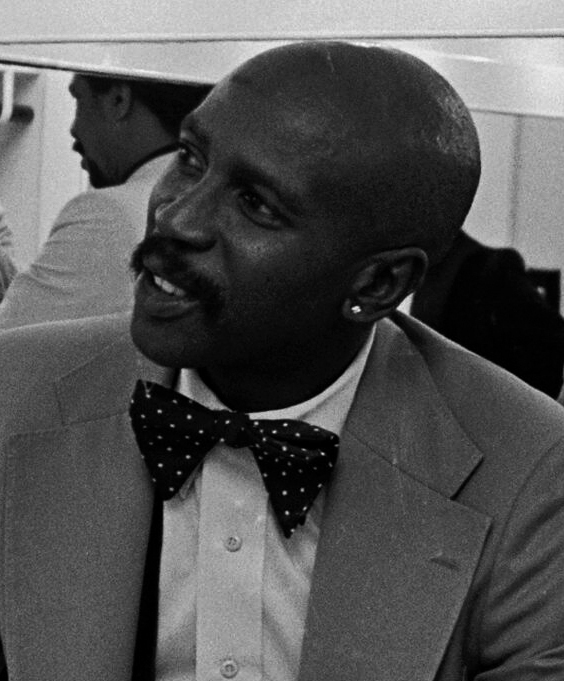
Louis Gossett Jr. gave one of the film’s most memorable performances as Gunnery Sergeant Emil Foley.
The role earned him the Academy Award for Best Supporting Actor.
That win made him the first African-American actor to receive that award.
Director Taylor Hackford reportedly used an unusual method to preserve the authority and distance of the character.
Gossett Jr. was kept in separate living quarters from the rest of the cast so that the strict atmosphere around Foley would remain intact.
The casting process for the part had also been complicated.
Several major actors passed on it, and Mandy Patinkin reportedly gave an audition that impressed the producers.
Hackford, however, felt Patinkin was “too ethnic” for the part.
The production later looked more closely at conditions in Pensacola, Florida, and found that many of the leading drill instructors there were Black.
That observation helped clear the way for Gossett Jr. to take on the role that became one of the most recognized parts of the film.
A Training Mishap During Filming
The physical training scenes in the film required preparation from the cast.
In a 2013 interview, Richard Gere said that both he and Louis Gossett Jr. received special training for the karate sequences used in the movie.
Gere said he eventually became comfortable with the choreography, while Gossett continued to have trouble with it despite coaching.
During one filming session, Gere accidentally kicked Gossett in the groin.
The incident reportedly caused Gossett to leave the set and stay away for two days.
To keep production moving, Gere and Taylor Hackford brought in a Black karate expert to serve as a stand-in.
Gere later accepted responsibility for what happened and said it did not permanently damage their relationship.
The two men continued to see each other occasionally after the film.
Gossett passed away in 2024 at the age of 87.
Why the Film Was Not Shot at NAS Pensacola
Although the story takes place in Florida, much of the movie was filmed in the Pacific Northwest.
The U.S. Navy did not grant permission to film at NAS Pensacola, the actual site of Aviation Officer Candidate School.
As a result, Fort Worden, a decommissioned U.S. Army base, was used for the training location shown in the movie.
That decision changed the production map but still allowed the film to create a convincing military environment.
Some scenes also captured real naval history in the background.
When Zack leaves his father’s home early in the film, the shipyard setting includes USS New Jersey (BB-62), USS Missouri (BB-63), and the aircraft carrier USS Hornet at the Navy Yard in Bremerton, Washington.
Not long after filming ended, both battleships were modernized and returned to active service.
The Missouri later took part in the Gulf War.
In time, both battleships were retired and became museum ships, and the USS Hornet was preserved as well.
The motel scenes were filmed at the Tides Motel in Port Townsend, Washington.
One of the rooms used for the production still has a wooden plaque on its door noting its connection to the movie.
Scenes Debra Winger Felt Were Important
Winger was not only dissatisfied with parts of the filming process.
She was also disappointed by material that was removed from the final cut.
Her concern was not limited to one scene or one production decision.
She believed those edits reduced the full shape of Paula as a character.
“I can never be totally pleased, because it’s not the full performance I gave,” she told The Philadelphia Inquirer in 1983.
She said the audience never saw key background details that explained Paula’s resilience and sense of responsibility.
“People will never know, for example, that Paula’s father was violent to her. We shot a scene where it was clear that if I did something wrong he would slap me across the face and push me down. And then there was a scene where point was made that I had a relationship with my sisters where I was in effect their mother.”
She also made clear why those missing scenes mattered to her understanding of the role.

“So Paula had all these qualities that showed where her strength of character came from, what she had overcome at home.”
Those remarks suggest that Winger saw Paula as more layered than the final edit revealed.
Continuity Errors That Viewers Still Notice
Like many well-known films, An Officer and a Gentleman contains a few continuity mistakes that viewers have pointed out over the years.
Just before the officer candidates take their oath and graduate, a recruit calls out, “All officers present.” In one shot the swords are resting on shoulders, and in the next they are back in their scabbards.
Another inconsistency appears during the graduation sequence.
The candidates wear Service Dress White while the reviewing officers appear in Service Dress Blue, even though Navy dress rules would normally require the same uniform across the event.
There is also a visible shift in the fight between Zack Mayo and Sgt. Foley.
Marks visible on Mayo’s back in one moment disappear as the scene continues.
A time-related mistake appears in the factory cafeteria sequence as well.
A coworker says it is 3:40 p.m. on a Friday, but shortly afterward the wall clock shows 12:50 p.m.
These details did not stop the film from becoming a success, but they remain part of the conversation around repeat viewings.
The Song That Almost Did Not Stay
One of the film’s best-known musical elements nearly disappeared before release.
Producer Don Simpson reportedly wanted “Up Where We Belong” removed from the movie.
His view was blunt: “The song is no good. It isn’t a hit.”
The result turned out very differently.
The song reached the top of the Billboard charts and won the Academy Award for Best Original Song.
It became closely associated with the movie and remains one of the elements most people remember.
Simpson had favored a different track, “On the Wings of Love” by Jeffrey Osborne.
That song was released but only reached No. 29 on the charts.
The contrast between those outcomes turned the decision into one of the film’s most striking near-misses.
The Ending Richard Gere Did Not Want
The closing factory scene became one of the signature images of the film, but it was far from universally embraced during production.
Richard Gere strongly opposed it at the time because he felt it did not fit the realistic tone he wanted.
“I argued against it from the beginning. I said, ‘This is bull—’… I was trying to make a very real, gritty movie… And that didn’t fit at all, it was such a rave-up ‘movie moment.’”
He also thought the sequence would be a poor use of production time.
“We’re going to waste half a day shooting this thing… This is never going to be in the movie.”
Douglas Day Stewart later recalled that even after filming, there was continued uncertainty during editing.
“In post-production, everyone debated that my ending didn’t work and when they cut it all together, everyone laughed.”
The reaction changed when the sequence was paired with “Up Where We Belong” and shown to an audience.
“They went crazy. We realised then that it worked,” Stewart said.
Gere later acknowledged the outcome directly.
“I was definitely wrong.”
Why the Film Continues to Be Remembered
An Officer and a Gentleman remains notable not only because of its box office success, but because of the number of memorable stories attached to its making.
The casting changes, the tension between key performers, the Oscar-winning work by Louis Gossett Jr., the real-world inspiration behind the script, and the debate over both the song and the ending all shaped the movie’s legacy.
It is also a film where the finished product often feels smoother than the production history behind it.
That contrast has kept interest alive for decades.
What reached the screen was a romance set against a demanding military backdrop, but the path to that result involved contract disputes, editing frustrations, training mishaps, and major creative disagreements.
Even with all of that, the film became a classic and continues to hold a strong place in discussions of 1980s cinema.