
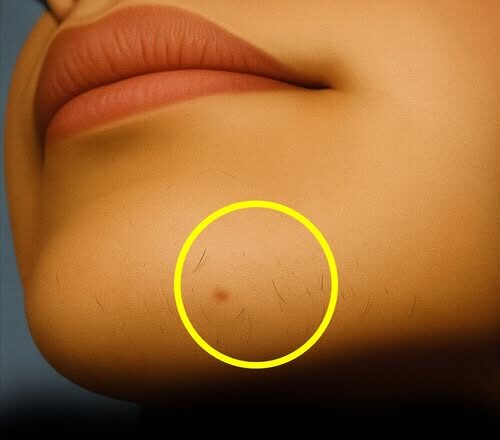
Why Chin Hair Can Appear in Women and What It May Mean
For many women, chin hair is something they notice gradually.
It may begin with a single strand that appears in the mirror under bright light. Over time, that small change can raise questions, especially when it feels unexpected or unfamiliar.
The first reaction is often concern. Some women wonder whether it is normal, while others question whether it signals a deeper issue.
In reality, facial hair on the chin is a common experience. It can affect women of different ages, backgrounds, and lifestyles, even though many people rarely speak openly about it.
Because beauty standards often place heavy emphasis on smooth skin, chin hair can feel more significant than it medically is. That emotional response is understandable, but it does not mean the change is unusual or shameful.
A Common Experience That Often Feels Isolating
Chin hair may feel deeply personal, yet it is far from rare.
Many women notice a few coarse or darker hairs at some point in life. For some, the change is mild and occasional. For others, it becomes more noticeable over time.
What often makes the experience difficult is not the hair itself, but the meaning attached to it. Social expectations can create the impression that facial hair does not belong on women, which can lead to embarrassment or self-consciousness.
That belief does not reflect how the body actually works. Hair growth is part of normal biology, and facial hair does not determine femininity, attractiveness, or personal worth.
Why Chin Hair Can Develop
Hair growth patterns are influenced by a mix of internal factors.
The body is constantly managing hormonal signals, inherited traits, and age-related changes. When one or more of these factors shifts, hair texture, color, and location can change as well.
That is why chin hair does not appear for just one reason. In many cases, it is connected to normal body variation. In others, it may be related to a hormonal pattern that deserves attention.
Hormones and Hair Growth
One of the most common reasons for chin hair in women involves hormones.
The body naturally produces androgens, sometimes described as hormones associated more strongly with male traits. Women also have these hormones, and they play a role in normal body function.
When hormone levels change, hair growth patterns can shift. A woman may begin to notice darker or coarser hair on the chin, jawline, or upper lip even if that was not present before.
These changes do not automatically point to a serious condition. Hormonal fluctuations can happen for many reasons during different stages of life.
Still, when new facial hair appears alongside other body changes, it may be useful to look more closely at the broader picture.
Changes That Can Come With Age
Aging is another major factor behind chin hair.
As women grow older, hormone balance changes naturally. Estrogen levels can decline, particularly around midlife and later years, and that shift can affect how hair appears.
Hair that once seemed light and barely visible may become darker, thicker, or easier to notice. The change can feel sudden even if it has actually developed slowly over time.
This does not mean something is wrong. In many cases, it reflects the body’s ordinary progression through different life stages.
What changes most is often not the number of hairs, but their visibility. A coarse strand on the chin tends to attract more attention than softer facial hair elsewhere.
The Role of Genetics
Family history can also shape facial hair patterns.
If close relatives experienced chin hair or other noticeable facial hair, there is a greater chance of seeing similar traits. Genetics can influence hair thickness, color, growth speed, and where certain hairs are most likely to appear.
In these cases, chin hair may simply be part of inherited body characteristics rather than a sign of illness or imbalance.
This is one reason two women with similar lifestyles may have very different experiences. Hair growth is not only about habits or skincare. It is also about how the body is built.
What Chin Hair Does Not Mean
Facial hair often becomes loaded with assumptions that do not hold up under closer examination.
It does not mean a woman is less feminine. It does not mean her appearance is flawed. It does not automatically mean her health is in danger.
There is also no scientific basis for claims that chin hair reflects personality, character, or hidden traits. Those ideas may circulate socially or culturally, but they are not grounded in medical fact.
Chin hair is a physical feature. Sometimes it is simply a normal variation in how the body expresses hair growth.
When a Change May Deserve Attention
Although chin hair can be completely ordinary, there are times when the pattern may be worth discussing with a healthcare professional.
The main concern is not the presence of one or two hairs. What matters more is whether the change is sudden, pronounced, or accompanied by other symptoms.
A rapid increase in thick, dark facial hair can sometimes point to a hormonal shift that should be evaluated. The same is true when facial hair appears along with irregular periods, persistent acne, unexplained weight changes, or thinning hair on the scalp.
When several of these changes happen together, they may suggest an underlying hormone-related issue rather than a cosmetic variation alone.
That does not mean a diagnosis can be made from appearance alone. It simply means the pattern may be worth paying attention to instead of ignoring.
Possible Underlying Patterns
In some women, noticeable facial hair can be linked with conditions that affect hormone balance.
Polycystic Ovary Syndrome, often called PCOS, is one example. Hormonal changes related to thyroid function may also affect hair and skin in ways that become visible over time.
Other women may experience temporary hormonal shifts without having a long-term medical disorder. The body does not always change in a perfectly steady way, and not every change signals disease.
What matters most is the full context. One isolated chin hair usually tells a very different story from a sudden pattern of new growth combined with other symptoms.
The Personal Choice of Hair Removal
Once chin hair appears, many women begin thinking about removal.
That decision is personal. There is no universal rule that says chin hair must be removed, and there is no obligation to conform to anyone else’s expectations.
Some women remove facial hair because they prefer the look or feel of smooth skin. Others feel more confident doing so in social or professional settings.
Some choose not to remove it at all. They may feel comfortable with their natural appearance, want to avoid irritation, or simply decide the hair is not important enough to manage.
Both responses are valid. The presence of chin hair does not create a requirement. It creates a choice.
Possible Downsides of Frequent Removal
Hair removal may seem straightforward, but it is not always neutral for the skin.
Repeated plucking, shaving, waxing, or other methods can sometimes lead to irritation. Some women experience redness, bumps, ingrown hairs, or sensitivity in the area.
When removal becomes frequent, the skin barrier may also be affected. That can make the area feel more reactive, especially if the skin is already sensitive.
This is why understanding the reason behind the hair can matter just as much as deciding how to manage it. A cosmetic approach may address appearance, but it does not always answer the underlying question of why the change occurred.
A Wider Message About Body Signals
Chin hair can be viewed in more than one way.
For some women, it is simply part of their normal body pattern and nothing more. For others, it may be one of several clues that the body is undergoing a hormonal shift.
That does not make the change frightening by default. It makes it informative.
The body often communicates gradually rather than dramatically. Skin changes, hair texture, cycle irregularity, and other subtle shifts can all be part of that conversation.
Paying attention to those signs does not require panic. It simply means staying aware of what the body is doing and noticing when something feels different from the usual pattern.
Why Shame Does Not Help
One of the most harmful parts of this experience is the shame that often surrounds it.
Women may feel pressure to hide chin hair immediately or to treat it as evidence that something about them is wrong. That pressure can make a normal body change feel far heavier than it needs to be.
A more balanced response begins with recognizing that many women deal with the same issue. The difference is that most do not talk about it openly.
Removing secrecy from the topic makes room for a healthier understanding. Chin hair is not a moral issue, a beauty failure, or a reason for embarrassment.
It is a body change that may be ordinary, age-related, inherited, hormone-related, or some combination of all four.
When to Consider Medical Guidance
A healthcare professional may be helpful when facial hair growth changes quickly or appears with other symptoms.
That includes situations where the hair becomes much thicker in a short time, menstrual patterns change, acne worsens unexpectedly, body weight shifts without a clear reason, or scalp hair begins to thin.
In those moments, the goal is not alarm. The goal is clarity.
A medical evaluation can help determine whether the change is part of ordinary aging, a genetic pattern, or a hormonal issue that deserves treatment or monitoring.
Seeking help for a new or unusual symptom is not an overreaction. It is a practical response to a visible change in the body.
Final Thought
Chin hair in women is often treated as something strange, but it is more common and more understandable than many people realize.
Sometimes it is simply a natural feature shaped by age or genetics. Sometimes it is one small sign of a hormonal pattern that may need more attention.
What it is not is a flaw.
It does not erase femininity, reduce beauty, or define identity. It is a physical detail that can carry different meanings depending on the wider context of the body.
For that reason, the most helpful response is neither panic nor shame. It is awareness.
Noticing the change, understanding what may contribute to it, and paying attention to the body’s broader signals can lead to a more informed and calmer perspective.
This content is for informational purposes only and does not replace professional medical advice. Always consult a healthcare provider for diagnosis.